The concept of protectionist policies has been a vital tool in international trade, with nations using limits to protect local businesses. Measures like exchange controls, import deposit schemes, and strict health and safety standards show how countries manage trade strategically. Learning about these rules is essential for students preparing for exams in economics, showing how trade rules work in the real world.
🎯 In this chapter, you will understand:
- How countries use non-tariff tools to regulate international trade.
- The financial mechanics behind exchange controls and import deposit rules.
- How safety rules can act as hidden barriers to foreign trade.
- The role of customs valuation and local content rules in growing local industry.
💡 Why this topic matters: Governments use protectionist policies to shield home industries, manage national currency reserves, and guide economic growth.
🧠 Core Idea: Modern trade control relies heavily on subtle financial checks, safety rules, and sourcing mandates rather than basic import taxes alone.
📌 Countries Following Protectionist Policies and Trade Restrictions
Protectionist policies are actions used by nations to direct trade, shield local makers, and control imports using different mechanisms. These methods range from financial rules to health regulations, all designed to manage foreign trade while boosting home production. These choices shape global buying and selling while showing the key economic goals of the governments using them.
- The Strategic Toolkit of Regulated Trade
Governments have a wide set of tools to protect local businesses from foreign competitors. Instead of using only simple taxes on imports, modern trade management relies heavily on subtle financial checks and administrative steps that control the movement of goods and money. By using these choices wisely, a country can steady its domestic production lines and reduce reliance on outside suppliers.
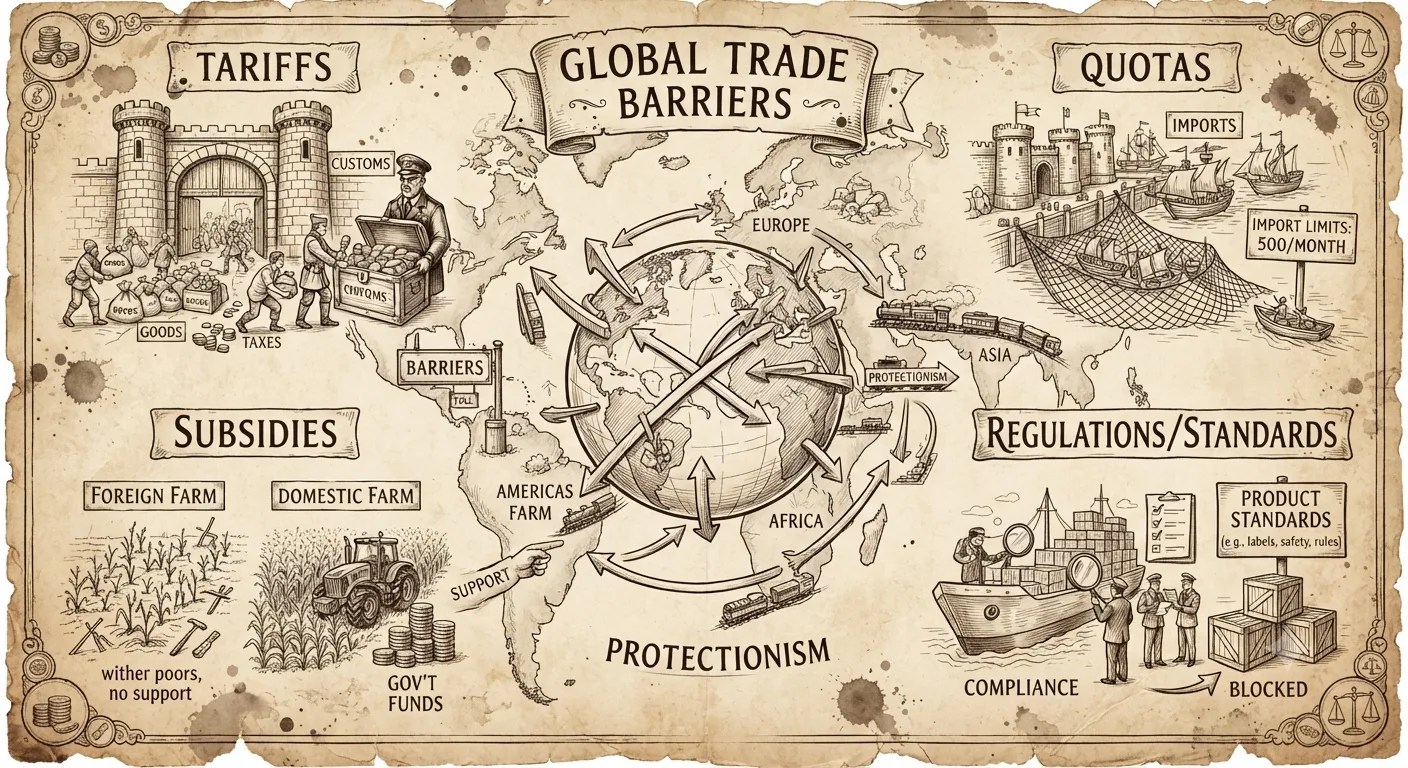
Protectionist policies and trade restrictions
Detailed Explanation of Protectionist Measures
This section explains the main methods nations use to shield local businesses, regulate incoming goods, and guide trade patterns.
Exchange Controls
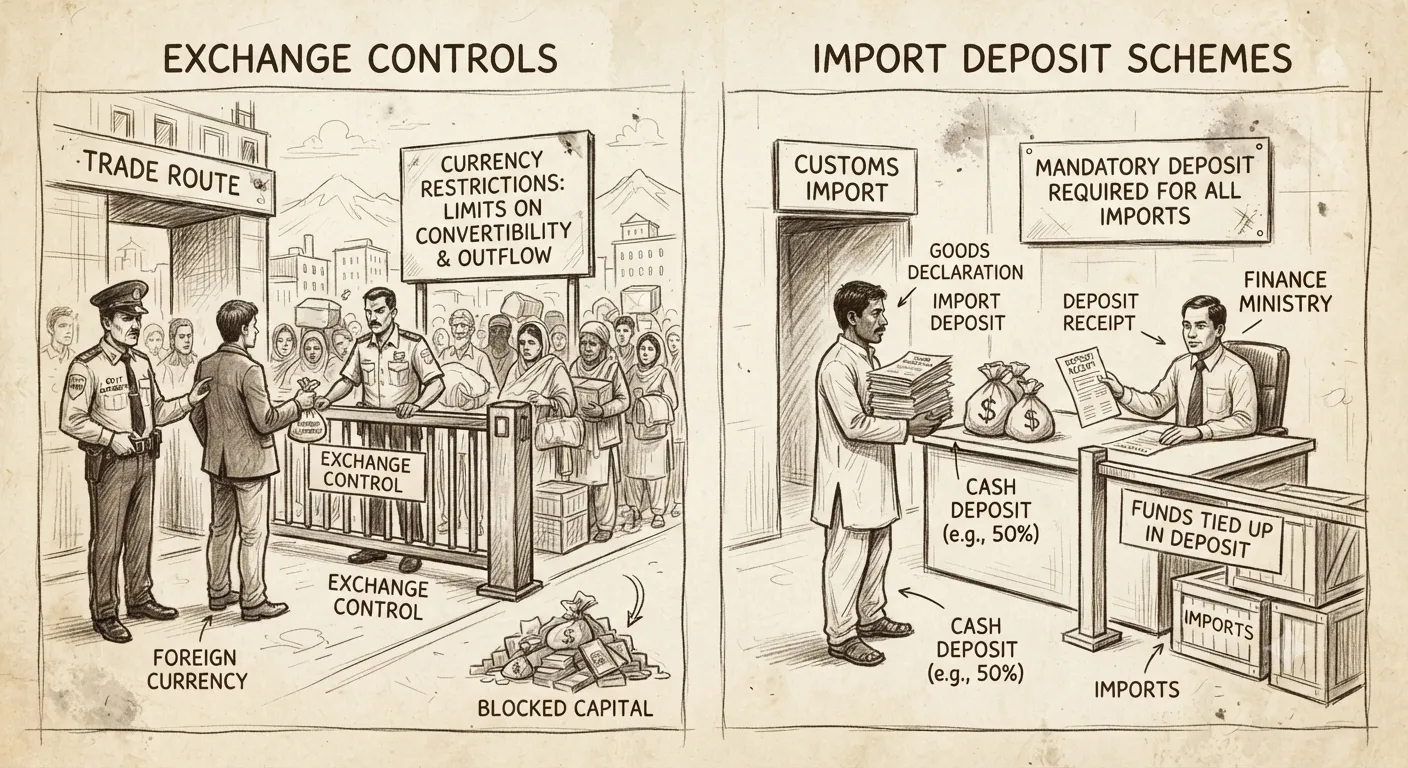
Exchange controls are a primary protectionist tool where a central bank limits access to foreign currency. People living in the country cannot freely buy foreign money without official permission, which reduces spending on foreign goods and promotes local buying.
- (i) Set limits on holding foreign currency bank accounts for local residents.
- (ii) Require formal central bank approval before completing foreign payment transactions.
- (iii) Control imports indirectly by making foreign purchases harder to complete.
Import Deposit Schemes
Import deposit schemes aim to reduce imports by making them more costly. Buyers must deposit a set part of the order value with the central bank, which acts as a money barrier and protects local businesses.
- (a) Raises the upfront cash required to import foreign goods.
- (b) Encourages local production and the purchase of domestic goods.
- (c) Helps governments protect and manage national foreign currency reserves.
Health and Safety Standards
Governments set quality standards to safeguard public health and safety. However, developed countries sometimes use these rules strategically to limit cheaper goods from developing nations, helping local companies stay competitive.
- (i) Set strict quality, environmental, and worker compliance checks on imports.
- (ii) Increase production costs for foreign companies trying to sell goods locally.
- (iii) Protect local buyers while subtly reducing competition from abroad.
Customs Valuation and Local Content Requirements
Customs valuation artificially raises the estimated value of goods to charge higher taxes, while local content requirements ensure a set share of a product is made locally. Together, these tools balance imports and encourage internal growth.
- Customs Valuation: Import taxes are figured using raised values to discourage buying foreign goods. While used often in the past, modern international trade rules now limit this practice.
- Local Content: Rules, mostly in developing nations, requiring a set part of final products to be made domestically. This guarantees local businesses gain from trade while allowing companies to import freely once targets are met.
- Combined Effect: Supports local factories while allowing carefully managed imports.
⚡ Quick Revision Capsule: Protectionist Trade Tools
The table below provides a quick side-by-side view of common trade restriction methods and their primary economic goals.
| Policy Mechanism | Primary Action | Economic Impact |
|---|---|---|
| Exchange Controls | Central bank limits foreign money purchases | Reduces import demand by limiting accessible foreign funds |
| Import Deposit Schemes | Requires upfront money deposits with the central bank | Increases the cost of foreign goods to favor local options |
| Health & Safety Standards | Sets strict safety and quality standards on imports | Protects consumers while raising costs for foreign sellers |
| Customs Valuation | Raises assessed values of imported items for taxation | Leads to higher import taxes (largely limited today) |
| Local Content Rules | Requires a share of parts to be sourced locally | Directly grows domestic industrial capacity and jobs |
📝 Summary
In conclusion, protectionist policies like exchange controls, import deposit schemes, health standards, and local content requirements play a major role in directing trade. These tools shield local businesses, preserve foreign cash reserves, and enforce safety and environmental rules. Mastering these concepts is vital for students preparing for tests in economics and international trade.
🚀 Quick Revision Points
Essential facts to review before examinations:
- (i) Exchange Controls directly restrict foreign currency access through the central bank to lower foreign buys.
- (ii) Import Deposit Schemes require importers to park cash with the central bank, making foreign goods more costly.
- (iii) Health and Safety Barriers are sometimes used by advanced economies to increase production costs for lower-wage developing countries.
- (iv) Local Content Requirements mandate that a fixed ratio of components be made locally, helping domestic industry grow.
- 💡 Exam Tip: When answering questions on non-tariff barriers, distinguish clearly between financial limits (like exchange controls) and administrative rules (like safety standards or local content shares).
❓ Frequently Asked Questions (FAQ)
Q1: How do exchange controls function as a trade barrier?
A1: By requiring approval from the central bank before exchanging local money for foreign currency, governments make purchasing foreign goods harder, effectively lowering overall import demand.Q2: Why are health and safety standards sometimes viewed as hidden protectionism?
A2: While meant to protect buyers, these strict rules can be used by advanced economies to intentionally raise production costs for sellers from developing countries.Q3: Are artificial customs valuation procedures still widely used?
A3: Raising the estimated value of imported goods to charge higher taxes was common in the past, but global trade agreements have largely limited its use today.