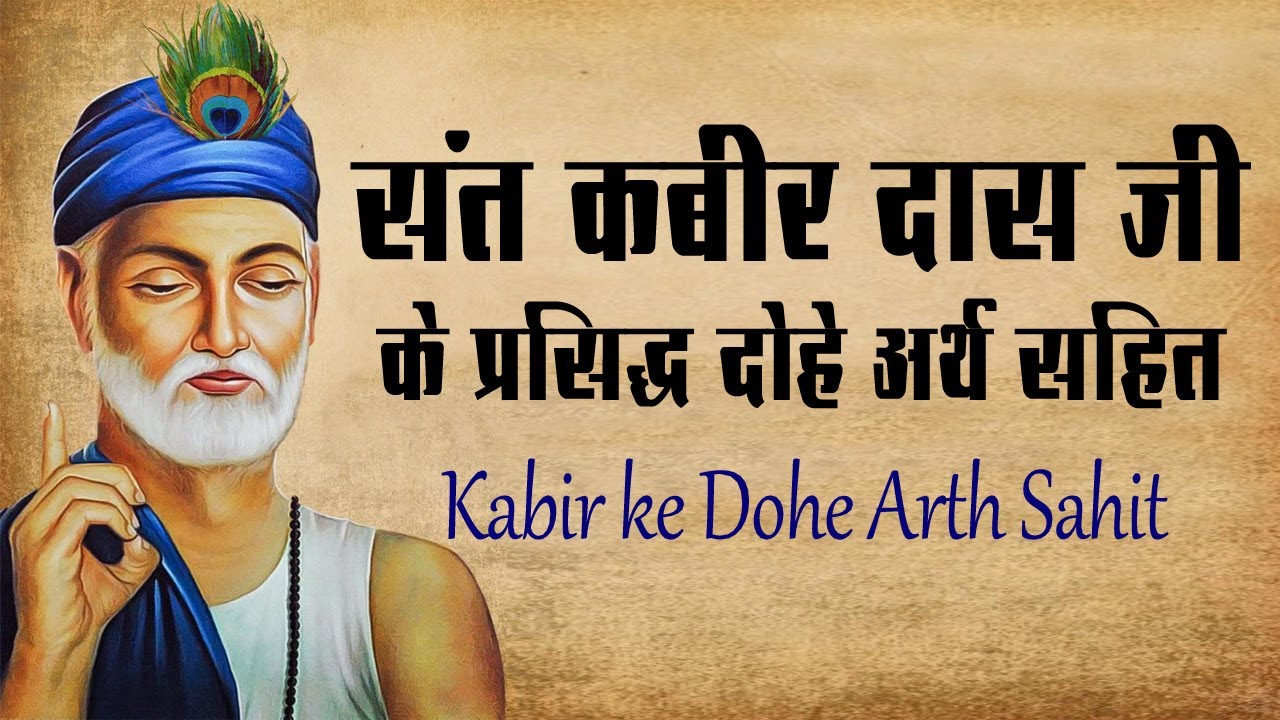
Kabir () was one of the greatest Bhakti movement saints, a poet, mystic, and social reformer whose verses promoted spiritual awakening, religious harmony, and social equality. His teachings transcended Hinduism, Sikhism, and Sufism, making him a central figure in Indian mysticism. For students and exam preparation, Kabir is important as his philosophy shaped medieval Indian society and influenced later reform movements.
🎯 In this chapter, you will understand:
- The early life, birth, and spiritual background of Saint Kabir in Varanasi.
- Kabir's core teachings, Nirguna Bhakti philosophy, and rejection of rituals.
- His major literary works including Bijak, Granthawali, and Sakhi Granth.
- His lasting legacy on social reform, Sikhism, and the Kabir Panth.
💡 Why this topic matters: Understanding Kabir is crucial for grasping how medieval Indian social reform movements challenged caste and religious dogma.
🧠 Core Idea: True spiritual devotion requires internal purity and universal love, rather than outer rituals or sectarian labels.
Kabir: Life, Teachings, Poetry, and Legacy in the Bhakti Movement ()
Kabir’s philosophy blended spirituality, poetry, and social reform. He rose as a spiritual luminary during a time of religious orthodoxy, offering simple yet profound messages on universal brotherhood, God-realization, and ethical living.
- (i) Born in Varanasi, raised by Niru and Nima in a humble weaver family.
- (ii) Disciple of Ramananda, emphasizing devotion to a formless God.
- (iii) Wove spiritual truths into his profession as a julaha (weaver).
Early Life and Spiritual Background of Kabir
Kabir’s early life symbolizes the merging of Hindu and Muslim traditions. His humble origins shaped his rejection of caste and ritual, paving the way for his universal philosophy.

Birth and Upbringing in Varanasi
Kabir was reportedly born in in Varanasi. Legends say he was found as a baby and adopted by Niru and Nima, a poor Muslim weaving couple. This background allowed him to witness and critique both Hindu orthodoxy and Muslim dogma.
- (i) Raised in a weaving family, blending livelihood with spirituality.
- (ii) Gained early respect for simplicity, equality, and hard work.
- (iii) His loom became a metaphor for life and devotion.
Kabir and Guru Ramananda
Kabir became a disciple of Ramananda, a Vaishnava saint. Despite initial opposition, his dedication secured acceptance, giving him spiritual depth and exposure to Bhakti philosophy.
- (a) Ramananda emphasized a formless divine.
- (b) Kabir absorbed the idea of devotion over ritual.
- (c) This blend of traditions became the hallmark of his teachings.
Kabir’s Philosophy and Spiritual Teachings
Kabir’s spiritual vision emphasized unity of God, critique of rituals, and self-realization. His verses, simple yet powerful, broke barriers of religion and caste.
Universalism in Kabir’s Thought
Kabir rejected orthodoxy and declared that truth lies within, beyond temples, mosques, or scriptures. His universalism made him a bridge across faiths.
- (i) Stressed inner purity over external rituals.
- (ii) Promoted the idea that God lives in every heart.
- (iii) Advocated spiritual equality for all communities.
Unity of God in Kabir’s Teachings
Kabir equated Ram, Allah, Hari, and Govind, emphasizing that all names point to one formless divine.
- (a) Believed in direct experience of God.
- (b) Opposed sectarian divisions.
- (c) Encouraged simple, sincere devotion.
Critique of Rituals and Dogmas
Kabir ridiculed meaningless rituals and condemned idol worship, fasting, and caste barriers. His famous doha mocked ritual baths by saying even fish would become saints.
- (i) Opposed blind ritualism in Hinduism and Islam.
- (ii) Stressed ethical life over formal worship.
- (iii) Emphasized meditation and self-discipline.
Nirguna Bhakti Philosophy
Kabir is a central figure in Nirguna Bhakti, worshiping a formless God. He encouraged detachment from material illusions (maya) and realization of the eternal self.
- (i) Advocated inner devotion over rituals.
- (ii) Warned against ego and pride.
- (iii) Urged seekers to find God within.
Kabir’s Poetry and Literary Contributions
Kabir’s verses, written in local dialects like Hindi, Braj, and Bhojpuri, made complex truths accessible to common people. His dohas remain timeless in Indian literature.
Style and Language
Kabir used allegory, metaphor, and paradox in simple language to convey profound truths. His poetic style was both mystical and critical of social evils.
- (i) Used the loom and weaving as metaphors for life.
- (ii) Language connected directly with ordinary people.
- (iii) Balanced simplicity with philosophical depth.
Key Themes in Kabir’s Poetry
Recurring themes in Kabir’s poetry highlight love, devotion, maya, and unity of humanity.
- (a) Love as the highest form of devotion.
- (b) Condemnation of worldly illusions.
- (c) Celebration of equality and harmony.
Notable Works of Kabir
His followers preserved his teachings in compilations that remain core texts of Indian spiritual literature.
Manuscript copy of the Kabir Bijak, preserving the essential core of his teachings. - Kabir Bijak: Verses stressing devotion and self-realization.
- Kabir Granthawali: Widely studied in the Sant tradition.
- Sakhi Granth: Collection of couplets with moral teachings.
- Adi Granth: Sikh scripture where Kabir’s hymns hold prominence.
Social Reform and Interfaith Harmony
Kabir emerged as a reformer who boldly condemned caste oppression and religious divisions. He taught Hindus and Muslims to embrace spiritual equality.
- (i) Denounced untouchability and caste discrimination.
- (ii) Advocated dignity and brotherhood of all humans.
- (iii) Urged people to look beyond Vedas and Quran to find truth.
Legacy and Influence of Kabir
Kabir’s impact spans religion, literature, and popular culture. His teachings inspired saints, movements, and millions of seekers worldwide.
Formation of the Kabir Panth
The Kabir Panth became a vibrant community following his ideals of simplicity, non-violence, and formless devotion.
Influence on Sikhism
Kabir’s hymns included in the Guru Granth Sahib shaped Sikh spirituality. Guru Nanak admired his universal teachings.
Impact on the Bhakti Movement
Kabir inspired saints like Ravidas, Surdas, and Tulsidas. His stress on personal devotion became a cornerstone of Bhakti traditions.
Kabir in Popular Culture
Kabir’s dohas are quoted in songs, films, and plays. His life continues to inspire academic and spiritual discourses.
Kabir’s Vision of Liberation (Moksha)
Kabir believed that liberation meant merging with the divine through humility, love, and self-awareness. For him, true moksha transcended ritual, caste, and religion.
- (i) Liberation is achieved through dissolving ego.
- (ii) The self must unite with the eternal divine.
- (iii) Love and humility are paths to realization.
⚡ Quick Revision Capsule: Key Aspects of Saint Kabir
A structured quick summary comparing core facets of Kabir's life, literature, and philosophy for rapid review.
| Aspect | Details & Description | Significance |
|---|---|---|
| Period & Region | , born in Varanasi | Active during the peak of the medieval Bhakti Movement |
| Philosophy | Nirguna Bhakti (Devotion to a formless God) | Rejected idol worship, caste discrimination, and blind rituals |
| Literary Works | Kabir Bijak, Kabir Granthawali, Sakhi Granth | Written in local folk dialects to reach common people |
| Scriptural Presence | Verses incorporated in the Guru Granth Sahib | Profound influence on Sikh tradition and interfaith harmony |
| Social Impact | Founded spiritual foundation for Kabir Panth | Promoted universal human equality and social justice |
📝 Summary
Kabir remains a timeless reformer, mystic, and poet whose Bhakti movement contributions continue to inspire students and seekers. His emphasis on teachings of love, equality, and formless God challenged orthodoxy and bridged religions. For exam preparation, Kabir is crucial in understanding social reform, interfaith harmony, and Indian philosophy.
🚀 Quick Revision Points
Essential facts to review before examinations:
- (i) Kabir advocated Nirguna Bhakti—the worship of a formless divine without rituals.
- (ii) Raised by weaver parents (Niru and Nima) and was a disciple of Ramananda.
- (iii) Major works include Kabir Bijak, Sakhi Granth, and hymns in the Guru Granth Sahib.
- (iv) Boldly opposed caste discrimination, untouchability, and rigid religious dogma.
- 💡 Exam Tip: Remember that Kabir belonged to the Nirguna (formless) school of Bhakti, unlike Saguna poets like Tulsidas or Surdas who worshiped specific deities with forms.
❓ Frequently Asked Questions (FAQ)
Q1: What was Kabir's primary spiritual philosophy?
A1: Kabir practiced Nirguna Bhakti, which stresses devotion to one formless, ultimate divine reality present inside all human beings, rather than idol worship.Q2: Which major literary compilations contain Kabir's poetry?
A2: His main works include Kabir Bijak, Kabir Granthawali, Sakhi Granth, and several hymns integrated directly into the Sikh scripture, Guru Granth Sahib.Q3: How did Kabir contribute to social reform in medieval India?
A3: Kabir strongly rejected caste distinctions, ritual purity, and religious bigotry, advocating for universal brotherhood and equality between Hindus and Muslims.