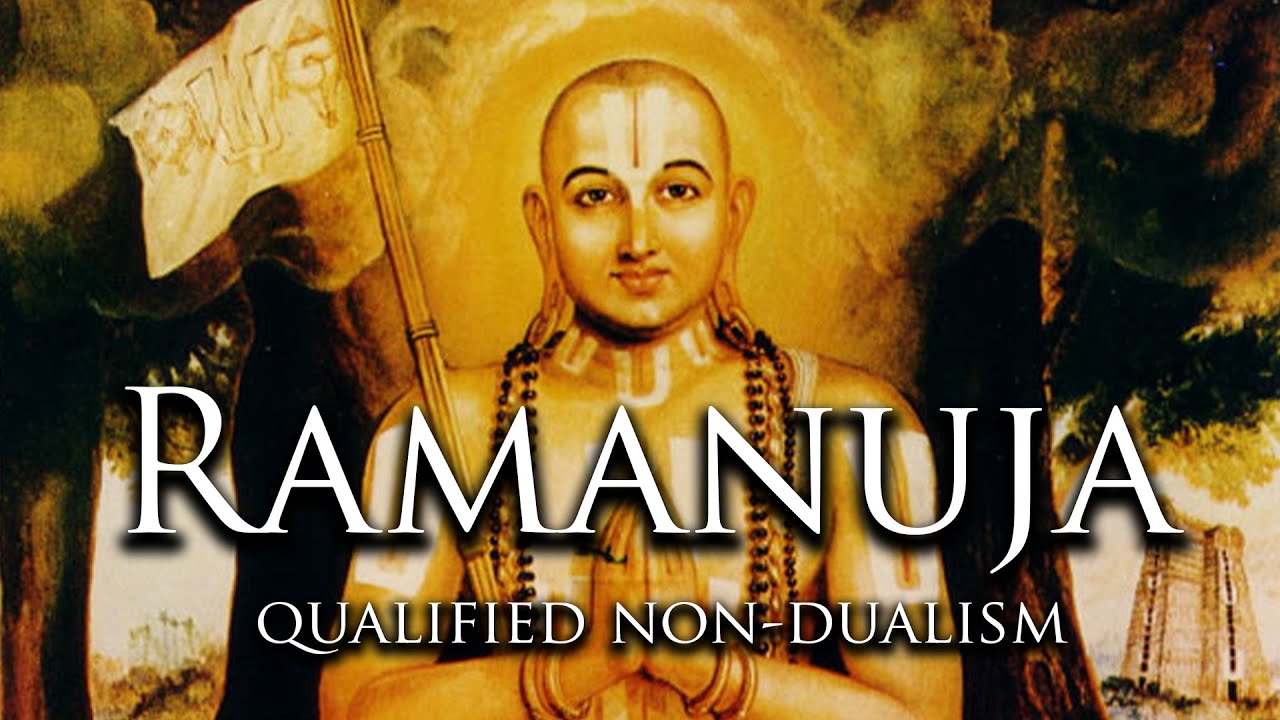
Ramanuja () was a revolutionary Indian philosopher, theologian, and reformer who established the Vishishtadvaita Vedanta school of thought. His philosophy of qualified non-dualism emphasized the relationship between Atman (individual soul) and Brahman (supreme soul), while highlighting devotion (bhakti) to Vishnu. For students and aspirants of Indian philosophy, his teachings hold immense value for UPSC exams, competitive history papers, and religious studies.
🎯 In this chapter, you will understand:
- The founding and core ideas of Vishishtadvaita Vedanta.
- Ramanuja's life journey from early education to ascetic leadership.
- Major literary works including Sri Bhashya and Bhagavad Gita Bhashya.
- Social reforms and lasting impact on the Bhakti movement.
💡 Why this topic matters: Ramanuja bridged deep philosophical reasoning with heart-felt devotion, opening spiritual practice to people of all backgrounds.
🧠 Core Idea: Individual souls and the material world are real and distinct, yet permanently attached to and guided by Brahman (Vishnu).
📌 Ramanuja: Vishishtadvaita Philosophy, Life, and Contributions ()
Ramanuja shaped Indian spiritual and social traditions by integrating philosophy, devotion, and social reform.
His vision went beyond abstract metaphysics by rooting spirituality in bhakti, compassion, and inclusivity. He directly challenged rigid interpretations of Advaita Vedanta and offered a new path that inspired generations of devotees and scholars.
- (i) Developed the Vishishtadvaita Vedanta system — qualified non-dualism.
- (ii) Advocated bhakti (devotion) as the primary path to moksha.
- (iii) Introduced reforms in religious and social practices, making them inclusive.
📜 Early Life and Education of Ramanuja
Ramanuja was born in Sriperumbudur (Tamil Nadu) into a Tamil Brahmin family. From early on, he displayed spiritual inclination and intellectual brilliance, which later positioned him as one of the most influential saints of India.

Childhood and Influences
Ramanuja's early education shaped his philosophical leanings. His exposure to Advaita Vedanta created intellectual debates, but his heart resonated with the devotional teachings of the Alvars and Yamunacharya.
- (i) Born in in Sriperumbudur, Tamil Nadu.
- (ii) Studied under Yadava Prakasha, but disagreed on Advaita interpretations.
- (iii) Inspired by the Alvars, Nathamuni, and Yamunacharya.
Transition to Asceticism
After a period as a householder, Ramanuja adopted asceticism and became a spiritual leader. His renunciation marked his commitment to Sri Vaishnavism and service to Vishnu.
- (a) Took vows of ascetic life.
- (b) Began reforming temple practices at Srirangam.
- (c) Focused on spreading bhakti philosophy.
🧠 Philosophical Legacy: Vishishtadvaita Vedanta
Ramanuja's central contribution was the development of Vishishtadvaita or qualified non-dualism. He redefined the relationship between Brahman and Atman, balancing individuality with divine unity.
Core Principles of Vishishtadvaita
Unlike Advaita, which viewed ultimate reality as undivided without attributes, Ramanuja stressed that individual souls retain their identity while being inseparably connected to Brahman. This made spirituality deeply personal and devotional.
- (i) Souls are distinct yet dependent on Brahman.
- (ii) Liberation (moksha) is possible through bhakti and divine grace.
- (iii) Vishnu and his avatars like Krishna and Rama are central to worship.
Critique of Advaita Philosophy
Ramanuja opposed Advaita Vedanta, arguing that it weakened the role of devotion. His critiques strengthened devotional traditions and made philosophy more accessible to ordinary people.
- (a) Challenged Shankara's view of the physical world as illusion (Maya).
- (b) Asserted that the world and individual souls are real, not illusory.
- (c) Emphasized inclusive interpretation of sacred scriptures.
🤝 Role in Social Transformation
Ramanuja was not only a philosopher but also a reformer who democratized religion by challenging caste restrictions and temple hierarchies.
Temple Reforms and Inclusivity
Ramanuja opened temple practices to all devotees, ensuring equal spiritual access. His reforms at the Srirangam temple remain historically significant.
Srirangam Temple, the hub of Ramanuja's administrative and social reforms - (i) Introduced structured administration in temple worship.
- (ii) Allowed participation of lower castes in rituals and sacred learning.
- (iii) Built learning centers promoting Sri Vaishnavism.
📚 Writings and Teachings of Ramanuja
Ramanuja's literary contributions provided philosophical depth and devotional guidance, shaping the Sri Vaishnavism tradition.
Major Works
His writings combined logical rigor with spiritual devotion, making them timeless reference texts.
- (i) Sri Bhashya — commentary on the Brahma Sutras.
- (ii) Bhagavad Gita Bhashya — commentary on the Bhagavad Gita.
- (iii) Vedartha Sangraha — summarizing Vedic philosophy.
Core Teachings
His teachings blended philosophy with devotion, emphasizing service and discipline.
- (a) Liberation requires bhakti supported by divine grace.
- (b) Karma yoga (duty-based action) is essential for discipline.
- (c) Scriptures (Shabda) serve as the highest source of spiritual knowledge.
🌟 Enduring Influence and Legacy
Ramanuja's ideas shaped Indian philosophy, devotion, and culture for centuries. His legacy thrives in Sri Vaishnavism and the broader Bhakti movement.
Impact on Bhakti Movement
Ramanuja inspired devotional movements across India, stressing compassion and divine love.
- (i) Formed the intellectual bedrock of the Sri Vaishnavism tradition.
- (ii) Strengthened temple-centered devotional practices.
- (iii) His followers spread his teachings across South and North India.
Cultural Recognition
Even today, festivals, temples, and institutions celebrate his philosophy and service-oriented values.
- (a) Revered in Srirangam, Melkote, and other major temple towns.
- (b) His 1000th birth anniversary was celebrated globally.
- (c) Stands as an enduring symbol of spiritual equality and compassion.
⚡ Quick Revision Capsule: Ramanuja & Vishishtadvaita
A quick comparison overview of Ramanuja's core philosophical metrics:
| Aspect | Details | Significance |
|---|---|---|
| Lifespan | Lived for 120 years during a major cultural era in South India. | |
| Philosophy | Vishishtadvaita Vedanta | Qualified non-dualism connecting souls and world as real parts of Brahman. |
| Primary Path | Bhakti & Divine Grace | Devotion to Vishnu open to everyone regardless of caste. |
| Key Texts | Sri Bhashya, Vedartha Sangraha | Foundational commentaries defending devotional philosophy against pure illusionism. |
| Social Reform | Temple inclusivity at Srirangam | Broke barriers by granting ritual rights and teaching to marginalized groups. |
📝 Summary
Ramanuja () revolutionized Indian thought by establishing Vishishtadvaita Vedanta, advocating bhakti, and reforming social and temple practices. His teachings, preserved in foundational works like Sri Bhashya, remain central to Sri Vaishnavism and continue to inspire students, scholars, and seekers worldwide for their emphasis on devotion, equality, and sound logic.
🚀 Quick Revision Points
Essential facts to review before examinations:
- (i) Established Vishishtadvaita (Qualified Non-Dualism) which views individual souls as real and dependent on Brahman.
- (ii) Rejected the idea that the physical universe is a complete illusion (Maya).
- (iii) Highlighted bhakti (devotion) to Vishnu as the main path to salvation.
- (iv) Authored essential texts including Sri Bhashya and Bhagavad Gita Bhashya.
- 💡 Exam Tip: For competitive exams, remember that Shankara taught Advaita (absolute non-dualism), while Ramanuja taught Vishishtadvaita (qualified non-dualism). Highlight his social reforms at Srirangam to earn extra points!
❓ Frequently Asked Questions (FAQ)
Q1: What is the core difference between Advaita and Vishishtadvaita?
A1: Advaita holds that only Brahman is real and the world is an illusion, whereas Vishishtadvaita asserts that the world and individual souls are real entities united within Brahman.Q2: What are the main literary works of Ramanuja?
A2: His major works include Sri Bhashya (commentary on Brahma Sutras), Bhagavad Gita Bhashya, and Vedartha Sangraha.Q3: How did Ramanuja contribute to social reform?
A3: He opened temple rituals and sacred knowledge to marginalized classes, particularly at Srirangam, promoting spiritual equality.