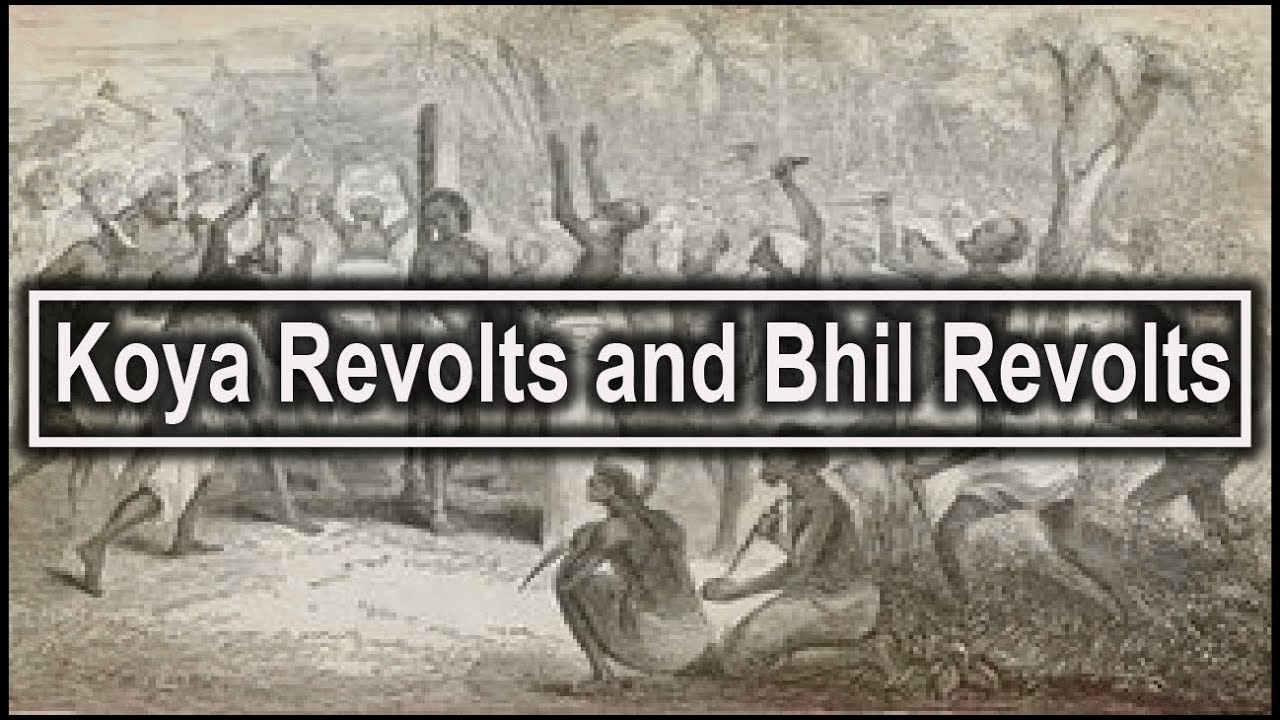
The Koya Revolts, spanning nearly a century from to , represent a crucial series of indigenous tribal uprisings within the eastern Godavari region, now part of modern Andhra Pradesh. These resistance movements were profoundly shaped by the leadership of figures like Tomma Sora and Raja Anantayyar, directly challenging the oppressive colonial system. The core catalysts included severe police oppression, the rapacious practices of exploitative moneylenders, the imposition of restrictive new regulations, and the catastrophic loss of traditional forest rights. Understanding these prolonged acts of resistance is vital for students diligently studying colonial tribal resistance movements and preparing for history exams focusing on 19th-century Indian tribal history.
🎯 In this chapter, you will understand:
- The underlying causes and key timeline of the century-long Koya uprisings.
- The socio-economic impact of colonial policies, land loss, and debt on tribal life.
- The leadership roles played by Tomma Sora, Raja Anantayyar, and Khonda Sara chiefs.
- The tactics used during the resistance and the harsh countermeasures taken by the British.
💡 Why this topic matters: The Koya Revolts showcase how tribal societies fought fiercely against foreign rules that ruined their economy and stripped away their ancestral forest freedoms.
🧠 Core Idea: Unfair British laws, greedy money lenders, and police abuse sparked repeated, organised tribal rebellions across eastern Godavari over eight decades.
Koya Revolts (1803–1886): The Long Struggle for Autonomy in Eastern Godavari and Andhra Pradesh
The sustained Koya Revolts were fundamentally rooted in the deepening exploitation, the systematic denial of customary tribal rights, and the burden of oppressive colonial administrative regulations, spearheaded by courageous tribal chiefs and popular leaders.
The genesis of the prolonged Koya resistance lies in the systematic dismantling of their traditional socio-economic structure by the British administration and its local agents. The Koya community, particularly in eastern Godavari, found their customary way of life severely threatened, leading to multiple eruptions of armed revolt.
- (i) The Koyas of eastern Godavari, often in concert with the powerful Khonda Sara chiefs, initiated their earliest documented rebellion in , followed by successive major outbreaks in , , , , and , indicating a continuous thread of resistance.
- (ii) A significant and widespread resurgence of the movement took place in the period of –, which was galvanised and led by the formidable tribal leader, Tomma Sora, whose actions posed a serious challenge to the colonial administration.
- (iii) Their collective grievances centered around the brutal oppression meted out by colonial police forces and the debilitating debt traps set by ruthless moneylenders, coupled with the introduction of new, restrictive regulations that curbed their traditional autonomy.
- (iv) Even after the death of the charismatic leader Tomma Sora, the spirit of resistance did not wane; another major revolt was successfully organised and launched in , demonstrating resilience under the leadership of Raja Anantayyar.
Socio-Economic Catalysts and Revolutionary Leadership of the Koya Revolts
The numerous uprisings were directly fuelled by the confluence of severe socio-economic exploitation, the systematic erosion of their ancestral forest rights, and the imposition of harsh colonial laws, finding powerful direction through the efforts of leaders like Tomma Sora and, subsequently, Raja Anantayyar.

Deep-Rooted Tribal Grievances Under Colonial Rule
The British colonial framework fundamentally disrupted the harmonious relationship the Koya people shared with their environment and local governance. This disruption created an explosive mix of political, economic, and social discontent that drove the revolts.
- (i) Oppression by Police and Moneylenders: The local police acted as instruments of colonial repression, while exploitative non-tribal moneylenders seized tribal lands and property, trapping the Koya in cycles of crippling, inescapable debt.
- (ii) Implementation of New Regulations: The colonial government aggressively introduced administrative and legal frameworks that significantly limited the traditional autonomy and self-governance of the tribal communities, interfering with centuries-old social structures.
- (iii) Denial of Customary Forest Rights: Perhaps the most devastating blow was the systematic denial of their customary rights over the vast forest resources. This affected everything from shifting cultivation (podu) to gathering food and materials, directly undermining the economic foundation and survival of the Koya community.
Koya Leadership and Distinct Phases of the Resistance
The movement's longevity is a testament to the resilient local leadership which adapted and reorganised the resistance through distinct phases, ensuring the colonial power faced challenges across different decades.
- (a) Tomma Sora (The Resurgent Leader): He rose to prominence to spearhead the widespread and notable uprising that occurred between and . His leadership focused on mobilising the community against the detrimental colonial policies and agents.
- (b) Raja Anantayyar (The Successor): Following the suppression of the – revolt and the death of his predecessor, Raja Anantayyar successfully organised and led a significant continuation of the rebellion in , ensuring the struggle for tribal rights persisted.
- (c) Tribal Chiefs from Khonda Sara (Early Collaborators): These powerful local chiefs played an instrumental role in the earlier, sporadic, yet numerous uprisings that occurred throughout the first half of the 19th century, specifically between and , indicating a historical precedent for coordinated tribal resistance.
Nature of Revolts and Colonial Response
The Koya uprisings were often marked by swift, targeted attacks against symbols of colonial authority and exploitation. The British reaction was typically severe and repressive, aimed at swiftly crushing the resistance.
Targets of Rebellion
- (i) Attacking police stations and colonial outposts.
- (ii) Raiding the houses and businesses of exploitative moneylenders and local officials.
- (iii) Using traditional weapons and guerilla tactics to challenge the better-equipped colonial forces in the difficult hilly terrain.
Colonial Countermeasures
- (a) Deployment of special armed police and military units to track down the rebels.
- (b) Use of harsh punishments and collective fines on supporting villages to deter future uprisings.
- (c) Attempts to co-opt or neutralize local leadership to fracture the movement.
Legacy and Significance of Koya Revolts (1803–1886)
The nearly century-long span of the Koya Revolts serves as a powerful historical documentation of the persistent and deep-seated tribal resistance movement in eastern Godavari and Andhra Pradesh. These revolts were a direct, armed response against profound colonial exploitation, the catastrophic loss of ancestral forest rights, and the burden of oppressive administrative regulations. They hold immense significance for students of history as they provide invaluable insights into the enduring patterns of tribal leadership, the nature of popular mobilisation, and the brutal reality of rebellion among the tribal communities during the 19th century colonial era.
⚡ Quick Revision Capsule: Koya Revolts Key Highlights
This revision matrix summarizes the timeline, key leadership, grievances, and methods associated with the Koya Revolts.
| Phase / Aspect | Key Leaders / Group | Primary Causes & Highlights |
|---|---|---|
| Early Phase (–) | Koya Tribals and Khonda Sara Chiefs | Outbreaks in , , , , , and against early British land and police control. |
| Major Resurgence (–) | Tomma Sora | Organised rebellion protesting police brutality, land seizures by moneylenders, and restriction of forest access. |
| Final Phase () | Raja Anantayyar | Re-mobilised tribal forces following Tomma Sora's death to push back against colonial administrative frameworks. |
| Economic Drivers | Moneylenders & Forest Officials | Deprivation of customary rights over forest produce and traditional shifting cultivation (podu). |
| Rebellion Tactics | Koya Guerilla Fighters | Targeted raids on police stations, outposts, and debt records held by non-tribal moneylenders. |
📝 Summary
The Koya Revolts spanned from to across eastern Godavari in modern Andhra Pradesh. Driven by the destruction of traditional forest rights, heavy debt from dishonest moneylenders, and police high-handedness, the Koyas mounted recurring armed defenses. Led by notable leaders including Tomma Sora and Raja Anantayyar alongside local Khonda Sara chiefs, the movement remains a landmark example of 19th-century tribal resistance in India.
🚀 Quick Revision Points
Essential facts to review before examinations:
- (i) Spanned nearly a century (–) in the eastern Godavari region of Andhra Pradesh.
- (ii) Key leaders included Tomma Sora (–) and Raja Anantayyar ().
- (iii) Primary causes were the loss of traditional forest rights (podu), extortion by moneylenders, and police abuse.
- (iv) Tribal fighters used guerilla tactics against police stations and local officials in difficult hill terrain.
- 💡 Exam Tip: Remember the major timeline markers (, –, and ) along with the leaders Tomma Sora and Raja Anantayyar for direct multiple-choice and short-answer questions.
❓ Frequently Asked Questions (FAQ)
Q1: What were the main causes of the Koya Revolts?
A1: The primary causes were severe police oppression, debt traps created by exploitative moneylenders, restrictive new laws, and the loss of ancestral forest rights, including traditional podu cultivation.Q2: Who were the main leaders of the Koya Revolts?
A2: Key leaders included Tomma Sora, who spearheaded the major – uprising, Raja Anantayyar, who led the revolt, and chiefs from Khonda Sara during the early 19th century.Q3: Where did the Koya Revolts take place?
A3: They took place in the eastern Godavari region, located in modern-day Andhra Pradesh, India.