The Narkelberia Uprising, the religious and agrarian fervor of the Pagal Panthis and Faraizi Revolt, the sustained struggle of the Moplah Uprisings, and the crucial Peasants' Role in the 1857 Revolt collectively narrate a powerful saga of diverse forms of resistance against both British rule and entrenched oppressive local landlords across India. Visionary leaders like Titu Mir, Karam Shah, and Haji Shariat-Allah mobilized their respective communities, often fusing social, religious, and agrarian demands into a unified front for justice. Grasping the nuances of these critical uprisings and revolts from the to is vital for students of Indian history and competitive exams, as they showcase the genesis of grassroots resistance and the early evolution of political and social consciousness.
🎯 In this chapter, you will understand:
- How early agrarian and religious rebellions shaped rural resistance in colonial India.
- The key roles played by leaders like Titu Mir, Karam Shah, Dadu Mian, and Haji Shariat-Allah.
- The economic and social pressures imposed by the British tax system and local landlords.
- How peasant participation in the Revolt of laid the groundwork for broader freedom struggles.
💡 Why this topic matters: These early localized revolts highlight how rural communities fought back against harsh tax collection, loss of land rights, and foreign rule long before organized political parties emerged.
🧠 Core Idea: Agrarian hardship paired with spiritual reform created powerful social movements, transforming local peasant grievances into organized resistance against British rule and landlords.
Major Agrarian and Religious Uprisings in India (1820–1857): Early Resistance to British and Zamindar Oppression
These localized movements served as the bedrock of early resistance, challenging the new socio-economic order imposed by colonial powers and their local collaborators.
The period between the and the great revolt of was marked by frequent, intense localized disturbances, which were often a direct reaction to the harsh land revenue policies and the exploitative behavior of the new class of landlords and indigo planters supported by the British regime.
- (i) These agrarian movements represented critical, immediate resistance against the triple threat of oppressive local landlords, exploitative revenue policies, and the broader context of colonial exploitation, driving rural communities to desperation.
- (ii) Many of these struggles possessed a unique character, being often spearheaded by charismatic, visionary leaders and deeply rooted in strong religious, cultural, or tribal motivations, which provided a unifying force beyond mere economic grievance.
- (iii) Though largely suppressed individually, the sheer frequency and ferocity of these uprisings, from Bengal to Malabar, fundamentally set the stage and provided a blueprint for larger, more coordinated resistance efforts witnessed in subsequent decades of the freedom struggle.
Narkelberia Uprising (1831): Titu Mir's Struggle Against Landlord and British Oppression
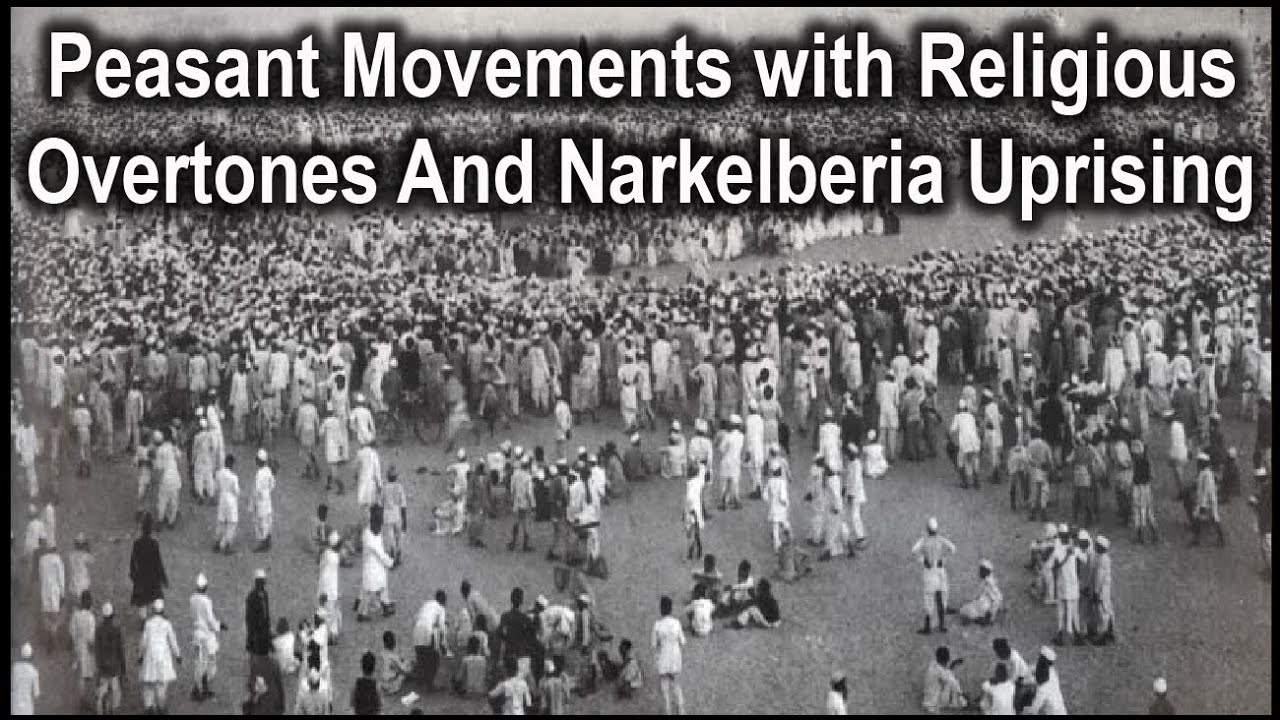
The Narkelberia Uprising, a significant peasant movement in West Bengal, was decisively led by Titu Mir, mobilizing the local Muslim peasantry against the systemic abuses perpetrated by powerful local landlords and the oppressive tactics of colonial indigo planters.

Mir Nithar Ali (Titu Mir) and the Formation of a Peasant Army
Mir Nithar Ali, popularly known as Titu Mir, began his reformist activities in the district of 24 Parganas, which quickly escalated into a militant protest. His initial focus was on religious and social purification, which soon merged with the pressing economic and social grievances of the peasantry, directed primarily against the predominantly Hindu landlords and the powerful British indigo planters who were exploiting the tenants ruthlessly.
- (i) The movement began as a direct, organized protest against the landlords who were levying arbitrary, often religiously offensive, taxes on the tenants, alongside the brutal exploitation inflicted by the British indigo planters.
- (ii) The peasant resistance, initially characterized by armed confrontation against local oppressors, eventually gained a broader ideological framework when it became closely associated and later merged into the principles of the pan-Indian Wahabi movement, giving it a religious and political undertone against foreign rule.
The Pagal Panthis Uprising (1825-1835): Fusing Faith and Agrarian Demands in Mymensingh
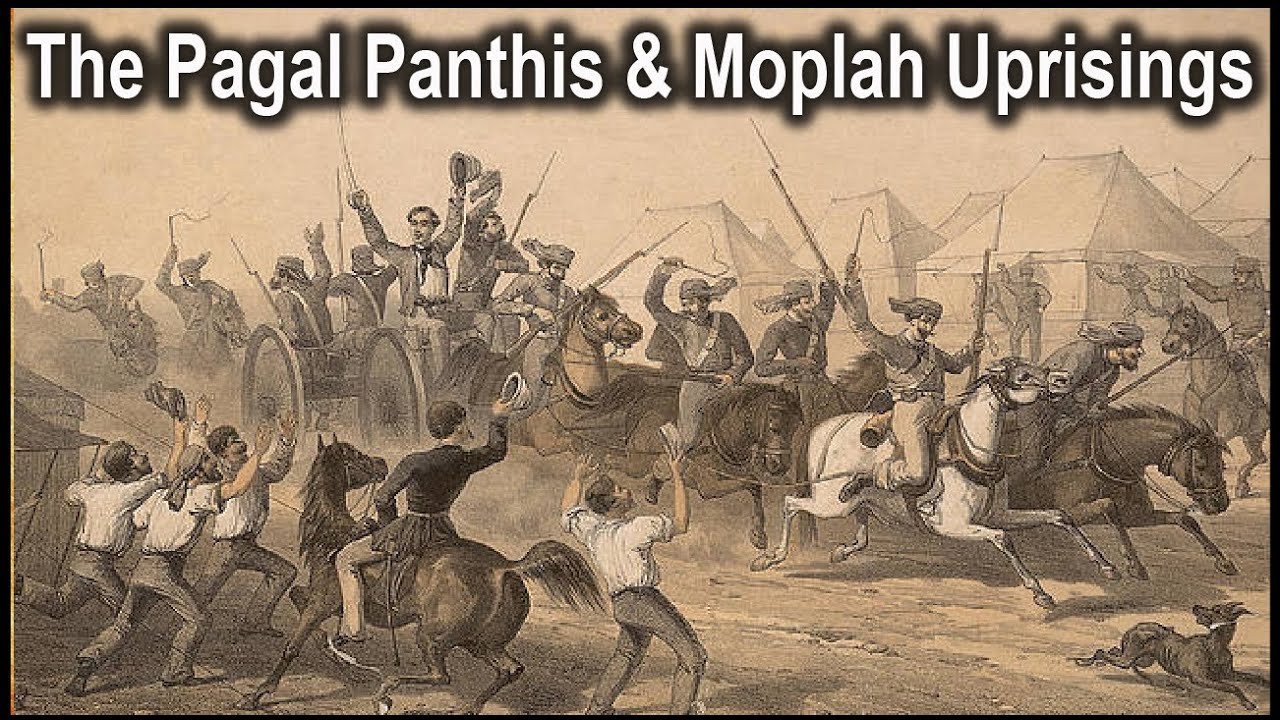
The movement of the Pagal Panthis, located primarily in the Mymensingh district of East Bengal (now Bangladesh), was a notable example of combined tribal and peasant resistance, initiated under the spiritual and political leadership of Karam Shah and subsequently intensified by his son, Tipu, against the rapacious local zamindars.
Leadership and the Core of the Pagal Panthis' Agrarian Struggle
The Pagal Panthis, meaning "mad devotees," was a semi-religious sect blending Sufism with local tribal beliefs. The resistance drew its strength primarily from the Garo and Hajong tribes, who were severely affected by the rising land rents and oppressive practices instituted by the zamindars under the colonial revenue system.
- (i) The movement successfully mobilized large numbers of the indigenous Hajong and Garo tribes, who were facing destitution due to the exorbitant rents and illegal cesses imposed by the zamindars.
- (ii) The revolt turned militant between and , characterized by deliberate refusal to pay the high rents and coordinated attacks on the estates and houses of the wealthy and exploitative zamindars.
- (iii) Despite facing fierce resistance and eventual suppression, the government was compelled to take some conciliatory actions aimed at protecting the aggrieved peasants, though these measures ultimately proved insufficient to quell the underlying issues.
Faraizi Revolt (1838–1857): Religious Reform Meets Tenant Protection in Bengal
The Faraizi Revolt, a significant socio-religious reform movement originating in Bengal, was founded by Haji Shariat-Allah. While deeply rooted in religious purification, the movement quickly adopted a powerful agrarian dimension by focusing on the protection and rights of tenant farmers against the dominant landowning class.
Dadu Mian: Expanding the Faraizi Influence and Anti-English Agenda
Following the death of Haji Shariat-Allah, the movement was vigorously reorganized and led by his dynamic son, Muhammad Mohsin, famously known as Dadu Mian. He strategically utilized the movement's base to consolidate tenants and effectively challenge the authority of both the zamindars and the external English power, famously declaring that all land belonged to God and no one had the right to levy taxes on it.
Spread of the Faraizi movement across rural Bengal under Dadu Mian. - Anti-Colonial Goal: The movement was strategically organized by Dadu Mian with the explicit political and religious goal of expelling all forms of English political and economic influence from Bengal.
- Tenant Protection: From until , the Faraizis strongly supported oppressed tenants, causing continuous disturbances for oppressive zamindars backed by the colonial state.
- Merger with Wahabis: Demonstrating shared goals, many Faraizi followers later joined forces with the broader Wahabi movement, strengthening anti-colonial resistance.
⚡ Quick Revision Capsule: Key Uprisings (1820–1857)
A quick summary of key historical agrarian and religious uprisings, their leaders, active regions, and primary objectives.
| Movement | Key Leaders & Region | Core Cause & Outcome |
|---|---|---|
| Narkelberia Uprising () | Titu Mir (24 Parganas, Bengal) | Protested illegal taxes by landlords and indigo planters; integrated into the Wahabi movement. |
| Pagal Panthis () | Karam Shah & Tipu (Mymensingh) | Garo and Hajong tribes resisted high rents; forced British authorities to review tenant rent limits. |
| Faraizi Revolt () | Haji Shariat-Allah & Dadu Mian (Bengal) | Religious reform turned peasant movement; declared land belongs to God and resisted English taxes. |
| Moplah Uprisings () | Moplah Peasantry (Malabar, Kerala) | Fought against unfair evictions and heavy land revenue demands by janmi landlords. |
| Peasants in Revolt | Peasants & Taluqdars (Avadh / UP) | Targeted revenue records and courts; faced betrayal when British restored landlord powers post-revolt. |
📝 Summary
The interconnected history of these early struggles between and establishes a clear pattern of localized resistance against foreign rule and local oppression. These foundational movements highlight the intensity of peasant and tribal struggles, the effectiveness of grassroots mobilization, and the deep-seated regional dissent present across India. Understanding these early uprisings is essential for students of Indian history preparing for competitive examinations, as they show the early sparks of resistance that shaped India's nationalist movement.
🚀 Quick Revision Points
Essential facts to review before examinations:
- (i) The Narkelberia Uprising led by Titu Mir fought against indigo planters and religious taxes.
- (ii) The Pagal Panthis mobilized tribal communities like the Garo and Hajong against high rents.
- (iii) Dadu Mian led the Faraizi movement with the principle that land belongs to God, opposing British tax collection.
- (iv) The Moplah Uprisings in Malabar saw over 22 rebellions between and due to tenure changes.
- 💡 Exam Tip: Questions frequently test the leadership, active regions, and years of these movements—be sure to associate Titu Mir with Narkelberia (), Karam Shah with Pagal Panthis (), and Dadu Mian with the Faraizi movement ().
❓ Frequently Asked Questions (FAQ)
Q1: What was the main cause behind the Narkelberia Uprising?
A1: The primary causes were heavy taxes imposed by local zamindars and severe economic exploitation by European indigo planters against local peasant farmers.Q2: Who were the Pagal Panthis and what was their main objective?
A2: The Pagal Panthis were a semi-religious sect in Mymensingh led by Karam Shah and Tipu. Their main goal was to protect Garo and Hajong tribes from high rent demands and illegal cesses.Q3: How did the Faraizi movement transition into an anti-colonial struggle?
A3: Under Dadu Mian, the movement declared that all land belongs to God, organized tenant protection, and directly challenged foreign political and economic authority in Bengal between and .