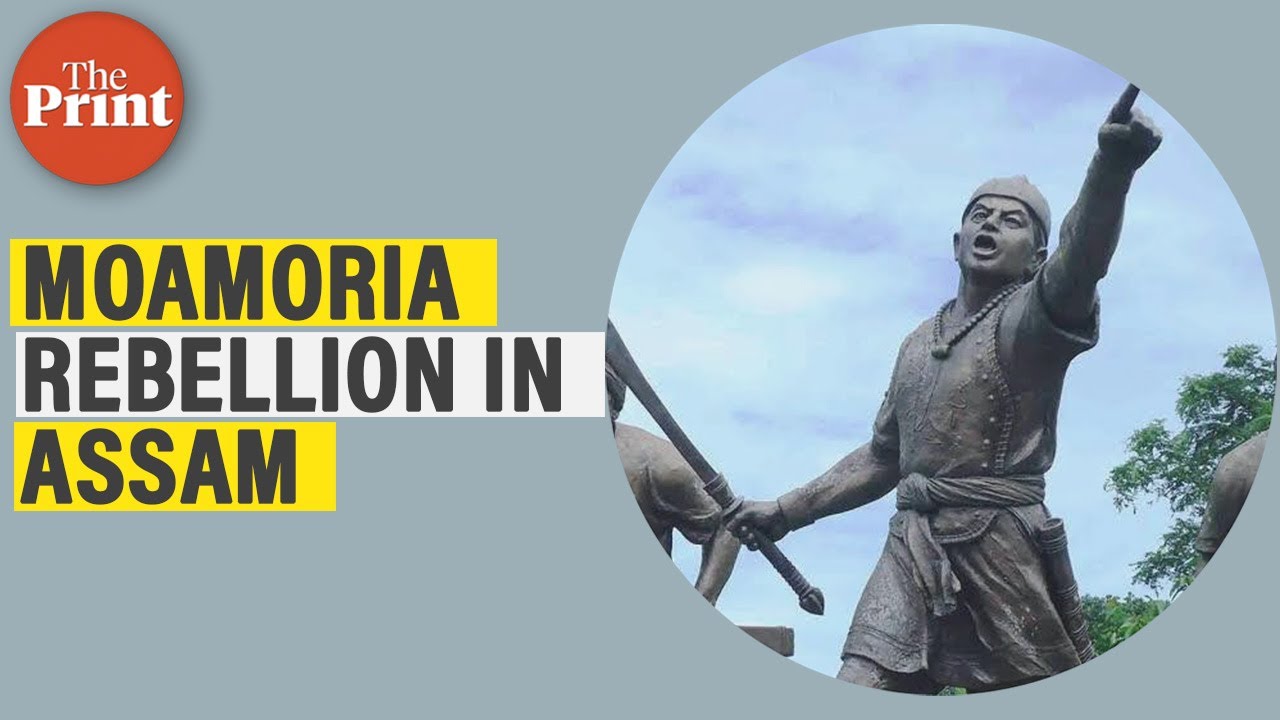
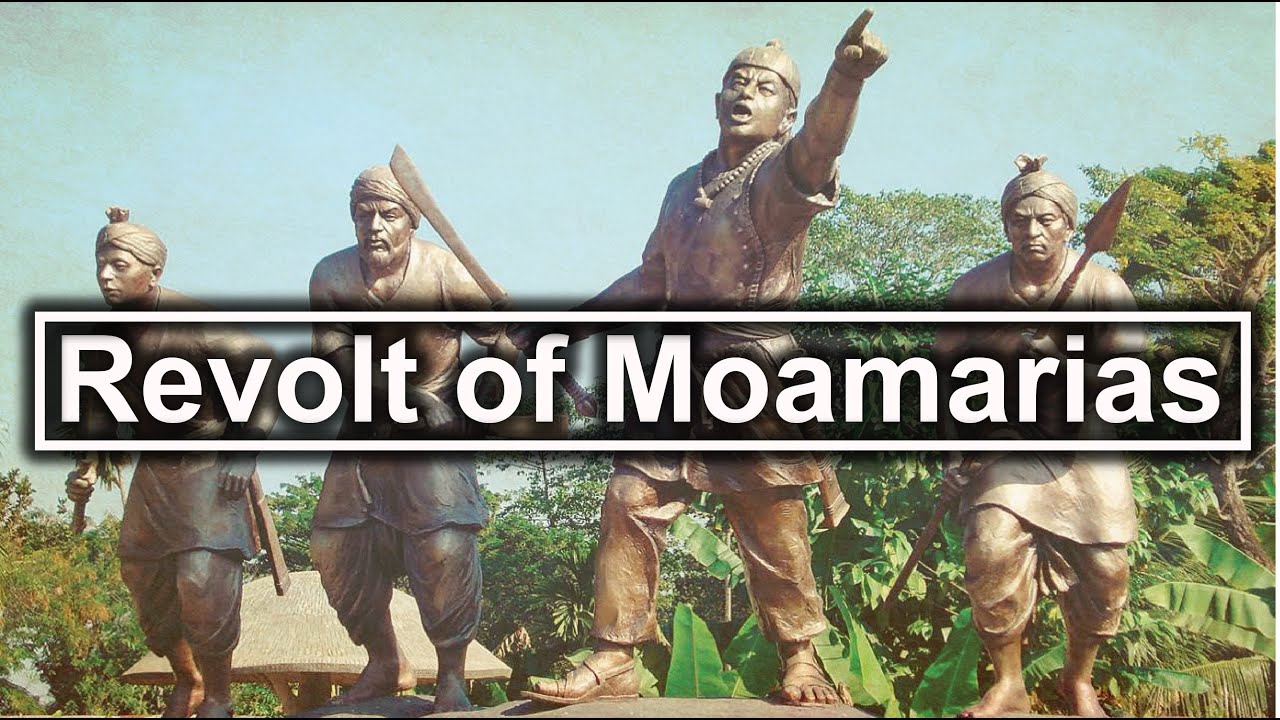
The Moamaria Rebellion (), a major socio-religious conflict in Assam, marks a turning point in the fall of the long-ruling Ahom kings. This long struggle was led by the Moamarias, who were mostly common farmers from lower castes and devoted followers of the saint Aniruddhadeva. This fight weakened the Ahom kingdom and left the region open to outside attacks, which eventually led to British rule.
🎯 In this chapter, you will understand:
- The social and religious roots of the Moamaria revolt against Ahom rule.
- How political instability and military breakdown weakened the central state.
- The main geographical bases of resistance, including Bhatiapar, Rangpur, and Jorhat.
- The long-term impact that led to Burmese attacks and British control over Assam.
💡 Why this topic matters: It reveals how social injustice and internal conflict can weaken a powerful kingdom and invite foreign control.
🧠 Core Idea: Common people fought for equality and religious freedom, causing a long conflict that broke the power of the Ahom ruling class.
The Protracted Moamaria Revolt (): Examining Causes, Nature, and Long-term Consequences
This uprising was more than a political fight; it was driven by the desire of marginalized communities for social and spiritual equality.
A Deep-Rooted Challenge to Ahom Authority: Driven by socio-religious goals, marginalized groups fought to improve their place in society.
- (i) The fighting started in , directly challenging the strict rule of the Ahom monarchy.
- (ii) Most Moamarias were low-caste farmers and tribal people who followed the teachings of Aniruddhadeva, which taught equality through devotion (Bhakti).
- (iii) This revolt was similar to other low-caste and peasant uprisings across North India during the same period.
Societal Tensions and Political Instability: The Anatomy of the Moamaria Uprisings
Years of continuous fighting drained the kingdom's resources, forcing the rulers into difficult choices.

- The constant wars broke the strength of the state and destroyed public order.
Political and Military Disruption: The Decline of the Ahom State
Repeated uprisings weakened the royal family and ruined their army's power to control the land.
- (i) The rebels repeatedly captured important areas, showing that the main government had lost control.
- (ii) Other local leaders took advantage of the mess; for example, in , King Krishnanarayan of Darrang rebelled using hired fighters (burkandazes) and local landlords (zamindars).
- (iii) Unable to stop the fighting on their own, the Ahom kings were forced to ask the British army for help.
Geographical Epicenter and Regional Impact: Key Headquarters of the Moamarias
The rebels built strong operational bases that became centers of resistance against royal troops.
- Main bases allowed the rebels to coordinate attacks and spread their power over large areas.
Key Centers of Rebellion: Bhatiapar, Rangpur, and Jorhat
Strategic locations helped the Moamarias organize their forces and maintain their influence.
Key operational bases of the Moamaria movement - Bhatiapar: Served as the main base and fortified military headquarters for the rebels.
- Rangpur: Located in modern-day Bangladesh, this area suffered heavy damage during the conflicts.
- Jorhat: Another major center that experienced severe instability throughout the rebellion.
Long-Term Legacy and Final Consequences of the Moamaria Revolt
Even though the royal family stayed on the throne for a short time after the revolt, the kingdom was permanently damaged.
The Collapse of Ahom Sovereignty and Subsequent Burmese Incursions
The destruction of royal authority left a power vacuum that outside enemies used to invade the country.
- (i) The royal family survived the main attacks, but their real authority was broken beyond repair.
- (ii) This internal weakness opened the door for devastating Burmese invasions in the early .
- (iii) The combination of internal revolt and foreign invasions eventually allowed the British to take full control of Assam.
Historical Significance of the Moamaria Rebellion for Students
The Moamaria Rebellion () is an important topic for students studying Assam's history before colonial rule. It shows how social inequality and peasant discontent, inspired by Vaishnavite teachings, destroyed an ancient kingdom and led to foreign control.
⚡ Quick Revision Capsule: Key Elements of the Moamaria Revolt
A quick comparison of the main factors surrounding the rebellion:
| Aspect | Details | Impact |
|---|---|---|
| Timeframe | Three decades of continuous internal conflict. | |
| Key Leaders & Faith | Inspired by Aniruddhadeva and Bhakti teachings. | Unified low-caste peasants and tribal groups. |
| Main Headquarters | Bhatiapar (with conflicts in Rangpur and Jorhat). | Central base for rebel planning and defense. |
| Other Rebellions | King Krishnanarayan of Darrang () using burkandazes. | Further weakened the central Ahom government. |
| Final Outcome | Burmese invasions followed by British annexation. | Ended native Ahom rule in Assam. |
📝 Summary
The Moamaria Rebellion () ended centuries of strong Ahom rule in Assam. What began as a social movement for equality turned into a long war that broke the kingdom's army and state system. The internal ruin caused by these wars left Assam helpless against Burmese invasions, which soon brought the region under the control of the British Empire.
🚀 Quick Revision Points
Essential facts to review before examinations:
- (i) Started in by low-caste farmers and tribal followers of Vaishnavite teachings.
- (ii) Challenged the strict social structure and power of the Ahom monarchs.
- (iii) Main operational center was set up at Bhatiapar.
- (iv) Led to internal instability that caused Burmese invasions and later British rule.
- 💡 Exam Tip: Remember that the revolt was caused by both religious equality movement (Bhakti) and social unrest among low-caste peasants, not just political disagreement.
❓ Frequently Asked Questions (FAQ)
Q1: When did the Moamaria Rebellion take place?
A1: The rebellion lasted from to in Assam.Q2: Who were the main participants in the uprising?
A2: The revolt was led by low-caste peasants and tribal groups following the Bhakti teachings of Aniruddhadeva.Q3: What was the main long-term result of the rebellion?
A3: It permanently weakened the Ahom state, leaving Assam open to Burmese invasions and eventual British rule.