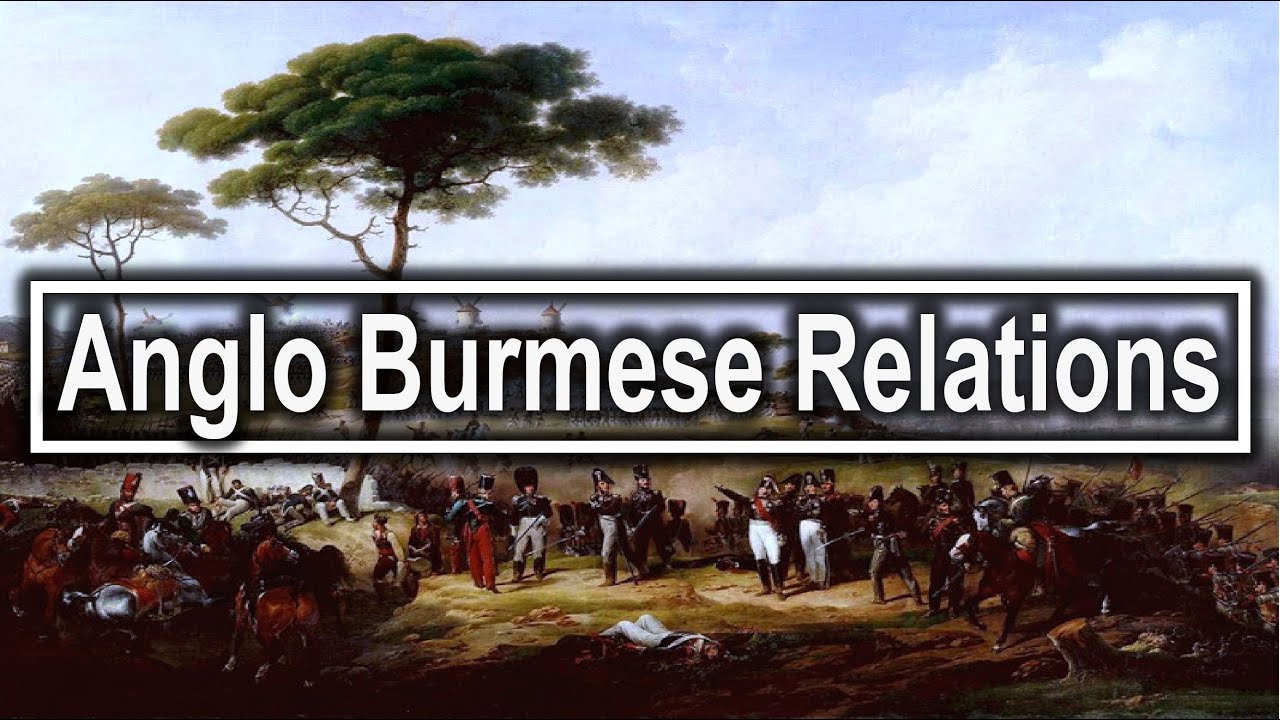
The Burma Wars (–) were key moments in British imperial history. Driven by land hunger, imperial strategy, and growing trade interests, Britain fought three separate wars against Burma. These conflicts changed Southeast Asia's political map, placed Burma under colonial rule, and reshaped India's northeastern border. Learning about these causes and outcomes gives great value to history students and those preparing for competitive exams.
🎯 In this chapter, you will understand:
- The step-by-step expansion of British power over the Burmese kingdom.
- The key causes and heavy terms of the Treaty of Yandabo ().
- How trade interests under Lord Dalhousie and Lord Dufferin led to full annexation.
- The growth of Burmese resistance and its long road to independence in .
💡 Why this topic matters: It highlights how British trade ambitions evolved from simple border security into total territorial conquest across South and Southeast Asia.
🧠 Core Idea: The British taken over Burma in three stages over 60 years, driven by a mix of border defense, natural resource gathering, and fear of rival European powers.
Burma Wars (–): British Expansion, Annexation, and Shifting Colonial Strategies in Southeast Asia
Three main wars marked the gradual defeat of the Burmese kingdom by the East India Company and later the British Crown.
The course of these wars shows a clear shift from small border disputes to full conquest aimed at economic control along the trade routes of the Bay of Bengal.
- (i) The first war started mainly because of Burmese expansion westward, which touched British territories and protected states.
- (ii) The next wars were driven by British business goals, aiming to grab valuable raw materials and sell British products in new markets.
- (iii) The final war ended with the full annexation of Upper Burma, adding the whole country into British India.
First Burma War (–): Escalation of Conflict and the Treaty of Yandabo
This first major war broke out over border disagreements. The aggressive actions of the Konbaung dynasty near British-controlled areas led to a costly but firm British victory.

Origins and Causes of the War: Burmese Imperial Ambition
The war began because the Burmese monarchy wanted to expand its borders. When Burmese forces occupied Arakan and Manipur, their presence near Assam and the rich Brahmaputra Valley directly threatened British security.
- (i) Border clashes and threats to Assam's independence alarmed the British, who wanted to safeguard their tea and trade options in the region.
- (ii) British troops launched an attack and captured the port of Rangoon in to strike deep into Burma.
- (iii) British armies advanced within 72 km of the Burmese capital at Ava, forcing the Burmese court to ask for peace terms.
Treaty of Yandabo (): Key Territorial and Financial Provisions
Signed on , the Treaty of Yandabo was a severe defeat for Burma, marking the start of British rule over Burmese lands.
- (a) War Fine:Burma was forced to pay a huge sum of one crore rupees to Britain, causing heavy damage to Burma's treasury.
- (b) Giving Up Coastal Lands: Burma handed over valuable coastal areas, including Arakan and Tenasserim, giving Britain direct sea ports.
- (c) Giving Up Neighboring Claims: The Burmese king gave up all old claims over Assam, Cachar, and Jaintia, securing India's northeast border.
- (d) Freedom for Manipur: The state of Manipur was recognized as an independent state, acting as a buffer zone.
- (e) Trade and Diplomatic Agreements: Burma agreed to sign a trade deal, allow a British resident at Ava, and send a Burmese envoy to Calcutta.
Second Burma War (): Commercial Interests and the Annexation of Lower Burma
Unlike the first war, the conflict in was driven purely by British commercial goals rather than border defense.
Imperial Motivations: Lord Dalhousie and the Drive for Commercial Dominance
This war was intentionally triggered by aggressive British traders and the forward expansion policy of Governor-General Lord Dalhousie.
- (i) Resource Access: British traders wanted total access to Upper Burma's natural resources, especially its vast teak timber forests.
- (ii) New Markets: Britain wanted to control Lower Burma to move goods smoothly into interior markets without paying Burmese taxes.
- (iii) Taking Pegu: Despite local guerrilla resistance, British forces quickly took over Pegu, annexing all of Lower Burma into British Burma.
Third Burma War (): Final Annexation and the Foundation of Nationalist Uprisings
The final war was a swift campaign to remove the Burmese monarchy completely, secure remaining resources, and block other European nations from gaining influence.
Causes and Annexation: Lord Dufferin and Royal Confrontation
The final step toward total annexation happened due to political changes in the Burmese royal court and quick action by Viceroy Lord Dufferin.
- (i) After King Mindon passed away, his son King Thibaw took the throne and took a firm stance against British demands.
- (ii) Rising Tensions:King Thibaw held talks with France and placed heavy fines on a British timber company operating in his kingdom.
- (iii) Invasion Order: Seeing this as a threat to British power, Lord Dufferin ordered an invasion in , annexing Upper Burma into British India.
Burmese Resistance, Separation, and the Path to Independence
While the initial military victory was quick, it triggered years of fighting that later turned into an organized struggle for independence.
Burmese fighters opposing British colonial forces after annexation. - (a) Guerrilla Warfare: After annexation, local fighters launched ongoing guerrilla attacks that took British troops years to put down.
- (b) Rise of Nationalism: Early resistance grew into a strong nationalist movement, gaining strength after .
- (c) Splitting from India: Political demands led to Burma being separated from British India in under the Government of India Act 1935.
- (d) Gaining Independence: Led by national leader U Aung San, Burma achieved complete independence on .
⚡ Quick Revision Capsule: Burma Wars (–)
This reference table summarizes the key details, dates, leaders, and outcomes of all three Burma Wars:
| Conflict & Timeline | Key British & Burmese Leaders | Primary Causes & Territorial Results |
|---|---|---|
| First Burma War (–) | Lord Amherst / Konbaung Dynasty | Burmese moves into Assam and Manipur. Ended with the Treaty of Yandabo; ceded Arakan and Tenasserim. |
| Second Burma War () | Lord Dalhousie / King Pagan Min | British traders seeking teak wood and trade routes. Ended with the annexation of Pegu (Lower Burma). |
| Third Burma War () | Lord Dufferin / King Thibaw | Fines on British timber firm and French influence. Led to full annexation of Upper Burma into British India. |
| Separation from India () | British Imperial Government | Separated Burma administratively from British India under the Government of India Act 1935. |
| Burmese Independence () | U Aung San / Anti-Fascist People's Freedom League | Sustained nationalist movement led to complete national sovereignty and end of British rule. |
📝 Summary
The Burma Wars (–) offer a clear example of British imperialism. What began as a move to secure borders soon turned into open commercial expansion and total political control. Through treaties like the Treaty of Yandabo () and annexations under Lord Dalhousie and Lord Dufferin, Britain secured India's eastern frontier and created a valuable colony. For students, understanding these events helps explain how colonial powers expanded and how local resistance turned into modern freedom movements.
🚀 Quick Revision Points
Essential facts to review before examinations:
- (i) The Treaty of Yandabo () forced Burma to pay a fine of 1 crore rupees and cede Arakan and Tenasserim.
- (ii) The Second Burma War () was fought for timber resources and resulted in taking Lower Burma (Pegu).
- (iii) Lord Dufferin completed the annexation of Upper Burma in during the Third Burma War.
- (iv) Burma was separated from India in via the Government of India Act 1935 and became free on .
- 💡 Exam Tip: Pay special attention to the provisions of the Treaty of Yandabo () and the role of Governor-Generals (Amherst, Dalhousie, Dufferin)—these are frequently tested in history exams!
❓ Frequently Asked Questions (FAQ)
Q1: What caused the First Burma War?
A1: It was triggered by Burmese expansion into Arakan, Manipur, and Assam, which threatened Britain's northeastern border in India.Q2: What were the major terms of the Treaty of Yandabo?
A2: Burma paid a fine of 1 crore rupees, gave up Arakan and Tenasserim, withdrew claims over Assam and Manipur, and allowed a British resident at Ava.Q3: When did Burma gain complete independence from British rule?
A3: Burma gained its independence on , following a long nationalist struggle led by U Aung San.