The First Anglo-Mysore War () marked an important phase in Southern India's political struggle. It showed the smart diplomacy of Haidar Ali, rapid changes in military alliances, and ended with the Treaty of Madras. Understanding this key war helps history students and UPSC aspirants see how the British started expanding their control while local rulers fought back strongly in the Deccan region.
🎯 In this chapter, you will understand:
- The main reasons behind the war between Mysore and the English East India Company.
- How Haidar Ali broke the alliance formed against him using clever diplomacy.
- The military steps that led directly to Haidar Ali's march on Madras.
- The main terms and impact of the Treaty of Madras in 1769.
💡 Why this topic matters: This war was one of the few early conflicts where an Indian ruler defeated the British East India Company and dictated terms of peace.
🧠 Core Idea: Strategic diplomacy and fast army movements allowed Haidar Ali to defeat a strong enemy coalition.
First Anglo-Mysore War: Background, Changing Alliances, Course of Conflict, and the Concluding Treaty of Madras ()
The main fight started because the English East India Company wanted more land after gaining control in Bengal, which directly threatened Haidar Ali and his growing strength in Mysore. This clash between British ambitions and local Indian rulers made Southern India a center for heavy political fighting and military actions.
- (i) The English East India Company, feeling confident after winning power in Bengal, believed its army could easily control other parts of India.
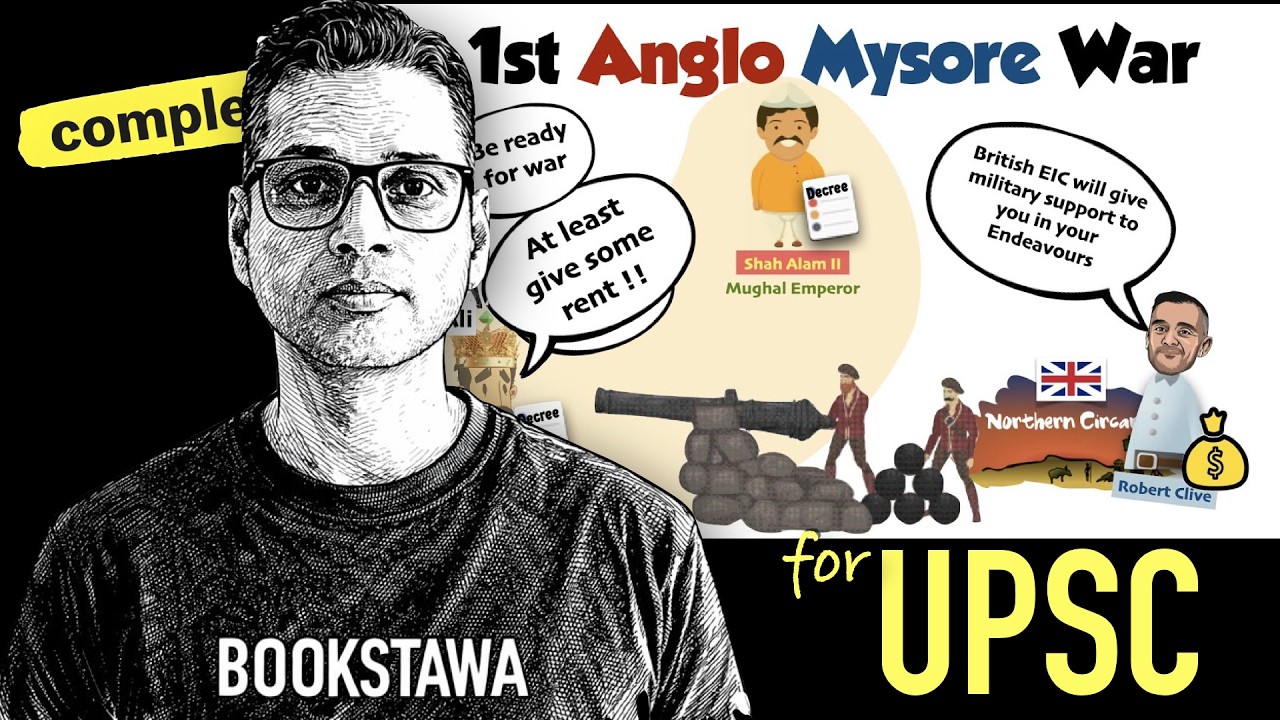
- (ii) A major cause of the war was the agreement made in with the Nizam of Hyderabad. The Nizam gave the Northern Circars region to the English if they helped him fight Haidar Ali.
- (iii) Haidar Ali was already dealing with other big political problems, including older fights with the nearby Nawab of Arcot and ongoing land disagreements with the powerful Marathas.
Changing Alliances in the First Anglo-Mysore War: Haidar Ali’s Strategic Diplomacy
The politics during this war changed quickly because of shifting allies. This proved how skilled Haidar Ali was at talking with rivals and breaking apart the big group of enemies standing against him.

Initial Triple Alliance Against Mysore
At the start, three strong forces joined together to stop Haidar Ali from expanding his land in Southern India.
- (i) The Nizam of Hyderabad, the Marathas, and the English East India Company built a single group to fight and defeat Haidar Ali in Mysore.
Haidar Ali’s Diplomatic Masterstroke and Alliance Formation
Seeing the big danger, Haidar Ali acted fast. He used careful talks and smart offers to turn his enemies against each other.
- (a) He gave money and land deals to the Marathas, persuading them to leave the fight and stay completely neutral.
- (b) He then won over the Nizam by offering to split any land they captured from the English and their allies.
- (c) Thanks to this diplomatic move, Haidar Ali and the Nizam joined forces and attacked the territory of the Nawab of Arcot, who was a close friend of the English.
Course of the Conflict and the Concluding Treaty of Madras ()
Even though the war went on for a long time without a clear winner, Haidar Ali made a fast, surprising move toward the main English city. This forced the British to sit down and agree to peace through the Treaty of Madras.
Prolonged Military Stalemate and War of Attrition
In the first part of the war, both sides kept fighting across Southern India without anyone winning a clear victory.
- (i) Fights continued for almost a year and a half, spending money and supplies from both Mysore and the English without a final result.
Haidar Ali’s Bold March to Madras: The Decisive Pressure Tactic
Haidar Ali stopped slow attacks on forts and chose a very fast march meant to surprise the English leaders.
Haidar Ali's quick cavalry movements surprised the English forces at Madras. - (i) Changing his military strategy, Haidar Ali moved around enemy forts and suddenly arrived with his army right outside Madras, the center of English rule in the area.
- (ii) His sudden arrival created fear among British officials, giving them no choice but to start peace talks immediately.
Terms of the Treaty of Madras ()
This peace agreement ended the war and secured good conditions for the leader of Mysore.
- (a) Both sides agreed to give back all captured lands, forts, and prisoners taken during the war.
- (b) Most importantly, the English promised to send military help to Haidar Ali if another power, especially the Marathas, attacked him in the future.
- (c) This result was a big political victory for Haidar Ali and a major early defeat for the ambitions of the English East India Company.
Summary of the First Anglo-Mysore War and its Historical Importance
The First Anglo-Mysore War () was a major event that showed how strong Haidar Ali was as a military leader and diplomat in Southern India. By showing that the English East India Company could be beaten and forcing them into a defense pact under the Treaty of Madras, this war stood out as a clear example of local Indian resistance against colonial rule.
⚡ Quick Revision Capsule: First Anglo-Mysore War ()
A quick summary table showing key details of the war for easy study:
| Aspect | Details | Key Impact |
|---|---|---|
| Time Period | Nearly 2 years of continuous conflict in Southern India. | |
| Main Rulers | Haidar Ali (Mysore) vs. English East India Company | Direct clash between regional growth and colonial plans. |
| Initial Coalition | English, Nizam of Hyderabad, and Marathas | Broken up by Haidar Ali through clever diplomacy. |
| Turning Point | Fast army movement right outside Madras | Caused panic among British leaders and forced peace talks. |
| Final Treaty | Treaty of Madras () | Mutual return of lands and an agreement for defensive help. |
📝 Summary
Between and , the First Anglo-Mysore War proved that smart diplomacy and quick tactical movement could stop early British expansion in India. Haidar Ali successfully split a three-part enemy alliance and marched directly to Madras, compelling the English East India Company to sign the Treaty of Madras.
🚀 Quick Revision Points
Essential facts to review before examinations:
- (i) The war began due to British expansion and their treaty with the Nizam of Hyderabad.
- (ii) Haidar Ali neutralised the Marathas with payments and made peace with the Nizam.
- (iii) The march on Madras bypassed heavy fortifications and caught the British unprepared.
- (iv) The Treaty of Madras () included a clause where the British promised to help Mysore if attacked by others.
- 💡 Exam Tip: Pay special attention to the defensive clause in the Treaty of Madras. The failure of the British to honor this clause when the Marathas attacked Mysore later became a major reason for the Second Anglo-Mysore War.
❓ Frequently Asked Questions (FAQ)
Q1: What caused the First Anglo-Mysore War?
A1: British ambitions to expand land after Bengal and their agreement with the Nizam of Hyderabad created direct conflict with Haidar Ali.Q2: How did Haidar Ali break the alliance against him?
A2: He paid money and gave land deals to the Marathas to stay neutral, then offered shared conquered territories to bring the Nizam onto his side.Q3: What was the main outcome of the Treaty of Madras?
A3: Signed on , it returned all captured lands and promised British military help to Haidar Ali if he was attacked by another power.