The First Anglo-Sikh War () was a major turning point that changed the history of North India. The conflict started when the Sikh army crossed the Sutlej River without permission. This action led to fierce battles and ended with two harsh agreements: the Treaty of Lahore and the Treaty of Bhairowal. For history students, this period explains how internal political troubles broke down the powerful Sikh Empire and allowed the growth of British control across India.
🎯 In this chapter, you will understand:
- The main causes that led to the clash between the Sikh Empire and the British East India Company.
- The major military engagements, including Mudki, Ferozeshah, Aliwal, and Sobraon.
- The economic and territorial terms of the Treaty of Lahore, including the sale of Kashmir.
- The administrative changes brought by the Treaty of Bhairowal and its long-term impact on Punjab.
💡 Why this topic matters: It highlights how leadership failure and internal division can lead to the fall of a powerful independent state.
🧠 Core Idea: Weak political leadership and internal treachery turned military strength into a defeat that secured British dominance in North India.
Major Causes, Course of Battles, and Far-Reaching Consequences of the First Anglo-Sikh War (1845–1846)
The conflict arose from instability inside the Lahore court, mutual distrust, and the forward military stance of the British East India Company along the border.
The immediate spark occurred on , when the Sikh army moved across the Sutlej River. The British treated this action as an open threat and a declaration of war.
- (i) The main cause was the severe political confusion in the Sikh kingdom after the death of its founder, Maharaja Ranjit Singh. The court at Lahore fell into internal fighting between nobles and the powerful Khalsa army.
- (ii) Suspicions grew as the British expanded their power nearby, including their actions in Gwalior (), the takeover of Sindh (), and their retreat during the Afghanistan campaign ().
- (iii) The British also built up their troop numbers along the Lahore border, which the Sikhs viewed as preparation for an invasion.
Key Battles and the Decisive Course of the First Anglo-Sikh War (1845–1846)
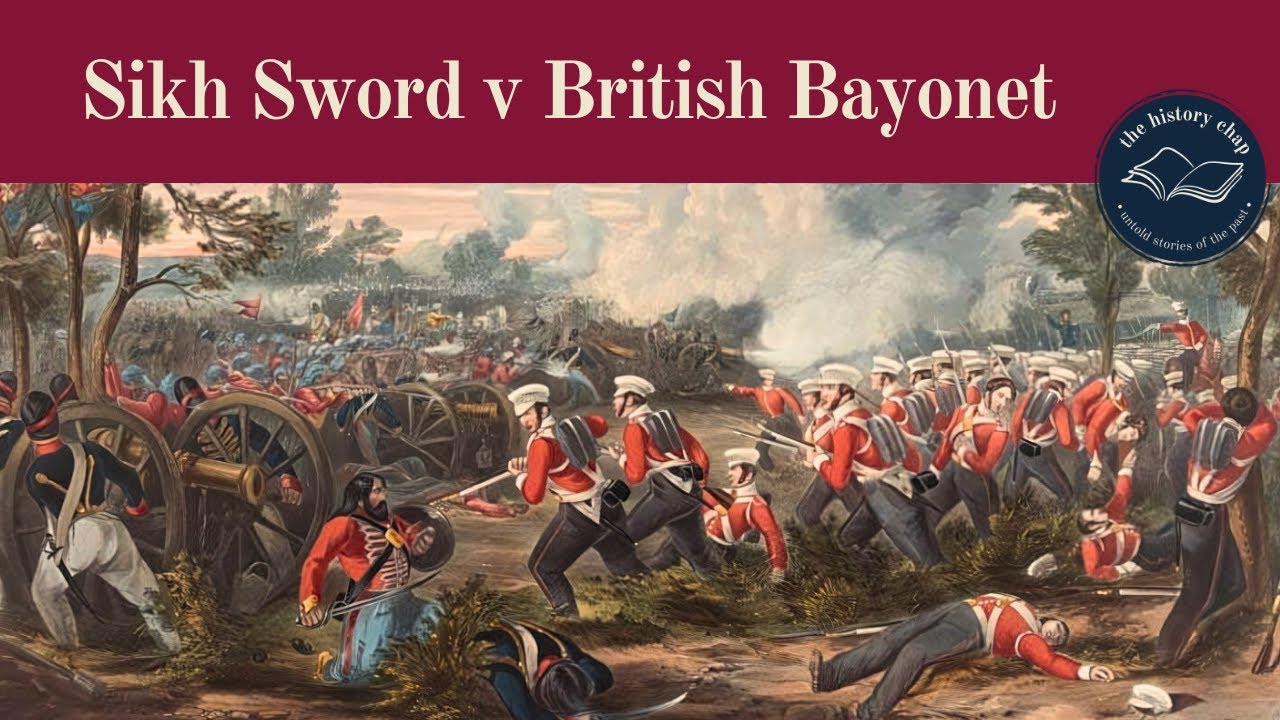
The war matched a large Sikh army of nearly 50,000 soldiers against a British force of 20,000 to 30,000 troops. Although the Sikh soldiers were brave and well-trained, bad decisions and betrayal by leaders like Lal Singh and Teja Singh caused their defeat.

Major Military Engagements Leading to the Sikh Defeat
A quick series of intense battles took place over a few months, showing both the bravery of the troops and the failure of their top military leaders.
- (i) Battle of Mudki (): The opening battle where British forces gained an early advantage.
- (ii) Battle of Ferozeshah (): A tough two-day fight that ended in a British victory despite heavy losses on both sides.
- (iii) Battle of Buddelwal (): A small engagement where Sikh forces briefly gained success.
- (iv) Battle of Aliwal (): A clear British victory that opened the path across the Sutlej River.
- (v) Battle of Sobraon (): The final and decisive battle. Sikh soldiers were defeated after commanders withdrew supplies and support, ending organized military resistance.
Uncontested Fall and Occupation of the Capital, Lahore
After the defeat at Sobraon, resistance ended and British troops took control of the capital without further fighting.
- (i) On , British forces entered Lahore peacefully, marking the end of the war and the loss of Sikh independence.
The Punitive Treaty of Lahore (March 8, 1846)
The Treaty of Lahore was a harsh agreement that set the terms of surrender and placed the Sikh state under heavy British influence.
Stringent Conditions and Territorial Losses Imposed by the Treaty of Lahore
The conditions focused on weakening the Sikh kingdom financially and militarily to remove any future threat to British power.
- (i) The court had to pay a heavy war fine of over 1 crore rupees, which drained the state treasury.
- (ii) The land of Jalandhar Doab, located between the Beas and Sutlej rivers, was taken over by the British.
- (iii) A British representative, Sir Henry Lawrence, was stationed at Lahore to oversee state affairs.
- (iv) The size of the Sikh army was heavily reduced.
- (v) Young Maharaja Daleep Singh was recognized as the ruler, with Rani Jindan as Regent and Lal Singh as Wazir.
- (vi) Kashmir Clause: Because the court could not pay the full fine, Kashmir and Jammu were separated from the kingdom and sold to Raja Gulab Singh for ₹75 lakh under an agreement signed on .
The Restrictive Treaty of Bhairowal (December 1846)
Unrest continued due to dissatisfaction with British presence and the sale of Kashmir. This led to a second agreement in called the Treaty of Bhairowal.
Provisions for Near-Complete British Control over the Punjab Administration
This agreement removed remaining local authority and handed real administrative control to the British.
- (i) Rani Jindan was removed from her position as Regent to prevent her from organizing resistance.
- (ii) A Council of Regency made up of eight Sikh leaders was created to rule during the Maharaja's youth, but it was led and controlled directly by British Resident Henry Lawrence.
⚡ Quick Revision Capsule: First Anglo-Sikh War Key Details
A simple overview of the important dates, events, and treaty terms for quick study.
| Event / Phase | Key Details & Dates | Outcome / Significance |
|---|---|---|
| War Trigger | Crossing of Sutlej River on | British declared war on the Sikh Empire. |
| Early Battles | Mudki () & Ferozeshah () | Initial victories for British forces despite heavy casualties. |
| Final Battle | Battle of Sobraon on | Decisive Sikh defeat caused by leadership failure and betrayal. |
| Treaty of Lahore | Signed on | Loss of Jalandhar Doab, payment of fine, reduction of army. |
| Sale of Kashmir | Signed on | Kashmir sold to Raja Gulab Singh for ₹75 lakh. |
| Treaty of Bhairowal | Signed in | Rani Jindan removed; British Resident given full control. |
📝 Summary
The First Anglo-Sikh War () exposed the internal problems of the Sikh state following the reign of Maharaja Ranjit Singh. Treachery from key leaders undermined the brave fight of the army. Through the treaties of Lahore and Bhairowal, Punjab lost key territories and its independence, turning into a British-controlled state. This set the stage for total British annexation during the Second Anglo-Sikh War.
🚀 Quick Revision Points
Essential facts to review before examinations:
- (i) The war began after troops crossed the Sutlej River in .
- (ii) Five battles were fought: Mudki, Ferozeshah, Buddelwal, Aliwal, and Sobraon.
- (iii) The defeat at Sobraon led to the peaceful occupation of Lahore in .
- (iv) The Treaty of Lahore reduced the army and transferred Kashmir to Raja Gulab Singh.
- (v) The Treaty of Bhairowal gave direct control of the government to British Resident Henry Lawrence.
- 💡 Exam Tip: Focus on the differences between the Treaty of Lahore (territorial losses and war fine) and the Treaty of Bhairowal (complete administrative control under the British Resident).
❓ Frequently Asked Questions (FAQ)
Q1: What immediately caused the First Anglo-Sikh War?
A1: The immediate cause was the crossing of the Sutlej River by Sikh forces on , which the British viewed as an act of war.Q2: Why did the Sikh forces lose despite their bravery?
A2: Strategic failures and deliberate betrayal by top commanders like Lal Singh and Teja Singh severely weakened the army's performance.Q3: How was Kashmir affected by the Treaty of Lahore?
A3: Because the Lahore court could not pay the full war fine, Kashmir was separated from the empire and sold to Raja Gulab Singh for ₹75 lakh.