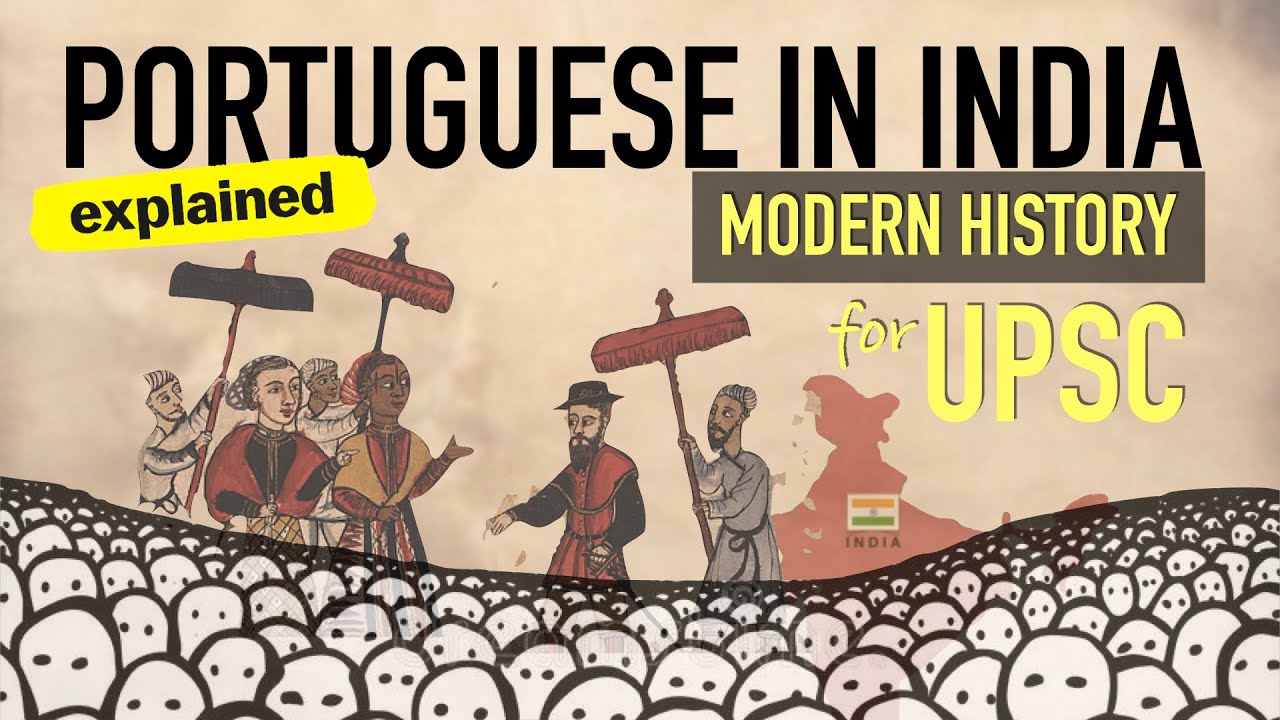
The European trading companies in India were key actors in shaping modern Indian history, starting with the arrival of the Portuguese in . Major European powers—including the Dutch, English, Danes, and French—competed through trade, diplomacy, and war. This lesson explores the origins, growth, and decline of these foreign trading entities.
🎯 In this chapter, you will understand:
- Why European nations searched for direct sea routes to India in the .
- How the Portuguese established early trading centers and maritime control.
- The rise and eventual exit of the Dutch and French East India companies.
- How the English East India Company secured commercial and political dominance.
💡 Why this topic matters: European trade rivalry laid the structural groundwork for British colonial rule in India.
🧠 Core Idea: High demand for spices and blocked land trade routes pushed European nations to build sea-based trade empires in Asia.
1. Maritime Expansion and the Search for Ocean Routes
European sea exploration was driven by high demand for oriental trade items and the closure of traditional overland routes under Ottoman rule.
Factors Driving Exploration
The movement to find a direct sea route to Asia combined economic needs with rapid progress in European navigation and shipbuilding.
- (i) The Renaissance in Europe encouraged curiosity, navigation, and ocean mapping.
- (ii) The European economy required luxury items, especially spices to flavor and preserve meat through winter.
- (iii) The fall of Constantinople in to the Ottoman Turks blocked traditional land routes to Asia.
- (iv) Mediterranean cities like Venice and Genoa could no longer control Asian trade against Ottoman power.
- (v) Spain and Portugal led ocean voyages with support from northern European finances and Genoese sailors.
- (vi) The Portuguese proved a direct sea route was possible, followed by the Dutch, English, Danes, and French.
2. Portuguese Dominance in India
The Portuguese were the first European power to establish direct sea links and fortified trading bases in India.

Vasco da Gama's Voyage
Vasco da Gama reached Calicut in , opening direct trade between Europe and India.
Early Trading Forts
On his second visit in , Vasco da Gama helped build early trade centers at Calicut, Cochin, and Cannanore.
Alfonso de Albuquerque
Alfonso de Albuquerque consolidated Portuguese trade into a organized territorial structure.
- (i) He is recognized as the key founder of Portuguese power in the Indian subcontinent.
- (ii) He captured Goa in , turning it into the central administrative seat for Portuguese trade.
Decline of Portuguese Power
Portuguese dominance weakened over time due to local resistance, administrative issues, and rival European powers.
- (i) Local Indian rulers resisted Portuguese efforts to control coastal trade by force.
- (ii) Conflicts within their administration and reduced support from Lisbon limited their expansion.
- (iii) Well-funded English and Dutch enterprises eventually displaced Portuguese trade control.
3. The Dutch East India Company (VOC)
The Dutch entered Asia with corporate capital and state-level authority, challenging Portuguese monopolies.
Formation of the VOC
The United East India Company (VOC) was established in by the Dutch parliament.
- (i) The Dutch government gave the VOC sovereign powers to build forts, sign treaties, and maintain armed forces.
- (ii) The company focused heavily on spice trade in Indonesia while maintaining key posts in India.
Anglo-Dutch Rivalry
Continuous clashes with English forces reduced Dutch commercial involvement on the Indian mainland.
The Battle of Bidara ()
In , English forces defeated the Dutch at the Battle of Bidara (Chinsura), ending Dutch political influence in India.
4. The English East India Company
From a small merchant body, the English company grew into a major military and administrative power in India.
Foundation and Charters
The company was formed in under a charter from Queen Elizabeth I, gradually expanding trade outposts in India.
Farrukhsiyar's Farmans ()
Mughal Emperor Farrukhsiyar issued royal decrees in granting duty-free trade rights to the English in Bengal, often called their Magna Carta.
The Union of Rival Companies ()
In , rival English trading groups merged into the United Company of Merchants of England Trading to the East Indies.
5. The French East India Company and the Carnatic Wars
The French were the last major European power to arrive, leading to open conflict with the English for control of southern India.
Foundation under Colbert ()
The French East India Company was set up in by finance minister Colbert under King Louis XIV as a state-funded enterprise.
Pondicherry Headquarters
Pondicherry was developed as the main seat of French authority and commerce in India.
The Carnatic Wars
European conflicts between England and France extended to India, resulting in three Carnatic Wars for coastal supremacy.
Reasons for French Failure
The French effort failed due to key structural differences with their English competitor:
- (i) Inadequate naval and military reinforcements from France during European wars.
- (ii) Diversion of resources to continental European wars instead of overseas trade bases.
- (iii) Heavy reliance on state funds without private merchant backing, leading to financial difficulties.
⚡ Quick Revision Capsule: European Powers in India
This table compares the major European trading companies established in the Indian subcontinent:
| European Power | Arrival / Formation | Primary Headquarters | Key Event / Outcome |
|---|---|---|---|
| Portuguese | Goa (from ) | Pioneered sea routes; captured Goa; lost influence to Dutch and English. | |
| Dutch (VOC) | Pulicat / Nagapattinam | Defeated at Battle of Bidara (); shifted focus to Indonesia. | |
| English (EIC) | Calcutta / Madras / Bombay | Obtained Farmans; defeated French in Carnatic Wars; established colonial control. | |
| French | Pondicherry | Fought three Carnatic Wars; restricted to small enclaves after defeats. |
📝 Summary
The arrival of European trading companies from to the transformed trade networks in India into colonial rule. Starting with the Portuguese, European nations set up fortified factories along Indian coasts. Through events like the Battle of Bidara in and the Carnatic Wars, the English East India Company eliminated rival European powers and became the primary political authority in India.
🚀 Quick Revision Points
Essential facts to review before examinations:
- (i) Vasco da Gama landed at Calicut in with the support of local rulers.
- (ii) Alfonso de Albuquerque established Portuguese trade supremacy by seizing Goa in .
- (iii) The Dutch VOC () held state powers to declare war and sign treaties.
- (iv) Farrukhsiyar's Farmans provided crucial trade tax exemptions to the English.
- 💡 Exam Tip: Focus on the chronological sequence of European arrivals: Portuguese (), Dutch (), English ( formed, landed ), Danes (), and French ().
❓ Frequently Asked Questions (FAQ)
Q1: Why did European powers seek direct sea routes to India in the 15th century?
A1: The Ottoman capture of Constantinople in blocked land routes, prompting European traders to find direct sea routes to access Asian spices.Q2: What was the significance of the Battle of Bidara in 1759?
A2: The English defeated the Dutch at Bidara in , effectively ending Dutch military and political activities in India.Q3: Why did the French East India Company lose to the English?
A3: The French company relied heavily on government funding, faced financial instability, and was frequently distracted by wars in Europe.