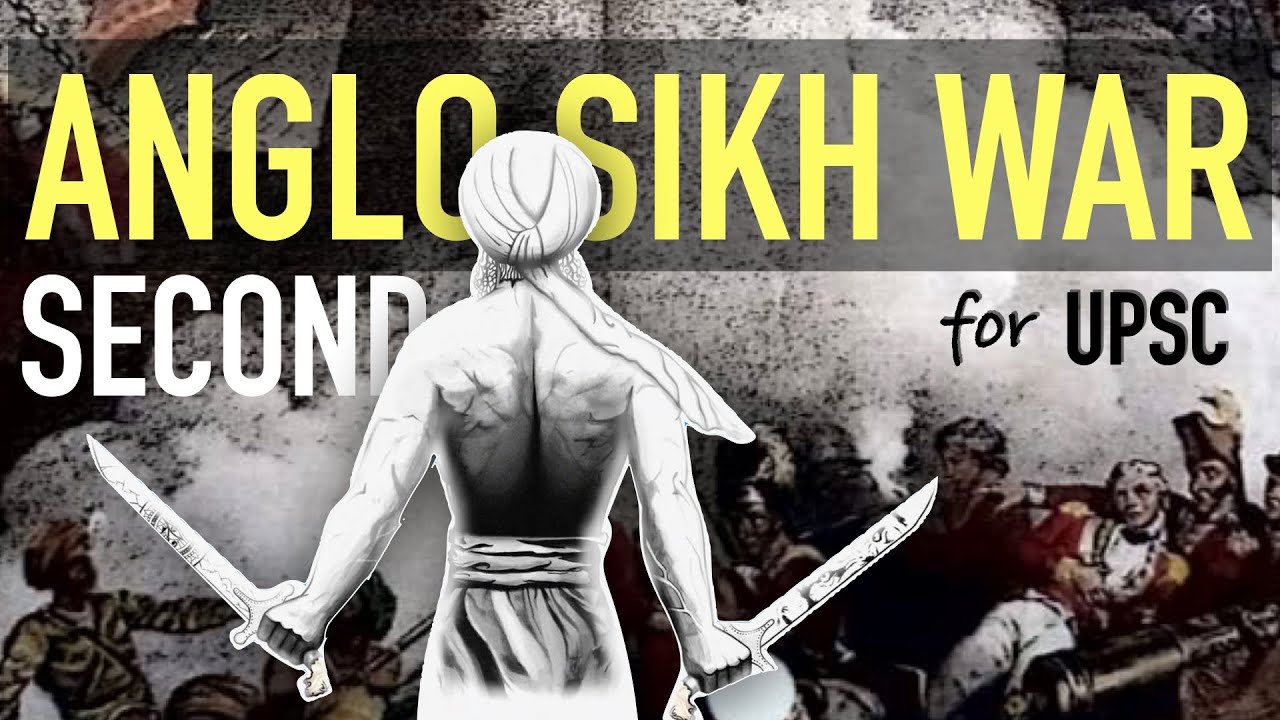
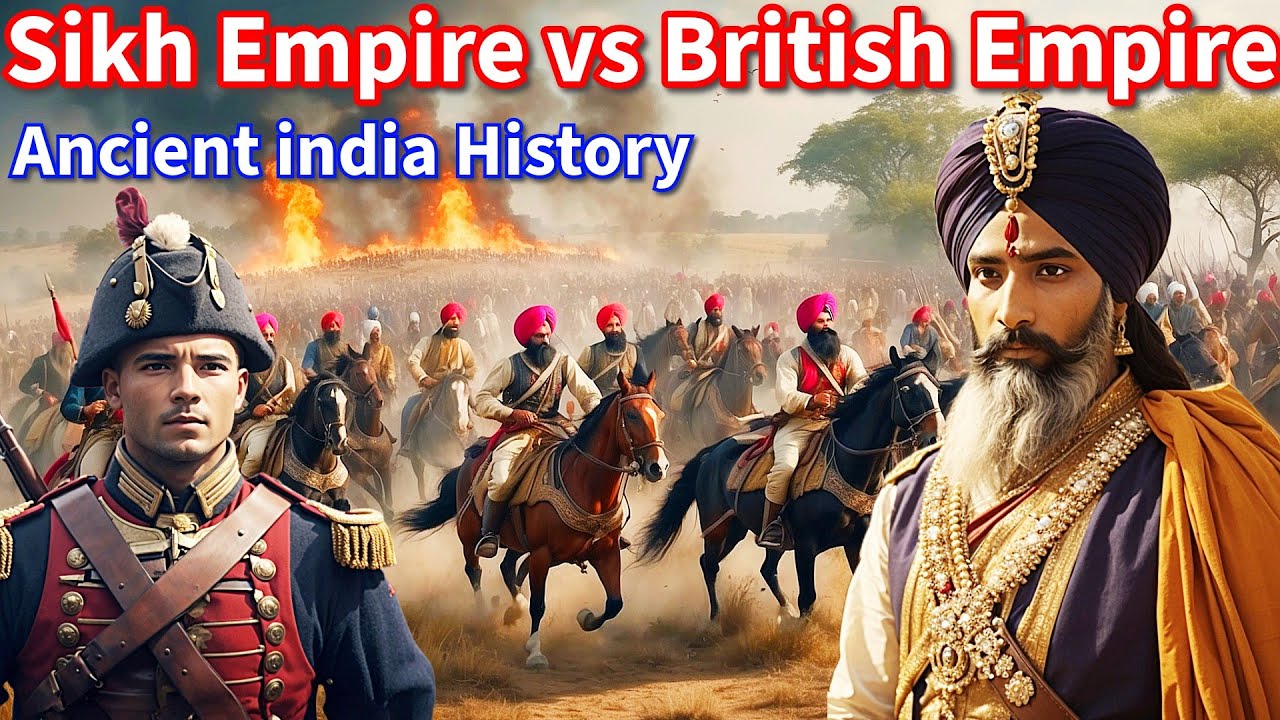
The Second Anglo-Sikh War, spanning from to , brought an end to Sikh rule in Northern India. This decisive conflict saw the British East India Company, led by Governor-General Lord Dalhousie, take full control of the kingdom of Punjab. Unrest had grown after the restrictive Treaty of Lahore, and a local revolt in Multan quickly turned into a region-wide conflict that reshaped British expansion in India.
🎯 In this chapter, you will understand:
- The main causes that triggered the war, including the Multan Revolt.
- The major military clashes at Ramnagar, Chillianwala, and Gujarat.
- How Punjab was annexed and governed under British administration.
- The long-term impact on British-Sikh relations leading up to 1947.
💡 Why this topic matters: It marks the fall of the last major independent power in 19th-century India and the complete takeover of Punjab by the British East India Company.
🧠 Core Idea: Rising anger over unfair treaties combined with local revolts to create a full-scale war, allowing Lord Dalhousie to fulfill his plan of annexing Punjab.
The Second Anglo-Sikh War (): Exploring the Causes, Major Battles, and Impact of Punjab Annexation
The outbreak of open conflict was rooted in anger over British control and was sparked by a major revolt in Multan led by its governor, Mulraj.
Causes and Triggers of the War
Harsh peace terms after the First Anglo-Sikh War created deep anger, which turned into a full uprising when British officials were killed in Multan.
- (i) Defeat in the first war resulted in the Treaty of Lahore and the Treaty of Bhairowal, which severely reduced Sikh authority.
- (ii) The exile of Rani Jindan to Benares (now Varanasi) angered the local population and fueled anti-British feelings.
- (iii) The governor of Multan, Mulraj, rebelled after being replaced and killed two British officers, sparking the war.
- (iv) Commander Sher Singh was sent to stop Mulraj, but he switched sides and joined the rebellion instead.
- (v) Governor-General Lord Dalhousie used this widespread unrest as a reason to launch a full military campaign to take control of Punjab.
Major Military Engagements: Key Battles of the Second Anglo-Sikh War ()
The course of the war was decided by three main battles fought across Punjab.

Battle of Ramnagar (): The Opening Clash
This was the first major battle between the British army, led by Sir Hugh Gough, and the Sikh forces along the Chenab River.
- (i) British forces under Sir Hugh Gough clashed with Sikh troops near the banks of the River Chenab.
- (ii) The battle ended without a clear winner, showing that the Sikh army remained strong and ready to fight.
Battle of Chillianwala (): A Display of Sikh Resistance
Fought in heavy rain and thick fog, this battle was one of the hardest fought conflicts in British Indian history.
- (i) Fighting near the village of Chillianwala resulted in very high casualties on both sides.
- (ii) Heavy British losses created panic in London and led to doubts about Sir Hugh Gough's leadership.
Battle of Gujarat (): The Decisive British Victory
Known as the "Battle of the Guns," this engagement relied heavily on field artillery to break the Sikh lines.
- (a) Powerful British artillery crushed the Sikh forces, leading to their final surrender at Rawalpindi.
- (b) British troops also pushed back Afghan forces led by Dost Mohammad Khan, who had come to assist the Sikhs.
- (c) Fought near the Jhelum River, this victory ended all organized military resistance in Punjab.
Result: The Annexation of Punjab () and the New British Administration
Following their victory, the British formally dissolved the independent Sikh Kingdom and added Punjab to their territory.
Immediate Political Outcomes of
Sikh leaders surrendered their weapons, and a new administrative system was put in place immediately.
- (i) Commanders like Sher Singh surrendered, marking the official end of the Khalsa army.
- (ii) A public proclamation declared that Punjab was now part of British India.
- (iii) The British Parliament rewarded Lord Dalhousie by granting him the title of Marquess.
- (iv) Governance was initially given to a three-member Board of Administration made up of Henry Lawrence, John Lawrence, and Charles Mansel.
Administrative Change: The Chief Commissioner System ()
To improve control and speed up decision-making, governance was updated a few years later.
- (i) The Board of Administration was abolished in in favor of a single leader.
- (ii) John Lawrence became the first Chief Commissioner of Punjab to lead local governance.
⚡ Quick Revision Capsule: Second Anglo-Sikh War (1848–1849)
A fast overview of key events, leaders, and military engagements for quick study.
| Event / Phase | Key Figures | Main Outcome |
|---|---|---|
| Multan Revolt () | Mulraj, Sher Singh | Local rebellion turned into a region-wide uprising after British officers were killed. |
| Battle of Ramnagar () | Sir Hugh Gough | Inconclusive first clash along the Chenab River. |
| Battle of Chillianwala () | Sir Hugh Gough, Sikh Commanders | Bloody clash with heavy losses on both sides; raised doubts over British leadership. |
| Battle of Gujarat () | Lord Dalhousie, Sir Hugh Gough | Decisive British artillery victory; led to complete surrender at Rawalpindi. |
| Annexation of Punjab () | Henry Lawrence, John Lawrence | Punjab annexed; governed first by a Board, then by a Chief Commissioner in . |
📝 Summary
The Second Anglo-Sikh War () ended independent Sikh rule in Northern India. Sparked by anger over post-war treaties and triggered by the Multan Revolt, the war saw major battles at Ramnagar, Chillianwala, and Gujarat. Governor-General Lord Dalhousie annexed Punjab in , establishing British control that lasted until India gained independence in .
🚀 Quick Revision Points
Essential facts to review before examinations:
- (i) The war began after Mulraj revolted in Multan during .
- (ii) The Battle of Chillianwala was the bloodiest engagement of the campaign.
- (iii) The Battle of Gujarat () was known as the "Battle of the Guns."
- (iv) John Lawrence became Punjab's first Chief Commissioner in .
- 💡 Exam Tip: Focus on the transition from the 3-member Board of Administration (1849) to the single Chief Commissioner system (1853) under John Lawrence, as this is a frequent question in competitive exams.
Long-Term Significance and Legacy of the Anglo-Sikh Wars
Despite the defeat, mutual respect grew between British officers and Sikh soldiers, leading to major changes in military recruitment.
Forging Future Military Alliances: The British-Sikh Relationship
Sikh troops were soon recruited into the British Indian Army and played a key role during the uprising of .
- (i) Newly recruited Sikh soldiers helped support the British during the Revolt of 1857.
- (ii) This partnership continued in the military through both World Wars up to .
Conclusion: Lasting Impact of the Second Anglo-Sikh War on Indian History
The annexation of Punjab completed British expansion across Northern India, bringing an end to the kingdom built by Maharaja Ranjit Singh.
❓ Frequently Asked Questions (FAQ)
Q1: What immediately triggered the Second Anglo-Sikh War?
A1: The immediate trigger was the revolt in Multan led by governor Mulraj in after two British officers were killed.Q2: Which battle is known as the "Battle of the Guns"?
A2: The Battle of Gujarat on is called the "Battle of the Guns" due to the heavy use of artillery.Q3: Who was appointed as the first Chief Commissioner of Punjab in 1853?
A3: John Lawrence was appointed as the first Chief Commissioner of Punjab in .