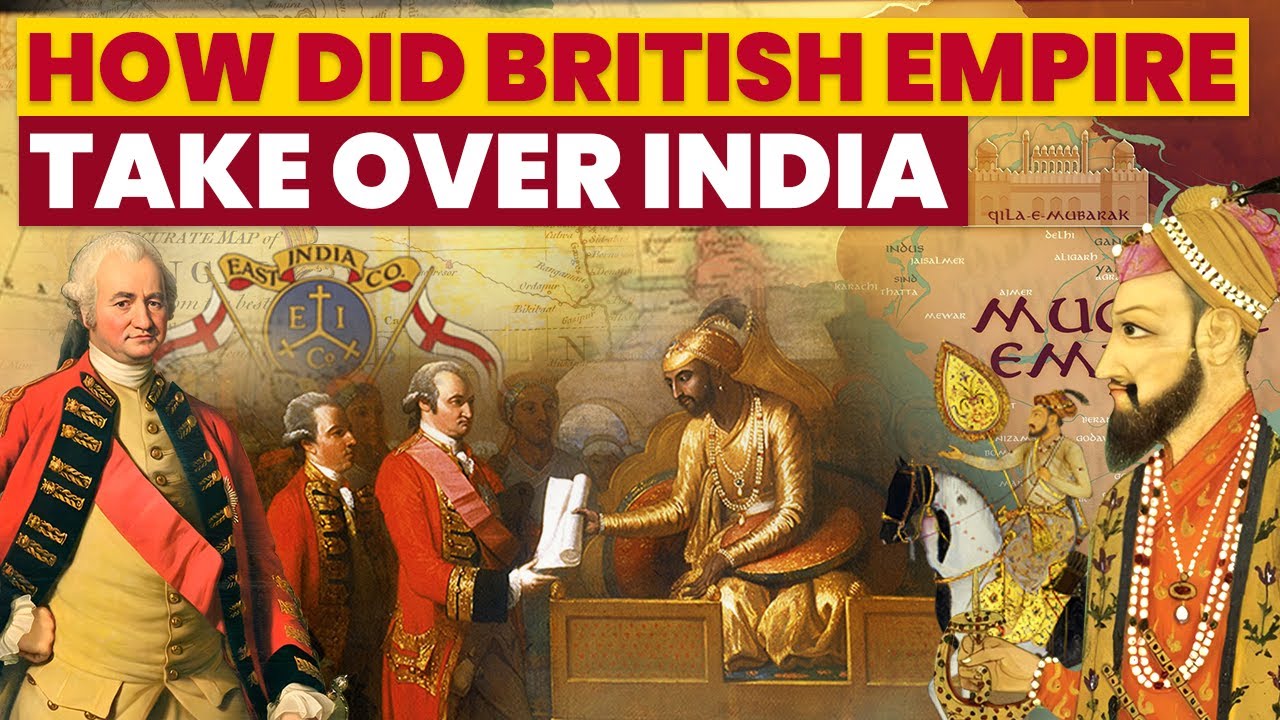
The British expansion in India, flourishing between and , fundamentally reshaped the destiny of the subcontinent. This growth was driven by a combination of military power, clever diplomatic strategies, and strong economic superiority. This transformative century witnessed key battles and treaties that led to the establishment of British paramountcy, laying the colonial foundations of modern India. This overview provides essential material for students preparing for competitive exams on the rise of British supremacy in India.
🎯 In this chapter, you will understand:
- The key factors behind British military and administrative success over Indian states.
- Major wars fought against Bengal, Mysore, the Marathas, Sindh, and Punjab.
- Diplomatic policies used to expand rule, including the Ring-Fence policy, Subsidiary Alliance, and Doctrine of Lapse.
- Frontier policies and treaties formed with neighbouring nations like Nepal, Burma, and Tibet.
💡 Why this topic matters: Learning how a single foreign trading company gained control over India between and is essential for understanding modern Indian history and answering exam questions on colonial expansion.
🧠 Core Idea: The East India Company transformed from a commercial trader into the main ruling power in India through disciplined military action, sound financial management, and strategic diplomatic alliances.
Comprehensive Overview of British Conquest, Territorial Expansion, and Establishment of Paramountcy in India (1757–1857)
The story of British success in India rests on a clear difference: the Company's organized military structure versus the divided regional powers of India. British victories over local states came from disciplined military organization, steady financial resources, and a focused political strategy.
- (i) Superior arms and weapons: British soldiers used modern weapons and artillery, giving them a clear advantage on the battlefield over traditional armies.
- (ii) Strict military discipline: Strong coordination and structured training helped British forces perform consistently during battles.
- (iii) Efficient civil administration: A well-managed administrative system supported the army with steady supplies, food, and transport during long campaigns.
- (iv) Strategic leadership: Leaders like Robert Clive and Lord Wellesley used clever political tactics and alliances to achieve their objectives.
- (v) Strong financial resources: Profits from trade and land revenue collected from early conquests provided continuous funding for wars.
- (vi) Nationalist confidence: A strong belief in their imperial mission kept British morale high throughout their expansion across the subcontinent.
Major Wars and Conflicts Defining British Territorial Expansion in India
British rule expanded through a series of decisive military campaigns against regional powers, systematically dismantling independent Indian kingdoms.

Conflict Between the British East India Company and the Nawabs of Bengal
The East India Company began establishing its political control in the wealthy province of Bengal, where key battles and treaties led to the defeat of the local Nawabs.
- (i) Battle of Plassey (): Robert Clive defeated Nawab Siraj-ud-Daula after internal betrayal within the Nawab's camp. This victory gave the Company its first main political foothold in Bengal.
- (ii) Battle of Buxar (): A major military conflict where the British defeated the combined forces of the Nawab of Bengal, the Nawab of Awadh, and Mughal Emperor Shah Alam II, establishing the Company as a top military power in northern India.
- (iii) Treaty of Allahabad (): Following victory at Buxar, this agreement legally granted the Company the Diwani rights (the right to collect land revenue) in Bengal, Bihar, and Orissa.
- (a) Treaty with the Nawab of Awadh: Turned Awadh into a buffer state that protected Bengal and provided financial payments to the Company.
- (b) Treaty with Mughal Emperor Shah Alam II: Officially granted Diwani rights to the Company, giving legal backing to British control.
- (iv) Dual Government System (): A system where the Company held the Diwani (revenue collection) while the Nawab retained the Nizamat (general administration). This arrangement caused widespread administrative confusion and corruption until it was abolished.
The British Conquest of Mysore through Anglo-Mysore Wars
The state of Mysore, led by Hyder Ali and his son Tipu Sultan, strongly resisted British growth in southern India during four separate conflicts known as the Anglo-Mysore Wars.
- (i) First Anglo-Mysore War (): Ended with the Treaty of Madras, which was favorable to Hyder Ali and showed the early strength of Mysore.
- (ii) Second Anglo-Mysore War (): Concluded in a draw with the Treaty of Mangalore, leaving both sides with their original territories.
- (iii) Third Anglo-Mysore War (): Under Lord Cornwallis, the British defeated Mysore and forced Tipu Sultan to sign the Treaty of Seringapatam, taking away half of Mysore's land.
- (iv) Fourth Anglo-Mysore War (): The British launched a final attack on Seringapatam, where Tipu Sultan died defending his capital. The British then placed the former Wodeyar royal family on the throne under a dependent alliance.
Anglo-Maratha Struggle for Supremacy and Causes of Maratha Defeat
The Marathas were the main contender for power across India after the decline of the Mughals. However, internal divisions caused them to lose three successive Anglo-Maratha wars.
- (i) First Anglo-Maratha War (): Sparked by succession disputes, this conflict ended with the Treaty of Salbai, which maintained peace between both sides for twenty years.
- (ii) Second Anglo-Maratha War (): Began after internal fighting among Maratha leaders led Peshwa Baji Rao II to sign the Treaty of Bassein (), accepting British troop protection.
- (iii) Third Anglo-Maratha War (): The British completely broke Maratha power, removed the Peshwa from authority, and annexed Maratha lands.
- Key Reasons for Maratha Defeat:
- (a) Weak leadership among later Maratha chiefs, who lacked unified goals.
- (b) A weak state organization that failed to build stable administrative systems.
- (c) A divided confederacy setup that caused constant internal conflicts between Maratha families.
- (d) Outdated military methods compared to modern British weapons and artillery.
- (e) An unstable economy that relied on irregular income rather than structured tax collection.
- (f) Clever British diplomacy that exploited internal rivalries among local rulers.
- (g) Modern administrative strategies that gave the British a consistent institutional advantage.
Conquest of Sindh and Punjab: The Last Independent Indian States
The northwestern regions of Sindh and Punjab were the final major independent areas brought under British control through military campaigns and political treaties.
- (i) Annexation of Sindh (): Sindh was taken over under Lord Ellenborough to secure trade along the Indus River and guard against potential threats from Afghanistan.
- (ii) Conquest of Punjab:
- (a) Treaty of Amritsar (): Signed with Maharaja Ranjit Singh, keeping peace along the Sutlej River border for decades.
- (b) First Anglo-Sikh War (): Political instability after the death of Ranjit Singh led to war, weakening the Sikh state.
- (c) Second Anglo-Sikh War (): Concluded with the full annexation of Punjab under Lord Dalhousie, bringing all of mainland India under British authority.
British Paramountcy in Action: Diplomatic Doctrines and Alliance Systems
Alongside direct military battles, the British built their control over Indian states using diplomatic policies and mandatory alliance systems that reduced local sovereignty.
- (i) Ring-Fence Policy: Introduced by Warren Hastings, this policy created buffer states (such as Awadh) to protect the Company's valuable lands in Bengal from outside threats like the Marathas.
- (ii) Subsidiary Alliance System: Introduced by Lord Wellesley, this system required Indian rulers to accept British troops within their borders and surrender independent foreign policy in exchange for protection.
- States forced into the Subsidiary Alliance included:
- Hyderabad (, reaffirmed )
- Mysore ()
- Tanjore ()
- Awadh ()
- Peshwa ()
- Bhonsle of Berar ()
- Sindhia ()
- Rajput states including Jodhpur, Jaipur, and Bundi ()
- States forced into the Subsidiary Alliance included:
- (iii) Doctrine of Lapse: Used extensively by Lord Dalhousie (), this policy stated that if a ruler of a dependent state died without a natural male heir, the kingdom would be annexed by the British rather than passed to an adopted son.
- States annexed under the Doctrine of Lapse included:
- Satara (), the first state annexed under this policy.
- Sambhalpur ().
- Jhansi (), which later became a major center during the 1857 revolt.
- States annexed under the Doctrine of Lapse included:
Relations of British India with Neighbouring Countries and Frontier Control
The British recognized that securing their Indian empire required firm control over its borders. They achieved this through military campaigns and treaties with neighbouring territories.
- (i) Anglo-Nepal Relations: Following the Anglo-Nepal War, the Treaty of Sagauli () defined northern boundaries and allowed Gurkha soldiers to be recruited into the British army.
- (ii) Anglo-Burma Relations: The British fought three wars, starting with the First Anglo-Burma War (), which secured territories in Assam, Manipur, and coastal Arakan.
- (iii) Anglo-Tibetan Relations: The Treaty of Lhasa () established British trade access and influence in Tibet, protecting the northern frontier.
⚡ Quick Revision Capsule: British Expansion in India (1757–1857)
This table summarizes key battles, policies, and treaties that marked the growth of British power in India.
| Event / Policy | Year / Period | Key Outcome & Significance |
|---|---|---|
| Battle of Plassey | Robert Clive defeated Nawab Siraj-ud-Daula, securing the first British political foothold in Bengal. | |
| Battle of Buxar | Defeated the combined forces of Bengal, Awadh, and Mughal Emperor Shah Alam II, proving British military strength. | |
| Treaty of Allahabad | Granted Diwani rights (revenue collection) of Bengal, Bihar, and Orissa to the East India Company. | |
| Subsidiary Alliance | onwards | Introduced by Lord Wellesley; forced Indian rulers to keep British troops and give up foreign policy control. |
| Doctrine of Lapse | Enforced by Lord Dalhousie; allowed annexation of states whose rulers died without a natural male heir. |
📝 Summary
Between and , the British East India Company transformed from a trading enterprise into the supreme sovereign power in India. Beginning with the Battle of Plassey in and continuing through major wars with Mysore, the Marathas, and the Sikhs, the British systematically defeated regional rivals. Coupled with diplomatic strategies like the Subsidiary Alliance and the Doctrine of Lapse, the Company consolidated control over the entire subcontinent, setting the stage for direct colonial rule under the British Crown.
🚀 Quick Revision Points
Essential facts to review before examinations:
- (i) British success was driven by modern military weapons, disciplined troops, and stable financial resources from trade and land revenue.
- (ii) The Battle of Plassey () and Battle of Buxar () established political control and Diwani rights in Bengal.
- (iii) The Subsidiary Alliance (Lord Wellesley) and Doctrine of Lapse (Lord Dalhousie) expanded territory without continuous war.
- (iv) The annexation of Punjab in completed the conquest of mainland India.
- 💡 Exam Tip: Focus on linking specific Governor-Generals (Clive, Wellesley, Dalhousie) to their policies (Dual Government, Subsidiary Alliance, Doctrine of Lapse) and key treaty dates.
❓ Frequently Asked Questions (FAQ)
Q1: Why was the Treaty of Allahabad (1765) so important?
A1: The Treaty of Allahabad granted the East India Company the legal right (Diwani) to collect land revenue in Bengal, Bihar, and Orissa, giving the Company huge financial resources.Q2: How did the Subsidiary Alliance System weaken Indian rulers?
A2: Introduced by Lord Wellesley, it required Indian states to station British troops within their territory and surrender independent foreign affairs, making them dependent on the Company.Q3: Which major states were annexed under the Doctrine of Lapse?
A3: Key states annexed under Lord Dalhousie included Satara (), Sambhalpur (), and Jhansi ().