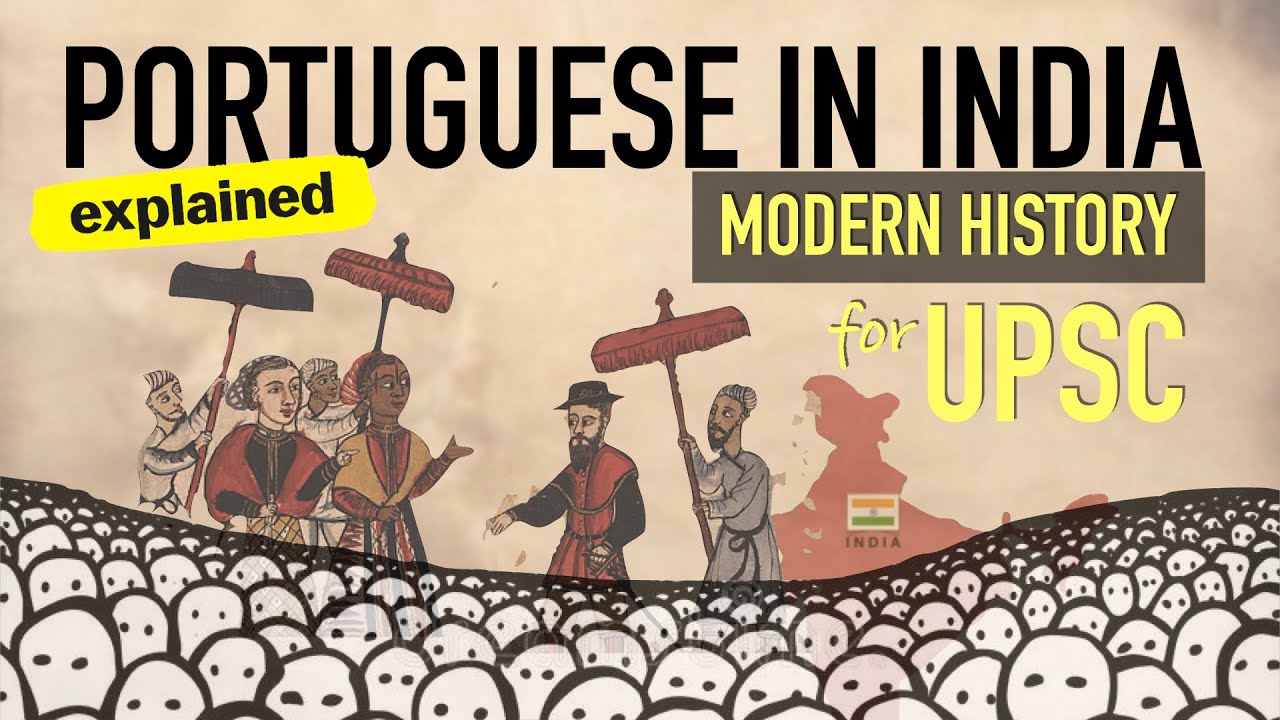
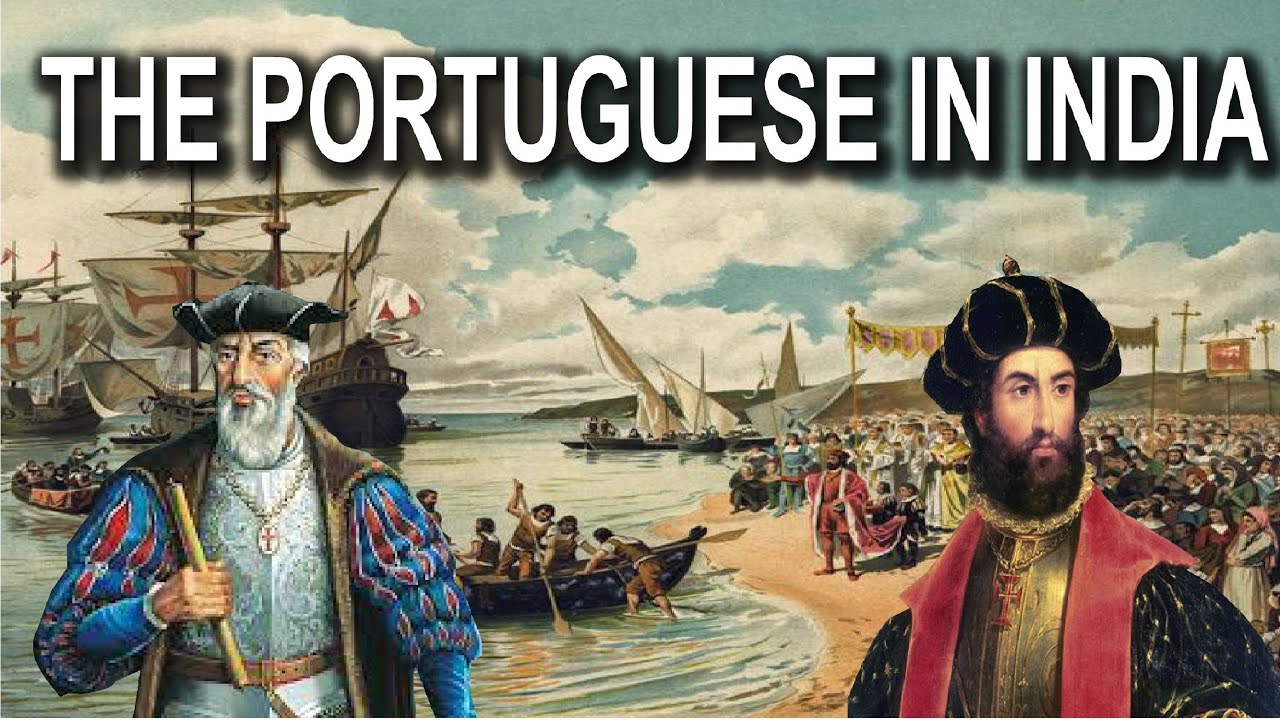
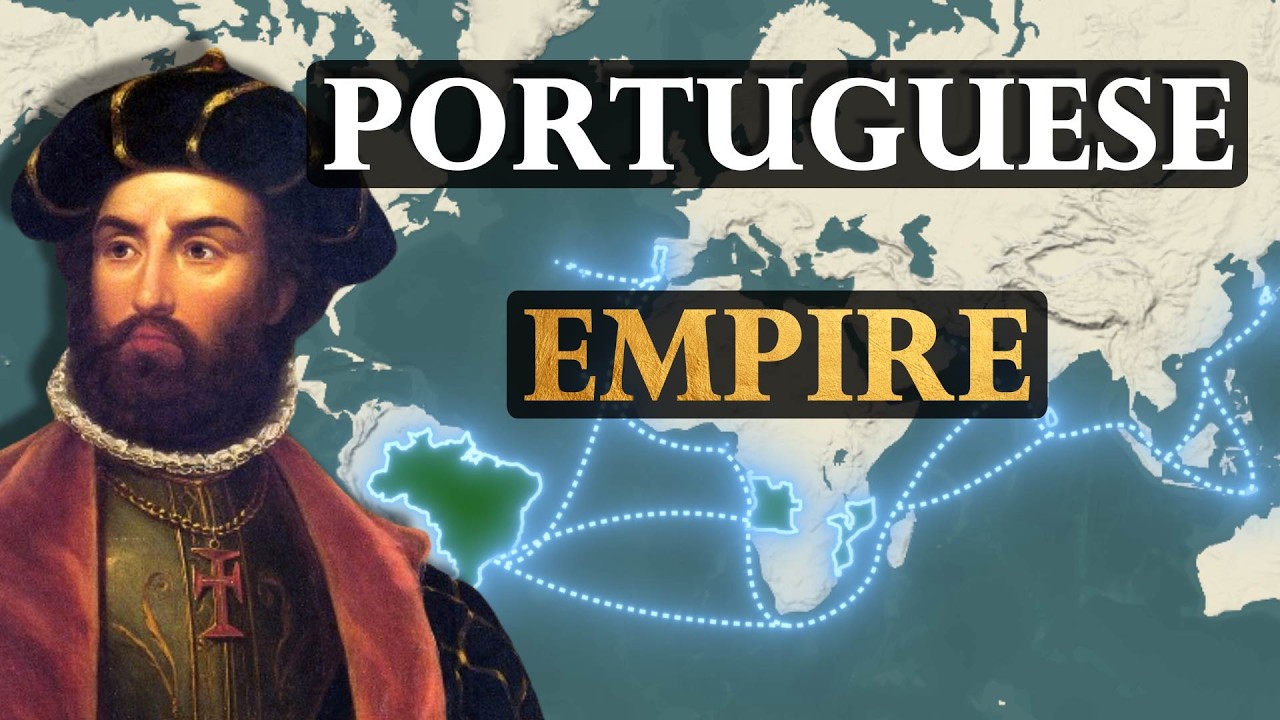
The Portuguese arrival, led by Vasco da Gama in , completely changed trade in the Indian Ocean and created the first major European colony in India. Important governors like Francisco de Almeida and Alfonso de Albuquerque captured key coastal areas, including Goa, Cochin, and Cannanore, using strong naval power and smart planning. Understanding this early period of European ocean travel is essential for history students preparing for competitive exams.
🎯 In this chapter, you will understand:
- How Vasco da Gama opened a direct sea route between Europe and India in .
- The military and naval strategies used by early viceroys Francisco de Almeida and Alfonso de Albuquerque.
- The capture of Goa in and its importance as the permanent Portuguese capital.
- The conditions in India that allowed the Portuguese to build a lasting trade monopoly.
💡 Why this topic matters: It marks the beginning of modern European colonialism in India, setting up models of ocean trade control and military bases that other European powers followed later.
🧠 Core Idea: The Portuguese combined strong ships, strategic coastal forts, and forced trade licenses to take control of Asian sea trade routes from existing local merchants.
📌 Portuguese Establishment and Expansion in India (1498–1537): Trade, Conflict, and Colonial Power
The years between and were the foundation stage when Portuguese sea travelers turned from simple traders into powerful rulers along the Indian coast.
During this period, bold ocean voyages, fighting with local trading groups, and building strong forts helped Portugal gain early control in the East.
- (i) The journey began with the famous voyage of Vasco da Gama in , which found a direct sea path between Europe and India without using Middle Eastern land routes.
- (ii) Early governors like Francisco de Almeida and Alfonso de Albuquerque built strong physical bases using naval force and strategic military planning.
- (iii) This period is important because the Portuguese created a new pattern of European rule—combining trade, military power, and religious growth—that influenced later European groups in India.
⚓ Arrival of Vasco da Gama and Initial Interactions: Opening the Sea Route
The successful trip by Vasco da Gama finished years of effort by Portugal and brought a new power into the traditional, multi-cultural Indian Ocean trade system.

Landing at Calicut and the First Contacts
Vasco da Gama reached Indian shores in a historic moment, creating direct sea contact and challenging established merchants who had long controlled Eastern trade.
- (i) Arrival Details: The explorer reached near Calicut in with three ships, guided by a skilled Gujarati sailor named Abdul Majid, showing how European sailors relied on local experts.
- (ii) Reception by the Zamorin: He was welcomed by the Zamorin (Samuthiri) of Calicut, a Hindu ruler, as Calicut was already a famous center for world trade.
- (iii) Arab Opposition: Very quickly, local Arab traders grew worried because they had long held a strong hold over trade along the Malabar coast.
Impact on Indian Ocean Trade and Monopolistic Aims
The Portuguese made it clear that they wanted to control trade completely and capture big profits for themselves rather than just share the existing market.
- (i) Disruption of Networks: The new sea path disrupted old trading connections shared among Indian, Arab, African, Chinese, and Javanese merchants.
- (ii) Aims of Exclusivity: The Portuguese worked to force out competing groups, especially Arab merchants, to keep the most valuable trade goods for themselves.
- (iii) First Voyage’s Return: Even though Da Gama stayed only three months in India, his return to Portugal with valuable goods proved that direct sea trade brought huge financial gains.
🚢 Pedro Alvarez Cabral: Establishing a Permanent Portuguese Presence and Retaliation
The expedition led by Pedro Alvarez Cabral changed the Portuguese approach from occasional visits to building permanent trading centers using military force when needed.
Cabral at Calicut: Trade Post, Attack, and Naval Retaliation
Cabral tried to open a regular trading post, but local resistance showed how hard it was to control powerful coastal towns.
- (i) Establishment and Attack: A Portuguese trading post was started at Calicut in , but local groups attacked it soon after, killing several Portuguese workers.
- (ii) Naval Retaliation: In response, Cabral captured Arab ships, took their cargo, and fired cannons at Calicut, showing a tough new approach by European traders.
Strategic Treaties and New Trade Centers
Seeing the danger in Calicut, the Portuguese made friends with neighboring rival rulers to secure safer places for trade.
- (a) Advantageous Treaties:Cabral signed useful trade agreements with local rulers in nearby Cochin and Cannanore.
- (b) New Key Hubs: Because of these agreements, Calicut, Cochin, and Cannanore became the main early Portuguese trade centers on the Malabar Coast.
⚔️ Francisco De Almeida: The First Viceroy and the Blue Water Policy (1505)
Chosen as the first viceroy in , Francisco de Almeida was asked to transform small trade posts into a strong military system to end Muslim control over sea routes.
Objectives, Fortifications, and the Naval Doctrine
Almeida’s plan relied on building strong forts at key places and focusing on total naval dominance across the Indian Ocean.
- (i) Fort Building: A main goal was to construct strong forts at important points like Anjadiva, Cochin, Cannanore, and Kilwa in East Africa.
- (ii) Trade Disruption Aim: He was ordered to stop existing trade networks by controlling key water passages such as Aden, Ormuz, and Malacca.
- (iii) The Blue Water Policy:Almeida introduced the Blue Water Policy (linked with the Cartaz System), which focused on controlling the open sea rather than capturing large areas of land. Under this system, non-Portuguese ships had to buy a permit called a cartaz to travel in the Indian Ocean.
Opposition and Major Naval Engagements
Regional rulers and their allies fought back against Portuguese claims over the sea, leading to early naval battles.
- (i) Resistance:Almeida faced strong opposition from a combined force that included the local Zamorin and the Mameluke Sultan of Egypt.
- (ii) Naval Conflicts: In , the Portuguese lost a naval battle off Diu to combined Egyptian and Gujarati fleets. However, Almeida won a decisive victory in , rebuilding Portuguese naval strength.
🏰 Alfonso de Albuquerque: Consolidating Portuguese Power and Imperial Vision (1509–1515)
Considered the second governor and real founder of the Portuguese power in the East, Alfonso de Albuquerque expanded beyond sea control to capture lasting land bases.
Acquisition of Goa and Strategic Bases of the Empire
Albuquerque focused on capturing key port cities that served as trading, military, and administrative centers for the region.
- (i) Capture of Goa: His major achievement was taking Goa from the Sultan of Bijapur in . Goa then became the permanent administrative capital of the Portuguese Eastern empire.
- (ii) Social Reform: He worked to end the practice of sati in Goa, marking an early change in local social rules under colonial rule.
- (iii) Maritime Control: He built bases along the Malabar Coast and at major ocean crossroads like Malacca in Southeast Asia and key spots in East Africa.
Encouragement of Portuguese Settlers and Colonial Society
Albuquerque created a policy to encourage a permanent Portuguese population in India for long-term stability.
- (i) Intermarriage Policy: He encouraged Portuguese men to marry local women to build a local population loyal to the colony.
- (ii) Agricultural and Social Contributions: Settlers built farms and brought new crops to India, such as tobacco and cashew nuts.
- (iii) Urban Development: In towns like Goa and Cochin, these communities worked as craftsmen, traders, and builders, helping early towns grow.
📜 Nino da Cunha: Governorship, Expansion, and The Capital Shift (1529–1537)
During the rule of Nino da Cunha, the Portuguese moved their main capital and expanded into important coastal areas in Gujarat and Bengal.
Headquarters Shift and Major Territorial Acquisition
Da Cunha made official changes to confirm Goa as the center of power and secured additional ports to control trade routes.
- (i) Official Capital Shift: The official main headquarters of Portuguese India moved from Cochin to Goa in .
- (ii) Gujarat Ports: He gained control of Bassein in from Bahadur Shah of Gujarat and later got Diu, strengthening control over western sea trade.
- (iii) Expansion to Bengal:Da Cunha also expanded Portuguese trading spots into Bengal, especially at Hooghly, connecting to rich eastern trade routes.
🌐 Albuquerque’s Policy on Muslims and Favourable Conditions for Supremacy
Portuguese success came from strong ships, clever political moves by Albuquerque, and the divided political situation in 16th-century India.
Policy of Persecution and Strategic Fortification
Albuquerque used power to weaken commercial rivals while building safe military centers for Portuguese ships.
- (i) Goa’s Hub Status: He developed Goa into a well-defended trade and military headquarters for the whole regional network.
- (ii) Eliminating Rivals: Historical records, like The Gazetteer of India, Vol. II, note harsh actions directed at Muslim traders to reduce their strong hold over Indian Ocean trade.
Favourable Conditions in India that Aided Portuguese Expansion
Divided local rulers and a lack of organized local navies gave the Portuguese a clear advantage at sea.
- (i) Political Fragmentation: Northern India was split among smaller kingdoms, and the Deccan was divided into separate Sultanates, so no single Indian ruler could challenge the Portuguese everywhere at once.
- (ii) Naval Weakness: Local kingdoms lacked large, organized navies built for ocean fighting to match European ships.
- (iii) Global Trade Vacuum: Reduced Chinese ocean sailing and scattered Arab trading groups left an open space that the organized Portuguese military quickly filled.
- (iv) Technological Edge: Advanced ocean ships equipped with heavy cannons gave Portuguese forces a strong tactical advantage during fights at sea.
📝 Conclusion: Portuguese Legacy and the Dawn of the Colonial Era (1498–1537)
The early Portuguese expansion, started by explorers like Vasco da Gama and organized by governors like Francisco de Almeida and Alfonso de Albuquerque, was a major change in history. They introduced strong naval strategies, captured key land bases like Goa, created trade rules like the Cartaz System, and opened the path for future European powers in India. Studying this period between and helps students understand early modern Indian history and European ocean trade.
⚡ Quick Revision Capsule: Portuguese Governors and Key Events
A quick summary of key Portuguese leaders, dates, and major accomplishments in India:
| Leader / Explorer | Key Period / Date | Major Accomplishment |
|---|---|---|
| Vasco da Gama | Discovered direct sea route to India; landed at Calicut guided by Abdul Majid. | |
| Pedro Alvarez Cabral | Established first trade post at Calicut; formed alliances with Cochin and Cannanore. | |
| Francisco de Almeida | – | First Viceroy; created the Blue Water Policy and Cartaz System. |
| Alfonso de Albuquerque | – | Captured Goa in ; banned sati locally; encouraged settler intermarriage. |
| Nino da Cunha | – | Moved capital to Goa in ; acquired Bassein () and Diu. |
📝 Summary
Between and , Portuguese explorers and governors created the first European maritime empire in India, as recorded in sources like The Gazetteer of India, Vol. II. By combining naval technology, strategic forts, and trade permits, they established control over key Indian Ocean trade routes.
🚀 Quick Revision Points
Essential facts to review before examinations:
- (i) Vasco da Gama reached Calicut in with help from Gujarati pilot Abdul Majid.
- (ii) Francisco de Almeida started the Blue Water Policy and built early coastal fortifications.
- (iii) Alfonso de Albuquerque captured Goa in , making it the permanent administrative capital.
- (iv) Historical details on trade policies are supported by works such as The Gazetteer of India, Vol. II.
- 💡 Exam Tip: Remember the timeline order of governors: Almeida (Blue Water Policy) → Albuquerque (Captured Goa ) → Nino da Cunha (Shifted capital to Goa ).
❓ Frequently Asked Questions (FAQ)
Q1: What was the main idea behind Francisco de Almeida's Blue Water Policy?
A1: The Blue Water Policy focused on using naval strength to control ocean trade routes rather than capturing large areas of inland territory.Q2: When was Goa captured by the Portuguese and who led the capture?
A2: Goa was captured in by governor Alfonso de Albuquerque from the Sultan of Bijapur.Q3: What was the Cartaz System introduced in the Indian Ocean?
A3: The Cartaz System was a mandatory pass system where non-Portuguese merchant ships had to pay for permits to sail safely in the Indian Ocean, as documented in historical references like The Gazetteer of India, Vol. II.