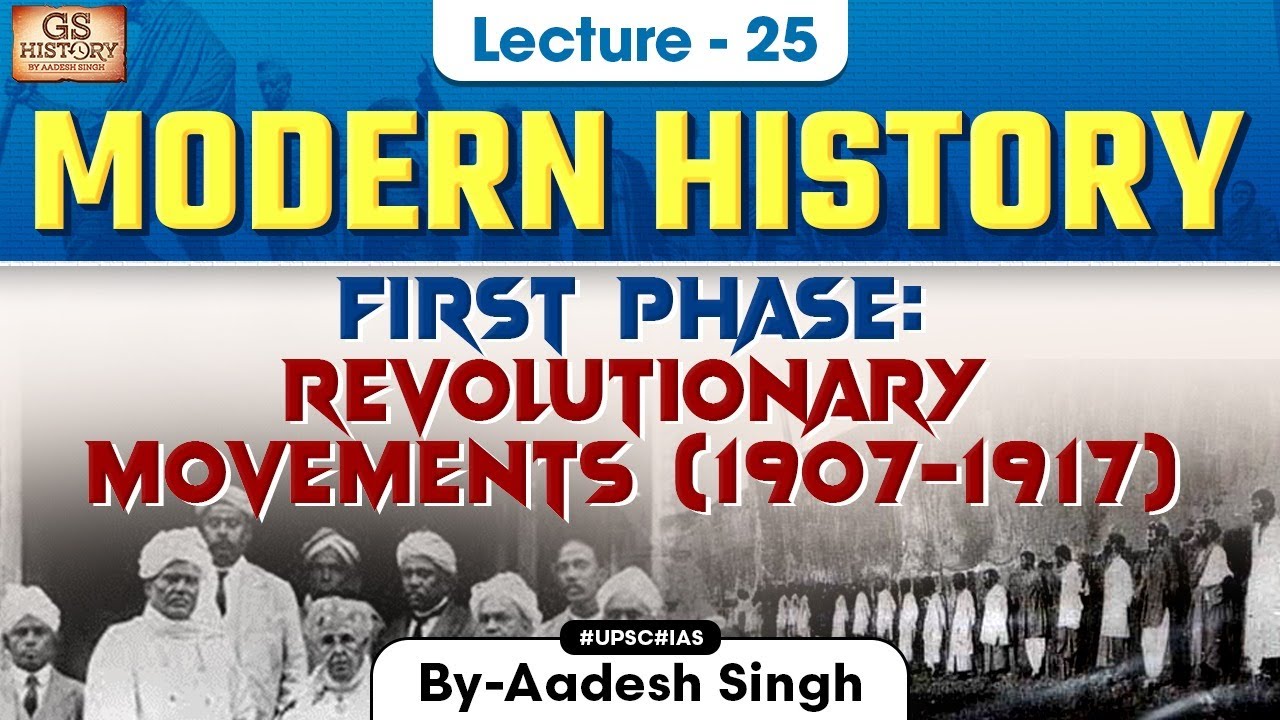
The early in India witnessed the rise of revolutionary activities as a powerful alternative to the moderate methods of peaceful petitioning. This era saw young freedom fighters organize secret societies and lead armed resistance across key regions including Bengal, Maharashtra, and Punjab. Notable figures such as Vasudev Balwant Phadke, the Chapekar brothers, Vinayak Damodar Savarkar, and Rashbehari Bose played central roles in challenging British rule. For students preparing for competitive examinations, learning about these militant strategies provides a clear picture of how diverse efforts shaped the path toward independence.
🎯 In this chapter, you will understand:
- How underground groups like Anushilan Samiti formed to challenge colonial authority.
- Major conspiracies and legal trials, such as the Alipore Conspiracy Case.
- International alliances made during World War I, including the German Plot.
- Parallel anti-British movements in western and northern regions like Maharashtra and Punjab.
💡 Why this topic matters: It highlights the fearless armed resistance and secret operations that kept the spirit of freedom alive alongside constitutional politics.
🧠 Core Idea: Frustrated by slow constitutional reforms, youth groups organized secret societies to disrupt British administration through direct armed action.
Revolutionary Activities: The Rise of Militant Nationalism in Bengal and Beyond during the Early 20th Century
A new wave of patriotism, driven by secret organizations and armed resistance, grew as a direct response to the slow, formal petitions of early political leaders.
At the turn of the , many young Indians felt that peaceful appeals were ineffective and turned toward direct action to gain freedom.
- (i) The foundations of these revolutionary ideas began in the through student groups and secret clubs in Calcutta.
- (ii) By , structured revolutionary groups appeared, including the Anushilan Samiti in Calcutta (founded by Promotha Mitter) and another branch in Midnapore led by Jnanendranath Basu.
- (iii) What began as physical training and moral instruction gradually turned into active political resistance between and .
The Revolutionary Movement in Bengal: Anushilan Samiti & Key Events
Bengal quickly became a major center for underground activities, with the Anushilan Samiti urging youth to use direct force against colonial authorities.

Key Actions and Conspiracies in Bengal
Underground journals and secret bomb manufacturing units formed the backbone of early resistance efforts in Bengal.
- (a) In , members of the Anushilan Samiti started the revolutionary journal Yugantar to spread ideas of direct action.
- (b) Early targeted attempts included an assassination plan in against Sir Fuller, the Lieutenant Governor of Eastern Bengal and Assam.
- (c) In , Prafulla Chaki and Khudiram Bose tried to assassinate magistrate Kingsford in Muzaffarpur, which accidentally caused the deaths of two British women.
The Alipore Conspiracy Case: A Trial of Fire
The Muzaffarpur bombing brought swift police raids across Bengal, resulting in one of the most famous trials in Indian freedom history.
Legal Consequences and Sentencing
- (i) Police raids led to the arrest of key leaders, including brothers Aurobindo Ghosh and Barindra Kumar Ghosh.
- (ii) During the trial, Aurobindo Ghosh was acquitted due to lack of direct evidence, but Barindra Ghosh and Ullaskar Dutt received life sentences.
World War I Revolutionary Efforts and the German Connection
When World War I broke out, revolutionaries attempted to use Britain's wartime difficulties to secure foreign aid and weapons.
- (i) The Jugantar group, led by Bagha Jatin (Jatin Mukherjee), coordinated with foreign contacts in the German Plot to import firearms for a nationwide uprising.
- (ii) British intelligence intercepted the plan, and Jatin Mukherjee died during a gun battle at Balasore, Orissa, in .
Parallel Revolutionary Movements in Maharashtra & Punjab
Beyond Bengal, strong militant movements also grew in Maharashtra and Punjab, fueled by local grievances, land issues, and intense patriotism.
Revolutionary Activities in Maharashtra: The Vanguard of Armed Revolt
In western India, historical memories of Chhatrapati Shivaji Maharaj inspired early efforts toward organized armed revolt.
- (i) Vasudev Balwant Phadke pioneered early armed resistance by creating the Ramosi Peasant Force in to attack British communications.
- (ii) In , the Chapekar brothers assassinated colonial officers in Pune, creating widespread political stir.
- (iii) Vinayak Damodar Savarkar and his brother formed Mitra Mela in , which became Abhinav Bharat in .
- (iv) Following the assassination of Nasik Collector A.M.T. Jackson by Anant Lakshman Kanhere, Savarkar was arrested and sentenced to life imprisonment in the Andaman Islands.
Revolutionary Activities in Punjab: Unrest in the Land of Five Rivers
Severe economic distress, crop failures, and heavy land taxes turned Punjab into an active area for radical political movements.
- (a) High land tax and frequent famines drove widespread public discontent across the region.
- (b) Key leaders like Lala Lajpat Rai and Ajit Singh created the nationalist group Anjuman-i-Mohisban-i-Watan in Lahore.
- (c) During World War I, Rashbehari Bose worked with Bagha Jatin and the Ghadar Party to plan a military rebellion, but after the plot failed, he escaped to Japan.
⚡ Quick Revision Capsule: Key Revolutionary Movements
This table summarizes the major revolutionary organizations, key figures, active regions, and major events of the early 20th century.
| Region | Key Organizations & Leaders | Major Events & Actions |
|---|---|---|
| Bengal | Anushilan Samiti, Jugantar (Promotha Mitter, Aurobindo Ghosh, Bagha Jatin) | Publishing Yugantar, Muzaffarpur Bombing (), Alipore Trial, and German Plot (). |
| Maharashtra | Ramosi Peasant Force, Abhinav Bharat (Vasudev Balwant Phadke, Chapekar Brothers, V.D. Savarkar) | Assassination of Rand (), Nasik Conspiracy Case, and assassination of Jackson (). |
| Punjab | Anjuman-i-Mohisban-i-Watan, Ghadar Movement (Lala Lajpat Rai, Ajit Singh, Rashbehari Bose) | Agrarian agitations in Lahore, armed revolt plans during World War I, and international coordination. |
📝 Summary
Although many early revolutionary attempts were suppressed by strict police measures, they left an indelible mark on India's freedom movement. These efforts proved that young Indians were willing to make the ultimate sacrifice to oppose colonial rule. The courageous acts of groups like Anushilan Samiti and leaders like Savarkar, Khudiram Bose, and Bagha Jatin inspired future generations of patriots throughout the early .
🚀 Quick Revision Points
Essential facts to review before examinations:
- (i) The Anushilan Samiti was founded in to build physical strength and coordinate revolutionary action.
- (ii) The Alipore Conspiracy Case resulted in life sentences for leaders like Barindra Kumar Ghosh.
- (iii) Abhinav Bharat, established by V.D. Savarkar in , grew out of the earlier Mitra Mela.
- (iv) The German Plot aimed to import arms during World War I but failed after the battle at Balasore in .
- 💡 Exam Tip: Focus on linking specific revolutionary organizations with their leaders, active regions, and major trial cases for multiple-choice questions.
❓ Frequently Asked Questions (FAQ)
Q1: What was the primary goal of the Anushilan Samiti?
A1: Formed in , its main goal was to organize Indian youth and use direct action to overthrow British rule.Q2: Who led the Abhinav Bharat society in Maharashtra?
A2: It was founded by Vinayak Damodar Savarkar and his brother in , developing from Mitra Mela.Q3: What was the German Plot during World War I?
A3: It was a plan by the Jugantar party under Bagha Jatin to secure arms from Germany for a nationwide uprising against British forces.