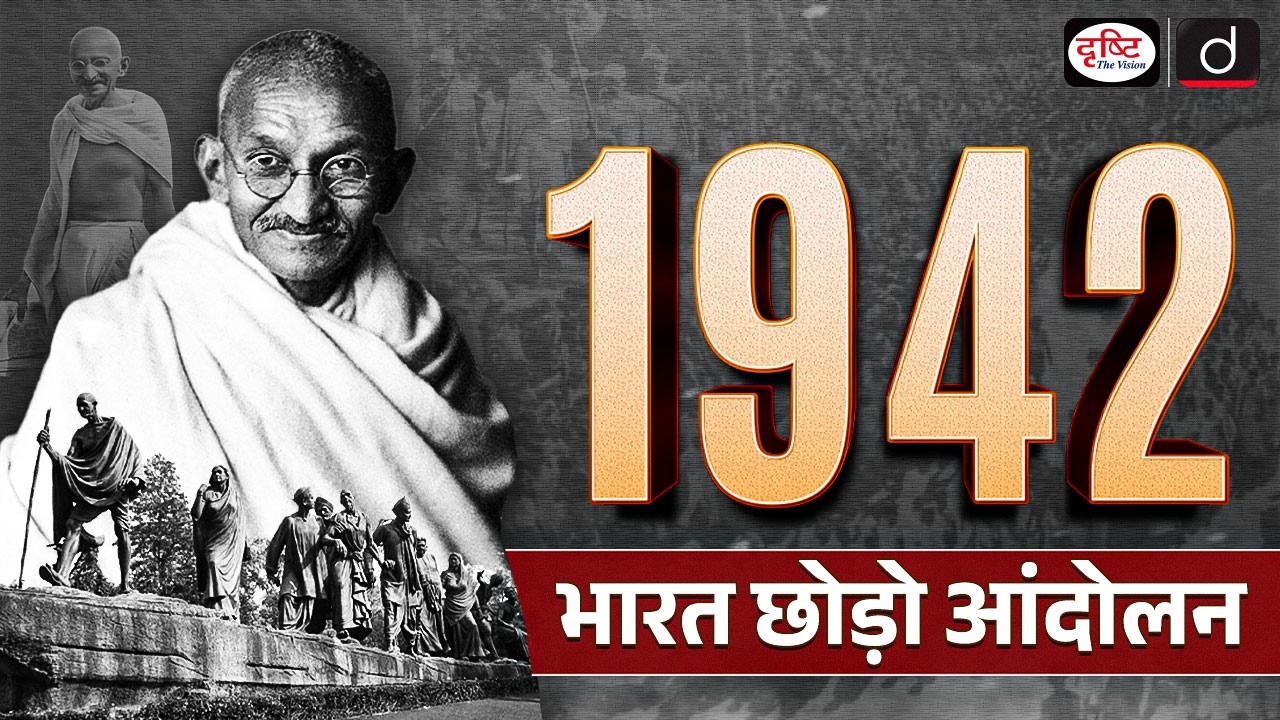
The notable return of Mahatma Gandhi in marked a major turning point in India's freedom movement. Known for his Satyagraha methods against racial discrimination in South Africa, he quickly became a key leader advocating peaceful resistance. This guide covers his initial years in India, including key local protests in Champaran, Ahmedabad, and Kheda, as well as the Rowlatt Satyagraha, which built the base for national independence.
🎯 In this chapter, you will understand:
- How Mahatma Gandhi adapted his South African principles of peaceful resistance to Indian conditions upon returning in .
- The methods and outcomes of the regional Satyagrahas in Champaran, Ahmedabad, and Kheda between and .
- The causes, events, and impact of the nationwide Rowlatt Satyagraha in .
- How early regional movements connected common citizens with the national leadership.
💡 Why this topic matters: It explains how non-violent resistance shifted from small local disputes into a nationwide movement that involved ordinary citizens across India.
🧠 Core Idea: Grounding political strategy in moral discipline and direct community involvement helped build widespread trust and established a foundation for independence.
Mahatma Gandhi’s Return to India and His Early Revolutionary Leadership in the Freedom Movement (1915–1919)
In , Mahatma Gandhi returned to India after decades of practicing law and leading social rights campaigns in South Africa. His arrival introduced a fresh approach to the national freedom movement based on truth and non-violent action.
A New Era of Resistance: Gandhi’s Strategic Homecoming and Socio-Political Integration
The year marked the return of a figure who transformed political action through truth and peaceful means.
- (i) Arriving in , Mohandas Karamchand Gandhi held wide respect after applying Satyagraha in South Africa to protect basic civil rights.
- (ii) On the advice of his political mentor, Gopal Krishna Gokhale, he spent his first year traveling across the Indian subcontinent to study everyday economic and social realities.
- (iii) During this initial period, he stepped back from public agitations to ensure his work reflected the direct needs of rural and working communities.
- (iv) He voiced clear concerns about elite-driven political approaches and chose not to join the Home Rule agitation, preferring not to take tactical advantage of Britain's involvement in World War I.
- (v) Guided by his personal convictions, he stated he would only join political efforts that remained fully committed to non-violent practices.
Gandhi’s Early Struggles in Champaran, Ahmedabad, and Kheda: Pioneering Non-Violent Resistance
From to , Gandhi moved from observation to direct action by addressing targeted local issues. These regional efforts tested and refined his leadership methods using disciplined non-violent action.

The Champaran Satyagraha: India's First Lesson in Civil Disobedience
In Champaran, Bihar, local farmers suffered under the harsh Tinkathia system, which forced them to cultivate indigo on part of their land for European landowners under unfair economic terms.
- (i) When Gandhi arrived in , he openly defied official orders to leave the district, presenting a early example of non-violent civil resistance on Indian soil.
- (ii) By gathering detailed statements from thousands of farmers, his investigation convinced the government to end illegal charges and grant practical relief to agricultural workers.
The Ahmedabad Mill Strike: Moral Force in Industrial Conflict
In , Gandhi helped address an industrial disagreement in Ahmedabad between mill owners and factory workers concerning wage levels and the removal of the Plague Bonus.
- (i) He supported the labor force in seeking a 35 percent wage adjustment to match rising living costs during wartime inflation.
- (ii) To encourage unity and peaceful resolve among workers, he undertook a fast, which encouraged both sides to reach an equitable agreement through direct discussion.
The Kheda Satyagraha: Defying Unjust Taxation
During , widespread crop losses in the Kheda district of Gujarat made it extremely difficult for small farmers to pay government land revenues.
- (i) Working alongside organizers such as Sardar Vallabhbhai Patel, Gandhi encouraged farmers to withhold tax payments peacefully until relief measures were granted.
- (ii) The administration eventually issued informal directives to collect land taxes only from those who had the financial capacity to pay, boosting local confidence in organized community action.
Analyzing the Impact of Gandhi's Early Regional Struggles
These local actions brought diverse social groups together and offered practical experience in peaceful protest techniques across different regions.
Validation of the Satyagraha Method
- (i) Practical outcomes in these three regions built public trust in Gandhi's leadership approach.
- (ii) The successful campaigns showed that peaceful, organized resistance could secure tangible administrative remedies.
Preparation for the Pan-India Movement
- (i) Farmers, factory workers, and city professionals began participating in a shared national movement.
- (ii) These regional efforts created the practical and moral framework used in later national campaigns.
Rowlatt Satyagraha of 1919: Gandhi’s First Nationwide Non-Violent Protest
Building on these regional experiences, Gandhi initiated his first countrywide protest campaign in against the Anarchical and Revolutionary Crimes Act, commonly known as the Rowlatt Act.
The Rowlatt Act: A Policy of Institutionalized Repression
The colonial administration passed strict legislation designed to limit civil liberties and curb political activity following the conclusion of wartime emergency provisions.
- (i) The act allowed authorities to detain individuals suspected of political agitation for up to two years without trial, setting aside standard judicial rights like habeas corpus.
- (ii) Indian political leaders broadly criticized the law, considering it an unfair response after the country had provided substantial support during World War I.
The Execution of the Nationwide Satyagraha Campaign
The call for public action against the Rowlatt Act marked a new stage in broad-based political participation.
- (i) Gandhi formed the Satyagraha Sabha and announced a nationwide strike (hartal) on , focused on fasting, peaceful assembly, and public prayers.
- (ii) The movement brought together urban workers, students, and rural communities in a unified public demonstration.
- (iii) Despite severe official measures—including the tragic loss of life at Jallianwala Bagh—it demonstrated the broad capacity of the Indian public for organized peaceful action.
The Historical Significance of the Rowlatt Satyagraha
The campaign against the Rowlatt Act altered the ongoing dynamic between the colonial government and the Indian population.
- (a) It represented the first coordinated application of non-violent resistance across multiple regions of the country simultaneously.
- (b) The campaign established Gandhi as a major national coordinator for political reform.
- (c) It created a vital foundation for larger national actions, including the Non-Cooperation Movement launched in .
⚡ Quick Revision Capsule: Early Gandhian Movements (1915–1919)
Below is a organized overview of Gandhi's major early movements, their core issues, and their primary results.
| Movement | Year & Region | Key Issue & Outcome |
|---|---|---|
| Return to India | (Nationwide) | Studied socio-economic conditions on the advice of Gopal Krishna Gokhale before starting active political work. |
| Champaran Satyagraha | (Bihar) | Opposed the unfair Tinkathia system forced on indigo farmers; secured official relief for agricultural workers. |
| Ahmedabad Mill Strike | (Gujarat) | Supported textile workers seeking a 35% wage adjustment; used a public fast to encourage an equitable agreement. |
| Kheda Satyagraha | (Gujarat) | Supported farmers facing crop loss; secured informal relief from strict land tax requirements. |
| Rowlatt Satyagraha | (Pan-India) | Opposed the repressive Rowlatt Act; organized a nationwide hartal on . |
📝 Summary
In summary, Mahatma Gandhi's return in and his leadership during the regional campaigns in Champaran, Ahmedabad, and Kheda, followed by the nationwide Rowlatt Satyagraha in , reshaped the Indian freedom struggle. By combining ethical principles with direct community action, Gandhi helped transform localized concerns into a unified national effort that set the course for subsequent independence movements.
🚀 Quick Revision Points
Essential facts to review before examinations:
- (i) Gandhi spent learning about regional conditions across India before undertaking major public actions.
- (ii) The Champaran Satyagraha in was his first civil disobedience campaign targeting forced indigo cultivation.
- (iii) The Ahmedabad Mill Strike () applied peaceful arbitration to settle industrial wage disputes.
- (iv) The Rowlatt Satyagraha () served as his first pan-India protest against detention without trial under the Rowlatt Act.
- 💡 Exam Tip: Remember the chronological order of Gandhi's early movements in India: Champaran (), Ahmedabad Mill Strike (), Kheda Satyagraha (), and Rowlatt Satyagraha ().
❓ Frequently Asked Questions (FAQ)
Q1: Why did Mahatma Gandhi refrain from active political movements in 1915?
A1: Upon returning in , Gandhi followed the advice of Gopal Krishna Gokhale to travel throughout India for a year to understand the living conditions and needs of ordinary citizens before taking political action.Q2: What was the main issue addressed during the Champaran Satyagraha?
A2: The Champaran Satyagraha of addressed the Tinkathia system, which required farmers in Bihar to plant indigo on three-twentieths of their land for European landowners under financially difficult terms.Q3: What was the primary objective of the Rowlatt Satyagraha in 1919?
A3: The Rowlatt Satyagraha in aimed to oppose the Rowlatt Act, which allowed the colonial government to arrest and detain individuals without trial, suspending basic legal protections like habeas corpus.