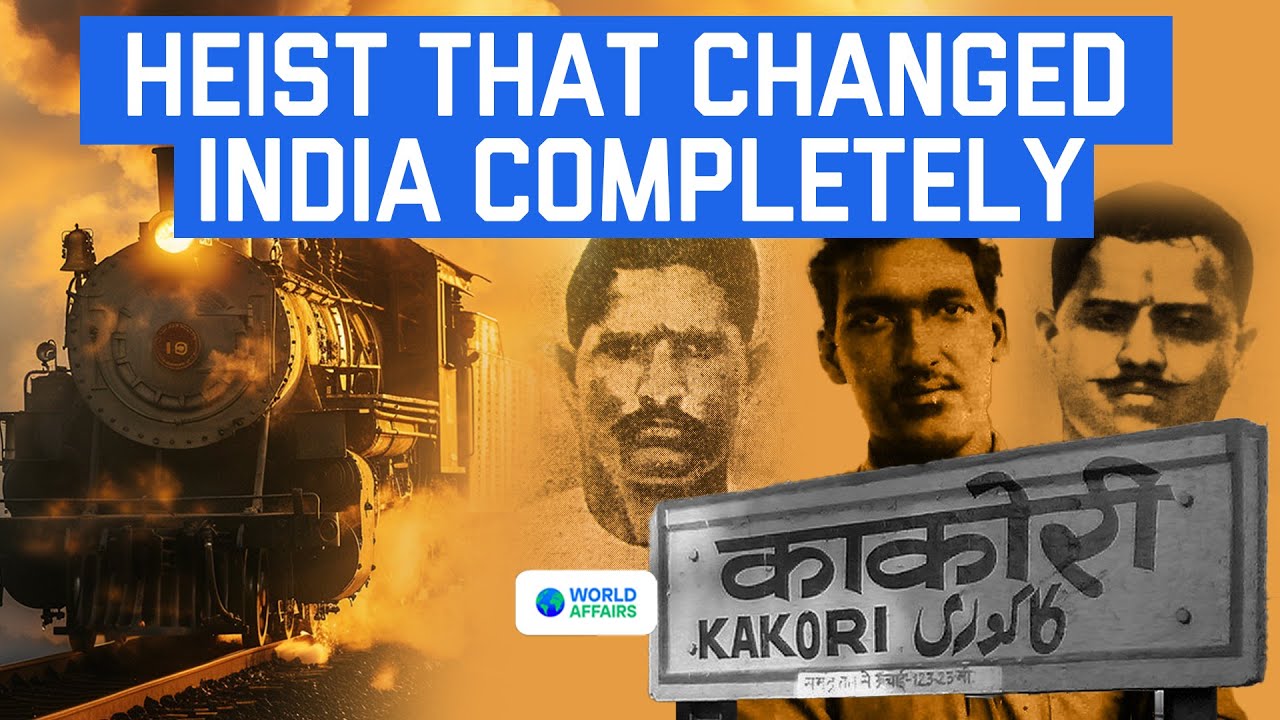
The legendary Kakori Robbery of represents a pivotal turning point in the timeline of India's freedom struggle against the British Raj. Meticulously orchestrated by the courageous Hindustan Republican Association (HRA), this event highlighted the extraordinary bravery, tactical strategy, and ultimate sacrifice of India's youth. For students and aspirants of modern Indian history, understanding this episode is essential to grasp the revolutionary fervor of the 1920s.
🎯 In this chapter, you will understand:
- The main goals and strategic reasons behind the Kakori Train Action of .
- The key revolutionaries from the HRA and their roles in the operation.
- The harsh legal actions, arrests, and trials carried out by the British authorities.
- How the sacrifice of these martyrs inspired future movements like the HSRA.
💡 Why this topic matters: It marks a vital phase when young freedom fighters openly challenged the economic power of British rule to fund their fight for independence.
🧠 Core Idea: Securing state funds from colonial control to build an underground revolutionary network for freedom.
Kakori Robbery of August 1925: Detailed Significance, Strategic Execution, and Heroic Aftermath
The Kakori Train Action stands as the most audacious and daring operation conducted by the Hindustan Republican Association (HRA). Driven by the need for resources to challenge an empire, the revolutionaries targeted the financial lifeline of the occupiers to ignite a spark of rebellion across the nation.
The mission was specifically designed as a strategic strike against the British colonial treasury, aimed at securing funds for the procurement of arms and the publication of revolutionary literature.
- (i) On the fateful evening of , ten dedicated members of the HRA intercepted the 8-Down train traveling from Shahjahanpur to Lucknow near the small Kakori village.
- (ii) This bold act was not merely a heist but a symbolic gesture of defiance, proving that the colonial rule could be challenged on its own infrastructure by the sheer determination of the Indian people.
The Masterminds Involved and the Draconian Aftermath of the Kakori Incident
While the robbery successfully seized the government's cash, it inadvertently triggered one of the most intensive and ruthless crackdowns ever seen in northern India, testing the heroism of every individual involved.

- The leadership shown by young revolutionaries created a lasting legacy in India's struggle for independence.
The Brave Hearts: Revolutionaries Behind the High-Stakes Robbery
The operation was a testament to the organizational brilliance of the Hindustan Republican Association, bringing together individuals from diverse backgrounds under a single banner of liberty.
- (i) The core leadership consisted of iconic figures such as the poet-revolutionary Ramprasad Bismil, the courageous Ashfaqullah Khan, Roshan Singh, and the intellectual Rajendra Lahiri.
- (ii)
The Role of Chandrashekhar Azad
- (a) Chandrashekhar Azad played a critical role in the field execution, managing to evade capture during the subsequent police raids.
- (b) His ability to remain Azad (Free) became a source of immense frustration for the British intelligence agencies.
- (iii) The ultimate objective remained the financing of revolutionary propaganda and the establishment of a robust underground network to dismantle British Imperialism.
The Colonial Retaliation: Judicial Proceedings and Severe Sentences
In the wake of the robbery, the British authorities utilized their entire legal and policing machinery to suppress the rising tide of the HRA, leading to a historic and emotional trial.
Trial proceedings against the Kakori revolutionaries - (i) A massive manhunt resulted in the arrest of dozens of activists, with 17 key revolutionaries eventually being sentenced to long prison terms.
- (ii) Four prominent members were sentenced to life in the penal colonies, commonly known as Kala Pani, under the harsh colonial penal codes.
- (iii) In a move that shocked the nation, the four pillars of the movement—Ramprasad Bismil, Ashfaqullah Khan, Roshan Singh, and Rajendra Lahiri—were awarded the death penalty and executed by hanging in .
Legacy, Impact, and Historical Evaluation of the Sacrifice
The execution of the Kakori Martyrs did not silence the movement; instead, it transformed a regional incident into a national saga of patriotism and sacrifice.
- (a) The public trial and the subsequent martyrdom of the leaders drew unprecedented attention to the revolutionary movement, garnering sympathy from even the moderate political factions.
- (b)
Tactical Setback vs. Ideological Gain
- (i) While the loss of leadership was a massive setback that temporarily paralyzed the HRA, the ideological seeds sown by these men remained fertile.
- (ii) The vacuum left by them eventually paved the way for the reorganization of the group into the Hindustan Socialist Republican Association (HSRA) under the influence of Bhagat Singh.
- (c) The Kakori Conspiracy Case serves as a reminder to students that the path to independence was paved with the blood of young visionaries who prioritized the nation over their lives.
⚡ Quick Revision Capsule: Kakori Train Action (1925)
Here is a quick overview of the essential facts regarding the Kakori Train Action for fast revision:
| Aspect | Details | Key Significance |
|---|---|---|
| Date & Location | , near Kakori village (Lucknow district) | Targeted the 8-Down train running from Shahjahanpur to Lucknow. |
| Organization Involved | Hindustan Republican Association (HRA) | Demonstrated organizational capability and commitment to active resistance. |
| Primary Objective | Secure British government funds from the train treasury | Fund revolutionary literature, purchase weapons, and expand the underground network. |
| Key Leaders | Ramprasad Bismil, Ashfaqullah Khan, Roshan Singh, Rajendra Lahiri, and Chandrashekhar Azad | Showcased supreme courage, unity, and strategic planning. |
| Executions | Hanged in | Inspired national sympathy and led to the formation of the HSRA led by Bhagat Singh. |
📝 Summary
The Kakori Robbery of remains a cornerstone of India's resistance narrative, showcasing the unyielding resolve of young revolutionaries. Although the British managed to execute the primary leaders, they could not execute the idea of Swaraj. This event significantly accelerated the momentum of the freedom struggle and remains a deeply relevant case study for students examining the transition from early revolutionary activities to organized socialist movements in modern Indian history.
🚀 Quick Revision Points
Essential facts to review before examinations:
- (i) Organized by the HRA on , targeting colonial treasury funds.
- (ii) Carried out near Kakori village on the 8-Down train between Shahjahanpur and Lucknow.
- (iii) Four key leaders—Ramprasad Bismil, Ashfaqullah Khan, Roshan Singh, and Rajendra Lahiri—were executed in .
- (iv) Led to the reorganization of the group into the HSRA under Bhagat Singh.
- 💡 Exam Tip: Focus on the connection between the execution of the HRA leaders in 1927 and the emergence of the HSRA with Bhagat Singh, as questions frequently test this historical link.
❓ Frequently Asked Questions (FAQ)
Q1: What was the main purpose of the Kakori Robbery in 1925?
A1: The main purpose was to seize British treasury money to buy weapons and publish revolutionary materials for the HRA.Q2: Who were the four revolutionaries executed in the Kakori case?
A2: The four martyrs were Ramprasad Bismil, Ashfaqullah Khan, Roshan Singh, and Rajendra Lahiri.Q3: How did the Kakori incident influence the future freedom movement?
A3: It created national awareness, gained widespread sympathy, and led to the creation of the Hindustan Socialist Republican Association (HSRA).