The Lahore Congress of stands as a monumental turning point in the Indian independence movement, defined by the rise of Jawaharlal Nehru and the definitive Purna Swaraj declaration. For students and competitive exam aspirants, understanding this transition from partial autonomy to complete freedom is essential for mastering modern Indian history and the evolution of political leadership.
🎯 In this chapter, you will understand:
- The historical background of the Lahore Session and the shift toward complete independence.
- The leadership transition and appointment of Jawaharlal Nehru as Congress President.
- Key resolutions including Purna Swaraj, legislative boycotts, and civil disobedience plans.
- Symbolic moments such as hoisting the tricolour flag on the River Ravi and declaring January 26 as Swarajya Day.
💡 Why this topic matters: It marks the exact moment when the Indian National Congress abandoned negotiations for Dominion Status and committed to total self-rule, shaping India's modern constitutional and national identity.
🧠 Core Idea: Youth leadership combined with mass mobilization transformed a reformist political body into a revolutionary movement for absolute sovereignty.
The Lahore Congress Session of 1929: Nehru’s Presidency and the Dawn of Purna Swaraj
The year witnessed a transformative shift in the Indian National Congress as it moved toward an uncompromising demand for total sovereignty.
- (i) As the decade closed, the internal dynamics of the freedom struggle underwent a radical change, marked by the infusion of youthful energy and a departure from constitutional moderation. This period laid the groundwork for a mass movement that would eventually dismantle British colonial rule.
- (ii) The foundational background was the rising tide of anti-colonial sentiment following the Simon Commission protests, which demanded a more aggressive political stance.
- (iii) Key developments included the strategic decision by Mahatma Gandhi to back younger leaders, ensuring the Congress remained relevant to the radicalized youth of the nation. This context matters because it transformed the Congress from a deliberative body seeking reforms into a revolutionary organization committed to absolute independence.
The Presidential Nomination and the Rise of Jawaharlal Nehru
The selection of the President for the Lahore Session was a symbolic passing of the torch to a new generation of Indian leaders.

The Politics of Nomination and Gandhi’s Strategic Support
Despite significant internal debate, Jawaharlal Nehru emerged as the leader of the Lahore Congress, signaling a shift toward socialist and republican ideals within the freedom movement.
- (i) Presidential Selection:Nehru was nominated for the presidency despite the fact that 15 out of 18 Provincial Congress Committees were initially hesitant, with Gandhi's influential backing proving decisive.
- (ii) Symbol of Youth: His appointment was a direct recognition of the massive youth surge that had powered the successful campaigns against the Simon Commission earlier that year.
- (iii) The Visionary Address: In his presidential speech, Nehru boldly declared an "open conspiracy" to liberate India, identifying himself as a socialist and a republican while voicing strong opposition to both monarchy and industrial capitalism.
Historic Resolutions: Defining the Goal of Complete Independence
The Lahore Session was not merely a meeting of leaders but a platform where the ultimate objective of the Indian struggle was codified into law and action.
Purna Swaraj and the Launch of Civil Disobedience
The Congress adopted resolutions that effectively ended all negotiations for Dominion Status, choosing instead the path of Purna Swaraj.
- (i) The Ultimate Goal: The Congress formally declared that Purna Swaraj, or Complete Independence, was henceforth the only acceptable goal for the nation.
- (ii) Legislative Boycott: In a show of total defiance, all members of the legislatures were directed to resign their seats immediately.
- (iii) The Call to Action: The Congress Working Committee was officially authorized to initiate a comprehensive Civil Disobedience program, which included the radical step of non-payment of taxes.
Rejection of British Diplomacy
A major component of these decisions was the total boycott of the upcoming Round Table Conference.
- (a) The decision signaled to the British Crown that India would no longer participate in half-hearted constitutional concessions.
- (b) It firmly established that full independence was non-negotiable.
Symbolic Landmarks: The Tricolour and the First Independence Day
Beyond policy changes, the Lahore Congress created enduring symbols and traditions that continue to define the Indian Republic today.
The Midnight Flag Hoisting on the Banks of the Ravi
As the clock struck midnight on , a new era was ushered in with a powerful display of nationalist pride and resilience.
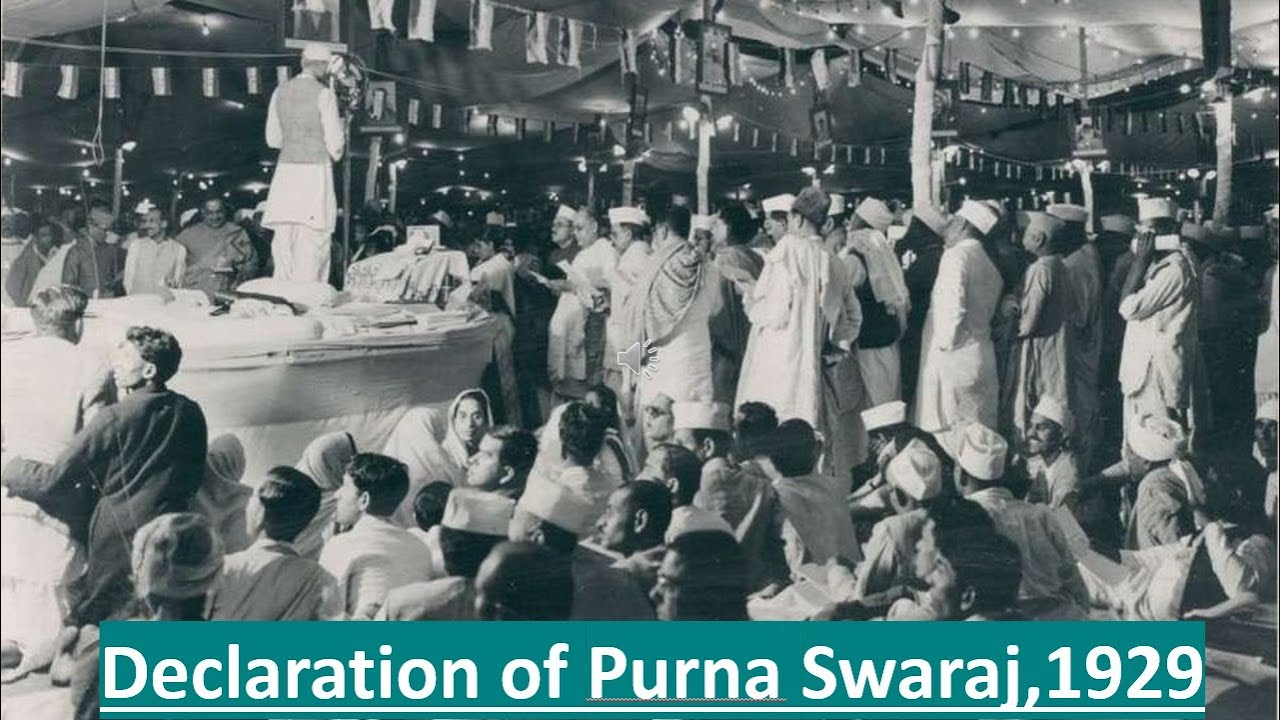
The historic midnight flag hoisting ceremony on the banks of River Ravi. - (i) On the cold banks of the River Ravi in Lahore, Jawaharlal Nehru hoisted the newly adopted tricolour flag of India.
- (ii) The atmosphere was electric, filled with the resonant slogans of "Inquilab Zindabad," marking a point of no return for the independence movement.
The Institution of January 26 as Independence Day
The Congress sought to mobilize the masses by dedicating a specific day to the cause of freedom, creating a nationwide celebration of sovereignty.
- (i) , was designated as the first Independence Day (also known as Swarajya Day).
- (ii) The plan was for citizens across the subcontinent to celebrate this day annually, reinforcing the collective resolve to achieve absolute liberty.
The Enduring Legacy of the 1929 Lahore Congress
The decisions made during this session fundamentally altered the trajectory of modern Indian history, providing the ideological fuel for the Salt Satyagraha and subsequent movements.
Long-term Consequences for the Independence Movement
The Lahore session successfully bridged the gap between different factions of the nationalist movement, uniting them under a single, radical objective.
- (i) Youth Mobilization: By placing Nehru at the helm, the Congress tapped into the revolutionary zeal of the younger generation, ensuring the movement's longevity.
- (ii) Ideological Foundation: The declaration of Purna Swaraj provided a clear, uncompromising vision that simplified the struggle for the common man and woman.
Conclusion: Why the Lahore Congress of 1929 Remains Crucial for Modern India
The Lahore Congress of was a watershed moment that defined the Indian independence movement through the leadership of Jawaharlal Nehru and the historic Purna Swaraj resolution. By instituting as Independence Day and authorizing a mass Civil Disobedience campaign, this session transitioned the struggle from elite negotiations to a mass revolutionary movement. For students and exam candidates, mastering these events is essential to understanding the political identity of independent India and the strategic brilliance of its freedom fighters during the early 20th century.
⚡ Quick Revision Capsule: Lahore Congress Session of 1929
Use this table for quick revision of essential facts regarding the 1929 Lahore Session.
| Key Aspect | Details & Historical Context | Significance for Modern India |
|---|---|---|
| Year & Venue | Held in Lahore in on the banks of River Ravi. | Set the geographic and temporal stage for mass movement. |
| Presidency | Jawaharlal Nehru, supported decisively by Mahatma Gandhi. | Marked a generational shift toward youth and socialist leadership. |
| Core Resolution | Declaration of Purna Swaraj (Complete Independence). | Replaced Dominion Status with total sovereignty as the sole objective. |
| Symbolic Action | Tricolour hoisted on ; declared Swarajya Day. | Established as a key date, later chosen for Republic Day. |
| Program Launched | Authorization of Civil Disobedience and legislative boycotts. | Paved the way for Gandhi's Dandi March and Salt Satyagraha in . |
📝 Summary
The Lahore Session of completely redefined India's freedom struggle. Guided by Jawaharlal Nehru, the Indian National Congress broke away from gradual constitutional reforms and formally declared Purna Swaraj (Complete Independence) as its singular goal. This historic meeting resulted in legislative resignations, authorized mass Civil Disobedience, and established symbolic landmarks like the midnight flag hoisting on the River Ravi and the annual observance of as Swarajya Day.
🚀 Quick Revision Points
Essential facts to review before examinations:
- (i) Purna Swaraj (Complete Independence) was declared as the ultimate goal in .
- (ii) Jawaharlal Nehru presided over the session with strategic support from Mahatma Gandhi.
- (iii) The tricolour flag was hoisted on the banks of River Ravi on .
- (iv) , was observed as the first Independence Day (Swarajya Day).
- 💡 Exam Tip: Focus on the link between the Lahore Session and the choice of for India's Republic Day in - this is a frequently asked question in competitive exams!
❓ Frequently Asked Questions (FAQ)
Q1: Who presided over the Lahore Congress Session of 1929?
A1: Jawaharlal Nehru presided over the Lahore Session of after receiving crucial support from Mahatma Gandhi.Q2: What was the primary resolution passed during the 1929 session?
A2: The main resolution was the adoption of Purna Swaraj or Complete Independence, which officially replaced the demand for Dominion Status.Q3: Why is January 26 significant in Indian history?
A3: , was celebrated as India's first Independence Day (Swarajya Day). To honor this historic pledge, India chose , to enact its Constitution and become a Republic.