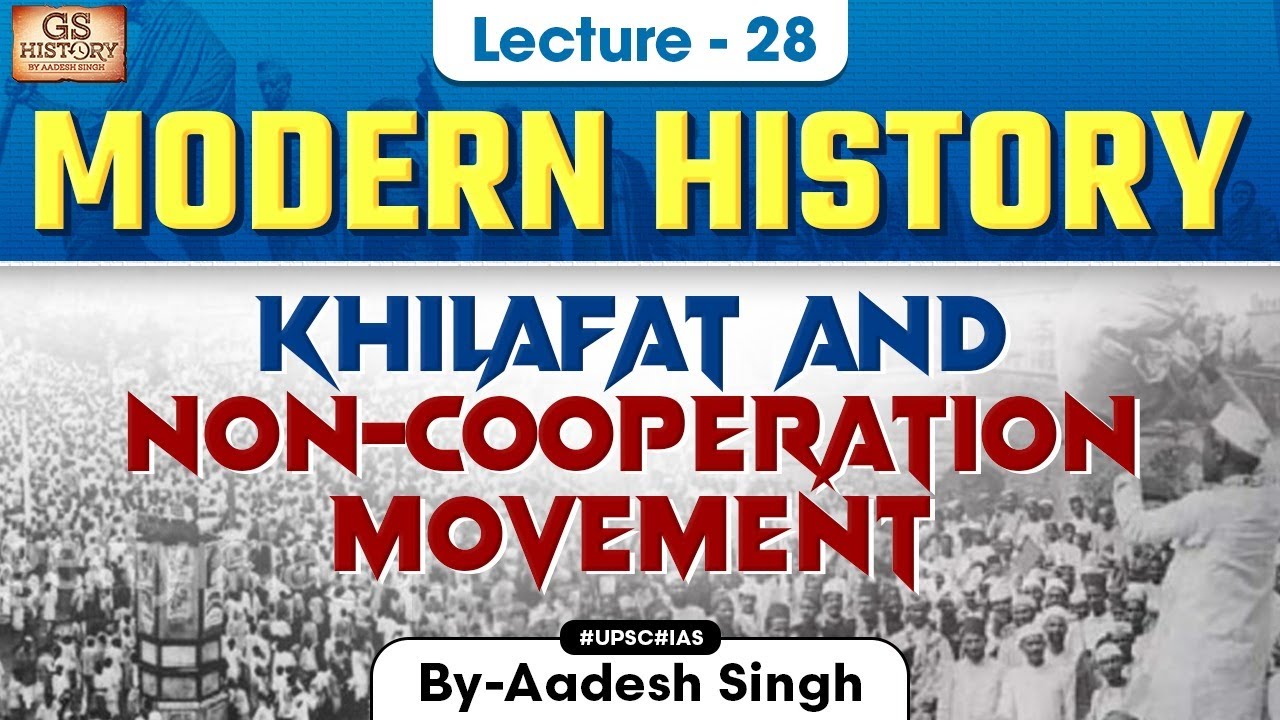
The Non-Cooperation Movement (–) marks a major turning point in India's struggle for freedom, showing how ordinary citizens joined hands under the leadership of Mahatma Gandhi. By combining the Khilafat movement with the call for Swaraj (self-rule), this nationwide effort aimed to bring Hindus and Muslims together against British rule. Learning how events moved from the first meeting in to the tragic event at Chauri Chaura in is very important for students preparing for competitive exams in modern Indian history.
🎯 In this chapter, you will understand:
- How the Non-Cooperation Movement began and brought different communities together for a common cause.
- The key steps taken to boycott British goods, schools, and courts across India.
- How the Indian National Congress changed its structure at the Nagpur Session to reach every common citizen.
- Why Mahatma Gandhi stopped the movement after the Chauri Chaura event and its impact on the nation.
💡 Why this topic matters: This was the very first movement where millions of common people across India joined together to peacefully resist British rule.
🧠 Core Idea: Achieving self-rule by peacefully refusing to cooperate with British schools, courts, and foreign goods, while building local Indian institutions.
The Saga of the Non-Cooperation Movement in India (1920-22)
The Non-Cooperation Movement (–), guided by Mahatma Gandhi, brought a completely new way of fighting for freedom through peaceful group strength.
The movement started as a strong answer to unfair British policies. It aimed to break down foreign rule simply by getting Indians to stop taking part in government institutions, bringing together many different concerns into one national voice against British power.
- (i) The main goal was to build Hindu-Muslim unity while standing up to British rule through a strictly non-violent approach.
- (ii) The plan included a complete boycott of government schools, law courts, and British-made items, along with returning all awards given by the British.
- (iii) This period encouraged the growth of national schools and inspired regional peaceful protests in different parts of India.
February 1920: The Joint Hindu-Muslim Deputation to the Viceroy
In early , a joint group of Hindu and Muslim leaders met the British Viceroy to ask for a fair resolution regarding the Khilafat issue, but the government paid little attention to their demands.
Gandhi’s Strategic Stand on Khilafat
Mahatma Gandhi understood that the concerns about the Khilafat were very important to the Muslim community. He saw this as a golden chance to bring both major communities together for a common goal.
Prioritizing the Khilafat Question
Gandhi felt that joining hands over the Khilafat issue was the quickest way to establish permanent friendship between communities.
- (a) Gandhi stated that issues in Punjab and other official changes were less urgent for the moment than addressing the critical Khilafat question.
- (b) He expressed his complete readiness to start a full-scale Non-Cooperation Movement if the British government did not resolve the concerns of Indian Muslims.
May 1920: The Implications of the Treaty of Sevres
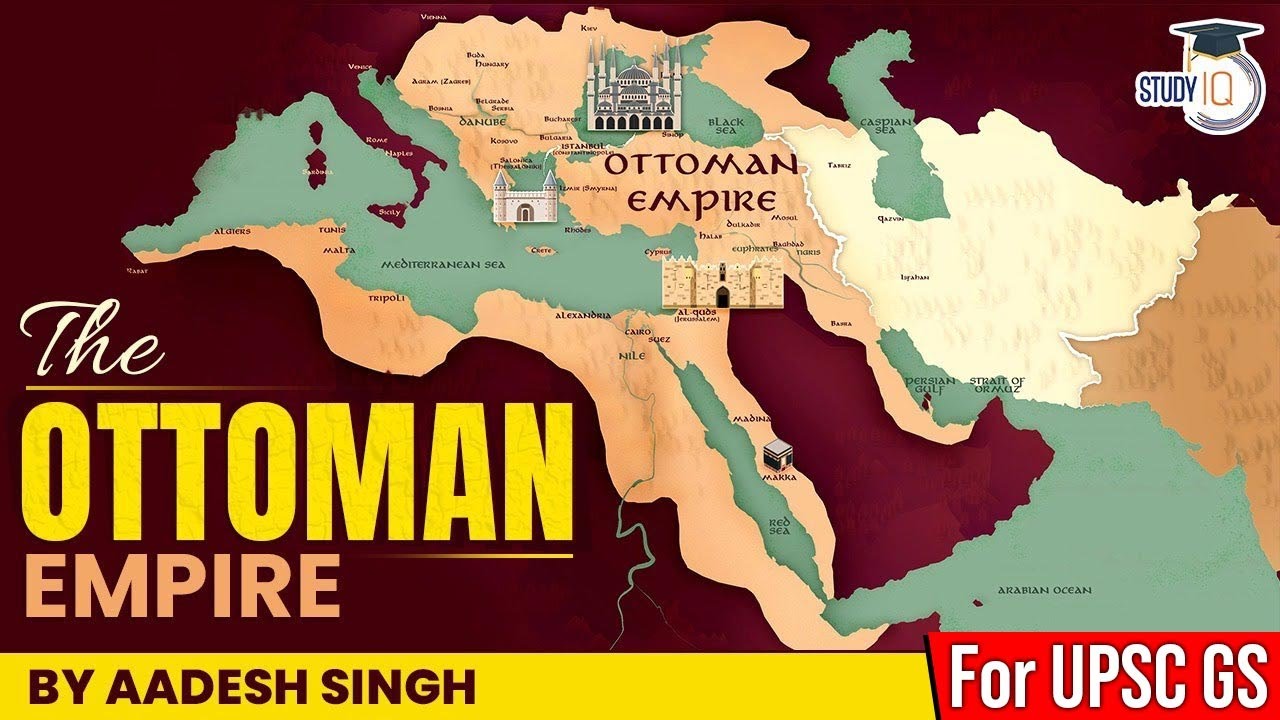
The signing of the Treaty of Sevres in officially broke up the Ottoman Empire. This action deeply hurt the feelings of Indian Muslims and strengthened their determination to fight alongside other Indians in the freedom struggle.

June 1920: Decisions at the Allahabad Conference
The Allahabad Conference was an important meeting where leaders from all parties came together and agreed to start boycotting government schools and law courts.
- (i) Attending leaders formally approved the boycott of British-run schools, colleges, and legal courts.
- (ii) The meeting officially requested Mahatma Gandhi to guide and lead this nationwide movement.
August 31, 1920: Launch of the Khilafat Committee Campaign
The Khilafat Committee formally started its non-cooperation program on . This day was also filled with sadness across the nation because the respected leader Bal Gangadhar Tilak had passed away on .
September 1920: Formal Approval of the Non-Cooperation Program
During a special meeting in Calcutta, the Indian National Congress approved a clear plan to challenge the British government using peaceful methods.
Comprehensive Measures of the Boycott Program
The plan was carefully designed to build national self-reliance through local cloth called Khadi, while step-by-step pulling support away from British institutions.
- (i) A large-scale boycott of all government-funded schools and colleges across the nation.
- (ii) Staying away from British courts and setting up local village councils (Panchayats) to settle legal disputes.
- (iii) Refusing to take part in legislative council elections.
- (iv) Focusing on Swadeshi (using Indian goods), which included burning imported clothes publicly and encouraging hand-spinning.
- (v) Giving back titles and honors that had been awarded by the British government.
- (vi) Setting a plan for future peaceful non-cooperation, such as resigning from government jobs and refusing to pay taxes.
Core Social Goals of the Movement
Along with political freedom, the movement worked hard to bring positive social changes to Indian society.
- (i) Working continuously for strong Hindu-Muslim unity as the foundation of the country.
- (ii) Making urgent efforts to completely eliminate the practice of untouchability.
- (iii) Strictly following the path of non-violence (Ahimsa) in every action.
December 1920: The Landmark Nagpur Session
The Nagpur Session of the Indian National Congress was a historic moment where the party transformed from a small group of educated elites into a true nationwide mass movement.
Revamping the Organizational Structure
The Congress adopted a new set of rules to make the organization open to everyone and ready for a long-term peaceful struggle for Swaraj.
- (i) Setting up a 15-member Congress Working Committee (CWC) to handle daily activities.
- (ii) Reorganizing state branches based on regional languages and dropping membership fees so that poor people could easily join.
- (iii) Welcoming former revolutionary groups who agreed to follow the non-violent path.
- (iv) The departure of moderate leaders, who later formed the Indian National Liberal Federation.
The Nationwide Impact of the Movement (1921-22)
As time went on, the movement spread to every corner of India, disrupting British trade and instilling a proud sense of national identity among citizens.
The use of the Charkha became a powerful symbol of self-reliance and economic resistance. - (i) Gandhi and the Ali brothers traveled across the country, inspiring the setup of over 800 national schools and colleges.
- (ii) Known thinkers and leaders like Subhash Chandra Bose, C.R. Das, Lala Lajpat Rai, and Zakir Hussain stepped forward to serve the movement full-time.
- (iii) Renowned lawyers including Motilal Nehru and Jawaharlal Nehru gave up their successful legal practices.
- (iv) Imports of foreign clothing dropped sharply as citizens gathered in public squares to burn imported fabrics.
- (v) The Tilak Swaraj Fund received overwhelming support, collecting more than one crore rupees.
- (vi) Local peasant movements arose in different areas, including the Awadh Kisan movement and the Mappila Revolt, showing widespread rural support.
February 1922: The Tragedy at Chauri Chaura and Its Aftermath
The speed and enthusiasm of the movement stopped suddenly after a tragic turn of violence in the village of Chauri Chaura, which made Gandhi reconsider whether the country was truly prepared for peaceful protest.
The Violent Turn at Chauri Chaura
A peaceful gathering turned into a tragedy when local police opened fire on demonstrators, leading to an angry response that shocked national leaders.
The Fatal Encounter
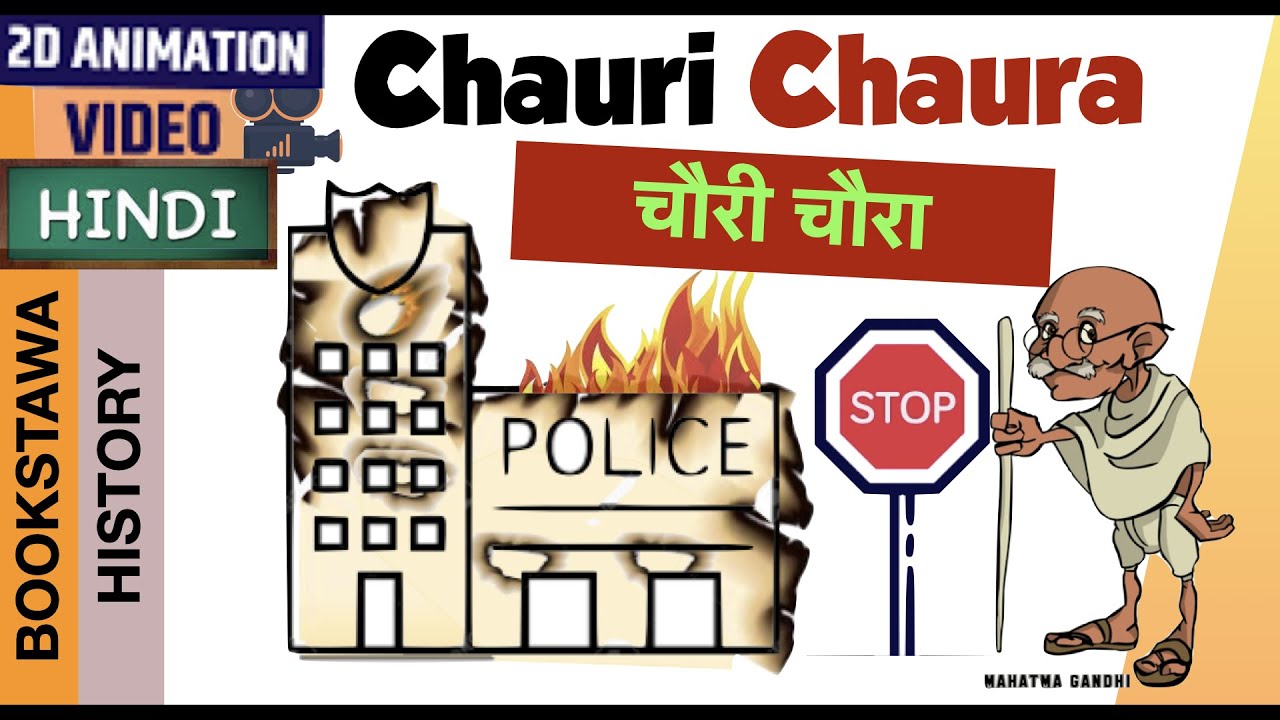
The violence at Chauri Chaura led directly to the end of the Non-Cooperation Movement.
- (a) After police opened fire, an enraged group set the Chauri Chaura police station on fire.
- (b) 22 police officers lost their lives in the fire, causing Gandhi to immediately pause the nationwide movement.
- (c) The Congress Working Committee met at Bardoli to shift focus toward constructive social work, concentrating on Khadi and basic education.
- (d) This sudden stopping of the movement was criticized by leaders like Motilal Nehru and Lala Lajpat Rai, who felt the movement was at its strongest point.
- (e) In , the British administration arrested Gandhi and sentenced him to six years in prison.
⚡ Quick Revision Capsule: Key Timeline of the Non-Cooperation Movement
Here is a quick overview of important events, dates, and milestones of the Non-Cooperation Movement for fast review before your exams.
| Date / Period | Key Event / Milestone | Historical Significance |
|---|---|---|
| Joint Deputation to Viceroy | Unified Hindu and Muslim leaders on the Khilafat issue. | |
| Treaty of Sevres | Dismantled the Ottoman Empire, bringing Indian Muslims firmly into the movement. | |
| Allahabad Conference | All-party consensus approved the boycott of schools and legal courts. | |
| Khilafat Campaign Launch | Official start of campaign; coincided with mourning for Bal Gangadhar Tilak. | |
| Calcutta Special Session | Congress approved the non-violent boycott program and promotion of Khadi. | |
| Nagpur Congress Session | Reorganized Congress into a mass party; created CWC. | |
| Chauri Chaura Incident | Violent clash led Mahatma Gandhi to suspend the entire movement. |
📝 Summary
The Non-Cooperation Movement (–) remains a cornerstone of the Indian independence struggle. It successfully brought Hindus and Muslims together under a single banner of peaceful resistance. Even though it ended abruptly after the tragic event at Chauri Chaura, the movement changed Indian politics forever by involving millions of common citizens. For students, mastering these events is essential to understand the growth of Gandhi's strategies and organized national freedom efforts in 20th-century India.
🚀 Quick Revision Points
Essential facts to review before examinations:
- (i) The movement was the first nationwide mass protest led directly by Mahatma Gandhi.
- (ii) It combined the Khilafat cause with the national demand for Swaraj.
- (iii) The Nagpur Session of lowered Congress membership fees to include common citizens and formed the 15-member CWC.
- (iv) The movement was called off in following the violent police station burning at Chauri Chaura.
- 💡 Exam Tip: Questions frequently ask about the connection between the Khilafat cause and the Non-Cooperation Movement, as well as the organizational changes made during the Nagpur Session of 1920. Remember the exact sequence of events from Calcutta (Sept 1920) to Nagpur (Dec 1920) to Chauri Chaura (Feb 1922).
❓ Frequently Asked Questions (FAQ)
Q1: What was the main objective of the Non-Cooperation Movement?
A1: The main objective was to achieve Swaraj (self-rule) and address grievances regarding the Khilafat issue and Punjab wrongs through non-violent resistance and boycotting British institutions.Q2: Why did Mahatma Gandhi withdraw the Non-Cooperation Movement in February 1922?
A2: Mahatma Gandhi withdrew the movement because a peaceful protest turned violent at Chauri Chaura, where 22 policemen were killed. Gandhi believed that the masses were not yet fully trained in true non-violence (Ahimsa).Q3: What major organizational changes were made to Congress at the Nagpur Session in 1920?
A3: The Nagpur Session formed a 15-member Congress Working Committee (CWC), reorganized provincial committees based on regional languages, and reduced annual membership fees so poor citizens could join.