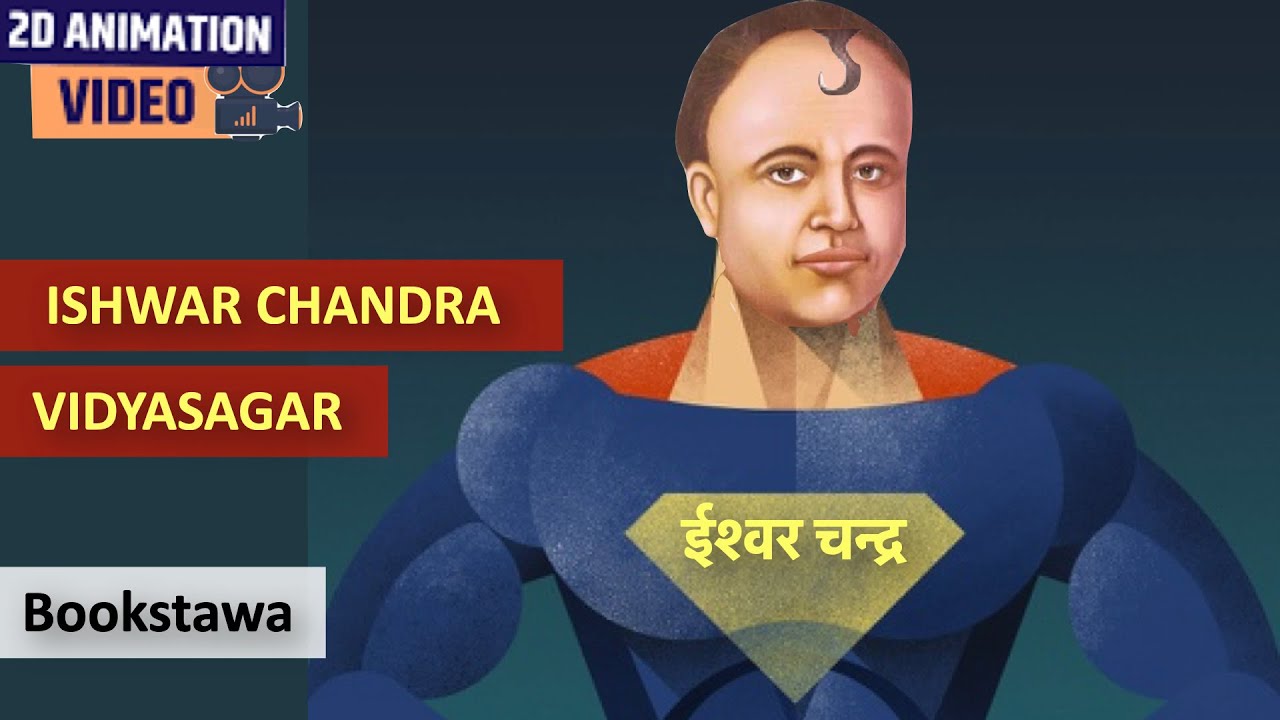
The Ishwar Chandra Vidyasagar story blends 19th-century social reform with educational innovation. This concise, student-friendly summary highlights his intellectual contributions, campaigns for women’s rights, and the founding role in the Bethune School, showing why Vidyasagar remains central to discussions on social reform and modern education.
🎯 In this chapter, you will understand:
- The harmonious blend of traditional Indian scholarship and modern Western educational methods.
- Key educational reforms, including opening the Sanskrit College to non-Brahmins and writing the primer Borno Porichoy.
- Major social campaigns for widow remarriage and legal protection against child marriage and polygamy.
- The founding and significance of the Bethune School in advancing female literacy in India.
💡 Why this topic matters: Vidyasagar’s reforms built the foundation for modern Indian education and women's empowerment, making his life a key subject for historical understanding and competitive examinations.
🧠 Core Idea: True social progress comes from using logic and compassion to reform traditional practices while making quality education accessible to every section of society.
📌 Ishwar Chandra Vidyasagar: Ideology, Reforms, and the Bethune School — A Study for Students
A visionary pioneer of the Bengal Renaissance, Ishwar Chandra Vidyasagar showed how to combine traditional scholarship with progressive modernism to transform Indian society.
The journey of Vidyasagar began in the heart of Bengal, where he emerged as a strong voice against stagnant social customs. His strategy was not to abandon traditional wisdom entirely, but to refine it through logic and human values, making his work essential for competitive exam preparation and historical study.
- (i) He served as a connecting link between ancient Sanskrit wisdom and modern scientific ideas from the West.
- (ii) He worked continuously to build a society where gaining knowledge was a standard right for everyone, not an exclusive privilege for a few.
- (iii) Through persistent effort, he modernized the legal rules and educational framework of colonial India.
📌 Intellectual Contributions and Social Initiatives of Ishwar Chandra Vidyasagar
Ishwar Chandra Vidyasagar brought together Indian philosophical traditions and select Western ideas, encouraging principled leadership, broader learning opportunities, and thoughtful social change.

A Harmonious Blend of Indian and Western Thought
Vidyasagar combined native ethics with practical modern reasoning to reform society without discarding beneficial traditions, creating a clear reformist narrative.
Adaptation of Western Methods
He supported using practical Western educational methods while keeping core Indian values intact.
- (i) He advocated for the inclusion of useful Western educational methods while strictly preserving core Indian values.
- (ii) He believed that combining Eastern and Western teaching methods would help students develop critical thinking and well-rounded character.
Critical Learning and Moral Formation
He used public discussions and books to promote original thinking and strong moral character.
- (i) Through his writings and public lectures, he encouraged critical learning as a tool for social progress.
- (ii) He emphasized that education without a strong foundation in moral formation was incomplete.
Breaking the Monopoly of Knowledge & Educational Innovations
Determined to make learning available to everyone, Vidyasagar expanded admissions and updated lessons for vernacular learning, helping common people advance in life.
Democratizing the Sanskrit College
He broke old social barriers by permitting students from all communities to study traditional texts.
- (i) Opening institutions: He took the breakthrough step of opening Sanskrit College to non-Brahmins.
- (ii) This bold move challenged long-held caste-based exclusivity in traditional Indian learning.
Modernizing Bengali Literacy
He simplified the Bengali alphabet and writing style to make reading easy for beginners.
- (i) Pedagogical reforms: He wrote the foundational Bengali primer, Borno Porichoy, which remains widely used today.
- (ii) He promoted a clear, modern prose style to significantly improve literacy and comprehension across Bengal.
Focus on Human Values
He guided students to use their knowledge for the betterment of society and the support of those in need.
- (i) Known for his high moral standards, he used his own earnings to help poor students and families.
- (ii) He viewed education primarily as a way to achieve moral growth and personal dignity.
Campaigns for Social Reform: Widow Remarriage & Women's Rights
Vidyasagar stood up for the dignity of women, fighting against harmful social customs and creating opportunities through schooling and supportive laws.
The Widow Remarriage Movement
He led a successful campaign that gave young widows the legal right to remarry and rebuild their lives.
- (i) He actively championed the cause that led to the legal recognition of widow remarriage through the Hindu Widows' Remarriage Act, 1856 (passed in ).
- (ii) He studied ancient shastric texts to prove that remarriage was allowed, answering conservative arguments with evidence.
Opposition to Child Marriage and Polygamy
He spoke out continuously against early marriage and multiple marriages, protecting young girls from severe hardship.
- (i) He campaigned publicly against child marriage and polygamy, calling them deeply damaging to society.
- (ii) He used his public standing to push for the legal protection of minors from early marriage.
Institutional Support for Women
He spent his own money and energy to set up schools specifically designed for girls across rural and urban Bengal.
- (i) He established and personally managed funding for dozens of girls' schools across Bengal.
- (ii) He considered education to be the essential foundation for freedom and self-reliance for women in India.
Bethune School and the Women's Education Movement
Vidyasagar’s work with the Bethune School proved his commitment to action, establishing permanent institutions to support female education.
The Founding Context of 1849
The establishment of this institution created a permanent center for women's higher learning in eastern India.
The Bethune School, founded in 1849 in Kolkata, established a foundation for formal female education in India. - (i) The Bethune School in Calcutta, founded in , became a major center for early women's education reform.
- (ii) Vidyasagar served as the honorary secretary and was the main administrator guiding its early progress.
Overcoming Social Stigma
He answered public criticism by showing how educated women bring positive values to their families and communities.
- (i) The school faced strong social pushback from conservative groups who worried that educated women would abandon household duties.
- (ii) Vidyasagar addressed these worries by demonstrating that female literacy strengthened the moral and social health of families.
⚡ Quick Revision Capsule: Key Contributions of Vidyasagar
This table summarizes the major achievements, institutional reforms, and social movements led by Ishwar Chandra Vidyasagar for fast exam revision.
| Area of Reform | Key Contribution / Initiative | Historical Impact |
|---|---|---|
| Educational Access | Opening Sanskrit College to non-Brahmins | Broke caste exclusivity in traditional education. |
| Bengali Literacy | Authoring Borno Porichoy primer | Created a simple, modern Bengali prose system. |
| Widow Remarriage | Advocating for the Hindu Widows' Remarriage Act, 1856 | Provided legal rights and dignity to widows in . |
| Women's Schooling | Co-founding and managing Bethune School | Established formal female education starting in . |
| Social Protection | Campaigns against child marriage and polygamy | Raised public awareness for the protection of minor girls. |
📝 Summary
Vidyasagar’s legacy rests on his practical combination of tradition and progress: he updated school lessons, opened access beyond caste divisions, and fought for women's rights through public campaigns and permanent institutions. For students, his life serves as an inspiring example of integrity and intellectual courage. In summary, Ishwar Chandra Vidyasagar remains a central figure in Indian reform — a thoughtful organizer, an educational leader, and a dedicated advocate for social justice whose contributions to female education through places like the Bethune School continue to guide modern discussions on equality and learning.
🚀 Quick Revision Points
Essential facts to review before examinations:
- (i) Vidyasagar introduced modern vernacular education by publishing Borno Porichoy.
- (ii) He ended caste-based entry rules at Sanskrit College to make learning available to all.
- (iii) He used legal channels and traditional texts to pass the Hindu Widows' Remarriage Act, 1856.
- (iv) He served as secretary of Bethune School, founded in , to promote girls' education.
- 💡 Exam Tip: When answering exam questions on the Bengal Renaissance, highlight Vidyasagar's dual focus: using traditional texts to justify reforms legally while building practical institutions like schools to sustain them.
❓ Frequently Asked Questions (FAQ)
Q1: What was Ishwar Chandra Vidyasagar's main contribution to the Bengali language?
A1: He simplified and standardized the Bengali alphabet by writing the book Borno Porichoy, which established modern Bengali prose.Q2: How did Vidyasagar support the widow remarriage movement?
A2: He wrote research papers using traditional scripture references to prove that widow remarriage was permitted, leading to legal approval under the Hindu Widows' Remarriage Act, 1856.Q3: What role did Vidyasagar play in the Bethune School?
A3: He served as the secretary of Bethune School (established in ), helping manage its operations, fund girls' education, and convince families to send their daughters to school.