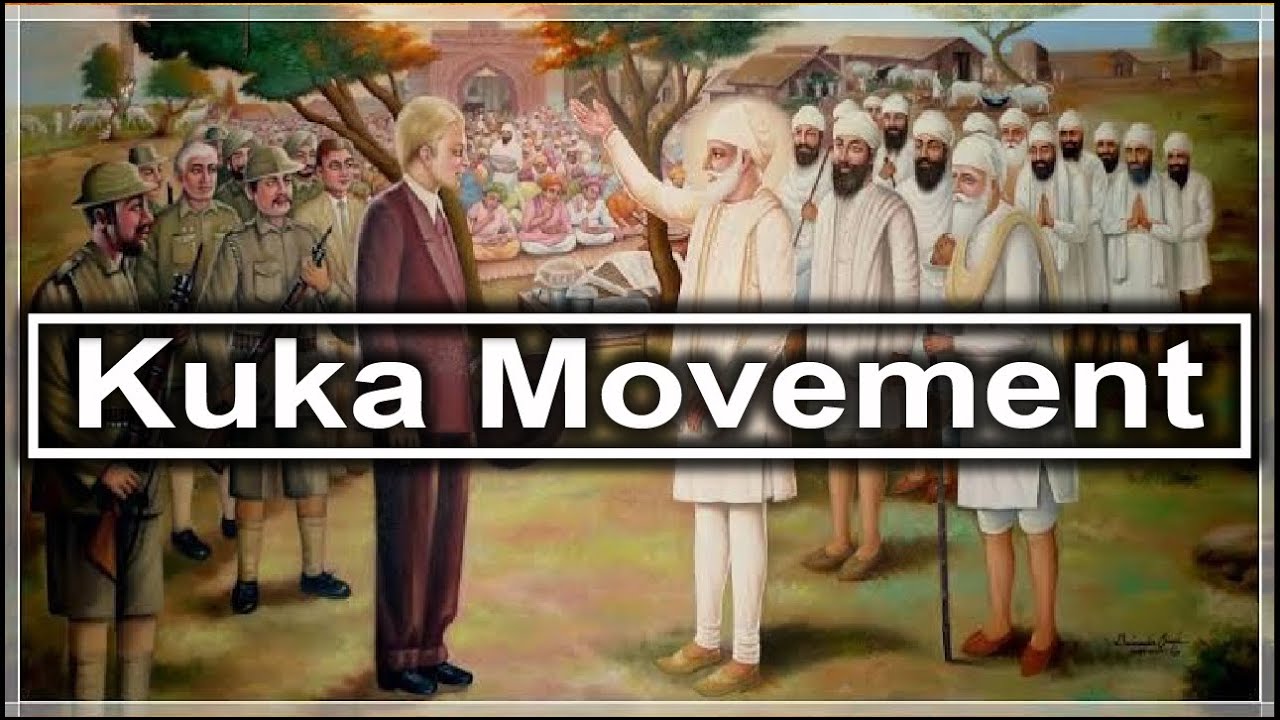
The Kuka Movement represents a pivotal chapter in history, emerging in under the spiritual guidance of Bhagat Jawahar Mal and the militant leadership of Baba Ram Singh in western Punjab. This revolutionary uprising combined deep-seated religious purification with a fierce political defiance against British colonial rule, making it a cornerstone for students and aspirants preparing for civil services and history examinations. By advocating for Swadeshi and social equality, the movement laid the early groundwork for the broader Indian national movement and Sikh reform efforts.
🎯 In this chapter, you will understand:
- The origins and evolution of the Kuka Movement in Punjab.
- The key social and religious reform initiatives led by Namdhari Sikhs.
- The early political strategies including Swadeshi, non-cooperation, and boycotts.
- The British suppression, deportation of Baba Ram Singh, and the lasting historic legacy.
💡 Why this topic matters: It highlights one of the earliest models of non-violent boycott and civil disobedience in India, long before these methods were popularized on a national scale.
🧠 Core Idea: Combining internal spiritual revival with external political resistance to create a self-reliant, morally upright society free from colonial rule.
📜 Kuka Movement: The Revolutionary Saga of Social Reform and Political Defiance (1840, Punjab)
The Kuka Movement was a unique synthesis of spiritual revivalism and anti-colonial political resistance that shook the foundations of British authority in Punjab. Initially starting as a peaceful religious reform group, the movement transformed into a powerful political force after the British annexation of Punjab, mobilizing the masses through the concepts of self-rule and moral purity.
- (i) The movement was inaugurated in by Bhagat Jawahar Mal, popularly known as Sian Saheb, in the western regions of Punjab.
- (ii) Under the later leadership of Baba Ram Singh, the group became more organized and shifted its focus toward active resistance against English interference.
- (iii) The Kukas were characterized by their distinct style of reciting Gurbani (Sikh scriptures) in a high-pitched voice, or 'Kuk', which gave the movement its name.
- (iv) It served as a precursor to modern non-cooperation by boycotting British institutions long before the nationalist movements.
🏛️ The Dual Pillars: Socio-Religious Reforms and Anti-Colonial Goals
The Kuka Movement stood on two pillars: the internal purification of the Sikh community and the external removal of the British yoke from Indian soil.

- The movement systematically attacked rigid social hierarchies, harmful rituals, and political submission.
✨ Transformative Religious and Social Reforms
The movement sought to strip away the superstitions and social hierarchies that had crept into the Sikh faith, advocating for a return to the core values of equality and simplicity.
Abolition of Social Hierarchy
- (i) Fierce opposition to caste discrimination, promoting the idea that all Sikhs are equal regardless of birth.
- (ii) Advocacy for the total abolition of untouchability within the Punjab region.
Moral and Ethical Codes
- (i) Strict prohibition and discouragement of meat and alcohol consumption among followers.
- (ii) Promotion of widow remarriage and the practice of inter-caste marriage to break traditional barriers.
- (iii) Encouragement of active women’s participation in both religious and social spheres, which was radical for the .
🚩 Political Objectives and the Spirit of Swadeshi
Beyond religion, the Kukas harbored a vision of a sovereign Punjab, free from the administrative and economic shackles of the British Empire.
Principles of Swadeshi and self-reliance pioneered by Baba Ram Singh. - (a) The primary political goal was the complete removal of British rule and the restoration of Sikh governance.
- (b) Early promotion of Swadeshi goods, specifically urging followers to wear only hand-spun, hand-woven clothes.
- (c) A systematic boycott of English laws, government education systems, and all imported foreign products.
- (d) Establishing their own independent postal system to bypass British surveillance and maintain secure communications.
⚔️ British Crackdown and the Legacy of Suppression
As the movement grew in strength, the British administration viewed the Kukas as a significant threat to their imperial stability, leading to a period of intense state violence.
- (i) Between and , the British government intensified its efforts to dismantle the Kuka network through arrests and surveillance.
- (ii) The culmination of this tension occurred in , when the movement was brutally suppressed following a series of clashes.
- (iii) Baba Ram Singh was captured and subsequently deported to Rangoon (Burma) in , where he remained until his death.
- (iv) Despite the physical suppression, the Kuka strategies of non-cooperation significantly influenced later Indian nationalist strategies and leaders.
⚡ Quick Revision Capsule: The Kuka Movement
Key highlights of the movement summarized for fast review:
| Aspect | Key Details | Historical Impact |
|---|---|---|
| Founders & Leaders | Bhagat Jawahar Mal () and Baba Ram Singh | Transformed a quiet reform group into a well-knit anti-colonial organization. |
| Core Ideology | Spiritual purity, equality, and Swadeshi | Attacked social evils like caste discrimination and female infanticide. |
| Key Methods | Boycott of foreign clothes, court systems, and official posts | Laid early foundations for civil disobedience and self-rule. |
| Communication System | Independent postal network (Kuka Mail) | Allowed covert coordination free from colonial interference. |
| Crackdown & Outcome | Suppressed in ; leadership exiled to Rangoon | Inspired future freedom fighters and modern Sikh reform movements. |
📝 Summary
The Kuka Movement (–) remains a vital subject for students because it bridged the gap between religious revivalism and the Indian freedom struggle. By championing Swadeshi, equality, and civil disobedience, Baba Ram Singh and his followers created a blueprint for resistance. Understanding this movement is essential for mastering the history of Punjab and the early stages of anti-colonial protest in India.
🚀 Quick Revision Points
Essential facts to review before examinations:
- (i) Initiated in by Bhagat Jawahar Mal (Sian Saheb) in western Punjab.
- (ii) Transformed into a major social-political force under Baba Ram Singh.
- (iii) Promoted strict ethical principles: inter-caste marriage, widow remarriage, and abolition of caste hierarchy.
- (iv) Championed early Swadeshi and non-cooperation against British rule.
- 💡 Exam Tip: Remember that the Kuka Movement was among the first to establish a self-reliant postal network and preach a complete boycott of British institutions long before Mahatma Gandhi's Non-Cooperation Movement.
❓ Frequently Asked Questions (FAQ)
Q1: Who founded the Kuka Movement and when?
A1: The movement was founded in by Bhagat Jawahar Mal (also known as Sian Saheb) in western Punjab.Q2: What were the major social reforms advocated by the Kukas?
A2: They advocated for the abolition of caste discrimination and untouchability, discouraged meat and alcohol consumption, encouraged widow remarriage and inter-caste marriages, and promoted women's equality.Q3: What happened to Baba Ram Singh in 1872?
A3: After the British brutally suppressed the uprising in , Baba Ram Singh was arrested and deported to Rangoon (Burma), where he remained in exile until his death.