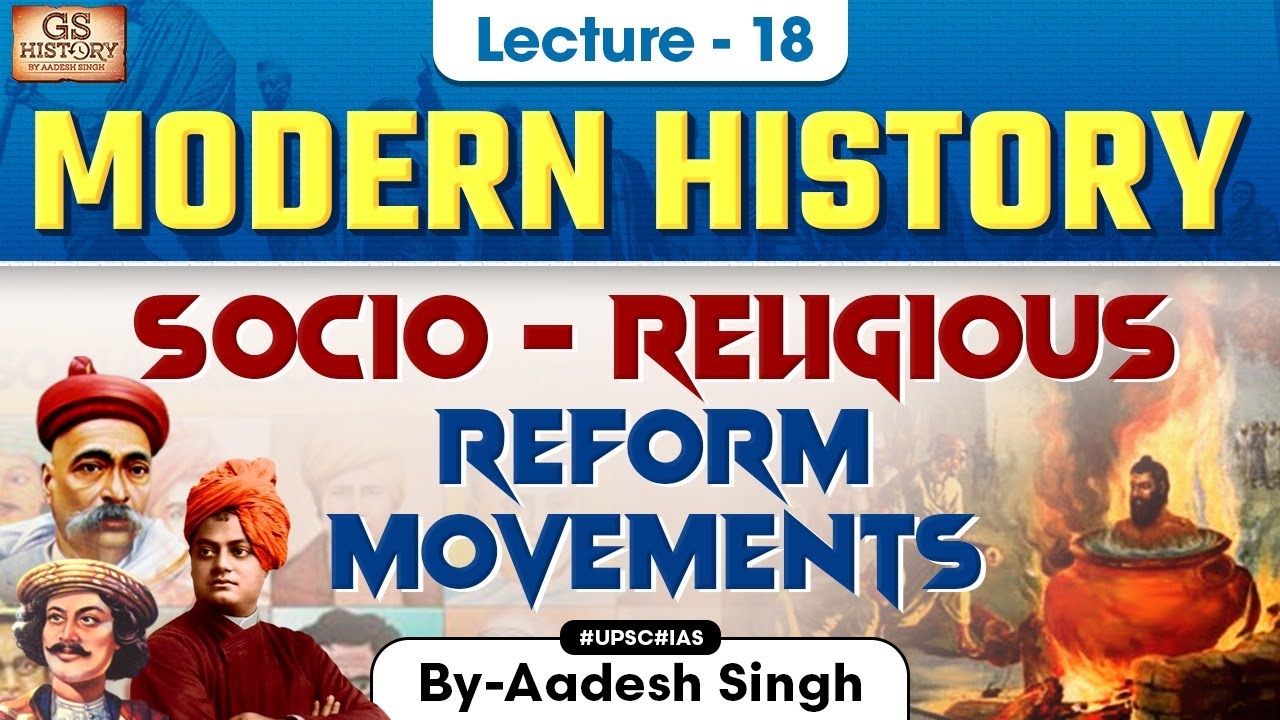
The in India marked a crucial phase of social reform, cultural reawakening, and intellectual transformation. This period witnessed both the influence of British rule and the rise of reform movements that shaped modern Indian history. For students of history, understanding this phase is vital to grasp the roots of nationalism, modernization, and socio-religious change.
🎯 In this chapter, you will understand:
- How British rule acted as a catalyst for internal social reform in India.
- The severe social issues affecting women and lower castes during the 19th century.
- The clash between traditional Indian culture and Western cultural domination.
- How early reform efforts laid the foundation for national awakening and democratic ideals.
💡 Why this topic matters: Understanding 19th-century reforms explains how modern Indian social values, legal protections, and national consciousness took shape.
🧠 Core Idea: Exposure to modern ideas under colonial rule pushed Indian thinkers to reflect on internal weaknesses, leading to a widespread social reawakening and reform movement.
New Vision and Enlightenment in 19th Century India: Impact of Colonial Rule and Social Reform
The dawn of the introduced a modern outlook among progressive sections of Indian society, often described as a Renaissance.
As the sun rose on the , India stood at a crossroads between its ancient traditions and a growing modern intellect. This era, widely celebrated as the Indian Renaissance, was not merely a change in governance but a profound social awakening that stirred the minds of the educated elite. While it paved the way for intellectual growth, it simultaneously birthed a complex landscape of negative consequences, as the clash between foreign values and indigenous roots created a friction that defined the century.
- (i) The process of intellectual growth encouraged a widespread social awakening across urban centers.
- (ii) The introduction of foreign ideologies produced certain negative consequences alongside the positive thrust of reform.
- (iii) Modernity became a double-edged sword, challenging the very fabric of traditional Indian culture.
Impact of British Colonial Rule on Indian Society and Culture
The arrival of the British brought a distinct cultural influence shaped by Enlightenment ideas and scientific thought, creating a stark contrast against the existing social landscape.

Colonial Cultural Contrast with Indian Traditions
The British presence served as a mirror, reflecting the social stagnation and decadence that had crept into Indian society over centuries. Unlike the invaders of the past—who crossed the borders only to be absorbed into Indian culture—the British remained a distinct, separate entity, maintaining a cultural distance that acted as a catalyst for local self-reflection.
- (i) The British maintained a rigid cultural separation, refusing to blend with the local populace.
- (ii) This isolation highlighted the stagnation of local institutions compared to the Scientific Revolution of the West.
Social Conditions Ripe for Reform in India
Within the heart of the 19th-century landscape, religious superstition and social obscurantism held a firm grip on the masses. Hinduism, the primary faith of the land, had become heavily overshadowed by the influence of priests and complex rituals of magic, moving away from its philosophical origins toward a darker period of blind faith.
The Grim Condition of Women
Women faced severe social restrictions and harmful traditional customs during this period.
- (i) Social practices like sati, child marriage, and polygamy severely degraded the status of women.
- (ii) Female infanticide remained a haunting reality in many households.
The Fragmentation of the Caste System
Strict social hierarchies divided the population into isolated groups.
- (i) Rigid caste hierarchies created deep internal divisions, marginalizing the untouchables.
- (ii) These divisions significantly weakened Indian unity, making the nation vulnerable to external control.
Resistance to Western Cultural Domination
As the British attempted to establish their colonial culture as the dominant force, a silent but powerful resistance began to grow. This was not just a political fight but a cultural survival movement where traditional Indian culture sought to revive its core strength to counter Western hegemony.
Preserving Cultural Identity against Western Hegemony - Cultural Revival: Efforts were made to revive traditional values to provide a buffer against Westernization.
- Indigenous Pride: The clash of civilizations fueled a new sense of pride in indigenous roots.
New Awareness and Awakening among Indians
The shock of foreign conquest combined with an exposure to Western ideas triggered a fresh awakening. Educated Indians began to look inward, realizing that internal social weaknesses—rather than just military power—had enabled foreign rulers to gain control.
- (i) Intellectuals recognized that social reform was a vital prerequisite for political freedom.
- (ii) In Bengal, the struggle between tradition and modernity took a radical turn.
- (iii) Some Bengali elites rejected traditional religious orthodoxy entirely, adopting provocative Western habits like wine drinking and beef eating as a symbol of their break from past norms.
Emergence of Reform Movements in 19th Century India
By the late , the twin forces of nationalism and democracy accelerated the momentum for change, fueled by Western education and shifting economic conditions.
Nationalism and Democratic Reform
The growing nationalist thought made it clear that a modern nation could not be built on ancient social injustices. Democratic ideals challenged caste-based traditions, demanding a society based on equality rather than birthright.
- (i) Nationalist leaders viewed the modernization of institutions as a key tool for social liberation.
- (ii) Questioning rigid religious dogmas became a hallmark of the new intellectual era.
Strengthened Resolve for Reform
The spread of education and new economic opportunities broadened the outlook of the middle class. The combination of nationalism and social reform helped build a resilient Indian identity that sought to merge the best of Eastern values and Western knowledge.
- (a) Western liberal thought acted as a catalyst for challenging long-standing social evils.
- (b) Economic changes required a more flexible and mobile social structure.
- (c) The drive for social justice became inseparable from the quest for self-rule.
⚡ Quick Revision Capsule: 19th Century Social Reform Movements
Key dimensions, factors, and consequences of the 19th-century social reform era in India:
| Aspect | Key Features & Issues | Historical Significance |
|---|---|---|
| Colonial Impact | Exposure to scientific thought and Enlightenment ideals | Exposed internal weaknesses and social stagnation |
| Condition of Women | Prevalence of sati, child marriage, polygamy, and female infanticide | Became the primary focus of legislative and social reform |
| Caste Dynamics | Rigid social hierarchy and marginalization of lower castes | Challenged by democratic ideals and human rights principles |
| Cultural Response | Dual approach of internal reform and defense against Western dominance | Sparked a proud revival of indigenous traditions and pride |
| National Awakening | Integration of social reform with political nationalism | Laid the essential groundwork for modern Indian democracy |
📝 Summary
The reform era stands as a testament to India's resilience, blending the influences of colonial rule, Western thought, and a genuine Indian awakening. While it sparked intense conflicts between age-old traditions and incoming modernity, it ultimately laid the essential foundation for national consciousness. For students, this era demonstrates how the drive toward social justice and modernization was the crucial first step toward a free and modern India.
🚀 Quick Revision Points
Essential facts to review before examinations:
- (i) The is widely regarded as the era of the Indian Renaissance.
- (ii) Colonial presence highlighted internal social problems like religious superstition and priestcraft.
- (iii) Major target areas of social reform included women's rights and the abolition of the caste hierarchy.
- (iv) Social reform was seen by early thinkers as an essential prerequisite for achieving true political freedom.
- 💡 Exam Tip: When answering questions about 19th-century reforms, highlight that social reform and political nationalism went hand in hand—leaders realized India could not win political freedom without first removing internal social inequalities.
❓ Frequently Asked Questions (FAQ)
Q1: Why is the 19th century called the Indian Renaissance?
A1: It is called the Indian Renaissance because it marked a major cultural, intellectual, and social reawakening, combining traditional knowledge with modern scientific thought.Q2: How did British rule influence Indian social reform?
A2: British rule brought exposure to Western liberal ideas and scientific thinking, which pushed educated Indians to examine and correct social evils in their own society.Q3: What were the major social evils targeted by 19th-century reformers?
A3: Reformers primarily focused on eradicating practices like sati, child marriage, female infanticide, polygamy, and rigid caste discrimination.