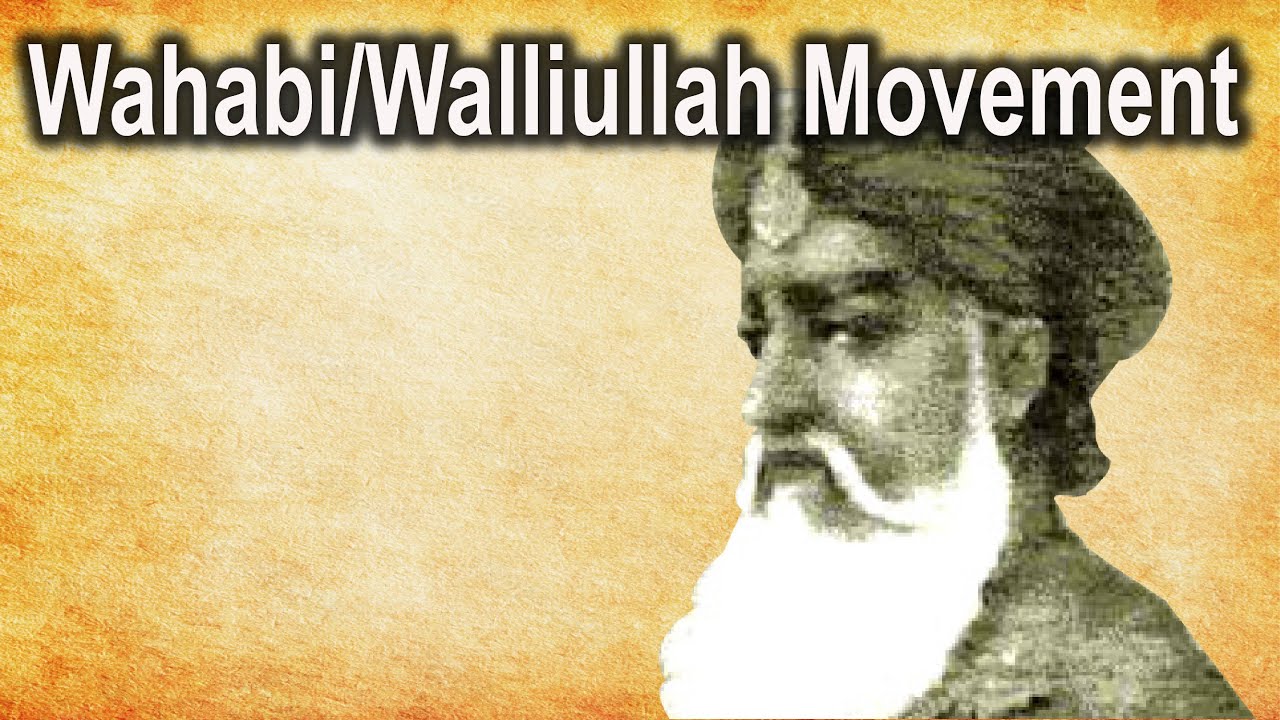
The Wahabi/Walliullah Movement emerged as an important Islamic reform and revival effort during India. It drew its ideological power from the teachings of Abdul Wahab and Shah Walliullah (). This movement worked to bring back Islam to its original simple practices while strongly opposing Western habits and building early resistance against British colonial rule. For students learning about Indian history, this period shows how religious reform connected directly with the early anti-colonial fights that later fueled the Great Revolt of .
🎯 In this chapter, you will understand:
- The origins and spiritual ideals set by Shah Walliullah and Abdul Wahab.
- How religious teaching transformed into active anti-British political resistance.
- The tactical shifts in armed conflict from the Sikh Empire to the British East India Company.
- The role of Wahabi leaders in the 1857 Revolt and their final suppression in the 1870s.
💡 Why this topic matters: It reveals how early freedom struggles in India were deeply tied to social and religious reform movements aiming to protect local culture and political freedom.
🧠 Core Idea: The Wahabi Movement combined personal moral cleanup with political action to remove foreign rulers from India.
Historical Impact and Ideological Evolution of the Wahabi/Walliullah Movement (1702–1870)
The movement served a two-part purpose by joining moral growth with a clear political fight against foreign control.
At its heart, the leaders wanted to reunite Muslims under core religious ideas while removing un-Islamic local customs that had grown over time. As the British extended their rule, this scholarly group turned into a strong movement fighting British colonial forces.
- (i) The movement found its main ideas in the work of Abdul Wahab of Arabia and Shah Walliullah ().
- (ii) It grew as a firm reaction against incoming Western culture and moral weakness among traditional leaders.
- (iii) Leaders successfully joined religious teaching with political goals to form a organized push against foreign expansion.
The Philosophical Foundations: Teachings and Ideals of the Wahabi Movement
The guidance of Shah Walliullah gave followers a structured plan that balanced traditional beliefs with practical reforms needed for their changing world.

Sources of Spiritual and Intellectual Inspiration
This initiative was connected to a larger global awakening across the Islamic world that focused on basic religious principles through careful reading and sincere practice.
Influence of Arabian Revivalism
- (i) Primary ideas were shared from Abdul Wahab’s teachings in Arabia, which stressed absolute devotion to one God.
- (ii) This thinking connected Indian Muslim scholars to broader reform efforts across the Middle East.
The Legacy of Shah Walliullah ()
- (i) Shah Walliullah prioritized clear faith, translating the holy text Quran into Persian so educated people could read and understand it directly.
- (ii) He pointed out that the weakening of the Mughal Empire came from a loss of moral discipline and focus.
The Revivalist Response to Cultural Decay
Movement leaders saw the growing British presence as an ideological threat that required a strong spiritual response.
- (i) Their main aim was to push back against Western habits that were changing local traditions.
- (ii) By urging a return to foundational principles, they hoped to rebuild community confidence and internal strength.
The Two-Fold Ideals of Shah Walliullah's Reform
Walliullah was skilled at resolving internal differences so that reforms would not break community harmony.
- (i) He worked to bring peace among the four traditional schools of Islamic law to keep unity.
- (ii) He supported the use of Ijtihad (individual reasoning and thought), allowing people to apply principles thoughtfully to modern problems.
The Spread and Evolving Political Perspective of the Wahabi Movement
When leadership moved to Shah Abdul Aziz and later Syed Ahmed Barelvi, the group transformed into a powerful social and political force targeting colonial rule.
Popularisation and the Shift Toward Active Resistance
What started as careful classroom studies soon expanded into active resistance across North India.
- (i) Shah Abdul Aziz shared Walliullah’s message widely so regular people could understand it.
- (ii) Syed Ahmed Barelvi organized followers into a focused effort, bringing reform ideas straight into public political action.
Strategic Political Objectives and Ideology
The leadership set clear social goals based on how land was governed and managed.
Geographic reach of Wahabi organizational hubs across India - (i) They urged people to set aside unhelpful superstitions that had entered daily life over the centuries.
- (ii) They viewed India under foreign rule as Dar-ul-Harb (land under foreign control), working toward making it Dar-ul-Islam (a land governed by moral Islamic rule).
Evolution of Military Targets: From Sikhs to British
The group changed its tactical focus as power shifted across regional borders in middle of the .
- (i) Armed efforts were first aimed at the Sikh Kingdom in Punjab during regional disputes in the Northwest.
- (ii) After the British annexed Punjab in , all resistance shifted directly against the British East India Company.
The Crucial Role in the 1857 Great Revolt
Followers provided early organizational support that helped spread opposition to British rule.
- (i) They shared information and literature warning against colonial expansion across northern cities long before open battles started.
- (ii) During the Great Revolt of , members actively fought alongside local groups trying to end colonial rule.
The Military Suppression and Final Decline
The colonial administration treated the group as a major threat and used strict laws and military force to shut it down.
- (i) Throughout the , official court trials and military actions were carried out to capture and imprison movement leaders.
- (ii) These continuous actions broke down the group's network, leading to its eventual end as an organized movement.
⚡ Quick Revision Capsule: Wahabi/Walliullah Movement
Key historical milestones, major leaders, and main goals at a glance:
| Aspect | Key Details | Historical Significance |
|---|---|---|
| Primary Founders | Shah Walliullah () & Abdul Wahab | Laid the intellectual foundation for religious purity and moral reform. |
| Key Reform Work | Persian translation of the Quran | Promoted direct text reading and encouraged Ijtihad (independent reasoning). |
| Political Shift Leaders | Shah Abdul Aziz & Syed Ahmed Barelvi | Transformed spiritual teaching into an organized anti-colonial struggle. |
| Target Shift () | From Sikh Kingdom to British East India Company | Redirected forces against foreign rule after the annexation of Punjab. |
| Revolt & Suppression | Active in ; suppressed in | Showed early organized resistance before being dismantled by legal trials. |
📝 Summary
The Wahabi and Walliullah Movement during the stands as an important example of combining internal social reform with active political resistance. Guided by the writings of Shah Walliullah and carried into public action by Syed Ahmed Barelvi, it created a dedicated front against foreign rule. Though colonial suppression ended its activities in the , its efforts created lasting awareness of self-rule and reform that influenced later independence movements in India.
🚀 Quick Revision Points
Essential facts to review before examinations:
- (i) Founded on spiritual purification ideas from Shah Walliullah and Abdul Wahab.
- (ii) Encouraged community unity across legal schools while supporting Ijtihad.
- (iii) Declared land under foreign rule as Dar-ul-Harb to mobilize support.
- (iv) Played an active, organized role during the freedom struggle of .
- 💡 Exam Tip: Remember the shift in when British forces annexed Punjab—this changed the movement's focus entirely toward opposing the British East India Company.
❓ Frequently Asked Questions (FAQ)
Q1: Who were the main thinkers behind the Wahabi Movement in India?
A1: The movement drew its primary ideas from Shah Walliullah () and Abdul Wahab, with practical organizing led later by Shah Abdul Aziz and Syed Ahmed Barelvi.Q2: What is the meaning of Ijtihad in Walliullah's teachings?
A2: Ijtihad refers to using individual reasoning and logical thinking to interpret religious principles rather than relying blindly on older practices.Q3: How did the movement end?
A3: The movement was gradually brought to an end in the through heavy British military actions and court trials against its key leaders.