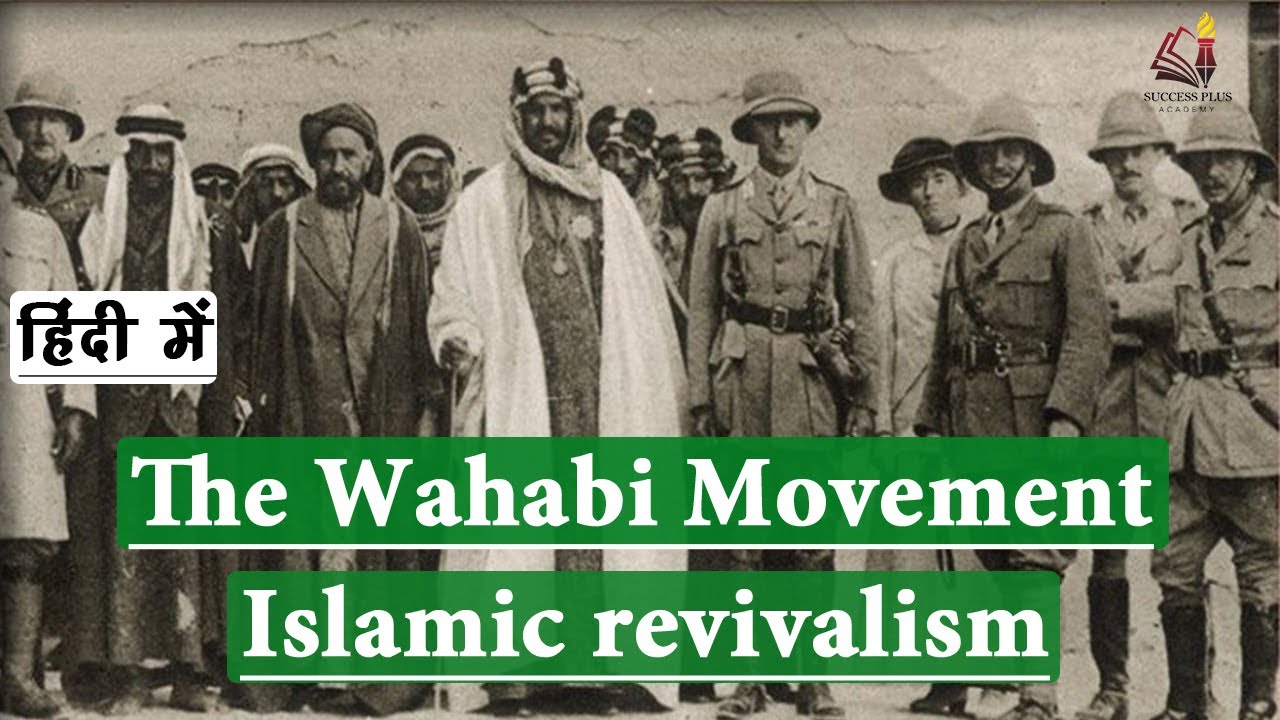
The Wahabi Movement, founded by Syed Ahmed of Rai Bareilly, stands as a pivotal Islamic revivalist and anti-colonial movement in Indian history. By drawing ideological inspiration from Abdul Wahab of Saudi Arabia and Shah Waliullah of Delhi, this movement fiercely opposed Western influences and advocated for a return to pure Islamic practices. For students and candidates, mastering this topic is essential for exam preparation as it illustrates the powerful link between religious reform and early anti-British resistance.
🎯 In this chapter, you will understand:
- The origins and core philosophy of the Wahabi Movement.
- The strategic geographical expansion across India.
- The transition from religious reform to anti-colonial struggle.
- The impact of British suppression and the movement's historical legacy.
💡 Why this topic matters: It highlights how religious and social reforms were used as a basis for challenging colonial rule during the .
🧠 Core Idea: A movement aiming to purify Islam and reclaim sovereignty, evolving into a direct military challenge to the British.
The Wahabi Movement: Islamic Revivalism and Anti-Colonial Resistance (1820-1890)
The Wahabi Movement represented a sophisticated blend of religious purification and organized political activism that resonated across the Indian subcontinent.
This movement was not merely a spiritual endeavor but a calculated response to the perceived moral and political decline of the Muslim community under colonial shadow.
- (i) The movement was pioneered by Syed Ahmed of Rai Bareilly, who synthesized the teachings of Abdul Wahab and the Indian scholar Shah Waliullah to create a robust reformist framework.
- (ii) Its core philosophy rested on the restoration of Islam to its original purity, mimicking the social and religious structures found during the era of the Prophet.
- (iii) The organizational structure was highly disciplined, with Syed Ahmed recognized as the Imam, supported by spiritual vice-regents known as Khalifas, while Sithana served as their primary operational base.
The Vast Geographical Influence and Strategic Missions of the Wahabis
From its roots in Northern India, the movement branched out into a network of missions that effectively disseminated its radical message of reform and rebellion.

Strategic Centers and Missionary Outreach
The Wahabis established a sophisticated administrative and recruitment network that spanned the length and breadth of India, ensuring a steady flow of resources and volunteers.
The Role of Patna as the Central Hub
- (i) Patna served as the primary nerve center for the movement's logistical and ideological planning.
- (ii) It acted as a recruitment ground where volunteers were prepared for the journey to the Northwestern frontier.
Regional Expansion into Madras and Bengal
- (i) Missions were successfully extended into Hyderabad, Madras, Bengal, the United Provinces, and Bombay.
- (ii) In Bengal particularly, the movement found fertile ground among the peasantry, linking religious reform with socio-economic grievances.
The Wahabi Contribution to Early Anti-Colonial Sentiments
The movement was instrumental in fostering a sense of collective identity and resistance among Indian Muslims against foreign rule.
Mobilization and Political Awareness of the Muslim Community
By framing the struggle in religious terms, the Wahabis managed to mobilize segments of society that were otherwise indifferent to the political shifts of the era.
Image: Mobilization efforts in the community - Political Awareness: The leadership worked tirelessly to encourage Muslim community awareness regarding the detrimental effects of foreign domination and Western influence.
- Ideological Template: They successfully combined Islamic revivalism with active political resistance, creating a template for future ideological challenges to colonial policies.
⚡ Quick Revision Capsule: Wahabi Movement
Key highlights of the movement's history and structure.
| Entity | Role/Significance | Location |
|---|---|---|
| Syed Ahmed | Founder and Imam | Rai Bareilly |
| Patna | Central logistical hub for recruitment | Bihar |
| Sithana | Primary operational base | Northwestern Frontier |
| Khalifas | Spiritual vice-regents | Regional missions |
| British Government | Primary target of resistance after 1849 | India |
📝 Summary
The Wahabi Movement led by Syed Ahmed of Rai Bareilly remains a cornerstone of religious revivalist and political resistance history in India. Between the and the , it rejected Western influence and championed pure Islamic practices, creating a formidable front against the British. For students, analyzing this movement is vital for understanding how the intersection of religion, politics, and resistance shaped the pre-independence era as documented in various historical texts.
🚀 Quick Revision Points
Essential facts to review before examinations:
- (i) The movement was based on the teachings of Shah Waliullah and Abdul Wahab.
- (ii) The movement shifted its military focus from the Sikh Kingdom to the British Empire.
- (iii) The British used sedition laws to dismantle the movement's leadership in the 1860s.
- (iv) The legacy of the movement is often discussed in modern history curricula.
- 💡 Exam Tip: Remember that the Wahabi Movement evolved from a religious purification mission into a significant political rebellion against British colonial power.
❓ Frequently Asked Questions (FAQ)
Q1: Who was the founder of the Wahabi Movement?
A1: The movement was founded by Syed Ahmed of Rai Bareilly.Q2: What was the primary purpose of the movement?
A2: It aimed at Islamic revivalism, purifying the religion of foreign influences, and challenging colonial rule.Q3: Why did the British target the movement in the 1860s?
A3: Because the movement's organizational and financial network was seen as a threat to British sovereignty and stability, requiring legal measures like sedition trials.