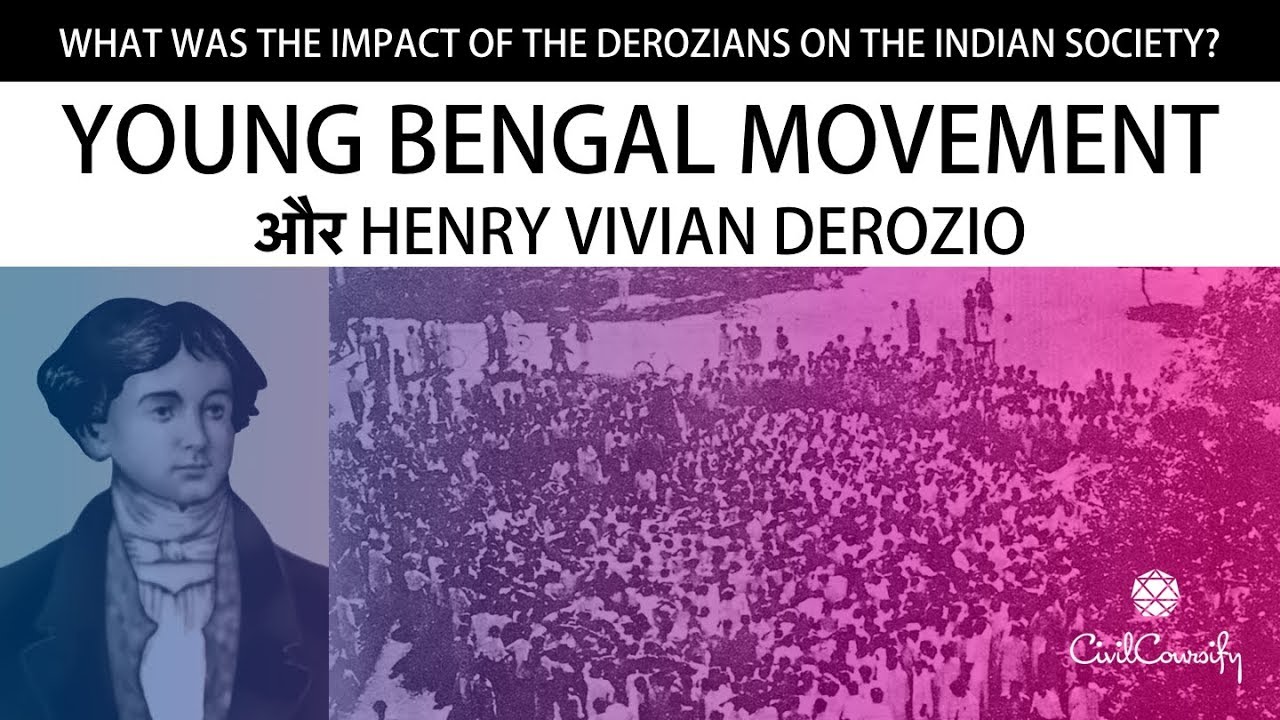
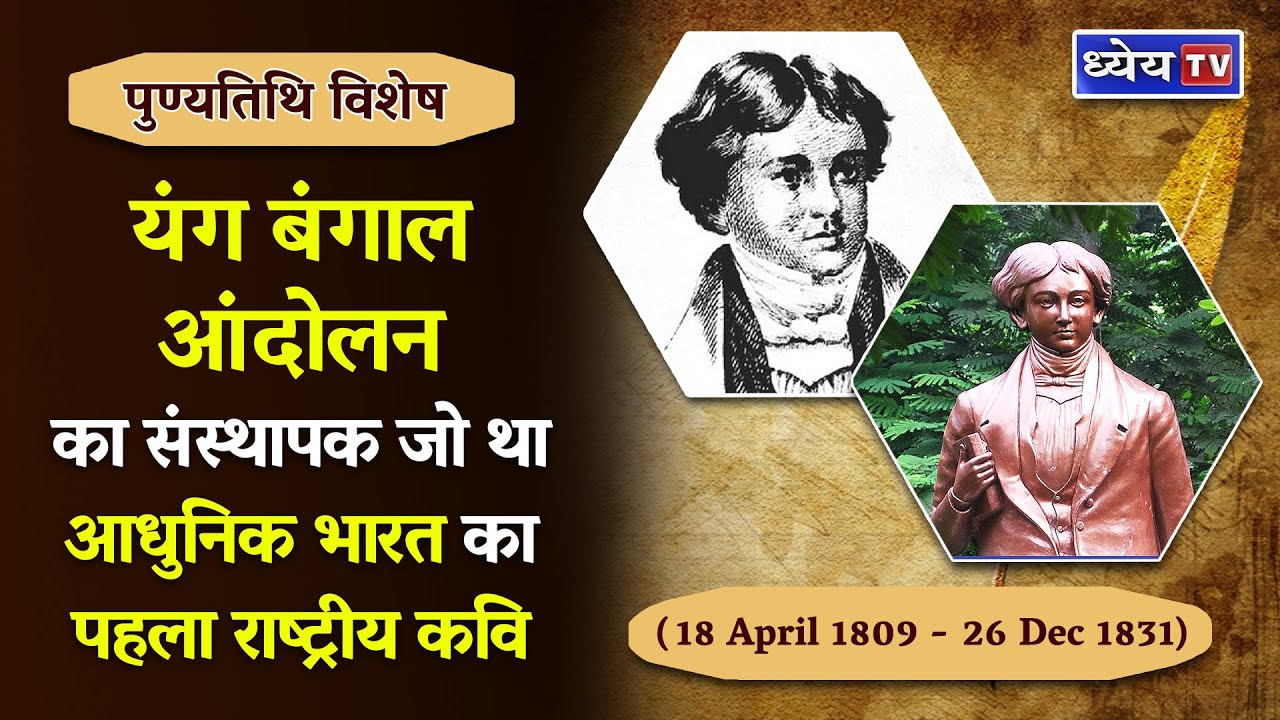
The Young Bengal Movement emerged in the early as a radical intellectual reform trend inspired by the visionary teacher Henry Vivian Derozio. Drawing profound inspiration from the French Revolution, this movement courageously encouraged liberty, equality, and freedom of thought while questioning outdated traditions that hindered progress. Though its peak was short-lived, it played a crucial role in Bengal’s modernization and remains critically important for students and competitive exam preparation regarding modern Indian history.
🎯 In this chapter, you will understand:
- The origins and core philosophical ideals of the Young Bengal Movement.
- The powerful influence of Henry Vivian Derozio at Hindu College.
- Key contributions of the Derozians to gender reform, press freedom, and civic rights.
- The social limitations, lack of mass base, and lasting historical legacy of the movement.
💡 Why this topic matters: It marks the early beginnings of modern intellectual defiance and nationalist thought among Bengal's youth during British rule.
🧠 Core Idea: Applying human reason, liberty, and free debate to break away from rigid religious dogmas and traditional social evils.
Rise of the Young Bengal Movement and Revolutionary Ideals in the 19th Century
The Young Bengal Movement represented a progressive and fearless awakening among Bengal’s educated youth during a time of deep traditionalism.
This intellectual storm developed under the charismatic influence of Henry Vivian Derozio at Hindu College, where he nurtured a generation to embrace rational thought and revolutionary ideals. The story of Young Bengal is one of intellectual defiance against the status quo.
- (i) The movement primarily emerged and flourished during the late and early in Calcutta.
- (ii) It encouraged a culture of rational inquiry, urging students to doubt and reject blind authority or dogma.
- (iii) The group drew its philosophical strength from French Revolution ideals, specifically focusing on liberty, equality, and fraternity.
Henry Vivian Derozio and His Intellectual Influence
Henry Vivian Derozio was the undisputed central figure and heartbeat of the movement, inspiring Bengal’s youth through his unconventional teaching methods and patriotic poetry.

Derozio at Hindu College (1826–1831)
During his tenure, Derozio transformed Hindu College into a hub of free-thinking where the Derozians were born. He was not just a teacher but a mentor who shaped the moral and intellectual fiber of his pupils.
- (i) He served as a brilliant teacher at Hindu College starting in .
- (ii) He passionately inspired students to challenge social evils and religious superstitions.
- (iii) Through his leadership, he became known as the pioneer of this radical intellectual trend.
Impact of the French Revolution on Reformist Thought
The echoes of the Bastille were felt in the classrooms of Bengal as Derozio used European history to spark an Indian Renaissance.
Ideals of Liberty and Equality
Derozio introduced Western philosophy and radical social ideas to challenge rigid social codes.
- (a) Derozio encouraged absolute free and rational thought among his followers.
- (b) He promoted the core values of liberty, equality, and freedom as universal rights.
- (c) He urged the total rejection of outdated customs and blind traditions that stifled human potential.
Contributions of the Derozians to Social and Political Reform
The Derozians, also known as the Young Bengal group, carried forward progressive ideals that laid the groundwork for early nationalism and modern social structures.
Advocacy for Women’s Rights and Educational Advancement
Recognizing the marginalization of women, the movement became a vocal advocate for gender-based educational reforms in Bengal.
- (i) They staunchly supported women’s education as a tool for social liberation.
- (ii) The group actively opposed oppressive social norms and patriarchal restrictions.
- (iii) They utilized public forums to encourage intense reform debates across the city.
Derozio as the First Nationalist Poet of Modern India
Beyond the classroom, Derozio's literary contributions helped define a new sense of patriotism in a colonized nation.
Derozio's patriotic poetry ignited early national consciousness among young Indian minds. - (a) He is widely regarded as the first nationalist poet of modern India.
- (b) His poetic works reflected India’s emerging national identity and love for the motherland.
- (c) These writings inspired a lasting intellectual awakening among the student community.
Political and Social Demands for Economic and Civic Reform
The movement was not limited to culture; it had a sharp political edge that demanded accountability from the colonial administration.
Economic Justice and Public Service
They raised important socio-economic questions long before formal political parties emerged in India.
- (i) They advocated for significant reforms in public services and economic justice.
- (ii) They raised their voices for the plight of ryots (peasants) and Indian labor abroad.
- (iii) They effectively continued the reformist legacy originally started by Raja Rammohan Roy.
⚡ Quick Revision Capsule: Young Bengal Movement Key Facts
A structured quick reference summary of the key pillars of the movement for rapid review.
| Key Aspect | Details & Description | Historical Impact |
|---|---|---|
| Founder & Mentor | Henry Vivian Derozio (Teacher at Hindu College) | Inspired radical free-thinking among young Bengali students between and . |
| Core Philosophy | Inspired by the French Revolution (liberty, equality, fraternity) | Promoted rationalism and questioned unscientific social traditions. |
| Social Issues Raised | Women’s education, freedom of the press, protection of ryots | Laid early foundations for social equality and civil liberty debates. |
| Literary Legacy | Patriotic poetry written by Derozio | Earned him the title of the first nationalist poet of modern India. |
| Major Limitation | Confined to urban elites; lacked grassroots peasant connection | Prevented the movement from expanding into a broad mass struggle across Bengal. |
📝 Summary
The Young Bengal Movement, spearheaded by the radical Henry Vivian Derozio during the , was a beacon of liberty, rationalism, and social reform. While it lacked mass support and faced heavy orthodoxy, it successfully laid the groundwork for future political reform and modernization. For students and exam aspirants, understanding this movement is vital to grasping the rise of progressive thought and nationalist ideas in modern Indian history.
🚀 Quick Revision Points
Essential facts to review before examinations:
- (i) Founded by Henry Vivian Derozio, a teacher at Hindu College, Calcutta.
- (ii) Strongly driven by the liberal spirit of the French Revolution.
- (iii) Stood up for women’s rights, protection of ryots, and administrative reforms.
- (iv) Dismissal of Derozio in and lack of mass outreach slowed down its momentum.
- 💡 Exam Tip: Questions frequently ask about the connection between Derozio, Hindu College, and the French Revolution. Remember that Derozio is recognized as modern India's first nationalist poet.
❓ Frequently Asked Questions (FAQ)
Q1: Who founded the Young Bengal Movement?
A1: It was led by Henry Vivian Derozio, a young teacher at Hindu College in Calcutta during the late .Q2: What were the main ideals of the Derozians?
A2: They believed in rationalism, free thought, and the French Revolution ideals of liberty, equality, and fraternity.Q3: Why did the Young Bengal Movement have limited long-term impact?
A3: Their radical views alienated conservative society, and they failed to build strong grassroots connections with the rural peasantry.