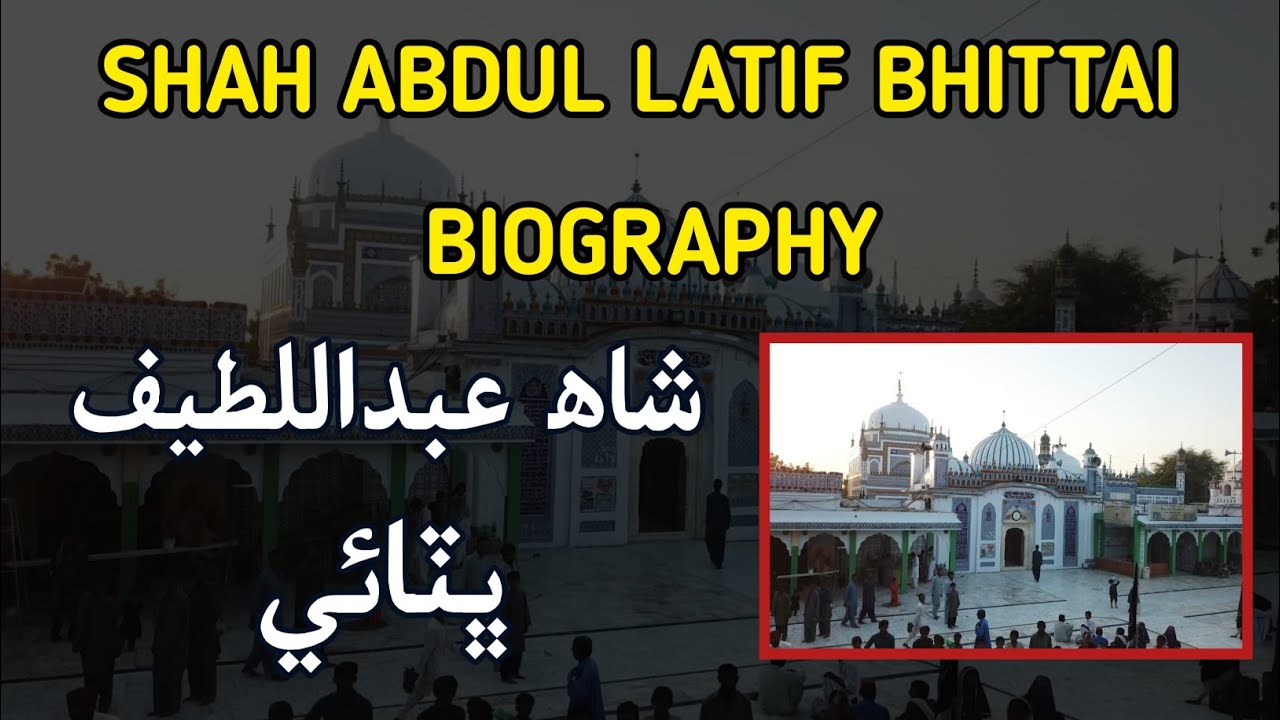
Shah Abdul Latif Bhittai (/ – ) is one of the greatest Sufi poets of Sindh and a guiding light in spiritual mysticism. His celebrated work, Shah Jo Risalo, reflects profound divine teachings and social wisdom, making it a crucial study for students preparing for history, literature, and cultural exams. His poetry blends historical context from / to with philosophical insights, offering lessons in love, compassion, and devotion.
🎯 In this chapter, you will understand:
- The life events and travels that shaped Shah Abdul Latif Bhittai's spiritual philosophy.
- The core themes and poetic structure of his literary masterpiece, Shah Jo Risalo.
- Key Sufi concepts including Shari'ah, Ma'arifah, and devotional mysticism.
- His cultural significance as the national poet of Sindh and his enduring pilgrimage legacy at Bhit Shah.
💡 Why this topic matters: Studying Shah Abdul Latif Bhittai provides vital knowledge for exams covering South Asian history, Sufi literature, regional poetry, and religious philosophy.
🧠 Core Idea: His life and writings demonstrate how traditional Sufi mysticism, local folk traditions, and deep human empathy unite to foster moral living and spiritual realization.
Shah Abdul Latif Bhittai: The Legendary SufiPoet of Sindh and His Spiritual Contributions
Shah Abdul Latif Bhittai's life represents a harmonious blend of literary brilliance and spiritual depth, leaving behind a legacy that continues to touch human hearts across generations.
Born into a Kazmi Sayyid family in Hala Haweli, he traveled across Sindh meeting scholars, mystics, and Jogis to deepen his understanding of spirituality. His teachings and poetry emphasized divine love, moral living, and social harmony.
- (i) Early life shaped by rich religious traditions in Hala Haweli.
- (ii) Spiritual development influenced by Sufism and the poetry of Rumi.
- (iii) Advocated living in accordance with Shari'ah and seeking Ma'arifah (divine knowledge).
- (iv) Emphasis on love, compassion, and justice in everyday life.
- (v) Resided in Bhit Shah, where his tomb remains a sacred pilgrimage site.
Life and Spiritual Journey of Shah Abdul Latif Bhittai
This section explores his mystical path, the influences that shaped his philosophy, and the spiritual practices that informed his poetry.

Early Life and Education
Shah Abdul Latif Bhittai was born in a family of religious scholars and spiritual seekers. His education included exposure to Quranic teachings, classical Sindhi literature, and interaction with wandering mystics.
- (i) Born into Kazmi Sayyid lineage emphasizing religious learning.
- (ii) Childhood surrounded by scholarly traditions and mysticism.
- (iii) Early exposure to Sufi literature shaped his worldview.
Spiritual Influences and Travel
He traveled extensively across Sindh, visiting shrines and learning from sages and Jogis. These experiences enriched his understanding of divine love and human compassion, which later permeated his poetry.
- (a) Met mystics and Jogis to understand diverse spiritual practices.
- (b) Absorbed lessons from nature, folk tales, and regional traditions.
- (c) Developed a unique synthesis of mystical wisdom and poetic expression.
Later Life and Bhit Shah Residence
In later years, Shah Abdul Latif settled in Bhit Shah, where he focused on writing, teaching, and spiritual guidance. His tomb in Bhit Shah is now a revered site for pilgrimage.
- (i) Authored Shah Jo Risalo compiling his poetic and spiritual teachings.
- (ii) Emphasized ethical living, social justice, and devotion to God.
- (iii) Established a spiritual legacy that endures through pilgrimage and study.
Literary Masterpiece: The Eternal Wisdom of Shah Jo Risalo
The Shah Jo Risalo is an anthology of mystical poetry exploring divine love, human values, and the Sufi journey, making it an essential resource for students of literature and spirituality.
Themes of Shah Jo Risalo
The poetry addresses universal themes such as love, compassion, social harmony, and the pursuit of spiritual knowledge. It connects human experience with divine principles.
Manuscript of Shah Jo Risalo written in classical Sindhi script. - (i) Explores divine love and mystical experiences.
- (ii) Offers social commentary through poetic allegories.
- (iii) Encourages ethical and compassionate living in society.
Linguistic Style and Translation
The poetry in Sindhi is lyrical, rich in imagery, and deeply spiritual. Translations into Urdu and English have expanded its global reach, spreading his philosophical insights worldwide.
- (a) Uses metaphors and allegories to communicate spiritual truths.
- (b) Translated works ensure accessibility for a wider audience.
- (c) Influences literary studies and spiritual discourse internationally.
⚡ Quick Revision Capsule: Shah Abdul Latif Bhittai
Use this convenient overview table to review key biographical details, major works, and core concepts before tests.
| Aspect | Details & Terminology | Key Significance |
|---|---|---|
| Lifespan & Origin | Born in Hala Haweli (/ – ) | Belonged to a respected Kazmi Sayyid scholarly family line. |
| Major Work | Shah Jo Risalo | Central text in Sindhi literature containing deep Sufi poetic allegories. |
| Core Philosophy | Shari'ah paired with Ma'arifah | Combined outer moral law with inner spiritual realization and universal love. |
| Spiritual Center | Mound village of Bhit Shah | Served as his sanctuary for teaching and remains his holy tomb location. |
| Cultural Impact | National Poet of Sindh & annual Urs festival | Draws devotees worldwide for study, devotion, and musical recitation. |
Enduring Legacy: A Spiritual Beacon for Generations
Shah Abdul Latif Bhittai’s teachings continue to inspire generations, making him a central figure in Sindhi literature and Sufi spirituality. His tomb and annual Urs celebrations reinforce his cultural and spiritual impact.
National Poet and Literary Impact
Recognized as the national poet of Sindh, his literary works are integral to the study of Sindhi literature and Sufi poetry, inspiring academics and students alike.
- (i) Central figure in Sindhi literary history.
- (ii) Influence persists in modern poetry and cultural studies.
- (iii) Studied widely in educational curricula across Pakistan.
Spiritual Influence and Pilgrimage
His tomb at Bhit Shah is a major pilgrimage site where followers seek inspiration. Annual Urs festivals draw devotees, scholars, and spiritual seekers.
- (a) Pilgrims honor his teachings and poetic wisdom.
- (b) Urs festivals promote cultural and spiritual continuity.
- (c) Global visitors study and celebrate his philosophy of love and unity.
📝 Summary
Shah Abdul Latif Bhittai remains a beacon of Sufi poetry and spiritual teachings, whose works like Shah Jo Risalo continue to influence literature, philosophy, and cultural studies. His legacy inspires students and scholars alike, emphasizing universal principles of love, compassion, and divine knowledge, and making his life and work essential for understanding and Sufi thought.
🚀 Quick Revision Points
Essential facts to review before examinations:
- (i) Lived from / to , hailing from a Kazmi Sayyid scholarly lineage in Hala Haweli.
- (ii) Traveled extensively across Sindh alongside mystics and Jogis to gain deep spiritual wisdom.
- (iii) Masterpiece Shah Jo Risalo encapsulates core Sufi principles like Ma'arifah through local folk poetry.
- (iv) Settled in Bhit Shah, which serves as his burial site and venue for the annual Urs pilgrimage.
- 💡 Exam Tip: Focus on the distinction between outer law (Shari'ah) and inner divine truth (Ma'arifah) in Bhittai's poetry, as examiners frequently ask about his balanced approach to Sufism.
❓ Frequently Asked Questions (FAQ)
Q1: What is Shah Abdul Latif Bhittai's most famous literary work?
A1: His most celebrated literary masterpiece is the Shah Jo Risalo, a collection of mystical Sufi poetry written in the Sindhi language.Q2: What key Sufi concepts did Bhittai emphasize in his teachings?
A2: He advocated living in accordance with Shari'ah while seeking Ma'arifah (divine knowledge), highlighting love, compassion, and social harmony.Q3: Where is Bhittai's shrine located, and why is it culturally significant?
A3: His shrine is in Bhit Shah, Sindh. It acts as an important pilgrimage destination where an annual Urs festival brings together scholars, musical reciters, and spiritual seekers.