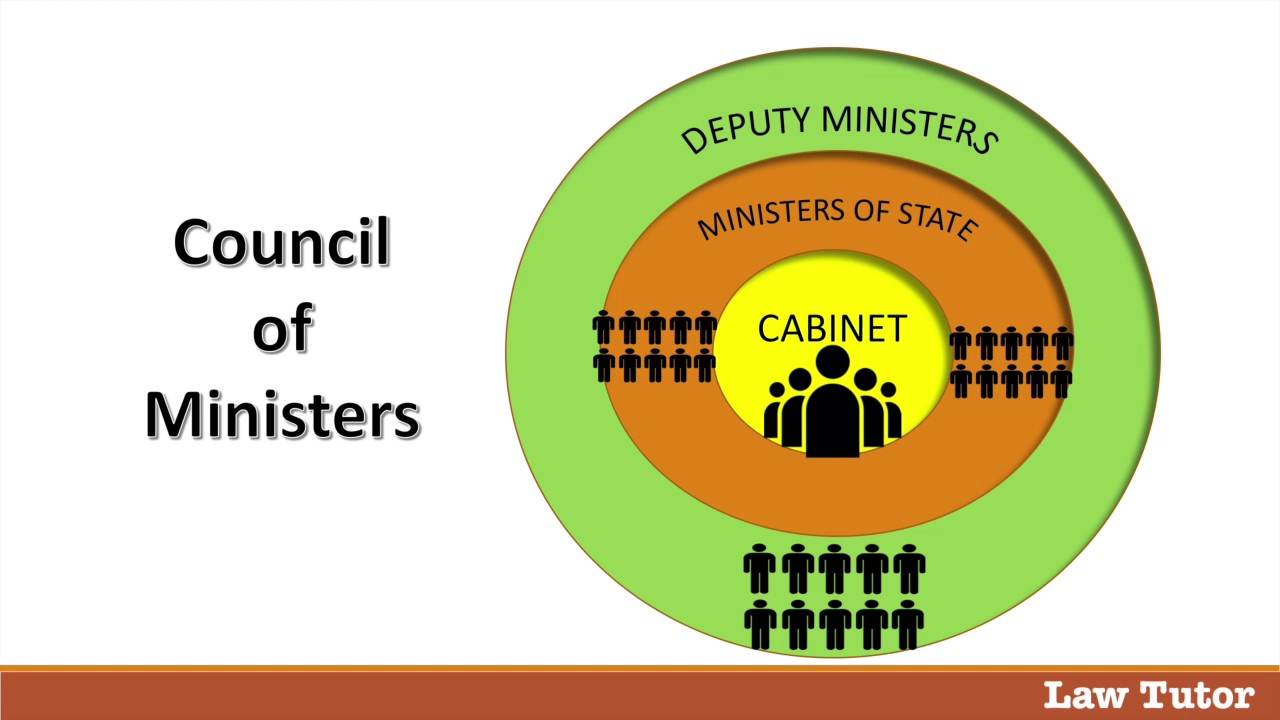
Explore the intricate Constitutional Role of the Council of Ministers in the Indian political framework, emphasizing the crucial relationship between the Prime Minister and the President of India. Understanding these executive powers and Constitutional Amendments from to the present day is vital for students preparing for competitive examinations and civil services.
🎯 In this chapter, you will understand:
- How Article 74 makes advice from ministers compulsory for the President of India.
- The key legal decisions by the Supreme Court regarding continuous government functioning.
- The process and qualifications needed for a person to become a minister.
- The oaths taken by ministers and how their pay is decided by Parliament.
💡 Why this topic matters: India follows a system where the real governing power sits with leaders elected by the public, ensuring that the country is guided by the people's choices rather than a single unelected head of state.
🧠 Core Idea: The Council of Ministers, led by the Prime Minister, acts as the primary decision-making body of the government, while the President serves as the official head who acts on their team advice.
The Council of Ministers and their Pivotal Constitutional Role (–Present)
The story of the Indian Executive begins with the creation of a collective body designed to steer the nation's governance while assisting the titular head of state. This system ensures that every rule and decision is made by representatives chosen directly or indirectly by the citizens.
- (i) Under the mandate of Article 74 of the Constitution of India, the Council of Ministers headed by the Prime Minister was established to aid and advise the President, ensuring that executive actions are guided by elected representatives.
- (ii) Historical shifts occurred through the 42nd Constitutional Amendment () and the 44th Constitutional Amendment (), which evolved the law to make this ministerial advice strictly binding on the President, leaving little room for individual presidential discretion in executive matters.
- (iii) The sanctity of this relationship is protected by law, as the nature of the advice tendered cannot be questioned in any court of law, safeguarding the confidential relationship between the President and the Ministers.
Judicial Interpretations of Article 74 and Executive Continuity
The judiciary has played a defining role in narrating the limits and continuity of ministerial power through landmark rulings. These rulings ensure that the country never runs without a functional executive team in place.

Landmark Supreme Court Judgments on Executive Stability
The Supreme Court has consistently reinforced the idea that India cannot function without a Council of Ministers to guide the President, even during political transitions or when Parliament is dissolved.
- (i) In the year , the Supreme Court delivered a narrative-shifting ruling stating that the dissolution of the Lok Sabha does not terminate the Council’s duty; any presidential action without their aid is deemed unconstitutional.
- (ii) By , the Court further clarified the "satisfaction" clause, ensuring that the President’s "satisfaction" is synonymous with the collective advice of the Council of Ministers rather than a personal whim.
The Procedural Journey: Appointment of Ministers
The process of forming the government is a blend of presidential authority and the strategic recommendation of the Prime Minister. It establishes a clear chain of leadership from the public vote to executive authority.
Eligibility and Membership Requirements for the Ministry
To ensure accountability, every minister must have a narrative link to the legislative branch of the Constitution of India.
Figure 2: The step-by-step process of minister selection and appointment in India. - (i) While the Prime Minister is directly appointed by the President, all other ministers receive their portfolios based solely on the Prime Minister's recommendation.
- (ii) House Membership: Candidates are usually chosen from the Lok Sabha or Rajya Sabha, but a unique window allows a non-MP to serve for before they must secure a seat in either house or cease to hold office.
- (iii) Participation Rights: A minister maintains the right to participate in debates in either House, but the sovereignty of their vote is restricted to the specific House of which they are a formal member.
Sacred Oaths and Financial Provisions of the Ministry
The transition into power is marked by solemn pledges and a structured compensation framework determined by law. These measures safeguard national security and uphold financial transparency for public servants.
The Two-Fold Oath: Office and Secrecy
Before entering their duties, ministers must undergo a ritual of loyalty and integrity administered by the President.
- (i) The Oath of Office Components: Pledging loyalty to the Constitution, upholding the sovereignty and integrity of India, and committing to perform duties sincerely and conscientiously without fear, favour, affection, or ill will.
- (ii) The Oath of Secrecy: This ensures that no confidential governmental matters are leaked to the public unless required for official ministerial duties.
The Descriptive Roles: The Case of the Deputy Prime Minister
History records instances where titles not explicitly found in the Constitution of India were challenged in the halls of justice.
- (i) In , the appointment of Devi Lal as Deputy Prime Minister faced a legal challenge for being unconstitutional.
- (ii) The Supreme Court upheld the validity, clarifying that titles like Deputy Prime Minister or Minister of State are merely descriptive and do not alter the substantive legal powers of the office.
Financial Security: Salaries and Allowances
The financial independence of the Council is maintained through legislative acts passed by the Parliament under the Salaries and Allowances of Ministers Act.
- (i) Ministers are entitled to salaries equivalent to MPs, ensuring parity within the legislative branch.
- (ii) Additional Perks: These include a rank-based sumptuary allowance, a rent-free official residence, and comprehensive travel and medical facilities.
⚡ Quick Revision Capsule: Constitutional Aspects of the Council of Ministers
This quick capsule provides a summarized overview of key constitutional attributes, relevant provisions, and legal descriptions governing Indian ministers.
| Constitutional Provision | Key Article / Legal Basis | Main Purpose & Impact |
|---|---|---|
| Aid and Advice Mandate | Article 74 | Mandates that the President acts in accordance with advice given by the Council headed by the Prime Minister. |
| Binding Advice Rule | 42nd & 44th Amendments | Confirmed that ministerial advice is strictly binding on the President after a single request for reconsideration. |
| Appointment Process | Article 75 | The President appoints the Prime Minister, and other ministers are appointed upon the Prime Minister's advice. |
| Non-MP Minister Allowance | Article 75(5) | Permits a non-member to hold a ministerial position for up to before getting elected. |
| Oaths and Remuneration | Third Schedule & Parliamentary Acts | Establishes the solemn oaths of office and secrecy while setting ministerial pay and allowances. |
📝 Summary
The Council of Ministers remains the real decision-making core of the Indian state. From to the present day, key provisions in The Constitution of India such as Article 74 ensure that the President remains a constitutional figurehead guided by the collective decision of elected representatives. Understanding the Oath of Office, executive appointments, and the landmark Judicial Interpretations helps students grasp the operational mechanics of Indian Parliamentary Democracy.
🚀 Quick Revision Points
Essential facts to review before examinations:
- (i) The President must act according to the collective advice tendered under Article 74.
- (ii) Presidential actions taken without ministerial aid during transitions are legally void.
- (iii) Non-parliamentarians can serve as ministers but must gain election within six months.
- (iv) Legal challenges regarding titles like Deputy Prime Minister were dismissed as titles are merely descriptive under Supreme Court Rulings.
- 💡 Exam Tip: Remember that while ministers can speak and join debates in both the Lok Sabha and Rajya Sabha, they are only allowed to cast votes in the specific House where they hold official membership!
❓ Frequently Asked Questions (FAQ)
Q1: Is the advice given by the Council of Ministers binding on the President?
A1: Yes, following the 42nd and 44th Constitutional Amendments, the President is bound to act in accordance with the advice tendered by the Council of Ministers.Q2: Can a person who is not a Member of Parliament become a Minister?
A2: Yes, an individual can be appointed as a minister, but they must become an elected member of either the Lok Sabha or Rajya Sabha within .Q3: Can courts inquire into the advice given by Ministers to the President?
A3: No, as mandated by Article 74(2) of the Constitution of India, courts are strictly barred from inquiring into any advice tendered by ministers to the President.