Explore the intricate distinction between the Council of Ministers and the Cabinet within the Indian political system, highlighting important legal frameworks such as Article 74 and Article 75 of the Indian Constitution, along with the 44th Amendment Act passed in . This detailed guide serves as a helpful learning resource for students preparing for school or competitive exams. It explains the functional roles and constitutional duties of these two governing bodies in a simple, clear, and easy-to-understand way.
🎯 In this chapter, you will understand:
- The major differences between the entire Council of Ministers and its smaller core group called the Cabinet.
- How decision-making power works in the central government and how laws support these groups.
- The special position of the Prime Minister and the informal advisory team known as the Kitchen Cabinet.
- Key articles in the Indian Constitution that define the duties and powers of executive leaders.
💡 Why this topic matters: Understanding how the central government makes big decisions helps us see how laws, national plans, and public safety rules are created and carried out across India every single day.
🧠 Core Idea: The Council of Ministers includes all the political leaders chosen to run government departments, while the Cabinet is a smaller group of the most senior ministers who meet regularly to make the final choices for the country.
Council of Ministers and Cabinet: Distinction and Role in Indian Governance
In the story of Indian democracy, citizens and news reporters often talk about the Council of Ministers and the Cabinet as if they mean the exact same thing. However, looking closely at how they are made, how they work, and what powers they hold reveals a very interesting relationship. It is like comparing a large group of leaders to a small, energetic engine that drives all important decisions. While the Council represents every single minister appointed to the government, the Cabinet sits right at the center. The Cabinet acts as the highest decision-making team that guides the nation's rules and future plans.
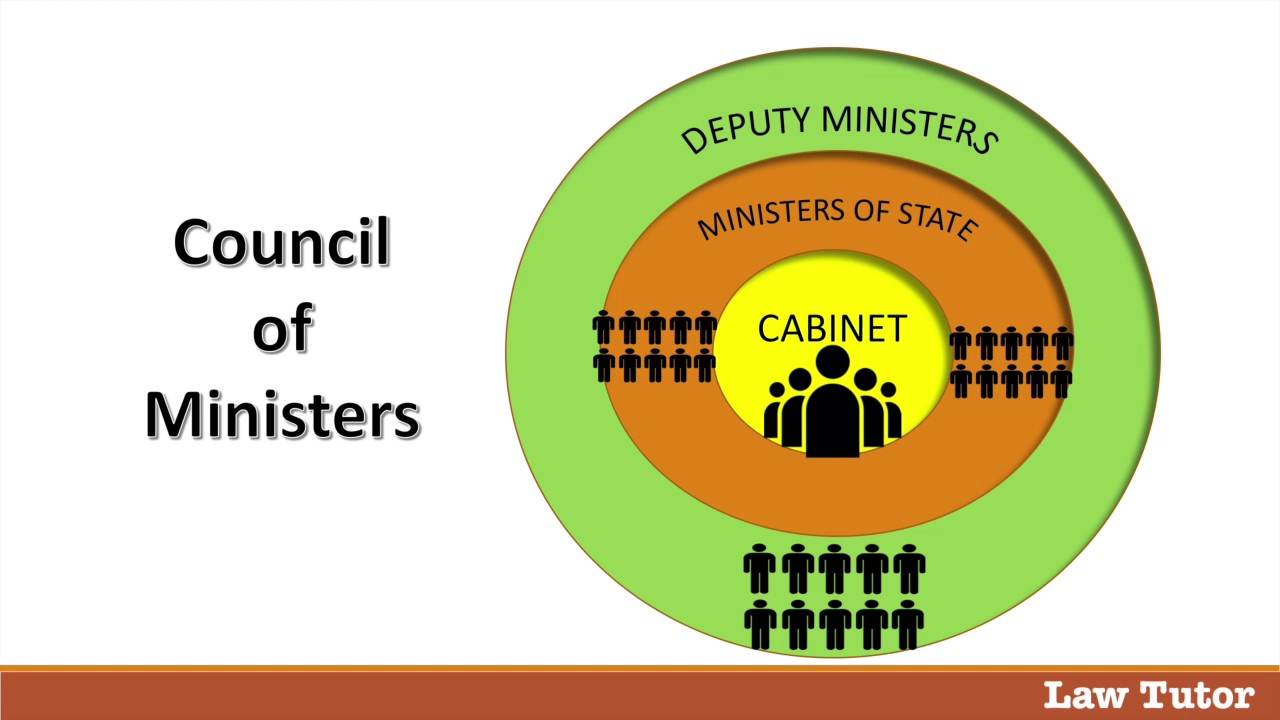
- (i) The relationship is just like a large team and its core leadership circle, where the Cabinet forms the inner circle of the bigger Council.
- (ii) Their differences come from both long-standing parliamentary conventions and specific rules written inside the Constitution.
- (iii) Learning these differences is important to understand how the Union government works in real life compared to what is written on paper.
Key Differences Between Council of Ministers and Cabinet
We can easily understand the differences between these two governing groups by looking at their physical team size, how often they meet, and their history in Indian law.

Structural Composition and Numerical Strength
The first major difference between these two bodies is their total count of members and who gets to join them. The Council of Ministers is a large assembly, while the Cabinet is a small, carefully chosen group of very senior leaders.
- (i) Numerical Size: The Council of Ministers is a broad group usually made up of 60 to 70 ministers, whereas the Cabinet is a compact core group of only about 15 to 20 ministers.
- (ii) Member Categories: The Council includes all levels of ministers: Cabinet Ministers, Ministers of State, and Deputy Ministers. On the other hand, the Cabinet consists only of high-ranking Cabinet Ministers.
Operational Power and Decision-Making Authority
Apart from total numbers, another key difference is how these groups use their executive power and who truly directs the country's daily governance.
- (i) Frequency of Meetings: The Council as one huge group does not meet regularly to discuss everyday government work. In contrast, the Cabinet meets very often—usually once every week—to discuss important matters and make binding policy decisions that everyone must follow.
- (ii) Theory vs. Practice: While the Council theoretically possesses all government executive powers, the Cabinet actually exercises these powers in practice, functioning as the main brain of the entire team.
- (iii) Direction and Control: The Cabinet leads and guides the Council by setting the work agenda. The Council's main job is to execute and implement the final choices handed down to them by the Cabinet.
Constitutional Status and Legal Framework
The legal history of these two groups has grown over many decades, moving from simple traditional customs to clearly written constitutional rules.
The Council of Ministers Framework
The Council of Ministers has a clear written foundation in the original law book of the nation, supported by specific Acts of Parliament.
- (a) It is directly mentioned in Article 74 and Article 75 of the Indian Constitution.
- (b) The division of ministers into three different ranks comes from traditional political practice rather than the original text of the Constitution.
- (c) It gained official legal approval through the Salaries and Allowances Act passed in .
The Cabinet's Legal Evolution
The word 'Cabinet' was not in the original Constitution text when it was first written, but was added later through an official law change.
- (a) The word 'Cabinet' was formally added into the Constitution through the 44th Constitutional Amendment Act in under Article 352.
- (b) It is officially defined as the governing body consisting of the Prime Minister and other senior ministers of cabinet rank appointed under Article 75.
The Pivotal Role of the Cabinet in Central Administration
The Cabinet operates as the highest decision-making authority in the Indian political and administrative structure, serving as the ultimate executive team that guides the nation.
Policy Formulation and Administrative Coordination
The Cabinet acts as the chief coordinator of all central government departments and is the main designer of India's national and international policy pathways.
- (i) Supreme Executive: It works as the primary policy-making group and holds supreme executive authority over the Central Government.
- (ii) Advisory Role: It serves as the official advisory body to the President of India, and its advice must be followed by law.
- (iii) Emergency Handling: It functions as the main crisis management team, taking charge during emergency situations and national security issues.
- (iv) Financial and Legislative Oversight: It controls all major legislative plans and budget decisions, while supervising high-level appointments to important government offices.
- (v) Global Relations: It controls India's foreign policy and oversees relationship agreements with other countries across the globe.
⚡ Quick Revision Capsule: Council of Ministers vs. Cabinet
Here is a quick side-by-side comparison table summarizing the main differences between the Council of Ministers and the Cabinet for fast learning.
| Feature / Aspect | Council of Ministers | The Cabinet |
|---|---|---|
| Total Size | Large body consisting of 60 to 70 ministers. | Compact body consisting of 15 to 20 senior ministers. |
| Ranks Included | Includes Cabinet Ministers, Ministers of State, and Deputy Ministers. | Includes only senior Cabinet Ministers led by the Prime Minister. |
| Meetings & Work | Does not meet collectively to handle daily business. | Meets regularly (usually once a week) to make policy decisions. |
| Main Role | Executes and implements decisions handed down by the Cabinet. | Directs policy, makes decisions, and sets the work agenda for the government. |
| Constitutional Status | Mentioned in original text under Article 74 and Article 75. | Added later by 44th Amendment Act in under Article 352. |
Scholarly Descriptions: Views on the Cabinet’s Role
Famous thinkers and experts in political science have long admired the enormous power concentrated inside the Cabinet. They have used creative phrases and visual descriptions to show its central place in democratic governance.
Metaphors of the Political Machinery
These famous descriptions highlight how the Cabinet functions as the central point of leadership and the essential support structure of democratic government.
- Ramsay Muir: Called the Cabinet the "steering wheel of the ship of the state" and noted the strong power of the Cabinet in his famous book How Britain is Governed.
- Walter Bagehot: Famously described it as the "hyphen that joins, the buckle that binds, the executive and legislature."
- William Ewart Gladstone: Referred to it as the "solar orb around which others revolve."
- Sir Ivor Jennings: Stated that it is the "core of the British Constitutional System" which brings essential unity to overall governance.
The Kitchen Cabinet: The Inner Circle of Power
Besides the official, formal structure, there is often a very small informal group known as the Kitchen Cabinet or Inner Cabinet. This tiny group often becomes a real center of decision-making for the leader of the country.
Composition and Influence of the Inner Cabinet
This informal group works with high privacy and speed. It consists of the Prime Minister's most trusted advisors, which can sometimes include people who are not elected ministers.
- (i) Members: Usually includes the Prime Minister and 2 to 4 trusted colleagues, and occasionally close personal advisors or family members.
- (ii) Historical Context: In Indian history, during Prime Minister Indira Gandhi's era, the Kitchen Cabinet was known to hold powerful influence over important choices.
- (iii) International Context: This informal setup is not used only in India; it is also commonly seen in democratic countries like the USA and Great Britain.
Evaluating the Impact of the Kitchen Cabinet
While an informal inner circle can work very fast, it also brings important advantages and disadvantages to a democratic system.
- (a) Efficiency: It allows leaders to make decisions much faster and keeps sensitive government matters private during critical moments.
- (b) Authority: A major disadvantage is that it can reduce the influence and importance of the larger official Cabinet.
- (c) Accountability: It risks giving non-elected individuals power to influence important national decisions without being answerable to the public.
Essential Articles Related to the Central Council of Ministers
The legal framework for ministers in the Indian government is established in these important constitutional articles:
- (i) Article 74: States that there shall be a Council of Ministers headed by the Prime Minister to aid and advise the President of India.
- (ii) Article 75: Explains details regarding the appointment, office tenure, salary, and collective duty of all Ministers.
- (iii) Article 77: Outlines the official rules for conducting the business and affairs of the Union Government.
- (iv) Article 78: Defines the duty of the Prime Minister to share administrative decisions and legislative proposals with the President.
📝 Summary
In summary, understanding the distinct roles of the Council of Ministers and the smaller Cabinet helps us clearly see how the executive branch of India operates. While the Council represents the full administrative strength under Article 74 and Article 75, the Cabinet serves as the active engine for swift, binding decisions. Recognizing how changes like the 44th Constitutional Amendment Act in shaped these roles helps students build a strong foundation in Indian Polity.
🚀 Quick Revision Points
Essential facts to review before examinations:
- (i) The Council of Ministers is a large body of 60 to 70 members, whereas the Cabinet is a smaller core group of 15 to 20 ministers.
- (ii) The Cabinet meets regularly on a weekly basis, while the Council of Ministers rarely meets as one complete body.
- (iii) The term 'Cabinet' was added into Article 352 of the Constitution through the 44th Amendment Act in .
- (iv) The Kitchen Cabinet is an informal body of trusted advisors that offers quick advice to the Prime Minister.
- 💡 Exam Tip: Remember that the Council of Ministers is collectively responsible to the Lok Sabha (House of the People) under Article 75, not to both Houses of Parliament equally. Always highlight the 44th Amendment Act, 1978 when answering questions about the constitutional origin of the term 'Cabinet'!
❓ Frequently Asked Questions (FAQ)
Q1: Is the term 'Cabinet' mentioned in the original Constitution of India?
A1: No, the term 'Cabinet' was not present in the original text of the Constitution in 1950. It was officially inserted into Article 352 through the 44th Constitutional Amendment Act in .Q2: Who sits inside the Council of Ministers?
A2: The Council of Ministers includes all three categories of ministers: Cabinet Ministers, Ministers of State, and Deputy Ministers.Q3: What is the main role of a Kitchen Cabinet?
A3: A Kitchen Cabinet is an informal circle of 2 to 4 highly trusted associates and advisors who assist the Prime Minister in making fast, confidential decisions on crucial national issues.