This beginner-friendly guide explains how the government stays answerable to the people through the key Principles of Responsibility in India's democracy. In simple terms, India follows a system where the leaders chosen to run the country must answer to Parliament for every decision they make. Under of the Indian Constitution, ministers work together as one united team under the leadership of the Prime Minister. Learning how collective responsibility and individual responsibility function helps students and competitive exam aspirants build a crystal-clear understanding of Indian Polity.
🎯 In this chapter, you will understand:
- How ministers work together as a single team under the principle of collective accountability to the elected Parliament.
- The rule of Cabinet solidarity, where all ministers must support shared decisions or step down if they disagree.
- How individual ministers hold office through Presidential pleasure upon the Prime Minister's advice.
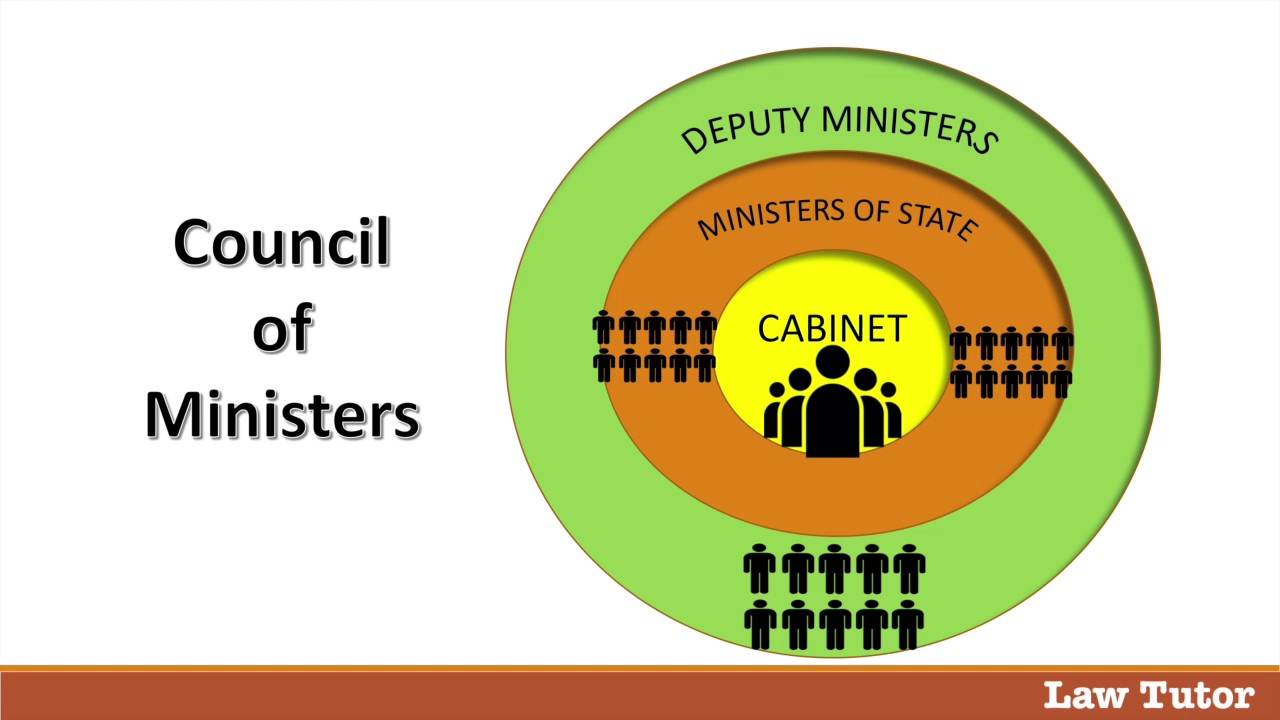
- The structural hierarchy dividing ministers into Cabinet Ministers, Ministers of State, and Deputy Ministers.
💡 Why this topic matters: It shows how democracy prevents single leaders from becoming too powerful by keeping all ministers accountable to elected representatives.
🧠 Core Idea: The Council of Ministers acts like a sports team—they make decisions together, defend each other in public, and succeed or fall as one unit.
📌 Principles of Responsibility and Governance in the Council of Ministers
The core foundation of Indian democracy is that the executive leaders who run the country are answerable to the lawmakers elected by citizens. Think of the Council of Ministers as a close-knit group where every choice is carefully watched and checked by members of Parliament. This ensures the government remains helpful, fair, and careful at all times.
Under the rules of of the Constitution, collective responsibility acts as the main pillar supporting the entire governing system. This means all ministers share the blame or praise for every decision made by the government.
- (i) Shared accountability to the Lok Sabha (the directly elected House of People) means ministers are not working alone, but as one united team.
- (ii) A famous saying describes this rule as "we sink or swim together." If a vote called a no-confidence motion passes in the Lok Sabha, the whole team of ministers must resign at once.
- (iii) This rule binds leaders coming from both the Lok Sabha and the Rajya Sabha into one group, ensuring that no minister can escape team responsibility.
🤝 The Doctrine of Collective Responsibility and Cabinet Solidarity
Behind closed doors, ministers can share different ideas and debate freely. However, once a group choice is finalized, every single minister must agree with it in public and defend it fully. This rule creates strong team unity, known as Cabinet solidarity.

The Unifying Force of Cabinet Decisions
Inside the meeting room, leaders can discuss and argue over the best path forward. But as soon as the door opens, the government speaks with one voice. Cabinet decisions are binding on all ministers, and solidarity is required in front of the public and news media.
- (i) Every minister has an official duty to protect and explain Cabinet decisions whenever they speak inside or outside Parliament.
- (ii) If a minister feels strongly against a decision and cannot support it, the only honest and constitutional choice is to resign from the post.
- (iii) Indian history includes famous examples where top leaders stepped down to protect their personal values:
Historical Resignations Due to Policy Differences
- (a) The legal scholar Dr. B. R. Ambedkar resigned in the year because of policy differences regarding the proposed Hindu Code Bill.
- (b) C. D. Deshmukh gave up his position as Finance Minister due to disagreements about the official States Reorganisation policy.
- (c) Minister Arif Mohammed Khan left his office in to show opposition against the Muslim Women (Protection of Rights on Divorce) Act.
👤 Individual Responsibility: The Presidential Pleasure and Prime Ministerial Advice
Along with working as a team, each minister also holds an individual duty for running their own assigned department smoothly and honestly.
Mechanisms of Individual Accountability under Article 75
Even though the team works together, a single minister who makes major mistakes can be removed individually without destroying the whole government. This balance is called individual responsibility, where the President holds the legal power to dismiss a minister on official recommendation.
- (i) Ministers stay in office during the official pleasure of the President, which acts as a check on their personal work and honesty.
- (ii) Importantly, the President can only remove a minister when given direct advice by the Prime Minister.
- (iii) As Dr. B. R. Ambedkar explained, collective responsibility can only work smoothly through the instrumentality of the Prime Minister, who can ask an unfit minister to resign or advise the President to dismiss them.
⚖️ The Absence of Legal Responsibility in the Indian Context
It is helpful to compare India's rules with other countries, like Great Britain, to understand how minister liability works legally in daily government affairs.
Constitutional Immunity and Ministerial Advice
In the British legal system, a famous saying states "The King can do no wrong." Because of this, British ministers must sign official orders alongside the Monarch to take personal legal liability in court. However, India decided not to enforce this rule of legal responsibility for its leaders.
- (i) In India, there is no constitutional provision asking a minister to countersign an official order issued by the President.
- (ii) The Courts of Law are completely stopped from asking what private advice ministers gave to the President.
- (iii) This design ensures that ministers focus on political duty and parliamentary work without facing constant lawsuits over routine government work.
🏛️ Organizational Composition of the Council of Ministers
The Council of Ministers is organized into clear levels so that administrative responsibilities are divided smoothly and efficiently.
The Three-Tier Hierarchy of Ministers
The Council is arranged into three levels, where each category carries specific duties regarding national policy and Parliament work.
- Cabinet Ministers: These senior leaders manage key ministries like Home, Defence, Finance, and External Affairs. They form the inner circle called the Cabinet.
- Ministers of State: They hold the second rank. They can be given independent charge of a smaller department or work directly under a Cabinet Minister. They only attend Cabinet meetings when invited.
- Deputy Ministers: The third rank of leaders, assigned to assist senior leaders in carrying out office tasks, administrative duties, and parliamentary questions without independent authority.
Parliamentary Secretaries and the Deputy Prime Minister
Along with the main three ranks, other political posts are created from time to time to help with workload or political coordination.
- (i) Parliamentary Secretaries: This group has no separate government department. Their main job is to assist senior ministers inside Parliament. Appointments to this post have been extremely rare since .
- (ii) Deputy Prime Minister: A political post not mentioned in the text of the Constitution, created occasionally for political stability or to respect a very senior leader in a coalition government.
⚡ Quick Revision Capsule: Council of Ministers & Types of Responsibility
This capsule compares the key features of ministerial responsibilities, hierarchies, and legal protections in India for quick exam review.
| Concept Category | Key Constitutional Rule | Main Purpose & Impact |
|---|---|---|
| Collective Responsibility | Mandated under to the Lok Sabha | Forces the entire team of ministers to resign if a no-confidence motion passes. |
| Cabinet Solidarity | Binding decisions on all ministers | Ensures ministers defend decisions in public or step down (e.g., Dr. B. R. Ambedkar in ). |
| Individual Responsibility | Ministers hold office during pleasure of President | Allows removal of a specific minister on the advice of the Prime Minister. |
| Legal Responsibility | No countersignature required in India | Courts cannot look into advice given to the President, providing immunity from routine lawsuits. |
| Ministerial Hierarchy | Three-tier division (Cabinet, State, Deputy) | Organizes administrative work cleanly and assigns clear levels of leadership. |
📝 Summary
Understanding and the collective responsibility of the Council of Ministers is essential for every student learning political science and preparing for exams. India's governing system maintains balance by pairing team accountability to the Lok Sabha with clear leadership under the Prime Minister. This structure keeps democratic leaders responsive, united, and dedicated to the service of the nation.
🚀 Quick Revision Points
Essential facts to review before examinations:
- (i) Collective responsibility makes all ministers answerable together to the elected Lok Sabha.
- (ii) All ministers must publicly stand by Cabinet choices; disagreeing ministers must resign from office.
- (iii) Individual ministers can be dismissed by the President, but only when advised by the Prime Minister.
- (iv) Indian courts cannot examine the private advice offered by ministers to the President under Article 74 and .
- 💡 Exam Tip: Remember that ministers are collectively responsible ONLY to the Lok Sabha, not to the Rajya Sabha, even though individual ministers can be members of either House!
❓ Frequently Asked Questions (FAQ)
Q1: What happens if a no-confidence motion is passed in the Lok Sabha?
A1: The entire Council of Ministers, including ministers from the Rajya Sabha, must resign immediately because of collective responsibility.Q2: Can the President remove a minister independently?
A2: No, the President exercises the power of dismissal under individual responsibility strictly on the advice of the Prime Minister.Q3: Do Indian ministers have legal responsibility for presidential orders?
A3: No, unlike in Great Britain, Indian ministers do not countersign official orders, and courts cannot question ministerial advice.