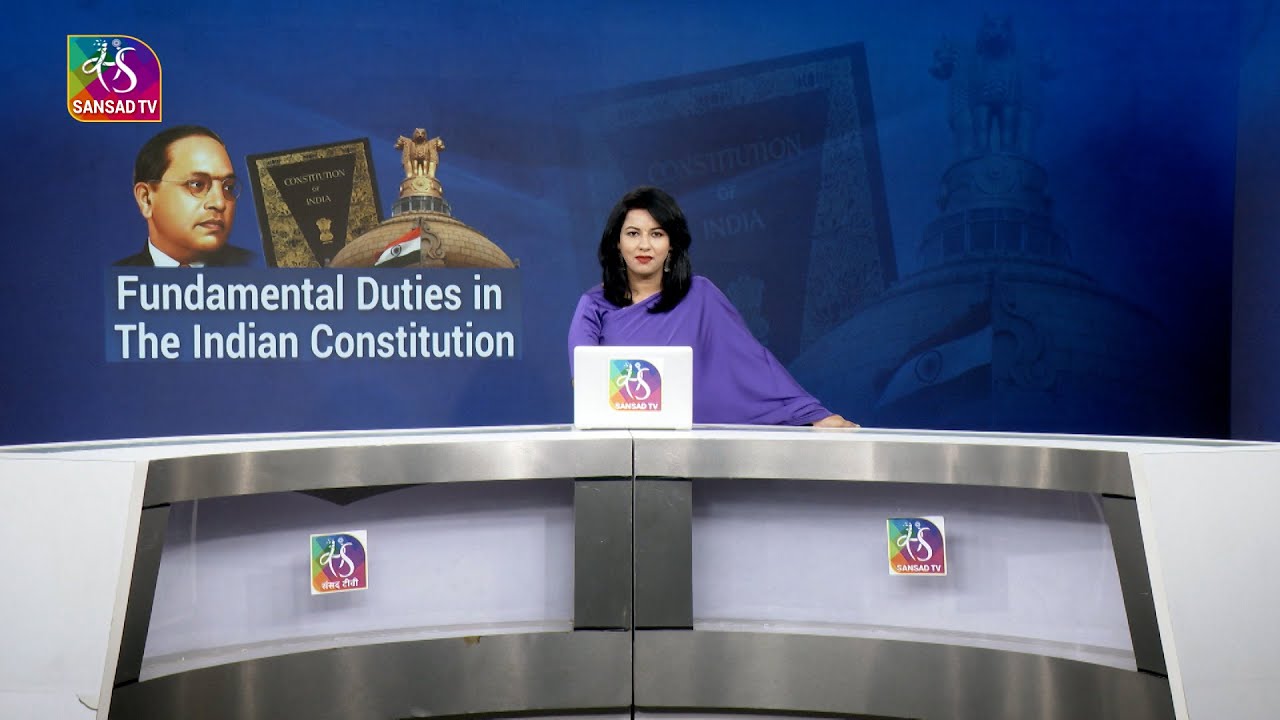
Explore the essential framework of Fundamental Duties in the Indian Constitution as detailed under Article 51A, a critical topic for students preparing for competitive exams. First introduced during the internal emergency through the 42nd Amendment Act, 1976 and later expanded by the 86th Constitutional Amendment Act, 2002, this comprehensive guide breaks down how our national rules remind every citizen to help build a safe, loving, and united country while enjoying their basic freedoms. Just as children have chores at home alongside their rights to play and study, every Indian citizen has duties toward our country to ensure constitutional morality and peaceful living.
🎯 In this chapter, you will understand:
- How Article 51A was added to balance citizen rights with civic responsibilities.
- The complete list of eleven fundamental duties every Indian citizen is expected to perform.
- The legal nature and non-justiciable character of duties under Indian law.
- Key criticisms, historical committee recommendations, and exam-focused takeaways.
💡 Why this topic matters: Rights and duties go hand-in-hand. You cannot enjoy freedom without protecting the country that grants it. Understanding Article 51A helps citizens build discipline and unit, while providing students with crucial knowledge for civics and political science examinations.
🧠 Core Idea: Fundamental duties act as a friendly moral guide for all citizens, reminding us to respect our symbols, care for nature, live in peace, and educate our children.
The Evolution and Significance of Fundamental Duties in India under Article 51A
The concept of Fundamental Duties serves as a constant reminder to citizens that while they enjoy rights, they also owe certain social obligations to the nation. When our country first wrote its Constitution in , it did not contain a special list of duties because leaders believed people would naturally do the right thing. However, during the internal emergency period, leaders realized that rights without rules could lead to confusion. In , following the advice of the Swaran Singh Committee, Parliament added Part IVA and Article 51A to create a permanent constitutional standard that reminds everyone to be responsible citizens.
- (i) The duties act as a warning against anti-social activities like burning the national flag or destroying public property.
- (ii) They serve as a source of inspiration for citizens, promoting a sense of discipline and commitment.
- (iii) They help the courts in examining and determining the constitutional validity of a law.
Chronicle of Responsibilities: The Eleven Fundamental Duties
The eleven fundamental duties form an ethical and civic roadmap for every Indian citizen. Originally numbering ten, an eleventh duty was added in to highlight the importance of childhood education. Together, they guide how we behave toward our country, our neighbors, and our natural environment.

Core Civic and Ethical Obligations of the Citizen
In a story-like progression of a citizen's life, the Constitution first demands respect for the symbols of our sovereignty and the history of our freedom struggle. It is about upholding the unity of a diverse land through intentional action and caring spirit so that people of all backgrounds can live happily together.
Respect for Sovereignty and Heritage
Every citizen is expected to honor the underlying principles that keep India free, strong, and democratic. Respecting national symbols shows our appreciation for the struggle that earned us independence.
- (i) To abide by the Constitution and respect its ideals and institutions, the National Flag and the National Anthem.
- (ii) To cherish and follow the noble ideals which inspired our national struggle for freedom.
- (iii) To uphold and protect the sovereignty, unity, and integrity of India.
- (iv) To honor our common culture and national traditions.
National Service and Social Cohesion
Living together in a large country requires teamwork and mutual respect. Citizens must treat everyone like family and stand ready to defend the country whenever needed.
- (i) To defend the country and render national service when called upon to do so.
- (ii) To promote harmony and the spirit of common brotherhood amongst all the people of India transcending religious, linguistic and regional or sectional diversities; to renounce practices derogatory to the dignity of women.
Environmental Stewardship and Intellectual Growth
Beyond politics, the duties extend into the natural world and the human mind. They encourage a scientific temper and the protection of our biological heritage. This means being curious, asking smart questions, and caring for plants, animals, and clean rivers so that the India of tomorrow remains green, healthy, and fair for everyone.
Preserving forests, rivers, and wildlife is both a legal duty and a moral obligation to future generations. - Rich Culture: To value and preserve the rich heritage of our composite culture as written in historical texts like Discovery of India.
- Environment Protection: To protect and improve the natural environment including forests, lakes, rivers, and wildlife, and to have compassion for all living creatures.
- Scientific Temper: To develop the scientific temper, humanism, and the spirit of inquiry and reform through critical thinking and learning.
- Public Property: To safeguard public property and to abjure violence under all circumstances.
Striving for Excellence and the Right to Education
The final chapters of these duties focus on the collective growth of our nation. Personal excellence in sports, science, arts, or studies is viewed as a valuable contribution to the entire country. Crucially, in , the 86th Constitutional Amendment Act added an essential new duty to this list: ensuring education for young children.
- (i) To strive towards excellence in all spheres of individual and collective activity so that the nation constantly rises to higher levels of endeavour and achievement.
- (ii) To provide opportunities for education to his child or ward between the age of . This specific duty was mandated by the 86th Amendment Act, 2002.
⚡ Quick Revision Capsule: Fundamental Duties Framework
This reference summary breaks down the key constitutional milestones and facts regarding Article 51A for quick study and examination preparation.
| Aspect | Constitutional Provision / Event | Key Significance |
|---|---|---|
| Original Constitution | Enacted in | Contained zero fundamental duties; focused primarily on rights and governance structure. |
| Recommendation Body | Swaran Singh Committee () | Recommended adding a dedicated chapter on duties, including the duty to pay taxes. |
| First Inclusion | 42nd Amendment Act, 1976 | Inserted Part IVA and Article 51A containing 10 original duties. |
| Eleventh Duty Added | 86th Amendment Act, 2002 | Obligated parents/guardians to provide education for children aged . |
| Legal Status | Non-justiciable | Cannot be enforced directly by courts without specific supporting laws passed by Parliament. |
Key Features and Legal Nature of Fundamental Duties
Understanding how these duties function within the legal machinery of India is vital for aspirants and legal scholars alike. While they tell us what good citizenship looks like, they have unique characteristics regarding who they apply to and how they are handled by our courts.
The Binary of Moral and Civic Responsibilities
The duties are categorized into two distinct streams: moral duties (such as following noble freedom ideals) and civic duties (such as respecting the National Flag). They represent a codification of the Indian way of life, drawing rich lessons from our history, mythology, and cultural traditions.
- (i) They reflect timeless values that have been part of Indian tradition for centuries.
- (ii) Unlike Fundamental Rights, these obligations are exclusive to Indian citizens and do not extend to foreign visitors or non-citizens living in India.
The Non-Justiciable Character and Enforcement
Much like the Directive Principles of State Policy, these duties are non-justiciable. This technical term simply means that if a person fails to follow a fundamental duty, someone cannot directly sue them in court under Article 51A alone unless Parliament has created a specific law with penalties.
- (i) There is no automatic legal penalty for their violation unless supported by specific legislation like the Prevention of Insults to National Honour Act.
- (ii) Parliament is fully empowered to enforce them by passing suitable laws whenever deemed necessary for the national interest.
Critical Analysis: Gaps and Academic Debates
While foundational to civic life, the list of duties has faced scrutiny from various constitutional experts regarding its completeness, language clarity, and position inside the Constitution.
Incompleteness and Vague Terminology
Critics argue the list leaves out important citizen actions. Crucial duties like paying taxes or voting during public elections were not included, even though the Swaran Singh Committee explicitly recommended them.
- (i) Complex terms like "composite culture" and "scientific temper" can be hard for ordinary people to understand without clear explanations.
- (ii) The omission of the duty to pay taxes is often viewed as a missed opportunity for building strong national infrastructure.
Concerns Regarding Necessity and Placement
Some scholars feel these duties state obvious facts that law-abiding citizens do naturally every day. Furthermore, placing them in Part IVA after the Directive Principles instead of Part III right next to Fundamental Rights makes them feel less prominent.
- (a) Critics label them as moral guidelines because they lack immediate legal penalties.
- (b) Although the Swaran Singh Committee suggested direct punishments for disobeying duties, Parliament decided not to include strict penalties in the Constitution itself.
📝 Summary
The Fundamental Duties under Article 51A express the collective conscience of Indian society, balancing democracy by reminding citizens that rights require responsibility. Added in and updated in , these eleven duties guide us to respect our heritage, protect nature, support education, and treat everyone with kindness. For students, mastering Article 51A and the 42nd Amendment is essential for excelling in civics and political science examinations, proving that a strong nation relies on responsible citizenship and national integrity.
🚀 Quick Revision Points
Essential facts to review before examinations:
- (i) Recommended by the Swaran Singh Committee and inserted into Part IVA under Article 51A.
- (ii) Introduced by the 42nd Amendment Act, 1976 (10 duties) and expanded by the 86th Amendment Act, 2002 (11th duty).
- (iii) Non-justiciable in nature and applicable exclusively to citizens of India.
- (iv) Covers moral obligations (honoring freedom ideals) and civic obligations (respecting the National Flag).
- 💡 Exam Tip: Remember that Fundamental Duties apply ONLY to Indian citizens, not foreigners. Also remember that the duty regarding child education () was added by the 86th Amendment Act, 2002, bringing the total count from 10 to 11.
❓ Frequently Asked Questions (FAQ)
Q1: Were Fundamental Duties part of the original Constitution of India?
A1: No, they were not in the original Constitution of . They were added later in by the 42nd Amendment Act based on recommendations from the Swaran Singh Committee.Q2: Can someone be arrested directly for violating a Fundamental Duty under Article 51A?
A2: No, because Fundamental Duties are non-justiciable. However, Parliament has enacted specific separate laws (such as national honor protection laws) that carry legal penalties if broken.Q3: Which duty was added by the 86th Constitutional Amendment Act, 2002?
A3: The 86th Amendment Act, 2002 added the 11th fundamental duty, requiring parents or guardians to provide education opportunities to children between the age of .