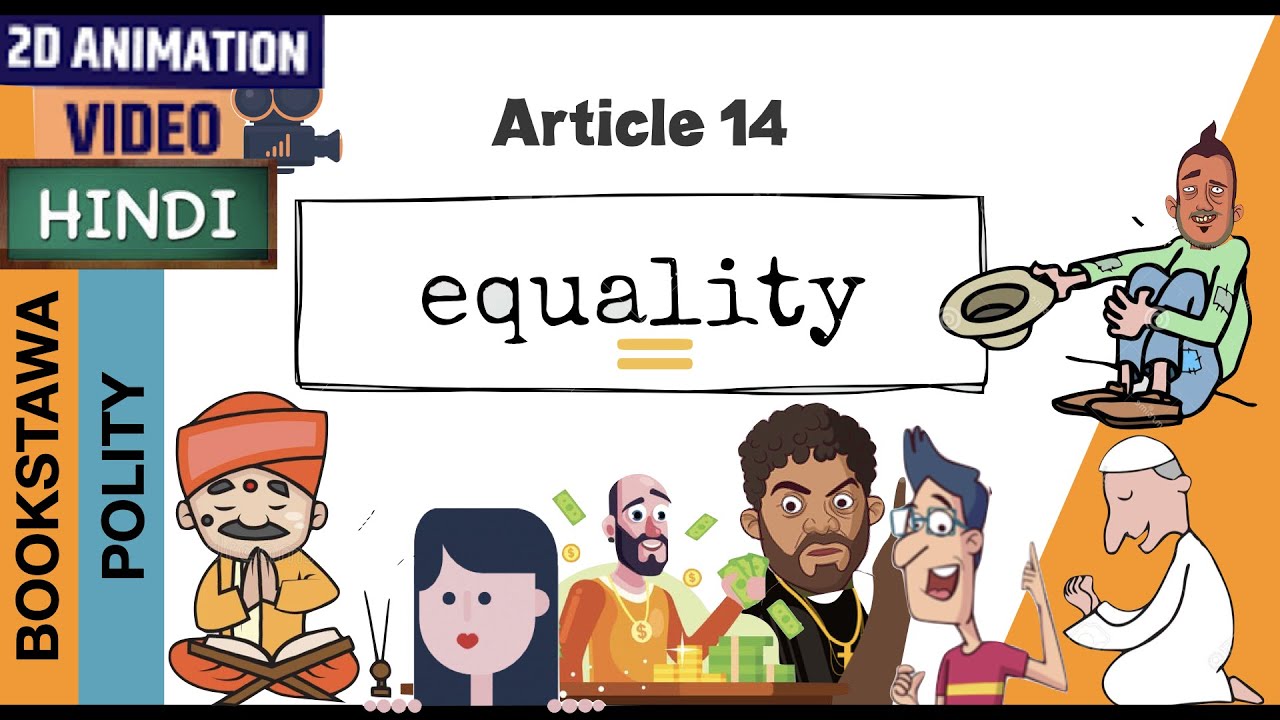
The Constitution of India has a very important rule: everyone must be treated fairly. It protects people from being treated badly just because of their religion, caste, sex, race, or where they were born. These rules are written in Articles 15 to 18. They were made after India got its independence to make sure every single person gets equal respect and fair chances. If you are a student preparing for big exams, knowing these Fundamental Rights under Part III of the Constitution is super important!
🎯 In this chapter, you will understand:
- How the Constitution stops unfair treatment based on who you are.
- Why the government sometimes gives extra help to certain groups.
- How everyone gets a fair chance to get a government job.
- The reasons for banning the old practice of untouchability and royal titles.
💡 Why this topic matters: These laws act as a shield. They broke down very old, unfair habits in society and opened doors for everyone to go to school, get good jobs, and live with respect.
🧠 Core Idea: True democracy means a fair society. Articles 15 to 18 work together to make sure no citizen is left behind because of their birth, gender, or religion.
Article 15: Stopping Unfair Treatment
Article 15 says clearly that the government cannot be unfair to any citizen just because of their religion, race, caste, sex, or place of birth. It is the bedrock of fairness in India.
What Does Article 15 Mean?
Article 15(1) tells the government to treat everyone equally. Article 15(2) says that regular people and businesses must be fair, too. The word 'only' is very important—it means the government can sometimes make rules based on other things like your skills or age, but never only on your caste or religion.
- (i) Nobody can stop you from going into shops, restaurants, hotels, or movie theaters.
- (ii) Everyone has the right to use public wells, bathing areas, and roads built with public money.
- (iii) It brings people together in daily life, ignoring old walls built by caste.
Special Help and Exceptions
Even though the law says treat everyone the same, sometimes treating people the same isn't enough to be truly fair. So, Article 15 lets the government make special provisions (extra help) to uplift those who need it most.
- (a) For women and children, like having special seats for women in buses or giving free schooling to kids.
- (b) For socially and educationally backward classes, like Scheduled Castes (SC) and Scheduled Tribes (ST), by saving seats for them in schools.
- (c) The 93rd Constitutional Amendment Act in made it possible to offer this special help in both private and government schools (except for schools run by minority religious groups).
Helping Students in Education
To make this extra help a reality, the government passed the Central Educational Institutions Act in . This law saved 27% of seats for Other Backward Classes (OBCs) in top colleges like the IITs and IIMs. In , the Supreme Court said this was a great idea, but they added one important rule: people in the 'creamy layer' cannot get this special help.
- (i) This rule made sure that smart and hardworking students got a fair chance.
- (ii) The 'creamy layer' rule ensured that the help reached the people who were truly struggling.
- (iii) This famous decision created a perfect balance between rewarding hard work and helping poor families.
Understanding the Creamy Layer
The term creamy layer is used to describe people from the Other Backward Classes (OBCs) who are already doing really well. Since they already have good money and high social standing, they don't need the special reserved seats.
- (i) People holding big national posts like the President, Vice-President, or Supreme Court Judges.
- (ii) Top government officers working in Group 'A' and 'B' jobs.
- (iii) High-ranking army officers, like a Colonel or above.
- (iv) Top professionals like doctors, lawyers, engineers, and big consultants.
- (v) Business owners making a lot of money.
- (vi) People who own very large farms or a lot of city property.
- (vii) Families earning more than ₹6 lakh a year, or having wealth that passes tax limits.
Article 16: Fair Chances in Government Jobs
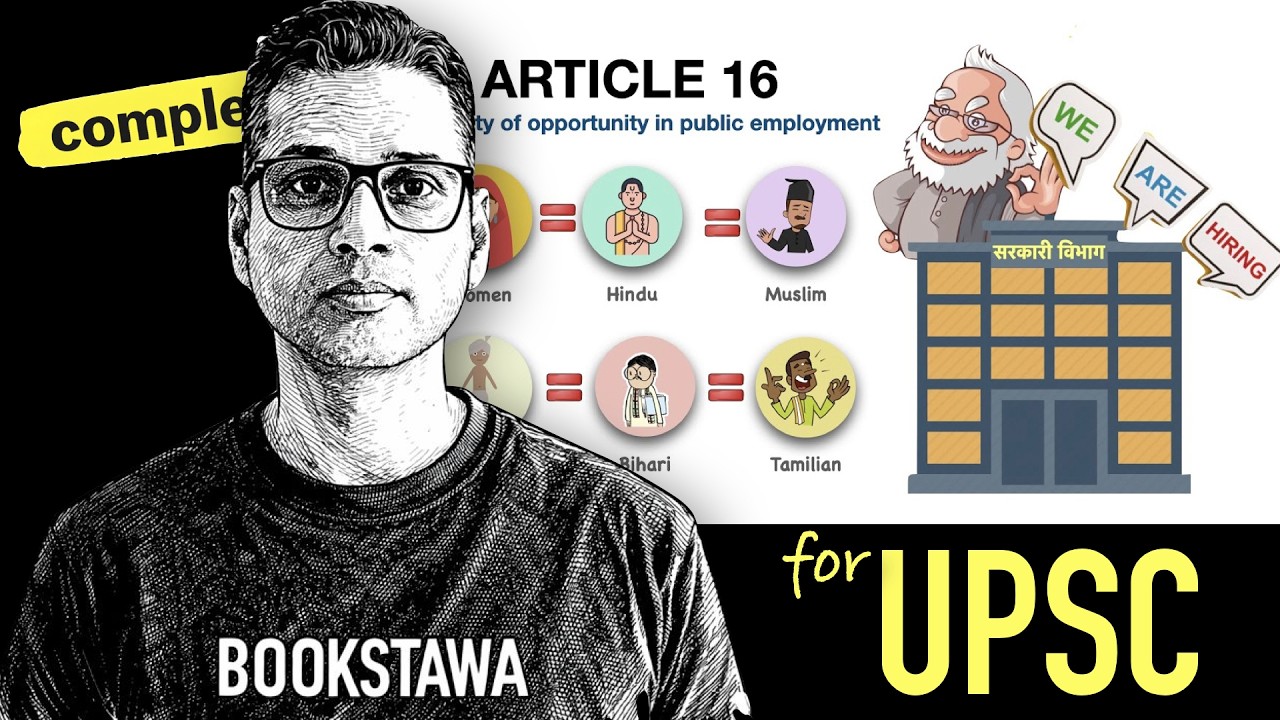
While Article 15 is about daily life, Article 16 is all about jobs. It promises that every citizen will have an equal chance to get a government job, no matter their caste, gender, or religion.

- Article 16 ensures the government is fair when hiring people.
The Main Rules and Exceptions
Article 16(1) and (2) say that everyone has the right to try for a government job. But just like Article 15, there are some logical exceptions to help society run smoothly and fairly.
- (i) Some local jobs in Andhra Pradesh and Telangana can ask that you live there to get the job.
- (ii) The government can save (reserve) jobs for backward classes if they aren't getting enough jobs.
- (iii) A job inside a religious place can require a person to belong to that specific religion.
The Mandal Commission Report
In , a group called the Mandal Commission was created, led by B.P. Mandal. They looked closely at India and found 3,743 backward castes, making up about 52% of the people (not counting SCs and STs). They suggested saving 27% of government jobs for OBCs.
- (i) The government under Prime Minister V.P. Singh made this a real rule in .
- (ii) Later, in , the Narasimha Rao government tried to add a 10% job save for poorer people from higher castes.
- (iii) These big changes made a lot of people talk, argue, and finally go to the courts to see if it was right.
The Big Supreme Court Case of 1992
This led to a very famous court case called the Indra Sawhney vs Union of India case in . The Supreme Court made some huge decisions that still guide us today.
- (i) They said the 27% job help for OBCs was perfectly fine, but the creamy layer (the rich ones) could not use it.
- (ii) They cancelled the 10% extra jobs for higher castes.
- (iii) They made a rule that total job reservations should never cross 50%.
- (iv) They said there would be no reservations when getting a job promotion after .
- (v) They told the government to create a special, permanent team to look after OBC matters.
What Happened After the Case?
To follow the Supreme Court's instructions, the government quickly made new rules and constitutional changes.
- (a) The Ram Nandan Committee was made in to figure out who belongs to the creamy layer.
- (b) The National Commission for Backward Classes was created in to keep checking on these groups.
- (c) The 77th Amendment in changed the rules so SCs and STs could still get help during job promotions.
- (d) Later, the 81st, 85th, and 76th Amendments were added to fix rules about job seniority and saving leftover job seats for the next year.
Article 17: Ending Untouchability
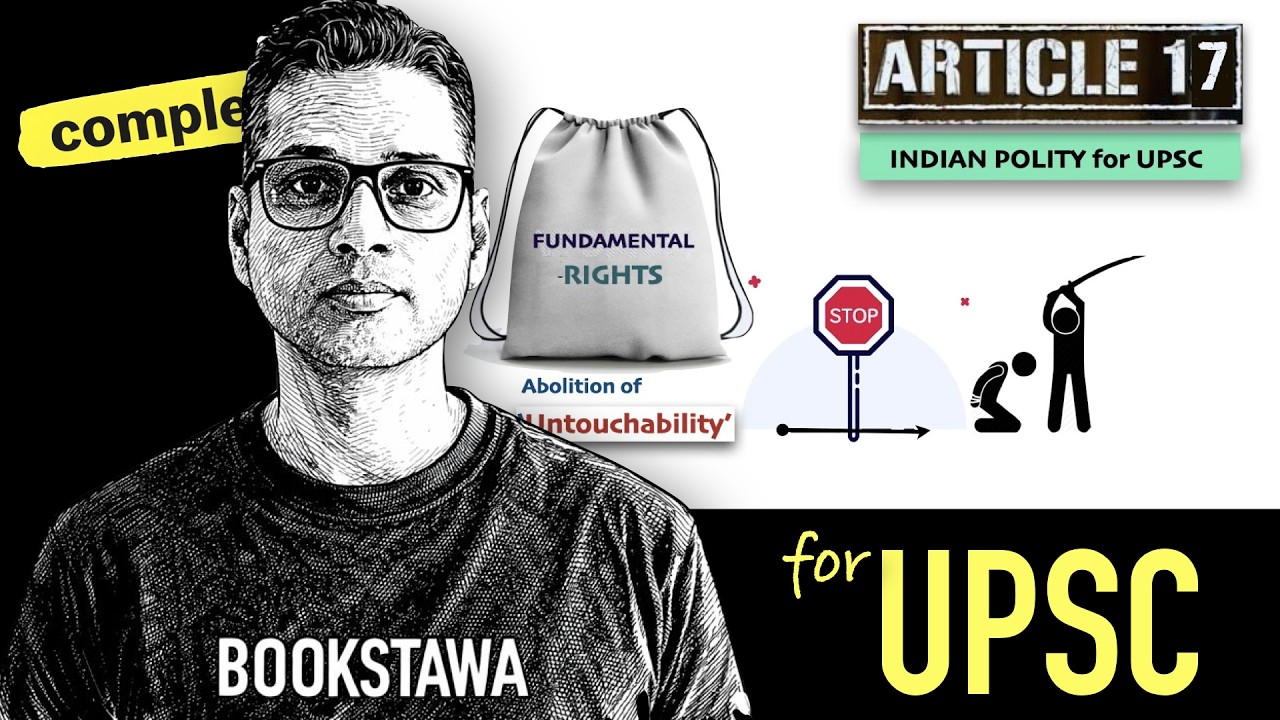
Article 17 is one of the most beautiful parts of the Constitution. It completely ended an old, cruel practice called untouchability, where some people were treated as "impure". Making this illegal was a massive moral victory for India.
- It ensures that every single citizen is treated with dignity.
Protection of Civil Rights Act, 1955
To make Article 17 strong, the government created this law. It punishes anyone who tries to practice untouchability. In , the punishments were made even stricter.
Breaking the Chains of Untouchability - Temple Entry: You can go to jail for stopping someone from entering a temple or place of worship.
- Public Services: You cannot refuse to serve someone in shops, hospitals, or hotels based on their caste.
- No Excuses: No one is allowed to use religion or old traditions as an excuse to be mean.
- Respect: Throwing insults at someone because of their caste identity is a serious crime.
What the Courts Say
The Supreme Court made it clear that Article 17 applies to everyone. Not just the government, but even normal citizens must follow it. If a citizen discriminates against someone, it is the government's duty to step in and stop it.
Article 18: No More Royal Titles
In the old days, kings and the British rulers used to give fancy titles like "Sir," "Rai Bahadur," or "Maharaja" to their favorite people. This made some people feel bigger than others. Article 18 stops this to make sure everyone is on the same level.
- It removes the old system where people were divided into commoners and nobles.
Rules About Titles
This article has four clear rules to stop people from using special titles to feel superior.
- (i) The government cannot give any titles, unless they are for doing great in studies (like "Doctor") or the military (like "Major").
- (ii) Indian citizens are not allowed to accept fancy titles from other countries.
- (iii) A foreigner working for the Indian government cannot accept a title from another country without asking the President of India first.
- (iv) No person working for the government can take gifts, money, or jobs from a foreign country without permission.
National Awards and the 1996 Ruling
You might wonder, what about awards like the Bharat Ratna or the Padma Shri? In , the Supreme Court said these are perfectly fine. They are given to people who do amazing work for the country, so they are not "royal titles."
- (i) However, the Court warned that winners cannot use these awards like a title in front of or behind their names (like saying "Bharat Ratna Rahul").
- (ii) If someone disobeys this rule, their award can be taken away.
The History of National Awards
These beautiful awards began in . A political party called the Janata Party stopped giving them in , but Prime Minister Indira Gandhi brought them back in . Today, they remain India's biggest way of saying "thank you" to its greatest citizens.
⚡ Quick Revision Capsule: Fundamental Equality Rights
Here is a simple table to help you easily remember what each of these important articles does for the citizens of India.
| Constitutional Article | Main Purpose | Key Detail to Remember |
|---|---|---|
| Article 15 | Stops unfair treatment in daily life. | Protects you based on religion, race, caste, sex, or birth place. Allows special help for women and kids. |
| Article 16 | Ensures fair chances in government jobs. | Provides job reservations for backward classes, but the rich creamy layer is excluded. |
| Article 17 | Ends the cruelty of untouchability. | Makes it a serious crime to discriminate or deny entry to public places based on caste. |
| Article 18 | Bans old royal or noble titles. | Only military and study-based titles are allowed. National Awards like Padma Shri are not titles. |
📝 Summary
The rules inside Articles 15 to 18 of the Indian Constitution act as a strong moral guide to create a fair and happy society. By banning unfair treatment, untouchability, and royal titles, these laws make sure everyone has an equal chance to succeed. For young students and exam candidates, deeply understanding these steps taken from to today is the key to knowing how India fights for true justice.
🚀 Quick Revision Points
Essential facts to review before examinations:
- (i) Article 15 allows educational quotas, but the 2008 ruling established the creamy layer limit.
- (ii) The Mandal Commission in 1979 suggested a 27% job quota for OBCs under Article 16.
- (iii) Article 17 completely abolishes untouchability, backed by the strict 1955 Civil Rights Act.
- (iv) The 1996 Supreme Court ruling stated that awards like the Bharat Ratna are not banned titles under Article 18.
- 💡 Exam Tip: Always remember the difference between Articles 15 and 16! Article 15 is about general daily life and education, while Article 16 is strictly about getting a job in the government.
❓ Frequently Asked Questions (FAQ)
Q1: Can private schools be forced to offer reserved seats under Article 15?
A1: Yes! Thanks to the 93rd Amendment in 2005, private schools (except for minority-run ones) also have to offer special seats to backward classes.Q2: What exactly is the creamy layer?
A2: The creamy layer refers to families in the OBC category who are already wealthy (earning above a certain limit) or hold high jobs. They do not get the reservation benefits.Q3: Are military ranks considered banned titles under Article 18?
A3: No, military ranks (like Major or General) and academic degrees (like Doctor) are exceptions. The Constitution allows these because you earn them through hard work.