This easy-to-understand study guide explains how neighboring states in India work together as a united family. It covers the setup of Zonal Councils and the rulebook created by the Constitution of India for Inter-State Relations. Learning about the States Reorganisation Act of 1956 alongside Articles 261 to 307 helps students and those aiming for exam preparation grasp the key concepts of Indian Federalism—which simply means how national and state governments share power and solve problems together.
🎯 In this chapter, you will understand:
- How Zonal Councils bring state leaders together to solve common problems like transportation, security, and economic growth.
- The five main geographical divisions of Zonal Councils, their member states, and where their administrative headquarters are located.
- The constitutional rules in Articles 261 to 263 for recognizing legal documents across state borders and resolving water sharing arguments.
- How Articles 301 to 307 keep business, trade, and the movement of goods smooth and fair across every state boundary in India.
💡 Why this topic matters: India is a huge country with many states. Without proper ways to talk and share resources, neighboring states might get stuck in disputes over water, roads, or business rules. These councils and articles make sure everyone collaborates peacefully.
🧠 Core Idea: Cooperative federalism keeps India strong. While states have their own borders, laws and economic activities are linked so that all regions grow together as one team.
Comprehensive Guide to Zonal Councils and Articles Related to Inter-State Relations in India
The story of how different regions of India learned to team up through Zonal Councils is an important part of our country's modern administrative history. These special groups were built to encourage teamwork and peaceful problem-solving among neighboring states. They act like friendly meeting tables where leaders can sit down, work out regional disagreements, and plan shared projects so every community gets better roads, power, and social care.
- (i) These regional bodies were officially established by Parliament under the States Reorganisation Act of 1956 in to make sure states live together peacefully after national borders were redrawn.
- (ii) Every council offers a neutral forum where the Union Home Minister from the national government and the Chief Ministers of the involved states meet to talk about mutual goals and concerns.
- (iii) The underlying administrative design helps handle shared challenges in fields like economic planning, social welfare, regional security, and border transport development.
Geographical Classification and Composition of Zonal Councils
To keep governance close to the ground, the Zonal Councils are organized into five clear regions across the map. Each zone has a defined group of member states and its own official headquarters city to manage daily administrative coordination smoothly.

The Northern and Central Jurisdictions
The Northern Zonal Council and the Central Zonal Council cover the vast landmass from the high snowy peaks of the Himalayas down through the fertile central plains and Vindhya hills of India.
Detailed Aspect of the Northern Zonal Council
This northern block groups together neighboring states and union territories that share critical mountain rivers, agricultural trade routes, and border security needs.
- (i) Members: Includes the states and union territories of Jammu and Kashmir, Himachal Pradesh, Haryana, Punjab, Rajasthan, Delhi, and Chandigarh.
- (ii) Headquarters: The core administrative work is run from the national capital, New Delhi.
Detailed Aspect of the Central Zonal Council
This central block connects giant heartland states that share major river basins, industrial transport zones, and mineral reserves.
- (i) Members: It brings together the states of Uttar Pradesh, Uttarakhand, Chhattisgarh, and Madhya Pradesh.
- (ii) Headquarters: The designated administrative center is located in Allahabad (Prayagraj).
The Coastal and Frontier Jurisdictions: Eastern, Western, and Southern Councils
Reaching from the waters of the Bay of Bengal on the east to the Arabian Sea on the west, and all the way down to the Indian Ocean in the south, these three councils look after the unique needs of India's maritime and coastal regions.
The Eastern Zonal Council
Connecting eastern farming hubs, mining regions, and coastal seaports to support heavy industry and regional trade.
- (i) Members: Comprises the states of Bihar, Jharkhand, West Bengal, and Odisha.
- (ii) Headquarters: The vibrant historical hub of Kolkata handles the administrative operations.
The Western Zonal Council
Bringing together India's major commercial and industrial hubs along the Arabian Sea coastline.
- (i) Members: Includes Gujarat, Maharashtra, Goa, and the coastal Union Territories of Dadra and Nagar Haveli and Daman and Diu.
- (ii) Headquarters: Headquartered in the financial capital, Mumbai.
The Southern Zonal Council
Uniting the southern peninsular states that share deep cultural ties, tech corridors, and complex river systems.
- (i) Members: Consists of Andhra Pradesh, Telangana, Karnataka, Tamil Nadu, Kerala, and Puducherry.
- (ii) Headquarters: The administrative seat is based in Chennai.
Constitutional Framework Governing Inter-State Relations
In addition to administrative bodies like zonal meetings, the supreme rulebook—the Constitution of India—contains clear written Articles. These articles act as the referee to make sure legal decisions, river water sharing, and interstate market trade remain fair, smooth, and legally binding across all state lines.
Public Acts, Judicial Proceedings, and Water Adjudication
The Constitution guarantees that legal decisions made in one state are respected across the whole nation, while giving Parliament specific power to settle disputes over shared river waters.
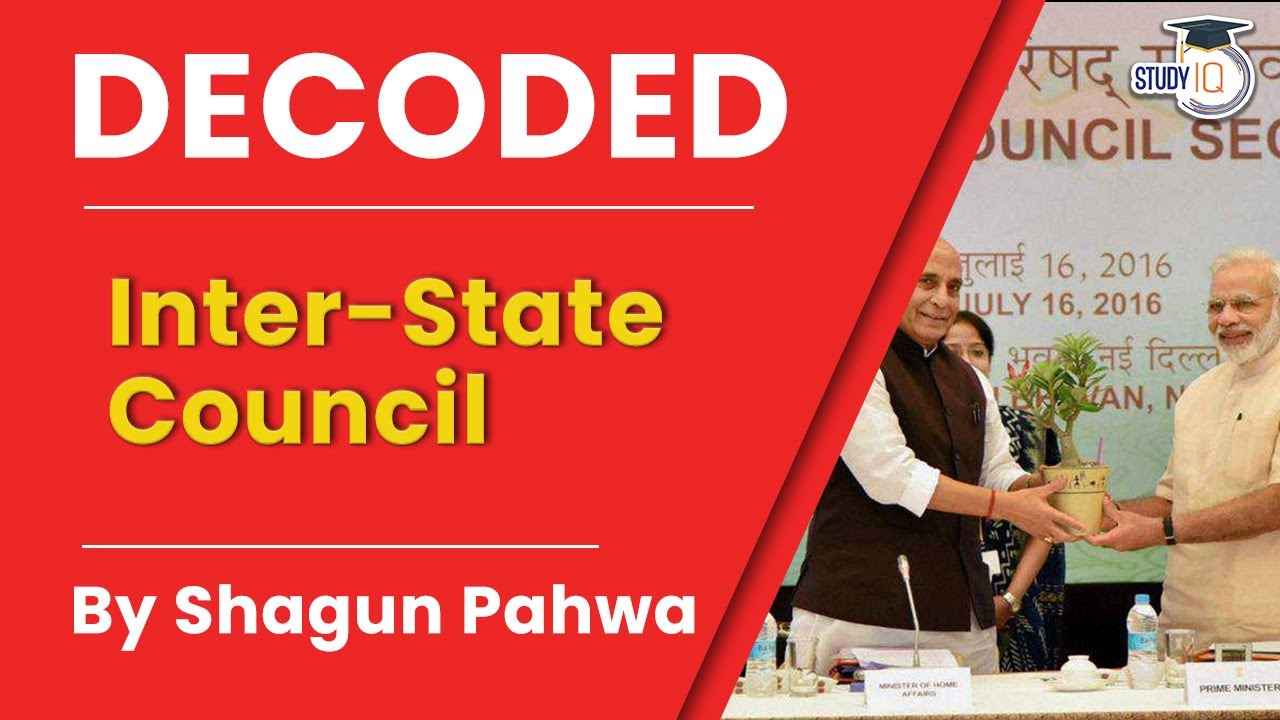
Secretariat and meeting setup for resolving inter-state coordination issues - Article 261 (Full Faith and Credit): Focuses on the Mutual Recognition of Public Acts, Records, and Judicial Proceedings. This means public documents, official civil records, and court judgments delivered in one state must be trusted and enforced equally in every other state.
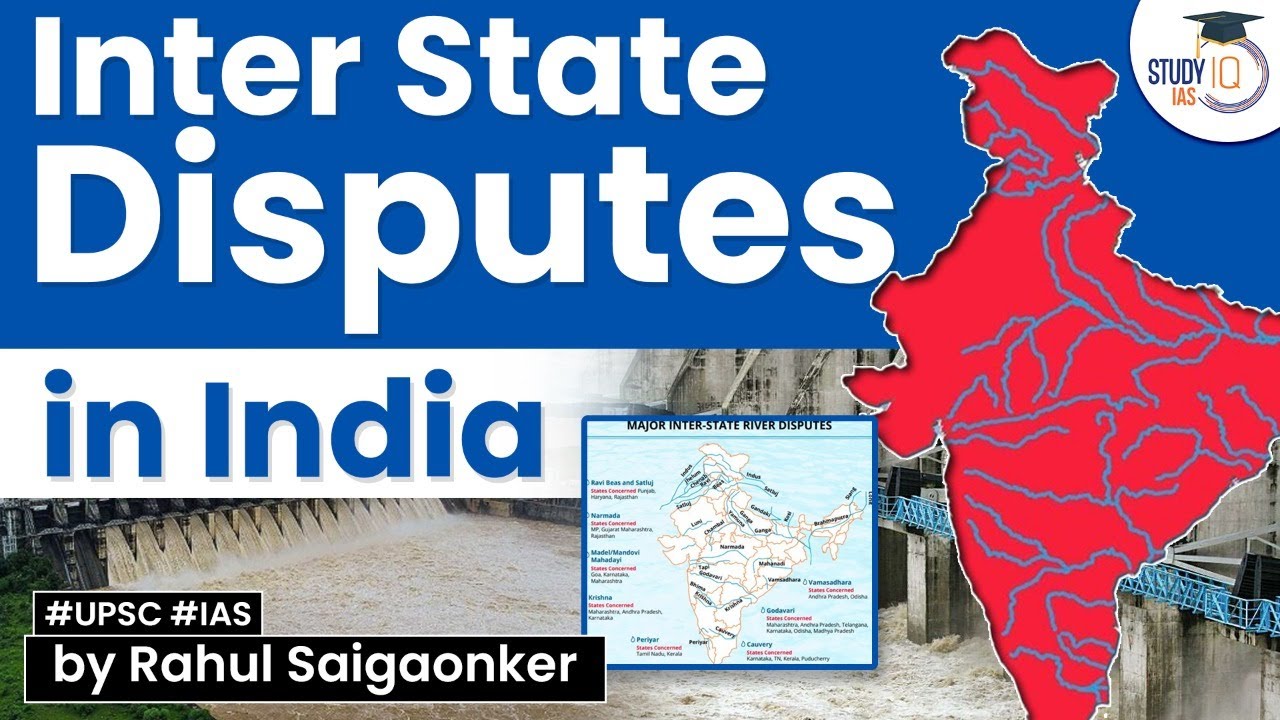
- Article 262 (Water Disputes): Deals with the Adjudication of disputes relating to waters of inter-state rivers or river valleys. It allows Parliament to create special legal tribunals to decide how shared river water is distributed, keeping these sensitive disputes outside the Supreme Court's normal jurisdiction.
- Article 263 (Inter-State Council): Empowers the President of India to establish an Inter-State Council to investigate common issues, recommend better policy solutions, and improve harmony between the Union and state governments.
The Architecture of Inter-State Trade and Commerce
Articles to in Part XII of the constitution build an invisible highway for business. They ensure that farmers, factory owners, and merchants can buy and sell goods anywhere in India without facing unfair local taxes or artificial trade walls.
- (a) Article 301: Guarantees that trade, commerce, and intercourse shall be completely free throughout the entire territory of India.
- (b) Article 302: Gives Parliament the law-making power to place reasonable restrictions on trade freedom if there is a real national public interest (like preventing food shortages).
- (c) Article 303: Strictly forbids both the Union and State legislatures from passing laws that give unfair preference or discriminate against one state over another in commercial matters.
- (d) Article 304: Allows states to levy non-discriminatory taxes on imported goods from other states, or put reasonable trade rules in place, provided the President approves them first.
- (e) Article 305 & 306: Article 305 protects existing laws and state-run business monopolies, whereas Article 306 (which dealt with old Part B states) was completely Repealed in .
- (f) Article 307: Authorizes Parliament to appoint a dedicated legal authority or commission to monitor and enforce the trade principles outlined in Articles 301 to 304.
⚡ Quick Revision Capsule: Zonal Councils & Constitutional Articles
Use this convenient summary table to quickly revise key structural details and legal provisions before exams:
| Category / Article | Key Focus Area | Administrative / Constitutional Detail |
|---|---|---|
| Zonal Councils Setup | Statutory Regional Cooperation | Created under States Reorganisation Act of 1956; chaired by Union Home Minister. |
| 5 Zonal Headquarter Cities | Regional Administrative Hubs | New Delhi (North), Allahabad (Central), Kolkata (East), Mumbai (West), Chennai (South). |
| Article 261 | Full Faith & Credit Clause | Ensures public acts, legal records, and court judgments are accepted nationwide in India. |
| Article 262 | Inter-State Water Disputes | Empowers Parliament to set up tribunals for river water sharing disputes. |
| Article 263 | Inter-State Council | Allows President to form an advisory council for inter-state policy coordination. |
| Articles 301 - 307 | Freedom of Trade & Commerce | Guarantees free movement of goods across states, while allowing regulated public interest limits. |
📝 Summary
The combined framework of five Zonal Councils (established in ) along with the key constitutional provisions in Articles 261 to 307 forms the backbone of Indian federalism. Together, they stop states from competing destructively against each other. Instead, they promote mutual discussion, peaceful judicial resolution, and a single unified economic market across India. For every student preparing for political science and governance exams, mastering these mechanisms is essential to understanding how our democratic nation stays united and well-coordinated.
🚀 Quick Revision Points
Essential facts to review before examinations:
- (i) Zonal Councils are advisory statutory bodies, not constitutional bodies, created to build federal cooperation.
- (ii) The Chief Ministers of member states serve as Vice-Chairmen of their respective Zonal Council on a yearly rotation basis.
- (iii) Article 262 explicitly allows Parliament to exclude the Supreme Court from hearing inter-state river water disputes once a tribunal is assigned.
- (iv) Freedom of trade under Article 301 applies to both inter-state (between states) and intra-state (within a state) commerce as ruled in landmark cases.
- 💡 Exam Tip: Questions frequently test whether Zonal Councils are constitutional or statutory. Always remember: Inter-State Council (Article 263) is Constitutional, whereas Zonal Councils (Act of 1956) are Statutory!
❓ Frequently Asked Questions (FAQ)
Q1: Who presides over the meetings of the Zonal Councils?
A1: The Union Home Minister acts as the ex-officio Chairman of all five Zonal Councils in India.Q2: Are Zonal Councils created directly by the Constitution of India?
A2: No, they are statutory bodies created by an ordinary law of Parliament called the States Reorganisation Act of 1956.Q3: What is the main difference between Article 262 and Article 263?
A3: Article 262 deals specifically with resolving arguments over river water allocation through tribunals, while Article 263 allows the President to create an Inter-State Council to discuss general policy and administrative cooperation.