Explore the intricate world of the Departmentally-Related Standing Committees, a cornerstone of Indian parliamentary democracy established in to ensure the Executive’s accountability. This detailed guide highlights the functions and merits of DRSCs, serving as an essential resource for students preparing for competitive examinations like UPSC and State PSCs. In a large democracy like India, Parliament has a huge amount of work to manage in limited time. To carefully inspect laws, review government spending, and keep a watchful eye on various ministries, specialized small groups of lawmakers called standing committees work behind the scenes. Think of these committees as dedicated helpers that make sure the government spends public money wisely and follows proper laws.
🎯 In this chapter, you will understand:
- How Departmentally-Related Standing Committees (DRSCs) were created in and expanded to keep government ministers accountable to Parliament.
- The fixed rule of having 31 members in each committee and why a sitting minister cannot be a committee member.
- The step-by-step procedure DRSCs follow to check government budget requests (demands for grants) and proposed laws (bills).
- The main benefits and limits of the committee system, including why their advice is non-binding and how they work in a non-partisan way.
💡 Why this topic matters: Understanding DRSCs helps students master how the Indian Parliament maintains control over government spending and policy decisions without getting bogged down in daily administration.
🧠 Core Idea: DRSCs act as specialized investigative groups that scrutinize budget demands, proposed bills, and long-term policies, ensuring that government ministers remain answerable to the people's elected representatives.
Departmentally-Related Standing Committees (DRSCs) Evolution and Parliamentary Oversight Since 1993
A transformative shift in the oversight of the Council of Ministers began with the recommendation of the Rules Committee of the Lok Sabha. The journey of DRSCs represents a narrative of evolving democracy, starting with 17 committees in and expanding to 24 committees by . These bodies act as the eyes and ears of the Parliament, ensuring that the accountability of the Executive is not just a concept but a continuous practice. Because the full Parliament cannot discuss every tiny detail of every ministry's spending plan, these small groups handle the heavy lifting by examining financial numbers and legislative proposals in detail.
- (i) The primary saga of these committees revolves around assisting Parliament in conducting more effective budget debates through meticulous scrutiny of every ministry's financial needs.
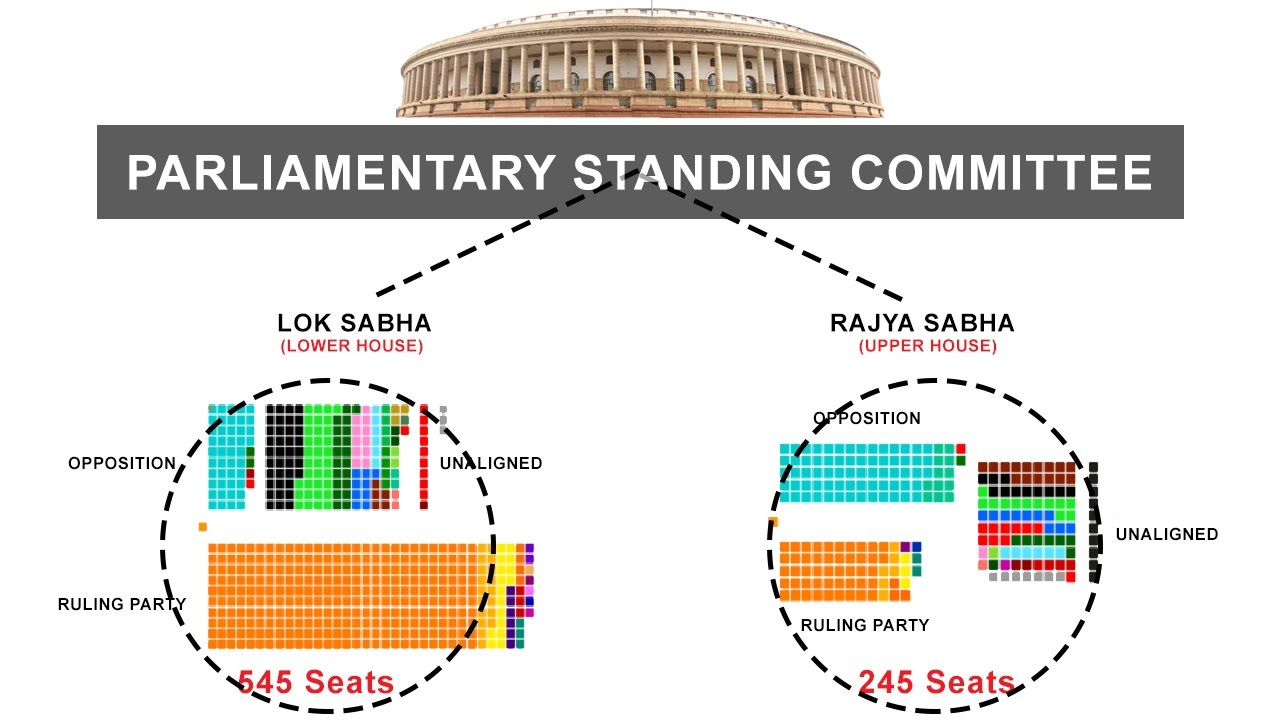
- (ii) Each of the 24 committees follows a strict membership rule of 31 members, consisting of 21 members chosen from Lok Sabha and 10 members chosen from Rajya Sabha.
- (iii) To maintain complete independence from executive influence, a minister cannot be a member of any committee; if a sitting member is elevated to the Council of Ministers, they must immediately vacate their seat in the committee.
Operational Dynamics and Roles of Standing Committees
The operational framework of DRSCs is designed to handle complex administrative and financial data that the full House cannot manage in its limited time. When Parliament meets, there are hundreds of lawmakers discussing many urgent national issues. Examining intricate policy documents, reading legal clauses in proposed bills, and checking detailed budget figures require quiet focus. DRSCs work away from the public debate floor, allowing lawmakers from different political parties to examine complex governance facts systematically and calmly.

Comprehensive Functional Mandate of DRSCs
The core functions involve a deep dive into the financial and legislative machinery of the Union Government, ensuring every rupee and law is scrutinized thoroughly. These committees do not create policies on their own; instead, they serve as dedicated reviewers that examine how ministries plan to spend taxpayers' money and implement laws.
- (i) Grants Examination: They examine demands for grants of ministries before voting takes place in Lok Sabha, though they cannot propose cut motions or change budget figures directly.
- (ii) Legislative Review: Committees act as a filter for bills, examining specific clauses and general principles referred to them by the presiding officers.
- (iii) Policy Analysis: They consider annual reports of ministries and national basic long-term policy documents to assess the long-term trajectory of the nation.
Procedural Blueprints for Financial and Bill Scrutiny
The story of a committee's work unfolds through a strict chronological procedure during the budget session and legislative cycles. This structured process ensures that lawmakers get sufficient time to review complex budget figures without delaying the overall work of Parliament.
Procedure for Consideration of Demands for Grants
During the annual budget session, examining government spending demands follows a clear timetable to ensure no ministry goes unchecked.
- (a) After the General Budget is presented and general discussions conclude, both Houses of Parliament adjourn for a fixed recess period to allow committees to work on financial figures.
- (b) Committees carefully review spending demands during this break and must submit separate reports for each ministry within the set time frame without asking for extensions.
Procedure for Examining Bills
When new laws are proposed, DRSCs examine their contents carefully to ensure they are well-drafted and legally sound.
- (a) Only bills introduced in either House and specifically referred to the committee by the Chairman of Rajya Sabha or the Speaker of Lok Sabha are examined.
- (b) The committee's focus remains strictly on general principles and clauses of the bill, concluding its study with a report submitted within a specified time limit.
Analyzing the Merits and Systemic Limitations of DRSCs
While powerful and essential for democracy, the DRSC system operates within a defined boundary to balance efficiency with parliamentary supremacy. The purpose of these committees is to support Parliament, not to replace the main decision-making powers of elected lawmakers or interfere with everyday civil service operations.
Systemic Limitations of Standing Committees
To prevent administrative interference and avoid repeating work done elsewhere, committees are restricted from certain areas of government operations.
- (i) They are strictly prohibited from dealing with the day-to-day administration of various government departments.
- (ii) They avoid overlap by not considering matters that are already being examined by other specialized parliamentary committees, such as the Public Accounts Committee or Estimates Committee.
- (iii) Crucially, all findings and recommendations made by DRSCs are advisory in nature; they guide Parliament and ministries but are not legally binding on the government.
Significant Merits of the Standing Committee System
The DRSC system is hailed as a flexibility-driven model that fosters a non-partisan atmosphere for governance and financial control, allowing politicians from opposing sides to work cooperatively.
- (i) Neutrality: Committee proceedings are notably free from party bias, allowing members to inspect issues objectively rather than following strict party lines.
- (ii) Expertise: Committees can invite experts and eminent persons to provide testimony, which enriches the knowledge base and overall quality of committee reports.
- (iii) Financial Discipline: By enforcing economy and efficiency in public expenditure, government departments are forced to be far more careful when preparing their financial demands.
- (iv) Inclusivity: This system ensures that Opposition parties and Rajya Sabha members play an active, continuous role in reviewing government spending and policies.
⚡ Quick Revision Capsule: Key Aspects of DRSCs
This table summarizes the core structure, composition, and functions of Departmentally-Related Standing Committees for quick learning and revision.
| Key Feature | Details & Rules | Importance in Governance |
|---|---|---|
| Year Established | Started in with 17 committees; expanded in to 24 committees. | Marks a major step in expanding parliamentary oversight of executive departments. |
| Total Membership | 31 members per committee (21 from Lok Sabha, 10 from Rajya Sabha). | Ensures representation from both Houses of Parliament in checking ministry work. |
| Ministerial Exclusion | A minister cannot be nominated as a member of any DRSC. | Guarantees independence by keeping the executive branch from controlling scrutiny. |
| Core Functions | Examines demands for grants, scrutinizes bills, and reviews annual ministry reports. | Provides deep technical examination of spending and proposed laws before full voting. |
| Nature of Recommendations | All committee reports and recommendations are advisory in nature. | Guides Parliament and government decision-making without limiting ultimate legislative authority. |
📝 Summary
The Departmentally-Related Standing Committees system, created in and expanded in , serves as a pillar of parliamentary oversight in India. By bringing together 31 members from both Lok Sabha and Rajya Sabha, these 24 committees closely check government expenditure proposals, review complex legislative bills, and evaluate long-term national policy documents. While their recommendations remain advisory and they cannot handle day-to-day administration or propose cut motions, DRSCs encourage non-partisan debate, bring expert knowledge into lawmaking, and keep the executive continuously accountable to Parliament.
🚀 Quick Revision Points
Essential facts to review before examinations:
- (i) DRSCs were introduced in with 17 committees and increased to 24 in (16 managed under Lok Sabha and 8 under Rajya Sabha).
- (ii) Every DRSC consists of exactly 31 members: 21 members nominated from Lok Sabha and 10 from Rajya Sabha.
- (iii) Ministers are strictly barred from becoming committee members to ensure unbiased scrutiny of government departments.
- (iv) DRSCs examine demands for grants during parliamentary recess and submit separate reports for each ministry, but their reports are advisory only.
- 💡 Exam Tip: Remember that DRSCs do NOT examine day-to-day administration or issues already handled by special bodies like the Public Accounts Committee. Also, remember that ministers cannot be members, and committee recommendations are purely advisory, not binding on the government!
❓ Frequently Asked Questions (FAQ)
Q1: What are Departmentally-Related Standing Committees (DRSCs)?
A1: DRSCs are specialized standing committees in the Indian Parliament created to closely inspect the budget demands, proposed bills, and annual reports of various government ministries.Q2: How many members serve on a DRSC and can a minister join?
A2: Each DRSC has 31 members: 21 from Lok Sabha and 10 from Rajya Sabha. A government minister cannot be a member of any standing committee to keep the scrutiny independent.Q3: Are the recommendations made by DRSCs legally binding on the government?
A3: No, all recommendations made by DRSCs are advisory in nature. They provide useful guidance to Parliament and government ministries, but the government is not legally forced to accept them.