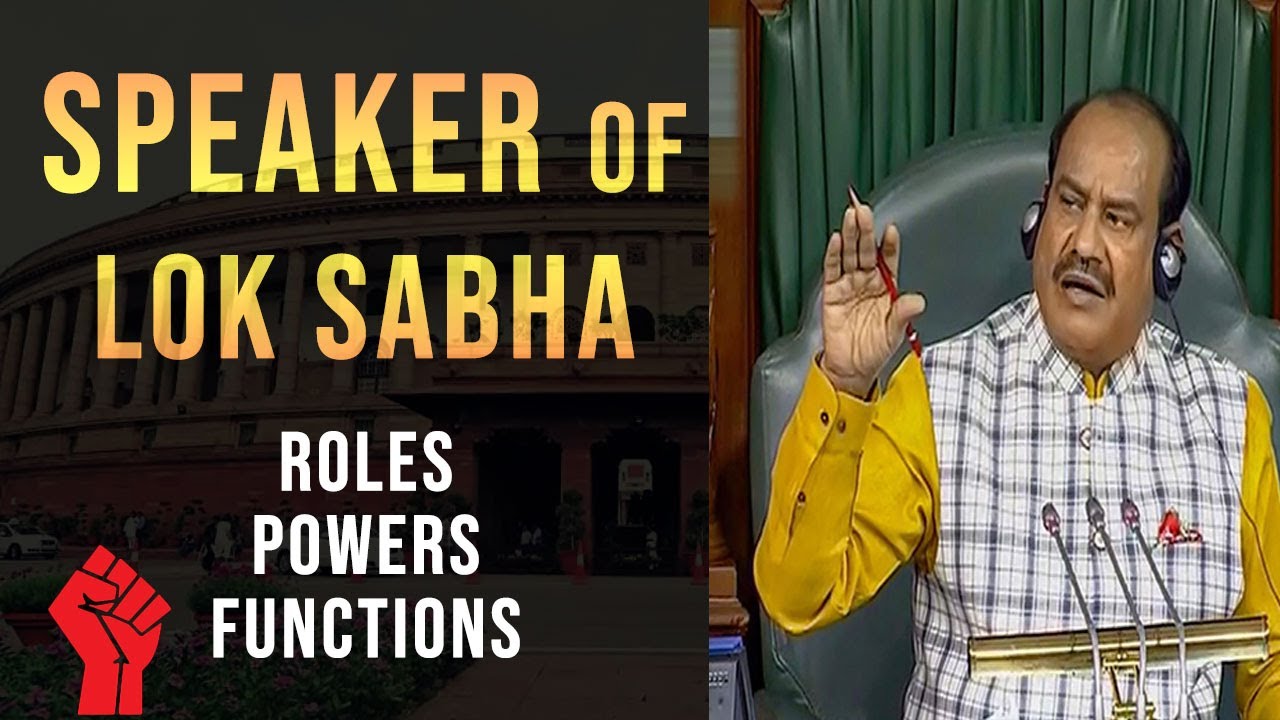
Explore the vital role of the Presiding Officers of Parliament, focusing on the Speaker of Lok Sabha and the Chairman of Rajya Sabha. Written under the provisions of the Constitution of India, this detailed guide covers election processes, duties, and powers. It is an essential reference created in for students and UPSC exam preparation candidates looking to master Indian Polity and Parliamentary proceedings.
🎯 In this chapter, you will understand:
- The leadership roles of the Speaker, Deputy Speaker, Chairman, and Deputy Chairman in maintaining order during lawmaking.
- How the Speaker of Lok Sabha is elected, their security of tenure, and the legal procedures for their removal.
- The major administrative, legislative, and judicial powers held by the Speaker, including decisions on Money Bills and the Anti-Defection Law.
- The constitutional safeguards that protect the Speaker's neutrality and independence from political pressure.
💡 Why this topic matters: Parliament cannot function smoothly without neutral leaders. Learning about Presiding Officers helps us understand how laws are debated fairly, how democratic rules are upheld, and how constitutional checks and balances protect the voice of the people.
🧠 Core Idea: Presiding Officers act like neutral referees in Parliament. They ensure every member follows the rules, manage debates, enforce voting procedures, and protect the dignity and legal powers of both legislative Houses.
📌 Presiding Officers of the Parliament: The Pillars of Indian Democracy
The governance of India’s legislative bodies is maintained by dedicated officials known as Presiding Officers. The story of Indian democracy is written within the halls of the Parliament, where each House is steered by specific leaders who ensure the sanctity of the legislative process and the maintenance of order during intense debates.
- (i) The Lok Sabha, or the Lower House, is led by the Speaker and the Deputy Speaker, who are elected from among its members to represent the voice of the people.
- (ii) The Rajya Sabha, or the Upper House, functions under the Chairman and Deputy Chairman, ensuring the interests of the States are upheld.
- (iii) To ensure continuity, panels of chairpersons for the Lok Sabha and vice-chairpersons for the Rajya Sabha are appointed to preside in the absence of the primary officers.
📌 Speaker of Lok Sabha: The Journey of Election and Security of Tenure
The Speaker is the first among equals in the Lower House, elected through a democratic process to serve as the administrative and judicial head of the House.

The Election Process and Filling Vacancies
The Speaker is elected by the Lok Sabha members from among themselves shortly after the first sitting of a newly formed House. In the event the office falls vacant due to resignation or other reasons, the House must elect a successor, with the President of India fixing the specific date for this election.
- (i) Tenure of Office: Typically, the Speaker serves for the entire duration of the Lok Sabha (), ensuring stability in parliamentary leadership.
- (ii) Automatic Vacation: The Speaker must step down if they cease to be a member of the House or if they resign by writing to the Deputy Speaker.
- (iii) Removal Protocols: A Speaker can be removed via a resolution passed by a majority of all the then members of the Lok Sabha, provided a advance notice is given.
Special Proceedings During Removal Resolutions
When a removal resolution is under active consideration by the House, special operational rules take effect immediately to ensure fairness and prevent conflicts of interest.
- (a) While a resolution for removal is being considered, the Speaker cannot preside over the sitting, though they have the right to be present and participate in discussions.
- (b) They retain the right to vote in the first instance during such proceedings, but notably, they cannot vote in the case of an equality of votes (tie).
Continuity of the Office After Dissolution
The office of the Speaker maintains structural stability even during major political transitions and elections.
- (a) A unique feature of this office is that when the Lok Sabha is dissolved, the Speaker does not immediately vacate their office; they continue until the very first meeting of the newly elected Lok Sabha.
📌 Role, Powers, and Functions: The Authority of the Speaker
The Speaker acts as the supreme guardian of the House, possessing vast powers to ensure that the Rules of Procedure are followed to the letter.
Sources of Power and Administrative Duties
The authority of the Speaker is not arbitrary; it flows from three distinct sources: the Constitution of India, the Rules of Procedure and Conduct of Business of Lok Sabha, and long-standing Parliamentary conventions.
Visual representation of procedural powers, quorum enforcement, and committee appointments by the Speaker. - Maintaining Decorum: The Speaker is the final authority for maintaining order and decorum within the House; without their supervision, the House cannot function.
- Quorum and Adjournment: In the absence of a Quorum (which is 1/10th of the total membership), the Speaker has the power to adjourn or suspend the meeting.
- Casting Vote: While they do not vote in the first instance, the Speaker exercises a Casting Vote in the event of a tie, thereby maintaining a position of neutrality.
- Joint Sittings: The Speaker presides over the joint sittings of both Houses, summoned by the President to resolve deadlocks over bills.
Legislative Oversight and Judicial Roles
Beyond administrative duties, the Speaker holds significant power over the classification of legislation and the conduct of individual members.
- (a) Money Bill Certification: The Speaker has the final say on whether a bill is a Money Bill. Their decision is absolute and is certified on the bill before it goes for Presidential assent.
- (b) Anti-Defection Law: Under the Tenth Schedule, the Speaker decides on the disqualification of members for defection. While this was once final, the Supreme Court ruled in that such decisions are subject to Judicial Review.
- (c) Committee Appointments: They appoint the chairmen of all parliamentary committees and personally chair the Business Advisory Committee, the Rules Committee, and the General Purpose Committee.
⚡ Quick Revision Capsule: Presiding Officers of Parliament
Use this revision matrix to review the key positions, elections, term limits, and unique constitutional powers of Parliamentary Presiding Officers at a glance.
| Office & House | Election & Selection Method | Key Constitutional Powers & Roles |
|---|---|---|
| Speaker (Lok Sabha) | Elected by Lok Sabha members from among themselves; election date fixed by the President. | Presides over House debates, maintains decorum, decides on Money Bills, exercises a Casting Vote, and chairs joint sittings. |
| Deputy Speaker (Lok Sabha) | Elected by Lok Sabha members from among themselves; election date fixed by the Speaker. | Presides over the Lower House when the Speaker is absent; enjoys full presiding authority during sittings. |
| Chairman (Rajya Sabha) | Ex-officio position held by the Vice-President of India, elected by both Houses of Parliament. | Presides over the Upper House, maintains order, but is not a member of the Rajya Sabha. |
| Deputy Chairman (Rajya Sabha) | Elected by Rajya Sabha members from among themselves. | Performs all duties of the Chairman when the office is vacant or when the Vice-President acts as President. |
| Disqualification Authority | Decided by the respective Presiding Officer under the Tenth Schedule. | Enforces anti-defection provisions; decisions are subject to Judicial Review per the ruling. |
📝 Summary
The Speaker of Lok Sabha and the Chairman of Rajya Sabha are indispensable to the Indian Parliamentary System. Understanding their Constitutional roles, Tenure, and Powers is crucial for students aiming to understand the checks and balances of Indian Democracy. Their impartiality ensures that the Rules of Procedure are respected, making this a core topic for competitive exams prepared over many .
🚀 Quick Revision Points
Essential facts to review before examinations:
- (i) The Speaker does not vote initially, but uses a Casting Vote to break deadlocks in case of a tie.
- (ii) A Quorum of 1/10th of total House members is mandatory for the Speaker to conduct sittings.
- (iii) Final certification of a Money Bill rests solely with the Speaker of Lok Sabha and cannot be challenged by the Rajya Sabha.
- (iv) Disqualification decisions made under the Tenth Schedule (Anti-Defection Law) are open to scrutiny by courts under Judicial Review.
- 💡 Exam Tip: Remember that while the Speaker of Lok Sabha is a member of the House they preside over, the Chairman of Rajya Sabha (the Vice-President) is NOT a member of the Rajya Sabha. However, both exercise a casting vote only in case of a tie!
❓ Frequently Asked Questions (FAQ)
Q1: Who determines whether a legislative bill is a Money Bill or an ordinary bill?
A1: The Speaker of Lok Sabha holds the absolute final authority to certify whether a bill is a Money Bill under the Constitution of India.Q2: Does the Speaker resign automatically when the Lok Sabha is dissolved?
A2: No, the Speaker continues in office even after dissolution until the very first meeting of the newly elected Lok Sabha takes place.Q3: Are the disqualification decisions of the Speaker under the Anti-Defection Law final?
A3: Originally they were considered final, but the Supreme Court ruled in that these decisions are subject to Judicial Review by courts.