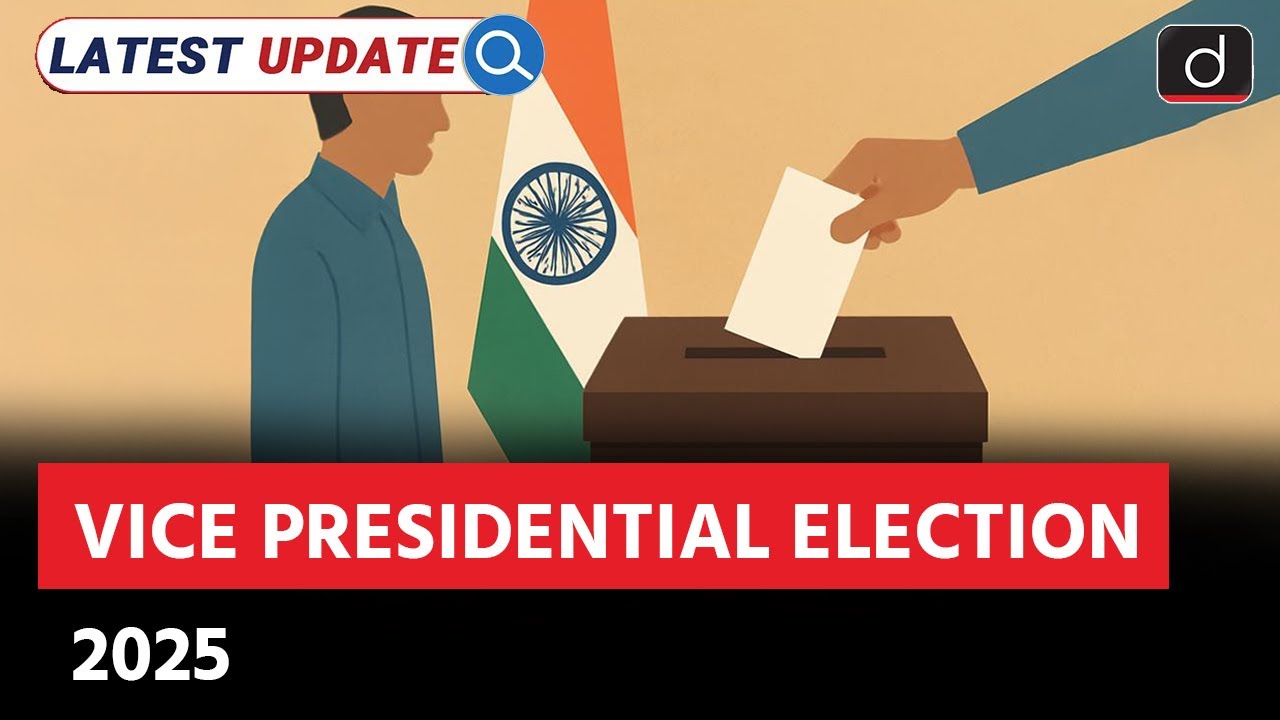
The Vice-President of India holds a very important and respected position under the Constitution of India, serving as the second-highest official post in our country's democratic setup. This detailed guide explains how the Vice-President is chosen through an election, what qualities a candidate must have, the official promise they make when taking office, and how they can step down or be removed if needed. Learning these key points about Indian Polity is super helpful for students preparing for school tests or civil service exams.
🎯 In this chapter, you will understand:
- The main duties of the Vice-President and why this office was created.
- How the special voting group elects the Vice-President and how it differs from selecting the President.
- The age, citizenship, and money requirements needed to apply for the position.
- How long the term lasts, how someone can leave the post, and how official disputes are solved.
💡 Why this topic matters: Knowing about the Vice-President helps us see how our government stays steady and organized even during big changes or emergencies.
🧠 Core Idea: The Vice-President leads the upper house of parliament every day and stands ready to take over the President's duties whenever necessary.
📌 The Vice-President of India: Constitutional Role, Powers, and Election Process for Students
The office of the Vice-President of India was designed following the pattern of the Vice-President of the United States. It sits right below the President in the country's official rank list. This position keeps our government running smoothly at all times without any breaks in leadership.
The Vice-President is the Guardian of the Upper House and the Primary Deputy to the President. The office holder has two major jobs that link our lawmakers with our political leaders.
- (i) The Vice-President works as the ex-officio Chairman of the Rajya Sabha (Council of States) and steps in to do the President's work if the President cannot perform their duties.
- (ii) Having both of these duties makes this job a special bridge between the leaders who enforce laws and the parliament that makes laws.
- (iii) Article 63 of the Constitution of India clearly states that there must always be a Vice-President of India.
📌 Election Process of the Vice-President of India: The Constitutional Mandate
Choosing the Vice-President is different from choosing the President because this job mainly focuses on working with the national parliament rather than individual states.

Electoral College Composition and Key Differences from Presidential Election
The Vice-President is chosen in an indirect election. This means normal citizens do not vote directly on election day. Instead, a specific group of elected representatives votes on behalf of the public.
- (i) The Exclusive Electoral Body: This special voting group is made up only of members from both houses of parliament—the Lok Sabha (House of the People) and the Rajya Sabha (Council of States).
- (ii) Inclusion of All MPs: Both elected members and nominated members in parliament get to vote in this election.
- (iii) Exclusion of State Assemblies: Members from state assemblies do not take part in this vote, keeping the focus entirely on national parliament leadership.
- (iv) Method of Voting: The vote uses a proportional representation system with a single transferable vote and a secret ballot, so every vote is kept private and fair.
📌 Qualifications and Nomination Requirements for Vice-Presidency Aspirants
To run for this high office, a candidate must meet specific rules about age, background, and suitability for national work.
Mandatory Eligibility Criteria for VP Candidacy
The Constitution of India lists simple but strict conditions that every candidate must meet before applying.
- (i) Citizenship and Age: A candidate must be a full citizen of India and must be at least to ensure they have enough maturity and experience.
- (ii) Readiness for the Rajya Sabha: The candidate must meet all requirements to become a member of the Rajya Sabha because their daily job is to lead that house.
- (iii) Prohibition of Profit: The candidate cannot hold an office of profit under the government. However, serving as current President, Vice-President, Governor, or Minister does not count as a restriction.
Formal Nomination and Security Deposit Procedures
To make sure only serious candidates apply, the election rules require support from members of parliament and a monetary deposit.
- (a) Support of Parliamentarians: A candidate's application must be officially proposed by at least 20 members and supported by another 20 members from the voting group.
- (b) Financial Commitment: Every candidate must submit a cash deposit of ₹15,000 to the Reserve Bank of India.
📌 Oath, Conditions, and Term of Office for the Vice-President
After winning the election, the Vice-President takes an official promise to serve the country under strict constitutional rules.
The Solemn Oath of Office and Affirmation of Duty
The new Vice-President takes an oath of loyalty to keep the nation's rules safe and do their job honestly.
- (i) The Vice-President promises to show true faith and loyalty to the Constitution of India.
- (ii) The Vice-President promises to perform all duties with complete fairness without fear or favor.
- (iii) This official oath is given in front of the President of India or an official picked by the President.
Conditions for Holding the Vice-Presidential Office
To keep the job fair, the Vice-President faces certain restrictions while in office.
- (a) Prohibition of Dual Membership: The Vice-President cannot sit as an active member of either House of Parliament or state legislatures. If an elected person is already a member, they give up that seat as soon as they take office.
- (b) Office of Profit Restriction: The Vice-President cannot hold any other paid government position during their term.
Term of Office, Resignation, and Removal Procedure
The position is held for a set length of time, but there are rules for resigning early or being removed by parliament.
Tenure and Parliamentary Removal Overview - Duration and Continuity: The official term lasts for from the start date, and a person can be re-elected as many times as chosen.
- Voluntary Resignation: The Vice-President can leave office early anytime by handing a written resignation letter to the President.
- Parliamentary Removal: The Rajya Sabha can start a removal process by passing a resolution with an absolute majority, which must then be approved by the Lok Sabha. A must be given before this vote takes place.
⚡ Quick Revision Capsule: Vice-President of India Summary
Here is a quick overview table covering all major facts about the Vice-President's office for fast revision:
| Feature / Topic | Constitutional Provision / Rule | Key Detail to Remember |
|---|---|---|
| Minimum Age | Must be an Indian citizen | |
| Electoral College | Article 66 | Includes elected and nominated MPs of both houses |
| Ex officio Role | Article 64 | Chairman of the Rajya Sabha |
| Normal Term | Can stay until new successor takes charge | |
| Dispute Resolution | Article 71 | Settled exclusively by the Supreme Court |
📝 Summary
The office of the Vice-President of India is essential for keeping our democratic government steady and organized. From working as the Chairman of the Rajya Sabha to stepping in during national emergencies, this post connects legislative work with top executive duty. Understanding the , the minimum age requirement of , and the special vote conducted by members of parliament helps students master key concepts in the Constitution of India.
🚀 Quick Revision Points
Essential facts to review before examinations:
- (i) Article 63 sets up the official position of the Vice-President of India.
- (ii) The election is indirect, using a secret ballot and a single transferable vote system.
- (iii) State assembly members do not vote in the Vice-President's election.
- (iv) Removal requires an absolute majority vote in the Rajya Sabha after a .
- 💡 Exam Tip: Remember that while state assembly members vote for the President of India, they DO NOT vote for the Vice-President!
❓ Frequently Asked Questions (FAQ)
Q1: Who administers the oath of office to the Vice-President?
A1: The oath of office is administered by the President of India or a person chosen by the President.Q2: Who resolves disputes regarding the election of the Vice-President?
A2: All election disputes are handled exclusively by the Supreme Court of India, and its choice is final.Q3: What is the security deposit required to contest the election?
A3: Candidates must submit a deposit of ₹15,000 to the Reserve Bank of India.