Dumping in international trade is a key economic practice where companies choose to sell items at lower rates in foreign markets than in their own local domestic markets to grab a bigger market share. This idea, grounded in overall economic theory, helps students see how market incentives operate and why nations apply antidumping duties for trade defense. Gaining clarity on dumping is vital for clearing exams and grasping 🌐 international trade policies.
🎯 In this chapter, you will understand:
- The fundamental mechanics of dumping and cross-border price discrimination.
- How market segmentation allows firms to charge different prices abroad.
- The role of importing nations and domestic firms in filing antidumping claims.
- WTO safeguards, margin calculation challenges, and potential protectionist biases.
💡 Why this topic matters: It highlights how companies strategically capture foreign market share and how governments balance open competition against protecting local jobs.
🧠 Core Idea: Dumping is international price discrimination, where products are exported at prices below home market levels, often triggering regulatory counter-measures like tariffs.
📌 Dumping in International Trade: Concept and Implications
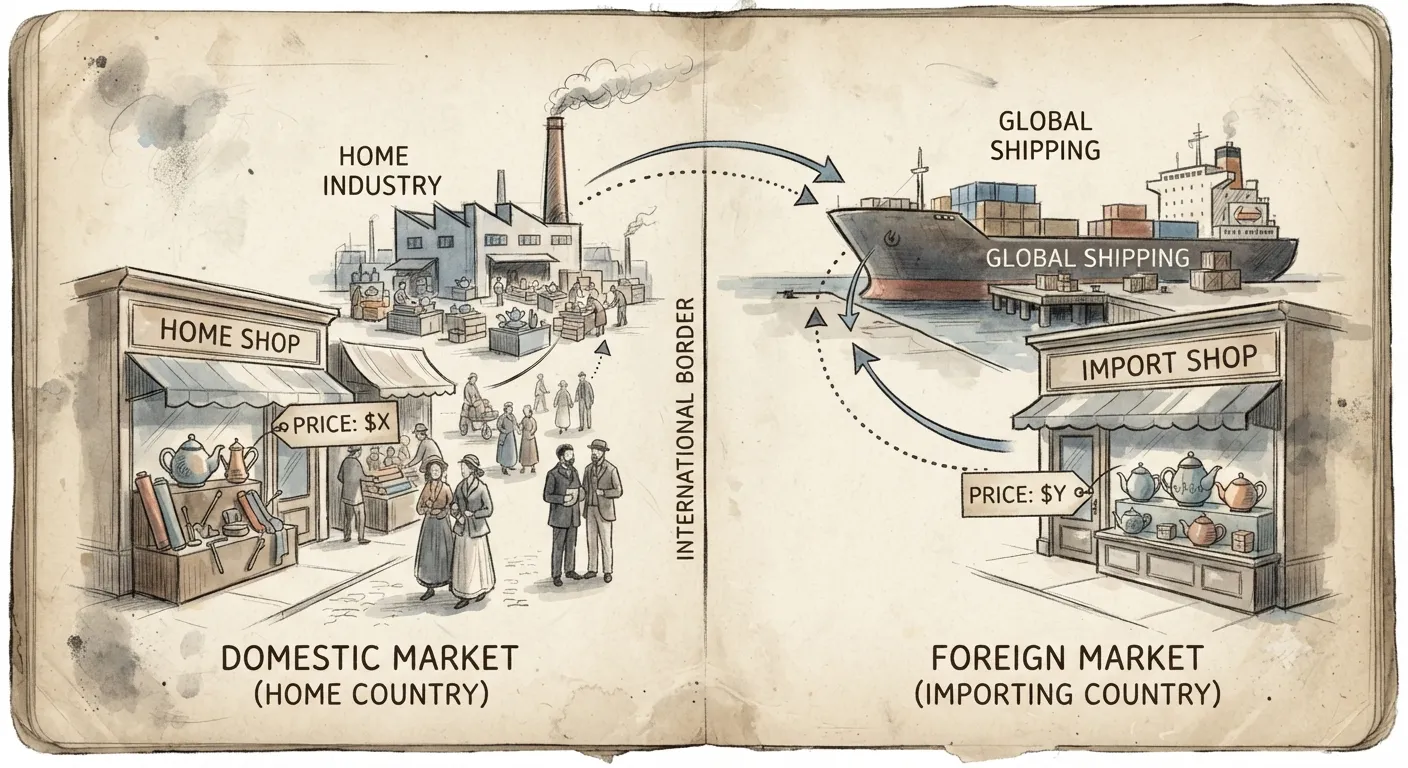
When looking at global business, dumping stands out as an aggressive pricing strategy. It happens when companies export goods at prices lower than what they charge domestically, aiming to build dominance in foreign markets. Driven by specific market conditions, this tactic lets businesses secure a temporary edge overseas. While buyers initially enjoy cheaper products, local industries can suffer significant long-term harm.
The Core Mechanics of Market Underpricing
To grasp why companies do this, we need to look at how different markets operate and how pricing can be manipulated across borders. Here are the main pillars behind this strategy:
- (i) Price Discrimination: In markets without perfect competition, companies use price discrimination across separated consumer bases to raise their total profit.
- (ii) Market Segmentation: High freight costs and trade barriers keep international markets separated, making it easier to run split pricing models.
- (iii) Short-term vs Long-term Effects: Consumers get lower prices at first, but if foreign firms wipe out local rivals, they can build a monopoly and raise prices later.
📌 Antidumping Duties and WTO Procedures
When an influx of ultra-cheap foreign goods threatens a domestic market, host nations rarely stand idle. To cushion against the damage caused by dumping, importing countries rely on antidumping duties and standard international trade regulations. These tariffs serve as corrective fees designed to level the playing field for local businesses.
Role of Domestic Firms and Lobbying
Local businesses harmed by dumping view it as an unfair and predatory practice. To safeguard their operations, these industries lobby their governments to levy antidumping duties following WTO guidelines.
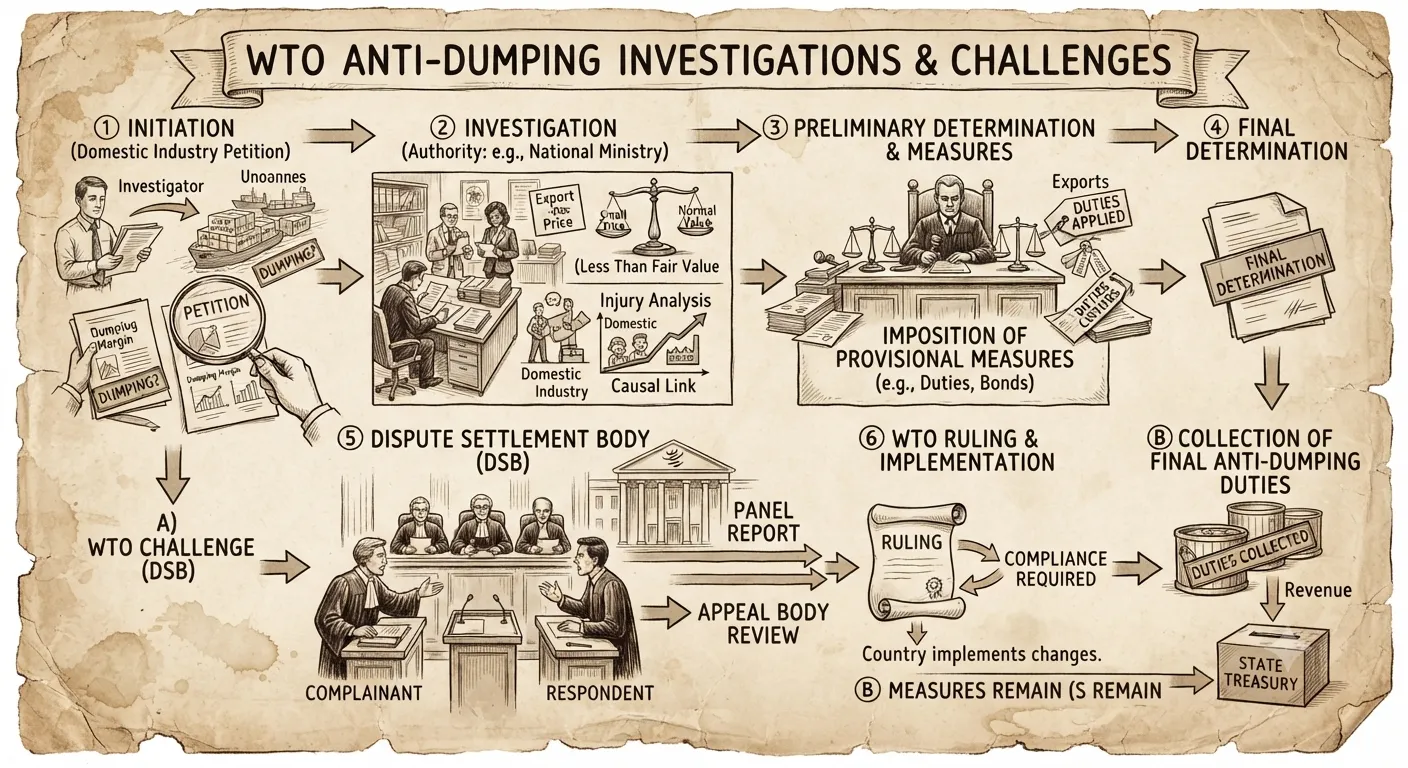
- (i) Filing Charges: Domestic businesses formally lodge complaints against foreign exporters accused of dumping.
- (ii) Investigation: The World Trade Organization (WTO) sets clear steps to check whether these dumping allegations are true.
- (iii) Levy of Duties: If investigations confirm dumping, special tariffs are imposed to shield local producers.
WTO Safeguards and Protectionist Bias
The WTO Anti-Dumping Agreement incorporates safeguards to stop countries from abusing these rules for excess protectionism. While duties safeguard local producers, the framework provides explicit oversight to avoid arbitrary decisions.
- (a) Safeguards: Built-in controls stop governments from misusing antidumping measures as excuses for simple protectionism.
- (b) Monitoring: Structured WTO investigation paths help maintain balance and procedural fairness across borders.
- (c) Bias Prevention: Standards work to constrain the natural protectionist motives present when countries act unilaterally.
Challenges in Antidumping Procedures
Despite their intended purpose, antidumping actions run into practical hurdles. Rule misuse and unclear steps can end up hurting local consumers.
- (i) Misuse for Protection: Struggling domestic companies might push for trade shields against efficient foreign rivals, leading to higher retail prices.
- (ii) Dumping Margin Calculation: Measuring the exact gap between a fair benchmark price and the foreign selling price often relies on estimates, leaving room for debate.
- (iii) Data Limitations: Gaps in reliable cost details from overseas producers force investigators to rely on rough estimates, making final figures somewhat arbitrary.
📌 Importance of Understanding Dumping and Antidumping
Studying dumping along with antidumping duties gives students clear perspective on international trade dynamics. It shows the fine balance between open trade policies, affordable consumer goods, and keeping local factories running. Master this subject to prepare thoroughly for exams and to understand how global firms manage pricing across divided markets.
⚡ Quick Revision Capsule: Dumping & Antidumping Overview
A structured breakdown of core concepts, operational drivers, trade defense responses, and practical challenges in international trade policy.
| Core Aspect | Primary Driver / Mechanism | Impact & Challenges |
|---|---|---|
| Export Dumping | Selling goods abroad at prices below home market levels to build market share. | Delivers lower prices to buyers short-term, but risks harming local industries long-term. |
| Economic Causes | Requires distinct market segmentation and intentional price discrimination. | Firms exploit tariff barriers and transport costs to segment regional pricing. |
| Antidumping Duties | Special corrective tariffs allowed under verified WTO guidelines. | Levels the playing field for local companies suffering from predatory pricing. |
| WTO Safeguards | Legal structures defined in the WTO Anti-Dumping Agreement. | Prevents nations from misusing trade remedies as hidden protectionist tools. |
| Procedural Hurdles | Calculating fair market values despite severe data limitations. | Imprecise dumping margin estimates can lead to arbitrary tariff levels. |
📝 Summary
Dumping is a deliberate international pricing strategy where businesses sell goods at discounted rates overseas to expand their market reach and outpace competitors. While consumers benefit from low costs early on, foreign price undercutting can weaken domestic producers over time. To preserve fair competition, the WTO permits nations to collect antidumping tariffs. However, measuring price gaps accurately and preventing local companies from abusing trade protections remains a delicate task.
🚀 Quick Revision Points
Essential facts to review before examinations:
- (i) Core Concept: Dumping is exporting goods at lower prices than what is charged in the domestic market to win market share.
- (ii) Key Drivers: The tactic rests on price discrimination across separated local and global markets.
- (iii) Trade Remedy: Affected domestic sectors can request protection via antidumping duties following official WTO rules.
- (iv) Main Challenges: Key hurdles include vague price comparisons, missing foreign data, and local firms sheltering their own inefficiencies.
- 💡 Exam Tip: When answering questions on dumping, clearly link price discrimination with market segmentation, and mention that antidumping duties are governed by the WTO Anti-Dumping Agreement.
❓ Frequently Asked Questions (FAQ)
Q1: What drives a firm to engage in dumping?
A1: Companies rely on price discrimination across separated global markets to increase overall profits and gain dominance by outpricing local rivals.Q2: How do importing nations fight back against dumping?
A2: Hurt domestic sectors lodge complaints under WTO guidelines. If investigations prove unfair dumping, the importing nation imposes special antidumping duties.Q3: What makes calculating anti-dumping duties difficult?
A3: Determining the exact dumping margin is tough due to limited data, often forcing investigators to rely on calculated estimates of foreign production costs.