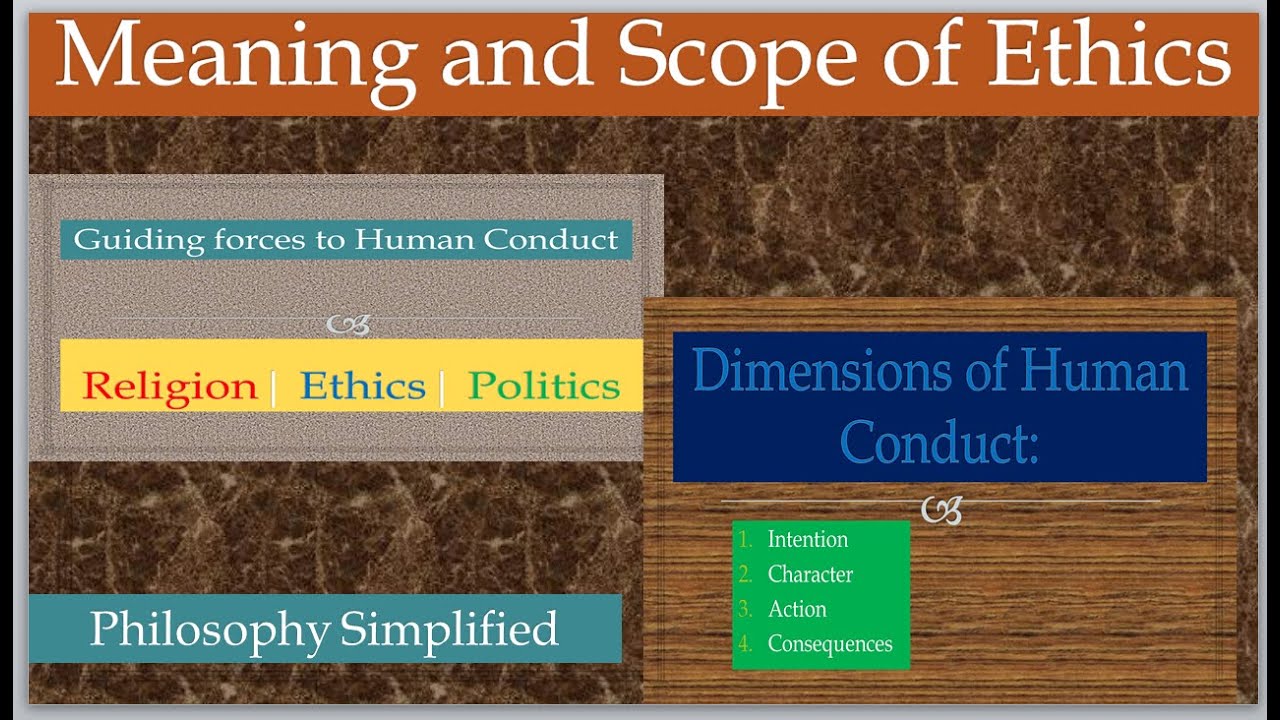
Ethics 🌱 serves as the guiding framework of human behavior, shaping what individuals and societies deem right or wrong. Rooted in philosophical reasoning, it explores moral principles that define responsible actions and virtuous living. Understanding ethics is essential for students and aspirants preparing for civil services, philosophy, or sociology exams, as it sharpens analytical thinking and moral awareness.
🎯 In this chapter, you will understand:
- The fundamental definition and core principles of ethics in human conduct.
- The scope of ethical evaluation regarding deliberate vs. involuntary actions.
- Key moral questions and the search for the highest human good (summum bonum).
- How ethics connects with psychology, philosophy, sociology, and political systems.
💡 Why this topic matters: Ethics forms the foundational bedrock of personal integrity, administrative decision-making, and public service accountability.
🧠 Core Idea: Ethics systematically evaluates human actions based on free will, intentions, and moral standards to promote social harmony and justice.
Defining and Understanding Ethics: Guiding Principles for Human Conduct 🧭
Ethics represents the moral compass that directs human thought and action towards the greater good 🌍. It is a systematic study of what is right or wrong in human conduct, analyzing actions based on their alignment with moral ideals. In essence, ethics seeks to achieve the highest good by reflecting on the motives, intentions, and responsibilities behind every deliberate action.
- (i) Ethics is both a science and philosophy of human morality 🧠.
- (ii) It defines standards for conduct, ensuring actions are consistent with social values and moral laws.
- (iii) Ethical study helps individuals make informed, conscious choices that lead to personal integrity and societal harmony 🤝.
Scope of Ethics: Human Actions and Moral Standards ⚖️
The scope of ethics is vast, encompassing every aspect of deliberate human action governed by knowledge, intention, and free will.

Deliberate Actions and Voluntariness 🧍♂️
Ethics concerns itself primarily with voluntary actions that reflect conscious decision-making. These include acts like speaking, teaching, or helping others — where an individual exercises free choice.
- (i) Actions such as sneezing or yawning, being involuntary, lie outside ethical evaluation.
- (ii) True ethical analysis begins where human freedom and intention intersect.
- (iii) Such acts reveal the moral character of individuals and their awareness of right and wrong 💡.
Ethics as the Science of Character 🧩
Character in ethics signifies the settled habits of will that shape a person’s consistent moral behavior.
- (a) Through repeated moral actions, character becomes the stable foundation of virtue.
- (b) Ethics studies the inner motives and psychological bases of human behavior 🧠.
- (c) It helps in building strong moral habits that influence long-term ethical decision-making.
Key Ethical Questions and Moral Ideals ❓
Ethics, being reflective and analytical, constantly seeks to answer the great moral questions that define human life and duty.
Fundamental Questions of Morality 🔍
At its core, ethics is the quest to identify and understand the moral ideal — the highest good (summum bonum) — which acts as the ultimate benchmark for moral evaluation.
- (i) What is the nature of the moral ideal or the ultimate good?
- (ii) What makes an action right or wrong in moral terms?
- (iii) What is the source of moral obligation, and to whom are we responsible for our conduct? 🤔
Criteria of Merit and Demerit ⚙️
Ethics also studies what makes actions praiseworthy or blameworthy, establishing the basis for moral responsibility and justice.
Figure 2: Moral evaluation criteria for merit and demerit. - (a) Actions guided by virtue earn moral merit 🏅.
- (b) Wrongful or negligent acts attract moral demerit and social disapproval.
- (c) These evaluations reinforce the social fabric and moral accountability.
Moral Judgments, Sentiments, and Ethical Interrelations 💬
Moral judgments reflect the emotional and rational dimensions of ethics — feelings of approval, guilt, or remorse are inseparable from moral reasoning.
Role of Moral Sentiments ❤️
Human beings experience moral emotions that accompany their ethical choices — happiness in doing good or regret after wrongdoing.
- (i) These sentiments deepen the understanding of moral responsibility.
- (ii) They guide self-reflection and personal growth 🌿.
- (iii) Through them, ethics bridges logic and emotion in shaping conduct.
Freedom, Responsibility, and Moral Accountability ⚖️
Ethics assumes that humans possess freedom of will, and hence are accountable for their choices.
- (a) Responsibility establishes the basis for justice and moral consequences.
- (b) It legitimizes concepts of reward and punishment within ethical systems.
- (c) Freedom thus forms the moral ground for rights, duties, and virtues 🕊️.
Intersections of Ethics with Other Disciplines 🌐
Though an independent field, ethics overlaps with psychology, philosophy, sociology, and political science.
- Psychology: Helps in understanding the motives behind moral actions.
- Philosophy: Provides rational foundations for moral principles.
- Sociology and Politics: Connect ethical behavior with laws, justice, and social order 🏛️.
Conclusion: Importance of Ethics in Modern Life 🌟
Ethics remains the moral compass that evaluates our actions, motives, and values. By refining our understanding of moral ideals, it enables societies to move towards justice, integrity, and collective well-being. For students and aspirants, the study of ethics builds critical reasoning, nurtures empathy ❤️, and inspires a commitment to the highest human good.
⚡ Quick Revision Capsule: Ethics and Moral Conduct
A quick comparison of key ethical concepts, scope, and related disciplines:
| Ethical Dimension | Core Focus | Key Significance |
|---|---|---|
| Voluntary Actions | Deliberate choices made with intention and free will | Forms the sole basis for moral evaluation and responsibility |
| Character | Settled habits of will built through repeated actions | Establishes stable foundation for virtuous behavior |
| Summum Bonum | The ultimate moral ideal or highest good | Acts as the benchmark for judging right from wrong |
| Moral Sentiments | Internal feelings like approval, guilt, or remorse | Bridges rational logic with emotional moral awareness |
| Disciplines Link | Intersection with psychology, sociology, and politics | Connects individual choices with legal and social order |
📝 Summary
Ethics serves as a philosophical study evaluating voluntary human conduct against moral standards. By focusing on free choice, intention, and character, it helps individuals discern right from wrong while promoting social justice and personal integrity.
🚀 Quick Revision Points
Essential facts to review before examinations:
- (i) Ethics evaluates only voluntary human actions, excluding involuntary reflexes.
- (ii) The ultimate goal of moral study is reaching the summum bonum (highest good).
- (iii) Freedom of will is a mandatory prerequisite for moral responsibility.
- (iv) Ethics connects closely with psychology, philosophy, and sociology to explain human conduct.
- 💡 Exam Tip: When writing administrative ethics answers, always highlight how voluntary actions and free will link directly to moral accountability in governance!
❓ Frequently Asked Questions (FAQ)
Q1: What is the main difference between voluntary and involuntary actions in ethics?
A1: Voluntary actions involve deliberate choice, intention, and knowledge, making them subject to moral evaluation. Involuntary actions (like blinking or sneezing) happen without conscious choice and carry no ethical weight.Q2: What is meant by summum bonum?
A2: Summum bonum refers to the ultimate moral ideal or highest good that serves as the benchmark for evaluating human actions.Q3: Why is freedom of will necessary for moral judgment?
A3: Without freedom of choice, an individual cannot be held responsible or accountable for their actions, making moral reward or punishment illogical.