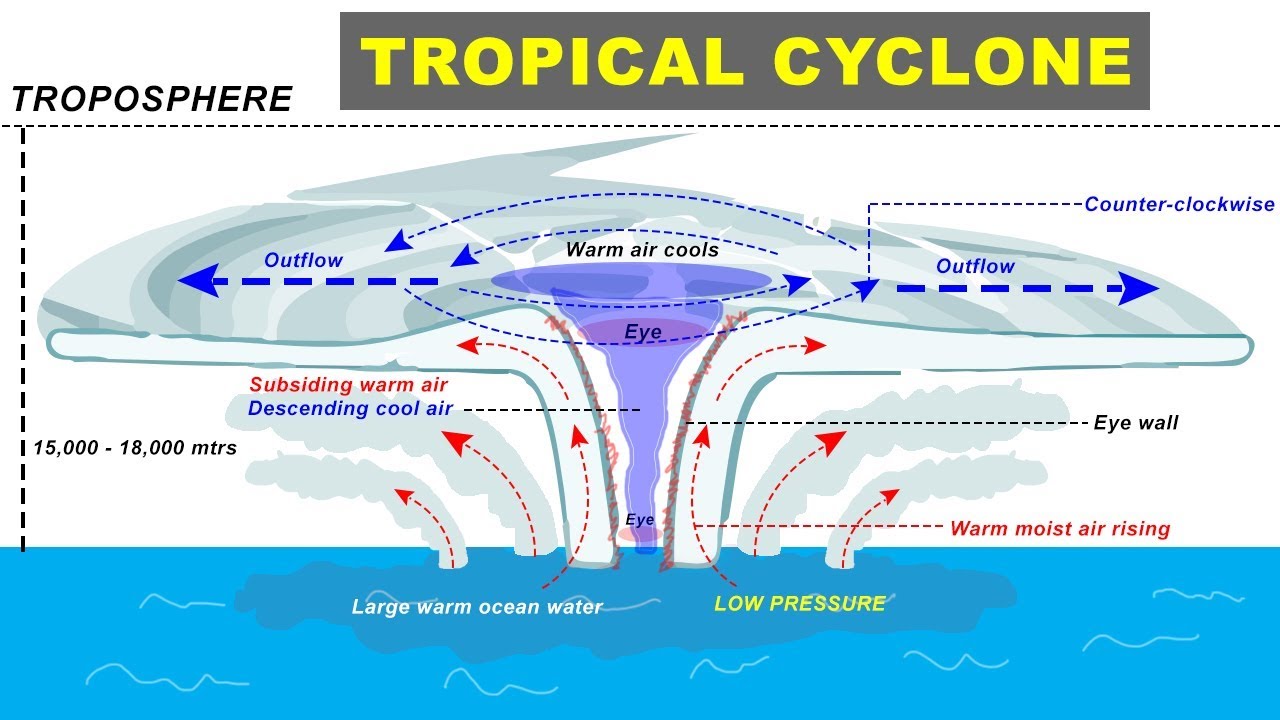
A cyclone is a giant, spinning air storm that forms over Earth. It acts like a giant vacuum cleaner in the sky, sucking in warm air and dropping huge amounts of water as rain or snow across different regions during of the year.
🎯 In this chapter, you will understand:
- What cyclones are and why their center has low air pressure.
- The differences between violent tropical cyclones and milder extra-tropical cyclones.
- How these spinning wind systems cause heavy rain, flash floods, and ocean storm surges.
- Why cyclones are necessary for moving heat and moisture across the planet.
💡 Why this topic matters: Cyclones bring water to places that need rain, but they can also bring severe weather, wild ocean waves, and sudden flooding to coastal communities.
🧠 Core Idea: Cyclones are nature's way of balancing temperatures across Earth by pushing warm air and water vapor away from warm ocean waters toward colder parts of the world.
🌀 Cyclones and Precipitation
Cyclones are powerful, rotating air systems that play an extremely important role in shaping global weather and rainfall patterns. You can think of a cyclone as a spinning wheel of wind with a low-pressure spot right at its middle, which pulls air inward and sends it upward into the sky.
📌 Types of Cyclones
Not all spinning storms are identical. Scientists separate cyclones into two primary groups based on where they form and what gives them their power.
🌀 Tropical Cyclones
These are super strong low-pressure systems that form over warm ocean waters near the equator. Warm, wet ocean air acts as fuel for these storms, creating very powerful winds, heavy downpours, and tall ocean waves called storm surges.
❄️ Extra-tropical Cyclones
These are bigger storms that form farther away from the equator, right where warm air from the south meets cold air from the north. They are generally less concentrated than tropical cyclones, but they cover huge areas and bring a wide variety of weather, including steady rain, cold wind, and heavy snow.

🌧️ How Cyclones Create Rain and Floods
Because cyclones lift massive quantities of water vapor high into the cold sky, they produce a tremendous amount of wet weather, known scientifically as precipitation.
⛈️ Intense Rainfall
Cyclones, especially fierce tropical ones, dump massive amounts of rain in a very short time. This sudden downpour can lead to sudden water rises known as flash floods, as well as wide-scale flooding over whole towns and fields.
🌊 Storm Surges
Strong winds blowing over the ocean push sea water up onto the land. This sudden rise in sea level causes sea water to flood low-lying coastal areas, making river flooding even worse and causing serious damage to shorelines.
🌍 Regional Impacts
Cyclones completely change local weather patterns. A passing storm might bring much-needed rain to farms suffering from drought, or it might dump way too much water at once and trigger severe floods.
🌐 Cyclones and Global Weather Patterns
Cyclones do not just affect local beaches; they act like Earth's global air conditioning pipes, moving warm air around the whole world.
☀️ Energy Transfer
Cyclones carry large amounts of heat and wet air away from the hot tropical oceans up toward colder northern and southern regions. This transfer helps keep northern lands from staying too freezing cold and tropical lands from getting too hot.
💨 Atmospheric Circulation
By constantly stirring up the atmosphere, cyclones help keep Earth's overall weather systems balanced so energy does not build up in just one place.
⚡ Quick Revision Capsule: Comparing Cyclone Types
Here is a quick side-by-side comparison to help you easily spot the differences between the two main types of cyclones:
| Storm Property | Tropical Cyclones | Extra-tropical Cyclones |
|---|---|---|
| Where They Form | Over warm, tropical ocean waters near the equator. | At mid-to-high regions where warm and cold air currents clash. |
| Primary Energy Source | Warm, wet air rising off hot ocean waters. | Temperature differences between cold air and warm air masses. |
| Overall Size & Intensity | Smaller in size, but extremely intense with very fierce winds. | Covers a much wider area, but winds are generally spread out. |
| Precipitation Type | Heavy torrential rain and high sea water waves. | Widespread rainfall, overcast skies, and heavy snowstorms. |
| Main Danger | Flash flooding, damaging winds, and coastal ocean surges. | Long-lasting storms, winter blizzards, and river floods. |
📝 Summary
Cyclones are giant spinning storms centered on low air pressure zones. Whether they are warm tropical cyclones born over hot seas or cold-boundary extra-tropical cyclones, these systems work around to transport heat, wind, and water around Earth. While they can bring dangerous floods and storm surges, they are essential for spreading fresh water around our world and keeping global temperatures balanced.
🚀 Quick Revision Points
Essential facts to review before examinations:
- (i) A cyclone is a spinning wind system with low air pressure right at its center.
- (ii) Tropical cyclones build up over warm seas and cause severe winds, heavy downpours, and coastal ocean rises.
- (iii) Extra-tropical cyclones form where warm and cold air clash, bringing large-scale rain and snow.
- (iv) Cyclones act as natural heat-transporters, carrying excess tropical heat up toward colder regions.
- 💡 Exam Tip: Remember that tropical cyclones get their strength from warm water evaporation, whereas extra-tropical cyclones are powered by the temperature difference between warm and cold air fronts!
❓ Frequently Asked Questions (FAQ)
Q1: What is a cyclone in simple words?
A1: A cyclone is a giant spinning storm in the sky with low air pressure in its middle that pulls in air and drops lots of rain or snow.Q2: What causes a storm surge during a cyclone?
A2: Powerful cyclone winds push ocean water toward land, causing the sea level near the coast to rise suddenly and flood land.Q3: Why are cyclones important for the planet's climate?
A3: Cyclones pick up heat and water vapor from warm oceans and carry them to cooler places, keeping global temperatures balanced.