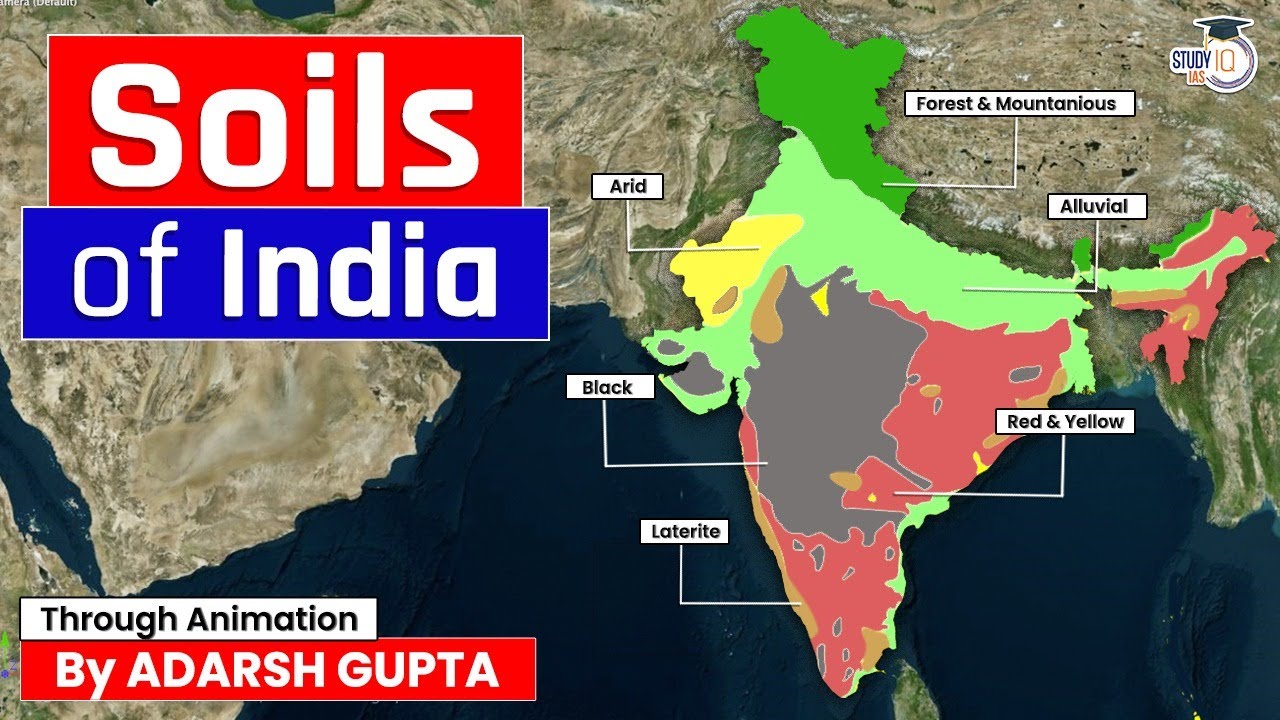
The complex nature of soil classification and distribution serves as a vital foundation for understanding global geography, environmental science, and agricultural productivity in competitive examinations. To understand how soil works, geographers divide Earth's upper layer into distinct groups based on how soil forms and what it looks like today.
🎯 In this chapter, you will understand:
- How traditional zonal systems categorize soil based on climate and vegetation.
- The differences between zonal, intrazonal, and azonal soil layers.
- The modern USDA Soil Taxonomy framework and its 12 global soil orders.
- The main features of Pedalfers and Pedocals in global soil mapping.
💡 Why this topic matters: Soil distribution directly determines farming potential, ecosystem survival, and land usage patterns across every continent.
🧠 Core Idea: Soils are classified either by their genetic origin (climate and plant cover) or by their observable physical properties (profile horizons).
Classification and Distribution of Soils
Understanding the framework of soil science requires a look at how geographers categorize Earth's upper layer. Soil classification remains a complex endeavor, aiming to be professionally meaningful to geographers while accurately reflecting diverse soil types and subtle gradations. Currently, two primary methodologies dominate the field: one based on the assumed origins of the soil and another focused on the observable properties within a soil profile.
The Zonal System and Pedological Origins
Proposed by pioneering Russian pedologists such as Dukuchaiev and Glinka, the zonal system emphasizes the profound relationship between climate, vegetation, and specific soil zones.
Primary Classification of Zonal Systems
This system recognizes three distinct classes based on development and environmental dominance:

Soil Classification: Zonal, Intrazonal, and Azonal frameworks. Definitions of Development Levels
- (i) Zonal soils: Well-developed profiles where climate is the dominant forming factor.
- (ii) Intrazonal soils: Well-developed soils where local factors override regional climate.
- (iii) Azonal soils: Immature or poorly developed soils lacking distinct horizons.
Global Zonal Soil Variations
Zonal soils occur across broad geographical spans, influenced heavily by climate and vegetation regardless of the underlying rock type.

Detailed Breakdown of Zonal Types
The following varieties represent the world's major climatic soil belts:
Leached and Forest-Based Soils
- (i) Podzols: Known as "ash-soil," these feature a bleached E horizon due to cheluviation, typical of cool coniferous forest regions.
- (ii) Brown Earth: Found in milder deciduous forest climates with less intense leaching than podzols.
- (iii) Tundra Soils: Influenced by ground ice, including brown polar deserts and Arctic brown forest soils.
Arid, Steppe, and Grassland Soils
- (i) Sierozems: Desertic soils with low organic matter but high potential fertility under irrigation.
- (ii) Chernozems: Deep, dark, humus-rich soils of the steppes with a calcium-rich horizon.
- (iii) Chestnut Soils: Arid-side neighbors to chernozems with lower organic content and shallow carbonate layers.
- (iv) Prairie Soils: Transition soils located between chernozem belts and forest brown earths.
Tropical and Savanna Soils
- (i) Grumusols: Dark clayey soils of the savanna that undergo intense cracking during dry seasons.
- (ii) Ferralsols: Tropical soils rich in ferric oxide but low in fertility due to a lack of humus and bases.
Intrazonal and Azonal Characteristics
Beyond broad climatic zones, local conditions and geological youth create specialized soil categories.
Intrazonal Soils and Local Influences
These soils reflect the dominance of relief, parent material, or age over the regional climate.

Detailed classification emphasizing the diversity of soil formations. Subtypes of Intrazonal Soils
- (i) Hydromorphic Soils: Marsh and swamp soils defined by gleying from waterlogging.
- (ii) Calcimorphic Soils: Formed on calcareous material, including rendzinas and terra rossa.
- (iii) Halomorphic Soils: Saline desert varieties like solanchak, solonetz, and solodic soils.
Azonal Soils and Profile Infancy
Azonal soils are immature, formed by active erosion or deposition, thus lacking a well-developed profile.
Primary Azonal Examples
- (i) Alluvial Soils: Found on active floodplains and frequently buried by new sediment.
- (ii) Regosols: Composed of loose dune sands or loess.
- (iii) Lithosols: Imperfectly weathered rock fragments found on steep slopes.
Theoretical Criticisms
- (i) Zonal soils often appear outside their "typical" climate zones.
- (ii) Profile features may reflect past climates rather than current environmental conditions.
The Modern USDA Soil Taxonomy
The US Department of Agriculture utilizes a system based strictly on observed soil properties rather than genetic considerations or assumed origins.
The Twelve Orders of Soil
Classification is determined by developmental properties and the presence of diagnostic horizons.

USDA Soil Orders categorized by climatic factors and developmental maturity. Maturity and Climate Based Orders
- (i) Entisols: Mineral soils with no horizons; found from equatorial to arctic zones.
- (ii) Inceptisols: Weakly developed but productive soils of river floodplains.
- (iii) Mollisols: Highly fertile grassland soils found in regions like the Great Plains, Pampas, and Steppes.
- (iv) Aridisols: Fertile desert soils that thrive with irrigation.
- (v) Gelisols: Permafrost-influenced soils rich in organic matter.
Parent Material and Specialized Orders
- (i) Vertisols: Expansive volcanic rock soils found in India's Deccan Plateau.
- (ii) Andisols: Fertile soils derived from volcanic ash.
- (iii) Histosols:Peat or muck soils from cool, poorly drained regions.
- (iv) Alfisols: Clay-rich horizons formed via illuviation.
- (v) Oxisols: Stable, highly weathered soils of equatorial rainforests.
- (vi) Ultisols: Nutrient-poor, leached soils vulnerable to soil erosion.
- (vii) Spodosols: Acidic soils with ashy horizons under needle-leaf forests.
General Global Soil Classification
The most comprehensive basis for understanding soil classification rests on the specific climate and vegetation of the region.
The Binary of Pedalfers and Pedocals
Global soils can be broadly divided into two chemical and climatic classes:
Pedalfers (Humid Soils)
- (i) Developed in humid areas with rich vegetation cover.
- (ii) Rich in aluminium and iron but lacking potassium and calcium.
Pedocals (Arid Soils)
- (i) Developed in areas with less than 25 inches of rain, retaining plant food elements.
- (ii) Characterized as alkaline and free from the effects of leaching.
⚡ Quick Revision Capsule: Soil Classification Systems
A quick comparison of global soil divisions and taxonomy categories for fast review.
| Classification Category | Dominant Forming Factor | Representative Soil Types |
|---|---|---|
| Zonal Soils | Regional Climate & Vegetation | Podzols, Chernozems, Ferralsols |
| Intrazonal Soils | Local Relief, Parent Rock, or Waterlogging | Hydromorphic (Gley), Calcimorphic (Rendzina) |
| Azonal Soils | Geological Youth & Active Erosion/Deposition | Alluvial soils, Regosols, Lithosols |
| USDA Taxonomy | Observable Profile Horizons & Physical Properties | Mollisols, Aridisols, Vertisols, Entisols |
| Pedalfers vs. Pedocals | Humid vs. Arid Moisture Belts | Aluminum/Iron rich vs. Calcium/Alkaline rich |
📝 Summary
Whether categorized by the traditional Zonal system or the modern USDA Taxonomy, soil distribution is a direct reflection of the interaction between climate, parent material, and time. From the fertile Mollisols of the world's breadbaskets to the leached Oxisols of the tropics, understanding these patterns is essential for managing the earth's agricultural and ecological future.
🚀 Quick Revision Points
Essential facts to review before examinations:
- (i) Zonal soils are fully matured soils guided mainly by climate.
- (ii) Chernozems are rich in organic humus and calcium, making them ideal for grain agriculture.
- (iii) The USDA Soil Taxonomy uses physical properties instead of origin theories to group soils into 12 orders.
- (iv) Pedocals accumulate calcium carbonate in dry regions receiving under 25 inches of annual rain.
- 💡 Exam Tip: Pay special attention to matching USDA soil orders (like Vertisols, Mollisols, and Aridisols) with their corresponding regional locations in map-based questions.
❓ Frequently Asked Questions (FAQ)
Q1: What is the main difference between Zonal and Azonal soils?
A1: Zonal soils have well-developed layers shaped by climate over long periods, whereas Azonal soils are young and lack distinct layers due to recent deposition or erosion.Q2: How does the USDA Soil Taxonomy differ from traditional pedology?
A2: The USDA system relies strictly on measurable and observable physical profile features (diagnostic horizons) rather than assumed genetic origins.Q3: What characterizes Pedalfers?
A3: Pedalfers develop in humid regions with heavy vegetation; they accumulate high amounts of iron and aluminum oxides while losing calcium to leaching.