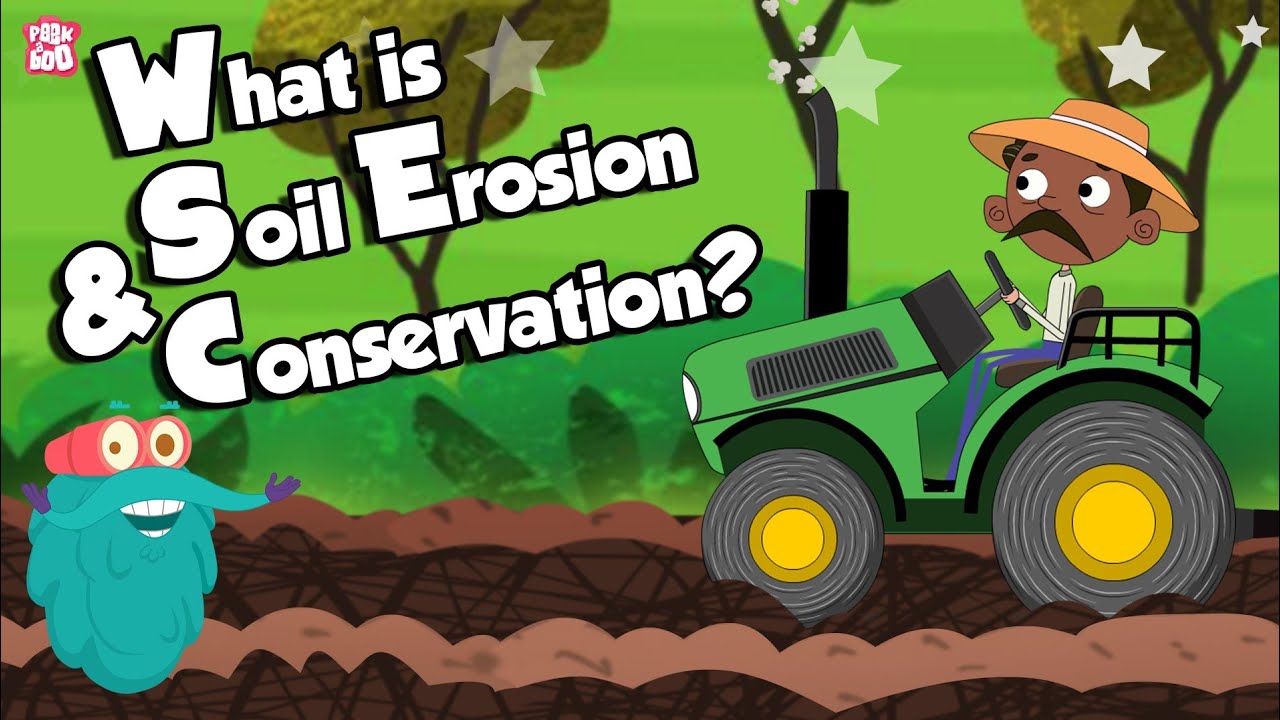
Every single day, the top layer of dirt that helps plants grow is washed away by rain or blown away by wind. Scientists have studied this process over many years, looking closely at how natural forces and human actions change our land over . In this guide, we will explore soil erosion, how water and wind move earth, and how we can work together to protect our environment for the future.
🎯 In this chapter, you will understand:
- The basic difference between natural geological erosion and man-made accelerated erosion.
- How moving water, heavy rain, and strong winds carry away fertile soil.
- The main human activities—like cutting down trees and overfarming—that harm the land.
- Simple and effective ways to protect soil, such as planting trees and building shelter belts.
💡 Why this topic matters: Healthy soil gives us food, supports plants, and cleans our water. When soil disappears, farming becomes much harder and nature suffers.
🧠 Core Idea: Soil erosion happens when topsoil is loosened and carried away. While nature does this slowly over long periods, human actions speed up the process to dangerous levels.
🌾 What is Soil Erosion?
Soil erosion is a natural process where bits of rock and dirt are loosened and carried away from their original spot. When nature does this slowly without human help, scientists call it geological erosion. This slow movement is part of the natural breakdown of the Earth's surface and happens everywhere all the time.

However, when human actions speed up this process, it becomes man-induced erosion or accelerated erosion. This happens when we clear forests or build towns, causing topsoil to disappear much faster than new soil can form naturally.
- Soil erosion has two main steps:
- First, dirt particles get loosened and detached from the ground.
- Second, rainwater or wind picks up those loose particles and moves them downhill or far away.
- In their well-known research, researchers L. D. Meyer and W. H. Wischmeier explained that how easily soil breaks apart depends on how big the grains are and how tightly they stick together.
- Dirt particles bigger than 0.2 mm need much stronger, faster-moving water to get pushed away.
- In , the scientist Morisawa showed that two big natural factors control how fast hillsides erode: the local climate and the type of rocks present.
- Across the whole planet, more than 4.85 billion acres (which is about 1.96 billion hectares, or 17% of all land with plants) has been damaged because of human activities.
🌊 Types of Soil Erosion
Scientists group soil erosion based on what physical force is pushing the dirt around. The two main forces are water and wind.
- The main types of soil erosion are:
- Water erosion (caused by rain, rivers, and ocean waves)
- Wind erosion (caused by strong gusts in dry places)
💧 Water Erosion
Water erosion happens when raindrops splash onto bare ground, or when running rivers, melting ice, and ocean waves pick up loose dirt and carry it away.
- Here are the main ways water moves soil:
- Raindrop erosion: Falling raindrops hit the ground like tiny water bombs. An average raindrop measures about 5 mm across and crashes into the dirt at speeds around 32 km/hr, splashing dirt particles into the air. Leaves and grass help block these high-speed splashes.
- Sheet erosion: A thin layer of rainwater flows smoothly over flat ground, slowly and silently washing away topsoil without making deep channels.
- Rill erosion: As rainwater gathers momentum, it cuts small narrow paths into farmland. Over time, these small paths get deeper and wider, turning into big ditches called gullies or ravines.
- Streambank erosion: Fast-flowing rivers eat away at their own dirt banks, causing chunks of land to collapse into the water.
- Landslide erosion: Heavy, soaked soil suddenly loses its grip on a steep hill and slides down all at once due to gravity.
- Coastal erosion: Strong ocean waves crash against the shore, pulling sand and dirt into the sea.
🌬️ Wind Erosion
Wind erosion mostly happens in dry areas or deserts where there are few plants to protect the ground. When strong winds blow across bare earth, they carry soil in three different ways:
- How wind moves loose dirt:
- Saltation: Medium-sized dirt grains bounce along the ground in short, hopping leaps.
- Suspension: Very small, fine dust particles are lifted high into the air and blown over long distances.
- Surface Creep: Larger soil grains are too heavy to lift, so strong winds roll them along the surface.
🚜 Soil Erosion Caused by Human Activity
While nature causes erosion slowly, many daily human tasks remove protective plant covers and loosen the dirt, making erosion happen much faster.
- Key human activities that speed up erosion include:
- Deforestation: Cutting down trees, clearing away fallen leaves, and letting animals eat small saplings leaves the ground completely bare and exposed to harsh weather.
- Farming practices: Plowing up fields repeatedly breaks down the soil's natural structure. Planting only one crop every year without rest makes the soil weak. Farming on steep mountain slopes without carving flat terraces lets rainwater rush straight down the hill, taking dirt with it.
- Overgrazing: Keeping too many cows, goats, or sheep on a field means they eat all the grass down to the roots and trample the dirt flat, leaving nothing to hold the soil together.
- Mining and resource gathering: Digging deep into the ground for metals or coal removes topsoil and creates huge piles of loose waste dirt.
- Building and development: Constructing homes, paved roads, and sports fields disrupts natural water pathways and exposes raw earth to heavy rain.
⚠️ Consequences of Soil Erosion
When healthy topsoil is washed or blown away, it causes serious problems for farmers, animals, human communities, and natural water bodies.
- Major harmful effects of soil erosion:
- Loss of rich plant food: Topsoil contains natural plant food and rich organic matter. When topsoil disappears, only hard, infertile subsoil is left behind.
- Washing away seeds: Flowing rainwater often sweeps planted seeds and young sprouts right out of the field, leaving farmers with empty crops and bare soil.
- Muddy rivers and reservoirs: Dirt carried off fields ends up at the bottom of streams, lakes, and water dams. This mud dirty the water, kills fish, and causes dams to hold far less water.
- Creation of deep gullies: Deep water trenches can grow up to 30 meters deep. These giant ditches break farmland into tiny pieces that tractors cannot cross.
- Loss of land and dangerous landslides: Riverbanks collapse, ruining nearby roads and fields. Steep hill slides can destroy houses, injure people, and harm farm animals.
- Sand encroaching on healthy fields: Coastal ocean winds push salty sea sand inland, covering up good farm soil.
⚡ Quick Revision Capsule: Soil Erosion Types and Causes
Here is a quick overview showing how different natural forces and human choices lead to soil loss across the country:
| Erosion Type | Primary Cause | Key Effect on the Land |
|---|---|---|
| Sheet Erosion | Thin layers of flowing rainwater | Slowly washes away topsoil without making deep channels |
| Rill & Gully Erosion | Concentrated fast-flowing water streams | Cuts deep ditches into fields, breaking up farm land |
| Wind Erosion | Strong wind gusts over dry, bare earth | Blows away fine dust and leaf matter through suspension and saltation |
| Deforestation | Cutting down trees and clearing forest floors | Removes natural root systems that bind soil particles together |
| Overgrazing | Too many livestock animals eating grass | Destroys ground plant cover, leaving soil exposed to rain and wind |
🛡️ Prevention of Soil Erosion
Thankfully, there are many simple and clever methods we can use to hold dirt in place and protect our farmland for generations to come.
- Effective ways to stop soil erosion:
- Keeping plants on the ground: Growing grass, bushes, and trees keeps the dirt covered. Plant roots wrap around soil particles like a tight web, holding them firmly in place during storms.
- Managing farm animals: Moving livestock from one pasture to another lets grass regrow so fields never become completely bare.
- Using crop rotation and fallow rest: Switching the type of crop planted each season and letting fields rest empty (fallow) for a few months gives the land time to heal.
- Building check dams and water traps: Building small stone barriers along streams slows down rushing runoff water before it can gouge out deep riverbanks.
- Protecting coastal beaches: Replanting native beach grasses and protecting natural sand dunes keeps ocean winds from blowing salty sand onto nearby farms.
- Leaving crop stubble on fields: Leaving leftover crop stalks (called stubble or mulch) on fields keeps at least 30% of sandy soil covered, breaking the force of dry winds.
- Planting shelter belts: Planting long rows of tall trees along field edges acts as a green wall that slows down strong winds and stops soil from blowing away.
📝 Summary
In this guide, we learned that soil erosion is the process where earth is loosened and moved by water or wind. Over historical , natural erosion has occurred slowly, as described in classical books like Fundamentals of Soil Science. However, human activities such as clearing forests, bad farming practices, overgrazing, and land development have accelerated this loss dramatically. Protecting topsoil requires us to keep plants in the ground, manage farm animals carefully, build tree shelter belts, and take better care of our water systems.
🚀 Quick Revision Points
Essential facts to review before examinations:
- (i) Geological erosion is natural and slow, while accelerated erosion is fast and caused by human choices.
- (ii) Raindrops hit bare ground like tiny missiles at speed up to 32 km/hr, loosening soil particles.
- (iii) Wind moves dirt in three ways: bouncing (saltation), floating dust (suspension), and rolling (surface creep).
- (iv) Planting rows of trees called shelter belts cuts wind speed and saves topsoil on flat farmland.
- 💡 Exam Tip: When writing exam answers, always distinguish between water erosion (sheet, rill, gully) and wind erosion (saltation, suspension, creep), and mention tree roots as the primary natural soil binder!
❓ Frequently Asked Questions (FAQ)
Q1: What is the main difference between sheet erosion and rill erosion?
A1: Sheet erosion slowly washes away a thin, smooth layer of topsoil over flat land without making noticeable channels. Rill erosion happens when rainwater forms tiny visible paths in the dirt, which eventually grow into deep gullies.Q2: How do tree roots stop soil from eroding?
A2: Plant and tree roots act like a natural net underground that grips soil particles tightly together. Above ground, tree leaves soak up the harsh impact of heavy falling raindrops.Q3: What is a shelter belt in soil conservation?
A3: A shelter belt is a long row of tall trees planted along the edges of agricultural fields to block strong winds, reduce wind velocity, and prevent loose topsoil from blowing away.