The Big Bang Theory is the most accepted scientific explanation for how our universe was born and how it changed over time. It tells us that all space, time, matter, and energy started inside a single, infinitely tiny and super-dense point called the Singularity about . Learning about the pioneer George Lemaître and the major proofs like Red Shift and Cosmic Background Microwave Radiation (CBMR) is important for anyone studying Cosmology and General Science for competitive examinations.
🎯 In this chapter, you will understand:
- The basic origin and historical background of the Big Bang Theory.
- How the universe grew out of a single point called a Singularity.
- How space expanded and cooled to create stars, planets, and galaxies.
- The two main proofs of the theory: Red Shift and Cosmic Background Radiation.
💡 Why this topic matters: It gives us a clear scientific answer to one of humanity's biggest questions: how everything in our universe began and where it is going.
🧠 Core Idea: The universe was not static or eternal; it started super hot and tiny, popped open into rapid expansion, and is still stretching out and cooling down today.
The Big Bang Theory: Tracing Cosmic Origins
The Big Bang Theory is a famous model in science that explains the full history of our cosmos. It describes how the universe went from a microscopic, extremely hot state into the huge, expanding space we see around us today.
This idea gives us a helpful roadmap to see how matter, space, and time came to be. Think of it like a giant blanket stretching out: as it stretches, it cools down, letting basic particles join together to form galaxies, stars, and planets over billions of years.
- (i) Belgian priest and physicist George Lemaître first shared this core idea back in the , calling it the "hypothesis of the primeval atom."
- (ii) Later, scientists like George Gamow in the developed the idea further and predicted key evidence that telescopes would later spot.
- (iii) Today, almost all space scientists agree that this model gives the best and clearest explanation for our expanding sky.
Central Postulates: Evolution from a Singularity
The main claim of the Big Bang model is that everything started in a burst of expansion from a state of unimaginable heat and pressure, which still shapes the cosmos today.

The Singularity and Initial Conditions
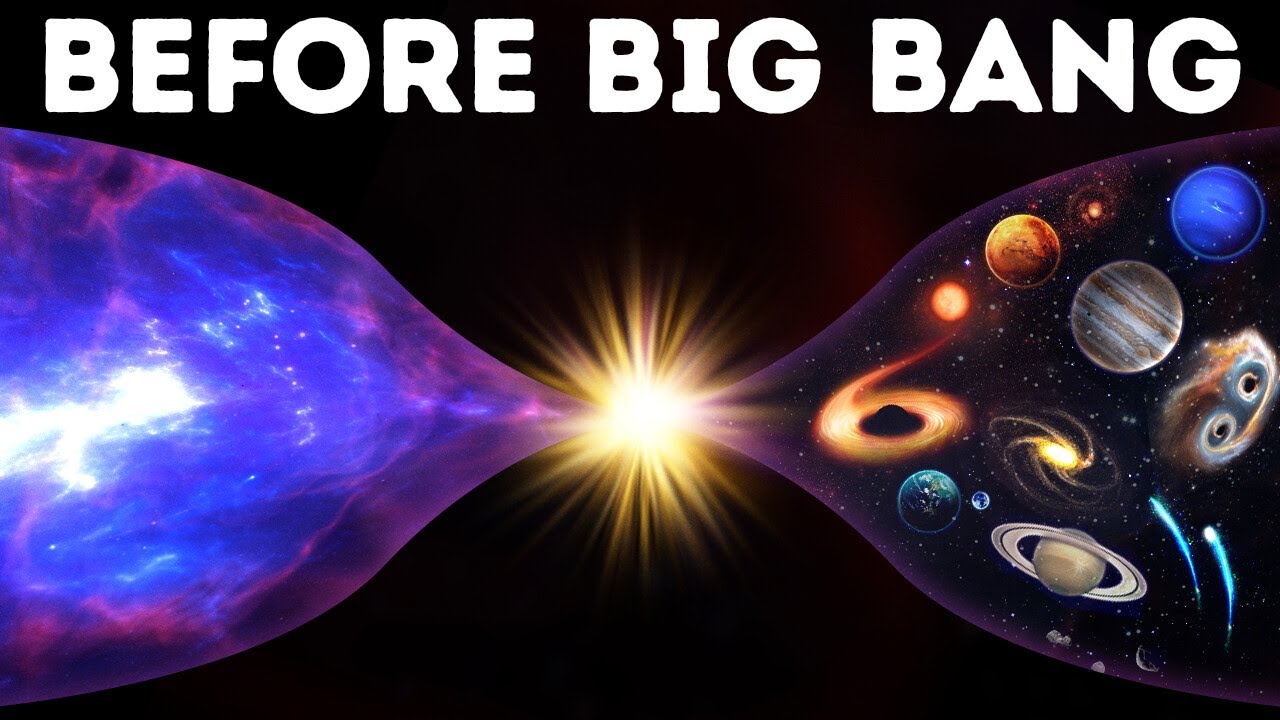
Our cosmic story begins at an endlessly dense point named the Singularity. Even though this pushes past everyday physics, it helps explain why everything is moving apart.
- (i) Origin Point: Every bit of energy and matter in space started inside this single tiny spot about .
- (ii) Initial State: At the very start, the universe was squeezed tight with super high heat, containing no individual stars or forces as we know them today.
Cosmic Explosion and Body Formation
The name 'Big Bang' describes space stretching out extremely fast. This expansion allowed the fiery early space to cool down so matter could bundle together.
- (a) The Great Event: Space expanded rapidly around , carrying all early matter and energy outward.
- (b) Continuous Expansion: Ever since that first event, space has kept stretching out in all directions.
- (c) Building Space Objects: As space cooled over vast periods, gravity pulled scattered particles together to create the first stars, galaxies, and solar systems.
Indisputable Evidence Supporting the Theory
This theory is backed up by two powerful real-world observations that prove space was once hot, packed tightly, and is expanding right now.
Red Shift: Signature of Expansion
The phenomenon called Red Shift gives clear proof that distant galaxies are traveling away from us, showing that space itself is expanding.
- (i) Doppler Effect in Space: Just like a siren sounds lower as an ambulance drives away, light waves stretch out when a galaxy moves away from us.
- (ii) Shift to the Red Side: This stretching makes light waves longer, moving them toward the red end of the light spectrum—an effect called Red Shift.
- (iii) Confirmation of Hubble's Law: Seeing Red Shift in almost every distant galaxy proves Hubble's Law, showing that space expands evenly everywhere.
Cosmic Background Microwave Radiation (CBMR)
The discovery of CBMR is widely considered the strongest proof for the Big Bang. It is an echo of light and heat left over from the very beginning of time.
Map showing the ancient, uniform heat glow left over from the early universe. - Early Heat Signal: This radiation flooded all of space shortly after the initial expansion when the early universe was hot and cloudy.
- Cooling and Stretching: As space stretched over billions of years, those intense heat rays cooled down into gentle microwaves that instruments pick up everywhere today.
- The Afterglow of Creation: Because this glow is nearly identical in every direction, it confirms that the early universe started out uniform and hot.
⚡ Quick Revision Capsule: Big Bang Evidence
Here is a quick overview of the essential facts and evidence supporting the theory:
| Key Concept | Main Idea | Why It Matters |
|---|---|---|
| Singularity | A single point of infinite density and heat containing all early matter. | Marks the very beginning of space and time. |
| George Lemaître | Belgian scientist who proposed the "primeval atom" idea in . | Laid the groundwork for modern cosmology models. |
| Red Shift | Stretching of light waves from galaxies moving away from Earth. | Direct physical proof that the universe is continually expanding. |
| CBMR | Faint microwave signal coming from every direction in deep space. | Serves as the leftover "afterglow" or fossil radiation from the Big Bang. |
| Hubble's Law | Observational rule stating galaxies move away faster the farther they are. | Confirms uniform cosmic expansion across all directions. |
📝 Summary
The Big Bang Theory stands as a major achievement in science, telling a clear story about how our universe started . First proposed by George Lemaître, it explains how space grew out of a tiny Singularity. Crucial proofs like the Red Shift of galaxies and the faint glow of Cosmic Background Microwave Radiation (CBMR) confirm that space is still expanding today. Understanding these facts provides a strong foundation for Cosmology and prepares students well for examination success.
🚀 Quick Revision Points
Essential facts to review before examinations:
- (i) The universe originated from a Singularity approximately .
- (ii) George Lemaître first proposed the core idea of an expanding origin in the .
- (iii) Light from distant galaxies stretches into longer wavelengths, causing a visible Red Shift.
- (iv) CBMR acts as leftover fossil radiation from the early, super-hot phase of the cosmos.
- 💡 Exam Tip: Always remember that Red Shift proves space expansion, while CBMR proves the early universe was super hot and dense!
❓ Frequently Asked Questions (FAQ)
Q1: Who first proposed the idea of the Big Bang Theory?
A1: Belgian priest and physicist George Lemaître first proposed it in the .Q2: What is the Singularity?
A2: The Singularity was the initial, infinitely tiny, hot, and dense point containing all matter before expansion started.Q3: How does Red Shift prove the universe is growing?
A3: As galaxies move away, light waves stretch into the longer, red end of the spectrum, proving space is continuously expanding.