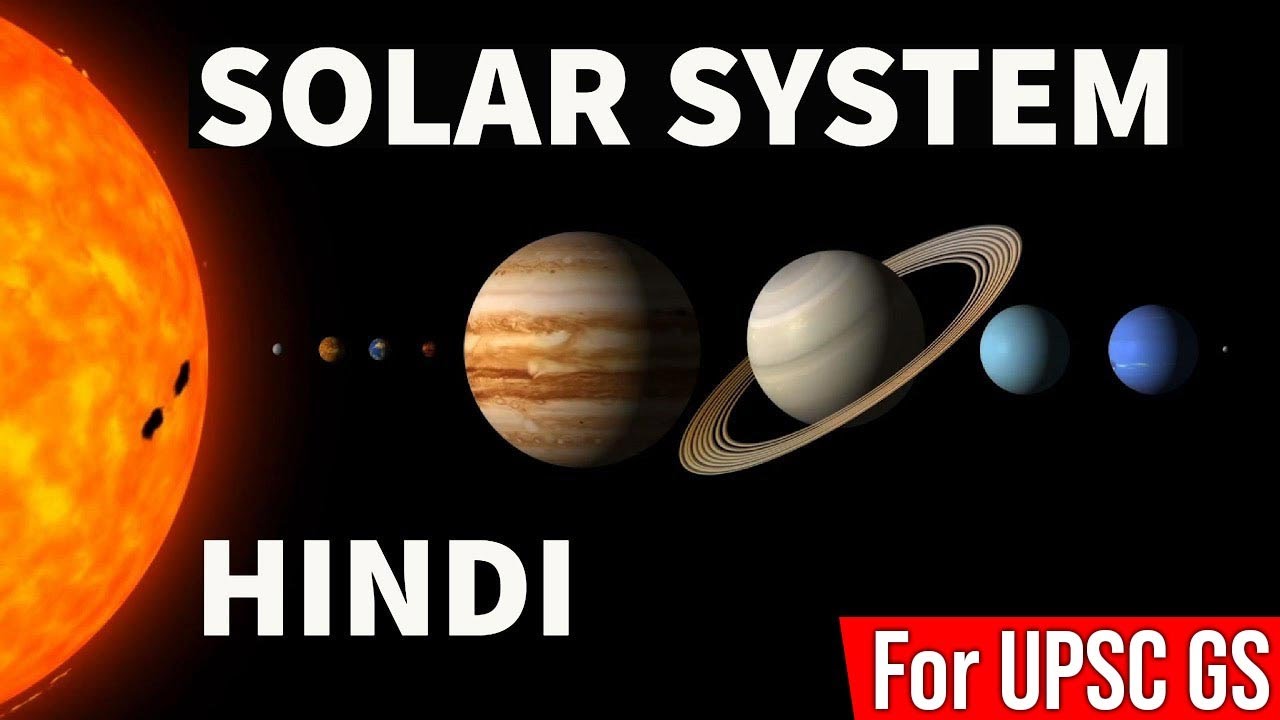
Embark on an exciting journey through space with this clear guide to planets and space objects. You will discover key facts about our eight main planets, smaller dwarf planets like Pluto, and amazing deep-space events. This helpful guide makes space science easy to learn for students preparing for school tests and exams. It clearly explains planetary groups such as rocky Terrestrial worlds and huge Jovian gas giants, the icy Kuiper Belt, and the scientific boundary known as the Kármán Line.
🎯 In this chapter, you will understand:
- How scientists define a planet and how planets move around the Sun.
- The major differences between rocky Terrestrial planets and massive Jovian planets.
- Key details, distance measurements in Astronomical Units, and space missions for every planet.
- How asteroids, comets, meteorites, and the Kármán Line shape our understanding of space.
💡 Why this topic matters: Learning about our solar system helps us understand how planets form, how Earth supports life, and how scientists explore deep space.
🧠 Core Idea: The solar system is a family of eight planets, dwarf planets, and smaller celestial bodies that all travel around the Sun in fixed paths called orbits.
Exploring the Solar System: Defining Planets and Their Orbits
Our solar system is an active neighborhood built around a giant central star called the Sun. It contains eight official main planets and many smaller space objects that all travel along oval paths called orbits. Learning about these objects is the first step in astronomy.
- (i) A planet is a large space object that orbits a star, is heavy enough for gravity to squeeze it into a round ball, and has cleared out smaller space debris from its path. In our solar system, all planets travel around the Sun.
- (ii) Starting from the closest to the Sun and moving outward, the eight main planets are Mercury, Venus, Earth, Mars, Jupiter, Saturn, Uranus, and Neptune.
- (iii) Beyond these eight planets, the official astronomical body called the International Astronomical Union classifies smaller round objects as dwarf planets. Famous examples include Ceres, Pluto, Haumea, Makemake, and Eris.
Categorizing Planetary Groups and Their Distinct Characteristics
Scientists group the eight main planets based on what they are made of, their sizes, and where they sit in space. This helps us understand how the solar system was created long ago.

The Terrestrial Planets: Dense, Rocky Worlds of the Inner Solar System
The inner area of our solar system holds the four Terrestrial Planets. They are heavy, compact worlds with hard rock surfaces. They are much smaller than the outer planets and have been shaped by heat from the Sun and geological activity.
- (i) Members: This group includes Mercury, Venus, Earth, and Mars. They all sit inside the main Asteroid Belt.
- (ii) Composition: They are made mostly of silicate rock and metals. They have a metal center called a core, a middle layer called a mantle, and a solid outer ground called a crust.
- (iii) Atmosphere: Their air layers vary greatly. Mercury has almost no air, while Venus has a very thick atmosphere that traps heat.
The Jovian Planets: Gas and Ice Giants of the Outer Solar System
The outer part of our solar system is dominated by huge worlds called Jovian Planets. These massive planets are mostly made of gases or icy materials, making them light for their huge size.
- (a) Gas Giants:Jupiter and Saturn are the biggest planets. They are made mostly of lightweight elements like hydrogen and helium gas. They have strong magnetic fields and many moons.
- (b) Ice Giants:Uranus and Neptune are called ice giants because they contain thicker icy materials like water, methane, and ammonia surrounding a small rocky center.
- (c) Shared Features: All four Jovian planets have ring systems around them (Saturn has the bright ones) and large families of natural moons.
Detailed Profiles: Key Facts, Distances, and Exploratory Missions
Looking at each planet reveals special features, orbital distances measured in an astronomical unit called Astronomical Units (where 1 AU is Earth's distance to the Sun), and famous space missions sent to study them.
Mercury and Venus: The Innermost Rocky Worlds
These two planets are closest to the Sun. Their location creates extreme temperature conditions, making space probe visits challenging. They show two very different examples of how planets hold onto air.
- (i) Mercury: This is the smallest planet, located at from the Sun. It has a rough, rocky surface and a thin outer gas layer called an exosphere made of oxygen, sodium, and helium. Famous robotic missions like Mariner 10 and MESSENGER sent back vital facts about its makeup. One full day on Mercury takes .
- (ii) Venus: Sitting at , Venus is nearly the size of Earth. It is famous for a thick, dangerous atmosphere made mostly of carbon dioxide. This air traps heat in a runaway greenhouse effect, making Venus the hottest planet. A day on Venus lasts . More than 40 spacecraft have visited it, including the Magellan probe which mapped 98% of its surface.
Earth and Mars: The Habitable Zone and the Red Planet
Earth is our home that uniquely supports living creatures. Mars is a nearby world that scientists study closely to look for signs of microscopic life from the past.
- (a) Earth: Located at from the Sun, Earth has an air layer of 78% nitrogen and 21% oxygen that living things can breathe. One day lasts . It has one large moon that helps keep its tilt steady.
- (b) Mars: Located at , Mars is called the Red Planet because its surface is covered in rusty iron oxide. It has a thin air layer and two tiny moons named Phobos and Deimos. The Perseverance rover landed inside Jezero Crater to search for signs of ancient microscopic life.
Jupiter and Saturn: The Majestic Gas Giants
Jupiter and Saturn are massive worlds. Their strong gravity helped shape how smaller space rocks move around the solar system.
- (i) Jupiter: Positioned at , Jupiter is the largest and most massive planet in our solar system. Its gas atmosphere is made of hydrogen and helium, and it has 67 known moons. Famous missions like Voyager 1, Voyager 2, and the Juno Mission have explored its storm clouds and magnetic environment.
- (ii) Saturn: Located at , Saturn is famous for its bright ring system made of seven major bands of ice particles. It has 62 known moons. The famous Cassini-Huygens mission spent years studying Saturn, its rings, and intriguing moons like Titan and Enceladus.
Uranus and Neptune: The Distant Ice Worlds
These two cold, distant planets are wrapped in thick atmosphere layers of ice and gas. Only one spacecraft has ever flown past them.
- (i) Uranus: Located far out at , Uranus is famous because it spins tilted completely on its side. This causes unusual seasonal weather changes. It has 27 moons and 13 rings. The Voyager 2 spacecraft is the only probe to fly near it.
- (ii) Neptune: The farthest main planet at , Neptune is an ice giant with a blue atmosphere of hydrogen, helium, and methane gas. It has six rings and 13 moons. Voyager 2 provided our only close-up photos of this world.
Pluto, Dwarf Planets, and the Kuiper Belt
Past Neptune lies a ring of leftover ice rocks that holds Pluto and other dwarf planets. These objects give clues about how our solar system formed long ago.
Pluto travels through the distant, icy Kuiper Belt region. - Pluto (Dwarf Planet): Once called the ninth planet, Pluto is now classified as a dwarf planet located in the Kuiper Belt, about from the Sun. It has five known moons, including its largest moon, Charon.
- Kuiper Belt: A massive ring of icy space objects that stretches from . It is wider and heavier than the main Asteroid Belt and holds preserved pieces from the birth of the solar system.
⚡ Quick Revision Capsule: Solar System Planets & Features
Use this convenient table to review key planetary facts and space boundaries quickly before your exams.
| Planet / Object | Group & Distance | Key Distinction |
|---|---|---|
| Mercury | Terrestrial () | Smallest planet with a thin exosphere; day lasts . |
| Venus | Terrestrial () | Hottest planet due to a dense carbon dioxide greenhouse atmosphere. |
| Earth | Terrestrial () | Supports life with a breathable nitrogen-oxygen air layer and one moon. |
| Mars | Terrestrial () | Called the Red Planet due to iron oxide; home to Jezero Crater. |
| Jupiter | Gas Giant () | Largest planet; studied by Voyager 1, Voyager 2, and Juno. |
| Saturn | Gas Giant () | Famous for magnificent icy rings; studied by Cassini-Huygens. |
| Uranus | Ice Giant () | Spins sideways on its axis; visited only by Voyager 2. |
| Neptune | Ice Giant () | Farthest planet with methane gas atmosphere; visited by Voyager 2. |
| Pluto | Dwarf Planet () | Icy world in the Kuiper Belt with its large moon Charon. |
| Kármán Line | Boundary () | The official boundary line marking where Earth's atmosphere ends and space begins. |
Celestial Phenomena: Asteroids, Comets, Meteorites, and the Kármán Line
In addition to planets, smaller objects travel through space. Understanding these objects and official boundaries helps us learn about space hazards and cosmic history.
Asteroids and Meteorites: Space Debris and Classification
These are pieces of rock and metal that either travel in quiet orbits or pass through planetary atmospheres, giving scientists real samples of space rock to study.
- (i) Asteroids: These are solid, irregular rocks. Most of them travel inside the main Asteroid Belt located between Mars and Jupiter. More than 150 asteroids are known to have their own tiny moons. Space missions like Dawn have visited large asteroids like Vesta.
- (ii) Meteorites: These are space rock fragments ranging from tiny dust grains to large boulders. They are divided into three types: iron, stony, and stony-iron. Spectacular meteor showers happen when Earth glides through dust trails left by space objects, such as trails studied by the Leonid MAC mission.
Comets and the Kármán Line: Icy Travelers and the Edge of Space
Comets are icy objects that grow bright tails when they get close to the Sun. Meanwhile, the Kármán Line acts as an official boundary marker for human spaceflight.
- (a) Comets: Comets are cosmic snowballs made of frozen gases, rock, and dust. As they near the warm Sun, they light up with a hazy gas cloud called a coma and a long visible tail. The famous Comet Halley returns near Earth every and will be seen next in the year .
- (b) Kármán Line: Located at an altitude of (about 62 miles) above Earth's surface, this is the official line that marks where space begins. It separates regular high-flying airplanes from spacecraft.
📝 Summary: Importance of Planetary Study for Students and Competitive Exams
Learning about our solar system's planets, dwarf planets, and space rocks provides essential scientific knowledge. Understanding the differences between terrestrial and Jovian planets, why Pluto is a dwarf planet, and key space missions like Cassini-Huygens, Juno, and MESSENGER will help you answer exam questions easily.
🚀 Quick Revision Points
Essential facts to review before examinations:
- (i) The solar system contains eight planets split into four inner terrestrial planets and four outer Jovian planets.
- (ii) Distances from the Sun are measured using Astronomical Units, where 1 AU represents Earth's average distance from the Sun.
- (iii) Pluto rests inside the icy Kuiper Belt alongside other dwarf planets like Ceres and Eris.
- (iv) The official boundary line for space is the Kármán Line, set at above Earth.
- 💡 Exam Tip: Remember that inner terrestrial planets are rocky and dense, while outer Jovian planets are larger gas or ice giants with rings and many moons!
❓ Frequently Asked Questions (FAQ)
Q1: What is the main difference between Terrestrial and Jovian planets?
A1: Terrestrial planets (Mercury, Venus, Earth, Mars) are small, rocky, and dense. Jovian planets (Jupiter, Saturn, Uranus, Neptune) are massive, made of gas or ice, and have rings and many moons.Q2: Why is Pluto classified as a dwarf planet instead of a main planet?
A2: Pluto is classified as a dwarf planet because it has not cleared out other icy space debris from its orbital path in the Kuiper Belt.Q3: What is the Kármán Line and why is it important?
A3: The Kármán Line is located at above Earth. It is the internationally recognized boundary that marks where Earth's atmosphere ends and outer space officially begins.