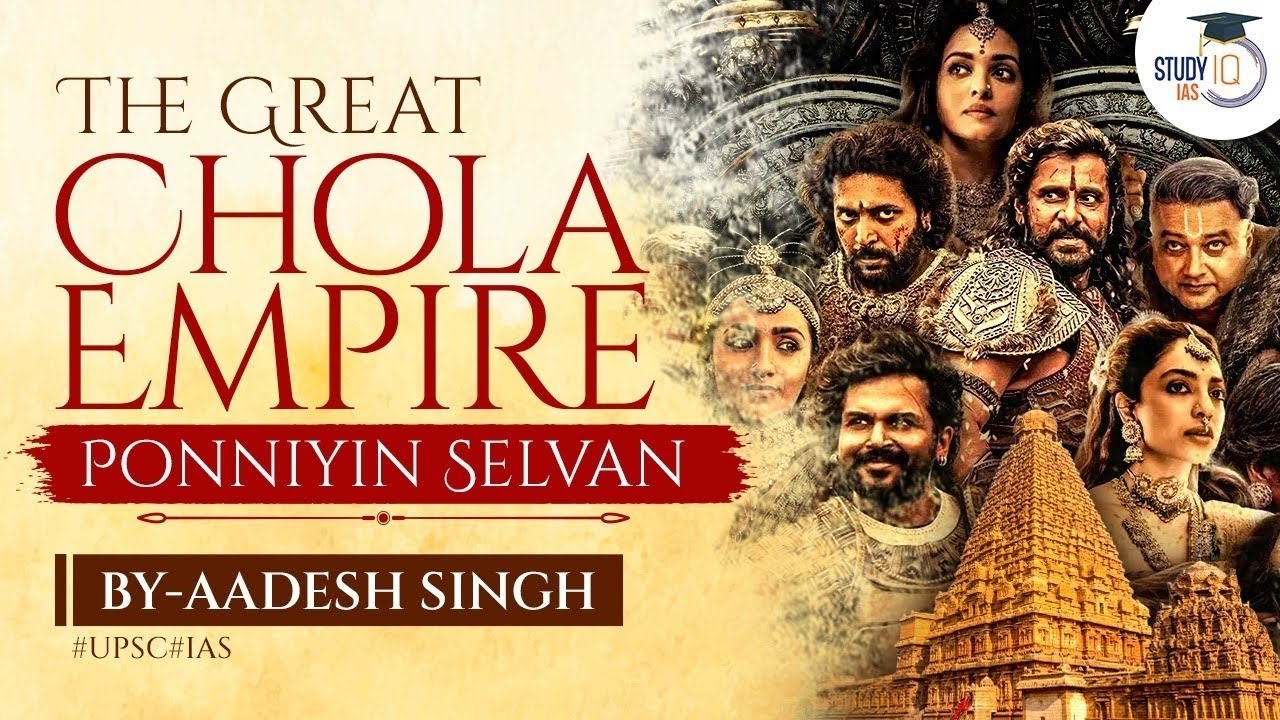
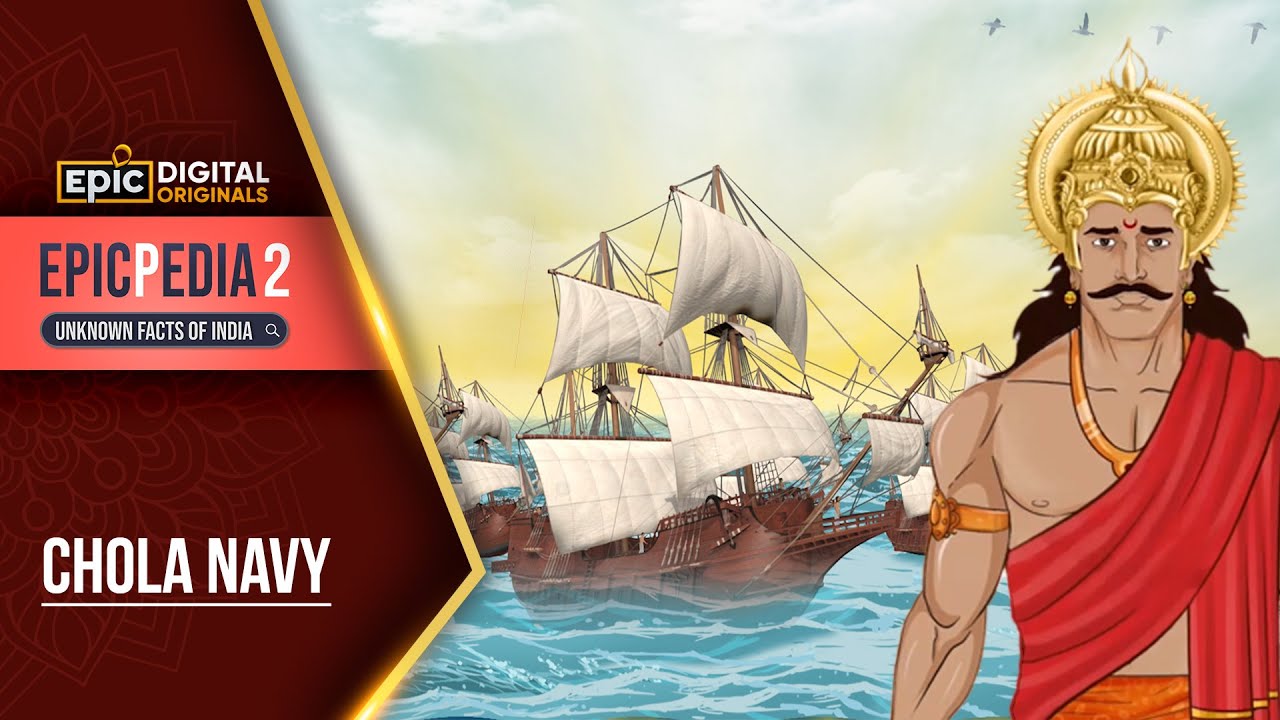
The history of the Chola Empire, a dominant force in South India, is crucial for students preparing for history and civil service exams. This powerful dynasty, emerging from Uraiyur near the Kaveri River in the mid-9th century, maintained its influence for over 400 years, establishing a vast territorial spread across modern Tamil Nadu, Karnataka, and Andhra, and extending its naval supremacy under rulers like Rajaraja I and Rajendra I to the Indian Ocean and Southeast Asia.
In this chapter, you will understand:
- The geopolitical rise of the Chola dynasty from the mid-9th century onwards.
- The five primary administrative and regional Mandalams of the ancient Tamil Country.
- The legendary military, temple architecture, and oceanic campaigns of Rajaraja Chola I.
- The trans-expeditionary achievements and new capital setup by Rajendra Chola I.
Why this topic matters: This historical era marks a milestone in classical state formation, institutional centralized administration, maritime trade diplomacy, and stone architectural developments. Understanding this dynasty is highly useful for competitive examinations and historical tracking of naval power in South Asia.
Core Idea: From their traditional base along the Kaveri River, the Cholas evolved from a regional power center into a dominant imperial authority. Their administration managed highly productive agrarian territories while establishing unprecedented naval command networks that reached deep into across the seas.
Chola Empire: Unparalleled Territorial Expansion and Maritime Dominance (850 to 1279 AD)
The Chola dynasty rose from a regional power center to become a formidable imperial authority, commanding a vast territory and unmatched naval strength for over four centuries. Originating near the fertile banks of the Kaveri River in Uraiyur, the Cholas consolidated their position in the mid-9th century. Their subsequent, sustained expansion efforts cemented their control over the entire Tamil-speaking region and beyond, spanning significant parts of present-day South India.
Geographical Divisions of the Ancient Tamil Country
To better comprehend the Chola heartland and the spheres of their influence, the ancient Tamil Country was traditionally segmented into five major political and geographical realms, known as Mandalam.
Cholamandalam: The Imperial Heartland
This region represented the core and centralized authority of the Chola Empire, encompassing the most fertile lands and the capital cities, serving as the launching pad for all their military and administrative operations.
- (i) It was the dynastic nucleus from which the Chola power emanated.
Pandimandalam and Tondaimandalam: Conquered Rival Realms
The Cholas systematically annexed territories belonging to major rival dynasties, integrating these formerly independent kingdoms into their own imperial structure for complete regional dominance.
- (a) Pandimandalam: This was the traditional dominion of the Pandya Realm, centered around the historic city of Madurai, which the Cholas eventually conquered.
- (b) Tondaimandalam: This region represented the former authority sphere of the Pallavas, with the highly significant religious and political center of Kanchipuram as its focus.
Naduvilnadu and Kongumandalam: Strategic and Western Territories
These regions provided vital buffers and represented the western and central extensions of the Chola territorial claims, crucial for maintaining control over trade routes and resources.
- Naduvilnadu: Literally meaning "The Land in the Center," this strategic area lay geographically between the Chola heartland (Cholamandalam) and the former Pallava territory (Tondaimandalam).
- Kongumandalam: This encompassed the western territories around the present-day districts of Dharmapuri and Coimbatore.
The Greatest Rulers: The Golden Age of Chola Empire
The Chola Empire reached the zenith of its power and influence under two exceptional emperors, father and son, Rajaraja Chola I and Rajendra Chola I, whose reigns marked an era of monumental conquests and architectural achievement. The expansion efforts involved not just land forces but unprecedented naval power in the Indian Ocean.

- The era of Chola supremacy stretched for over 400 years, fundamentally reshaping the political and cultural landscape of the peninsula and beyond.
- Their territory eventually encompassed the entirety of modern Tamil Nadu, along with substantial areas of Karnataka and Andhra Pradesh.
- The dynasty's rise to prominence began with the strategic capture of Tanjore in 850 AD by Vijayalaya, paving the way for complete regional control.
Rajaraja Chola I (985–1014): The Architect of Imperial Might
Rajaraja I, often regarded as the founder of the imperial phase, initiated a series of aggressive campaigns that systematically dismantled the power of regional rivals and established the Chola naval supremacy, fundamentally changing the balance of power in South India and the surrounding seas.
- (i) He achieved a pivotal naval victory by utterly destroying the Chera navy at Kandalur Salai, neutralizing a key maritime rival.
- (ii) His armies successfully conquered Madurai, effectively incorporating the core Pandya territory into the Chola domain.
- (iii) He annexed the northern-central part of Sri Lanka and secured control over crucial island territories in the Indian Ocean, most notably the Maldives.
- (iv) He also overran the Vengi region and annexed the northwestern parts of the Ganga kingdom.
Rajendra Chola I (1014–1044): The Trans-Indian Conqueror
Succeeding his illustrious father, Rajendra Chola I cemented the Chola dominance, pushing the boundaries of the empire far beyond the mainland Indian peninsula through historic military expeditions and naval conquests that secured domination in Southeast Asian trade routes.

Brihadeeshwara Temple Built Under Rajaraja I - Architectural Marvel of the Chola Era - The magnificent Brihadishwara Temple at Tanjore, completed in 1010 AD.
- The tradition of recording inscriptions on temple walls, providing a rich historical account of their reign.
Territorial Pinnacle: The Chola Empire at its Peak
The combined conquests of Rajaraja I and Rajendra I resulted in the maximal territorial extent of the empire, controlling key regions for political stability and economic prosperity.
- (a) His rule saw the Chola influence extend to the Malay Peninsula and the Eastern Archipelago, establishing the Cholas as a major international power.
- (b) He led a legendary military expedition across Kalinga to Bengal in 1022 AD, famously following the same general route as the ancient emperor Samudragupta.
- (c) During this remarkable northern march, his forces crossed the river Ganga and defeated two significant local kings.
- (d) To commemorate this historic victory, he earned the celebrated title "The Conqueror of the River Ganga," or Gangaikondan, and subsequently established a magnificent new capital city named Gangaikondacholapuram.
- (i) The empire's sway extended deeply into the Andhra region and the Mysore area of the Deccan plateau.
- (ii) Total control was asserted over the northern-central part of Sri Lanka, the Lakshadweep islands, and the Maldives in the Indian Ocean.
Chola Dynasty Quick Revision Capsule
Review the core historical anchors, rulers, and territorial highlights of the imperial Cholas:
| Imperial Ruler | Key Military Action & Conquests | Core Objective & Landmark Legacy |
|---|---|---|
| Vijayalaya | Captured Tanjore in 850 AD | Laid the foundational nucleus of the imperial Chola era. |
| Rajaraja Chola I | Destroyed the Chera navy; annexed Madurai and northern Sri Lanka | Established naval command; built the Brihadishwara Temple in 1010 AD. |
| Rajendra Chola I | Marched to Bengal (1022 AD); executed Southeast Asia maritime expeditions | Earned the title Gangaikondan; founded Gangaikondacholapuram. |
Summary
The imperial phase of the Cholas dynamic expansion established a standard for medieval South Indian administrative efficiency, architectural grandeur, and global commercial trade networks. Through structured territorial subdivisions and robust sea control, they left a deep footprint that reshaped maritime history across the Indian Ocean footprint.
Key Historical Points
Focus on these primary factual check-points for quick review:
- (i) Core power expansion initiated around the Kaveri River and Uraiyur.
- (ii) Total rule span crossed over 400 years across southern territories.
- (iii) Complete integration of regional domains like Pandimandalam and Tondaimandalam.
- (iv) Systematic custom of documenting historical narratives directly through temple stone walls.
- Exam Tip: Pay close attention to the specific titles and architectural developments under both Rajaraja I and Rajendra I. The shifting of the capital city to Gangaikondacholapuram and structural highlights of the Kandalur Salai naval campaign are recurring questions in civil service tests.
Frequently Asked Questions (FAQ)
Q1: Who founded the imperial phase of the Chola Empire?
A1: The imperial power trajectory was initiated by Vijayalaya when he strategically seized Tanjore in 850 AD.Q2: What is the meaning behind the title Gangaikondan?
A2: The title means "The Conqueror of the River Ganga," assumed by Rajendra Chola I to commemorate his historic military march up to Northeast India in 1022 AD.Q3: What were the geographical divisions called in the Chola governance framework?
A3: The territories were segmented into large geographical provinces known as Mandalams, such as Cholamandalam and Kongumandalam.