The Kushana Empire represents a pivotal turning point in Central Asian and South Asian history. Originally emerging from the migratory nomadic groups known as the Yueh-chi, the Kushanas carved out a vast, multicultural realm connecting different corners of the ancient world. Under influential rulers like Kanishka I—whose ascension in marks the traditional starting point of the Saka Era—the empire became a bustling crossroads for international trade, art, and mixed religious traditions along the Silk Road. Unlocking the history recorded in key artifacts like the Rabatak inscription and understanding their system of divine kingship gives us deep insight into how ancient empires controlled vast regions, built thriving trade channels, and brought diverse cultures under a single administrative umbrella.
In this chapter, you will understand:
- The nomadic roots and territorial expansion of the Yueh-chi into Bactria and Northern India.
- Key rulers, dynastic genealogy, and the Rabatak inscription's historical importance.
- The administrative systems of dual rule, satrapies, and divine claims to royal authority.
- Economic growth via Silk Road trade routes, numismatic evidence, and religious syncretism.
Why this topic matters: It reveals how ancient societies connected East and West through trade, political innovation, and cultural synthesis without enforcing uniform belief systems.
Core Idea: The Kushanas transformed from nomadic migrants into powerful emperors who bridged South Asia, Central Asia, and the Mediterranean. By combining military expansion with strategic religious tolerance, divine imperial claims, and control of major Silk Road trade nodes, they created an exceptionally prosperous and diverse empire.
The Kushanas: Rise of a Central Asian Empire and Their Unprecedented Influence (c. 1st–3rd Centuries CE)
The foundation of the expansive Kushana Empire began with the forced migration of the Yueh-chi tribes from their original homelands in the East.
Driven away from regions near Dunhuang and across the Tarim Basin by the rival Xiongnu, the Yueh-chi migrated westward. Between and , they settled in Bactria. Out of the five main clans forming this tribal confederation, the Kushanas emerged as the dominant force, consolidating power under a single rule.
- (i) From fragmented nomadic origins, the Kushanas unified the turbulent Indo-Iranian borderlands to forge a powerful Central Asian state.
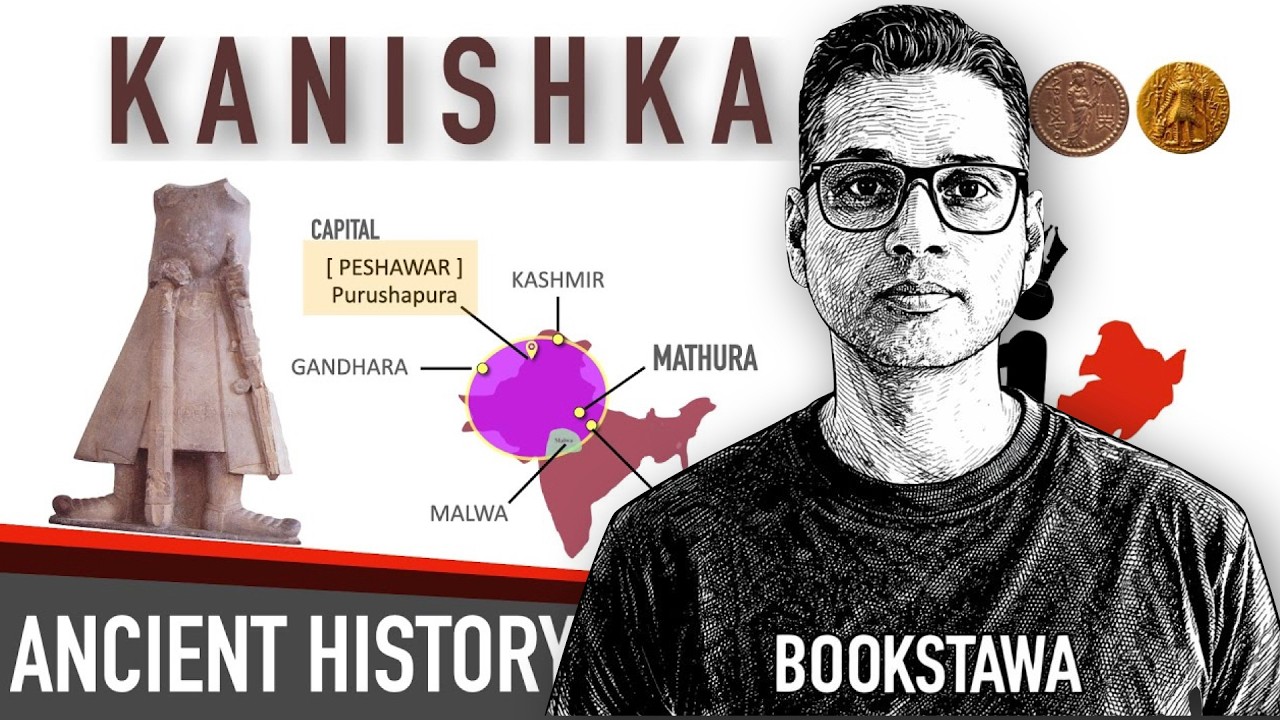
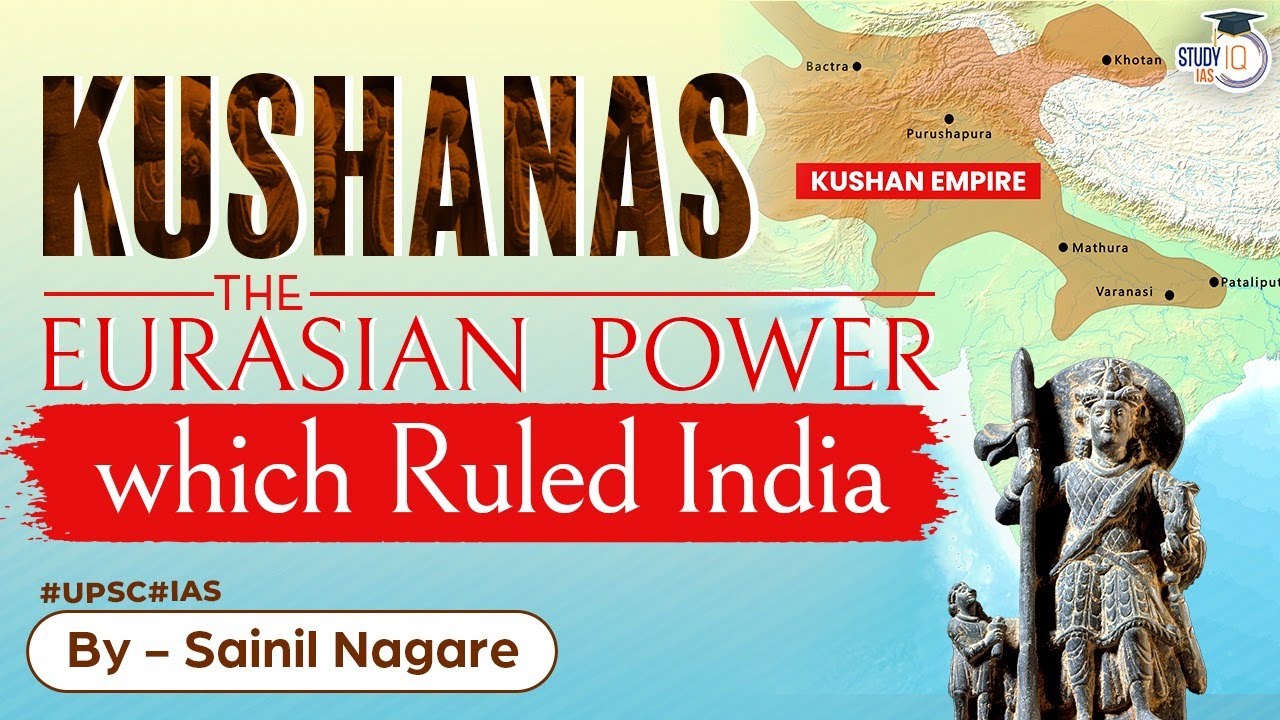
- (ii) Their territory eventually spanned modern Uzbekistan, Afghanistan, Pakistan, and Northern India, with imperial influence reaching as far east as Bhagalpur in Bihar.
- (iii) The famous Rabatak inscription, written in the Bactrian language during the reign of Kanishka I, provides concrete evidence that Kushana authority reached deep into the Gangetic valley.
Kushana Rulers: Divine Status, Succession Lineage, and Imperial Titles
The line of Kushana kings used grandiose titles and divine associations to establish political legitimacy over their diverse subjects.
Founding the Empire: Kujula Kadphises and Vima Kadphises
Dynastic consolidation began with Kujula Kadphises, who united the five Yueh-chi branches and led incursions into Kabul and Kashmir.
- (i) His successor, Vima Kadphises, introduced explicit claims of divine authority into Kushana royal ideology.
- (ii) Gold and copper coins issued under Vima Kadphises depicted him with a halo or nimbus surrounding his head to signify divine election.
- (iii) The Dasht-i-Nawur inscription highlights this grand image by referring to him as the
Law of the Living World
(Dom(r)a-ata : D’m-arta).
Divine Human Rulers: Vasishka and Kanishka I
Subsequent emperors expanded on this tradition of royal deification to elevate the monarchy far above ordinary governance.
- (a) The Kamra inscription refers to Vasishka using the title devamanusha, meaning a god in human form, blending local Indian concepts of incarnation with royal status.
- (b) Kanishka I took these claims further, receiving the title Bago (God) in the Rabatak inscription to confirm his supreme standing within the empire's political and religious hierarchy.
Kushana Influence: Trade, Culture, and Silk Road Connectivity
During the 1st to 3rd centuries CE, the Kushana realm acted as a major economic bridge connecting East and West.

The Kushana Empire as the Silk Road Hub
By controlling key regions in Transoxiana and Bactria, Kanishka I positioned his empire at the center of transcontinental trade routes.
- (i) This central position allowed the Kushanas to regulate and profit from land trade moving between Han Dynasty China, Parthia, West Asia, and the Roman world.
- (ii) The empire also maintained active maritime trade links with the Mediterranean via bustling ports along India's western coast.
Cultural Assimilation in Coinage and Titles
Kushana monarchs readily adopted political titles and symbols from neighboring cultures to ease governance across different regions.
- (a) Early on, Kujula Kadphises adopted high-sounding titles such as
Great King, King of Kings
. - (b) Early Kushana coins drew design inspiration and language choices directly from earlier Saka (Scythian) and Parthian predecessors.
- (a) Early on, Kujula Kadphises adopted high-sounding titles such as
Kushana Governance: Dual Rule, Satrapies, and Administration
To manage their extensive territory efficiently, the Kushanas built a flexible administrative system adapted for regional diversity.
Dual Kingship and Decentralization
A notable feature of Kushana administration was its reliance on a joint governance system.
- (i) Senior and junior kings often ruled concurrently, allowing the empire to maintain active governance across both Central Asian and South Asian territories while streamlining succession.
Refined Satrap System
The Kushanas adapted the earlier Iranian and Saka governor model to create an organized regional administration.
Administrative divisions were governed by regional satraps answerable to the central monarchy. - (a) The empire was divided into administrative units known as satrapies.
- (b) Each satrapy was overseen by an appointed official called a satrap (kshatrapa), who collected taxes, maintained law, and represented the central crown locally.
Quick Revision Capsule: Key Kushana Rulers & Features
The table below summarizes primary rulers, their distinct administrative or cultural highlights, and their historical contributions:
| Ruler / Topic | Primary Titles & Symbols | Key Historical Contribution |
|---|---|---|
| Kujula Kadphises | Great King, King of Kings | United the five Yueh-chi clans and secured Kabul and Kashmir. |
| Vima Kadphises | Nimbus symbol; Law of the Living World | Introduced gold currency and established divine royal claims. |
| Kanishka I | Bago (God); Initiator of Saka Era () | Issued the Rabatak inscription, expanded into the Gangetic Plain, and promoted Silk Road trade. |
| Huvishka | Multi-religious coin motifs | Adopted a broad multi-faith coinage depicting Roman, Greek, Iranian, and Indian gods. |
| Royal Cults | Devakula / Bagolango | Constructed dedicated dynastic temples (e.g., Mat, Surkh Kotal) to honor deified rulers. |
Kushana Pantheon: Religious Pluralism and Royal Propaganda
The coinage issued by Kushana rulers reflects an intentional policy of inclusive religious representation that mirrored their diverse empire.
Iranian Influence and Kanishka's Deities
During the reign of Kanishka I, coins heavily featured deities of Iranian origin alongside Greek and Indian figures.
- (i) Images on coins routinely included Bactrian deity names alongside figures like Mithra, Ahurmazda, and Siva.
- (ii) The Rabatak inscription singles out the goddess Nana as a primary patron deity of the ruling house.
- (iii) Depicting the Buddha (labelled as Boddo) on gold coins alongside other major gods presented Kanishka I as a protector of all faith traditions.
Huvishka’s Inclusive Strategy and Trade Support
His successor, Huvishka, broadened this inclusive approach even further on royal currency.
- (a) Coins from his reign featured an array of deities from Greek, Zoroastrian, Brahmanical, and Buddhist traditions.
- (b) Images referencing Roman or Alexandrian figures were likely meant to make foreign traders feel welcome and facilitate commerce with Roman merchants.
Syncretism and the Silk Road Connections
As trade flourished along the Silk Road, religious iconography developed in fluid and creative ways.
- (i) Depictions of deities such as Skanda, Kumara, Vishakha, and Mahasena appeared on coins before later merging into the single figure of Karttikeya in Hindu tradition.
- (ii) This flexible presentation of beliefs prevented religious friction and maintained peace across multi-ethnic trade routes.
Kushana Divine Claims: Dynastic Sanctuaries and The Cult of the Emperor
Beyond imagery on coins, Kushana monarchs built dedicated temple complexes to honor living and ancestral rulers as divine figures.
Establishment of Royal Cult Centers
Known as devakula in Sanskrit or Bagolango in Bactrian, these imperial sanctuaries functioned as centers for state veneration.
- (i) Vima Kadphises began this building program by establishing royal centers at Mat (near Mathura) and at Surkh Kotal in the northwest.
- (ii) Kanishka I expanded the complex at Surkh Kotal, designating it as the Kanishka Oanindo-sanctuary.
- (iii) Similar sites uncovered at Khalchayan and Airtam in modern Uzbekistan show how widespread this royal cult practice was throughout the empire.
The Rabatak Inscription and Deification
The Rabatak stone inscription provides clear textual details about how these royal shrines functioned.
- (a) The text describes building a sanctuary dedicated to the goddess Nana to house statues of the royal family.
- (b) It explicitly records statues made for four generations of kings: Kujula Kadphises, Vima Taktu, Vima Kadphises, and Kanishka I.
- (c) Describing the ruling monarch as bago provided a clear religious reason for subjects across different regions to offer political loyalty to the king.
The Cult of the Emperor as a Unifying Force
Historians view these state sanctuaries as an effective tool for uniting a broad mix of cultures under one banner.
- (i) Treating the ruler as divine gave subjects from different linguistic, ethnic, and religious backgrounds a shared center of loyalty.
- (ii) It allowed regional traditions to continue undisturbed while reinforcing ultimate respect for the central throne.
Interaction and Integration: Trade, Urban Centers, and Royal Symbolism
By connecting major urban markets from Central Asia to the Gangetic valley, the Kushanas created an integrated socio-economic network.
Strategic Urban Integration and Trade
Major cities were deliberately tied into imperial trade networks to promote stable economic growth.
- (i) Key cities like Taxila and Mathura sat along primary overland routes, connecting northern valleys with trade corridors in Afghanistan and the Gangetic Plain.
Symbolism and Syncretic Empire Building
The combination of royal iconography, strategic urban planning, and local engagement helped secure imperial control.
- (a) Building a major devakula near Mathura brought the Central Asian royal family directly into the cultural heartland of Northern India.
- (b) By combining pragmatic administration with religious tolerance, the Kushanas built a resilient and interconnected state structure that lasted for centuries.
Summary
The Kushana Empire stands as an impressive example of ancient state-building, economic success, and cultural exchange. Rising from nomadic Yueh-chi roots, the dynasty established an empire spanning Central Asia and Northern India. Through steady control of key Silk Road trade routes, flexible administrative models like satrapies and joint rule, and an open approach to diverse religions, emperors like Kanishka I created a prosperous environment for artistic and cultural growth. Their practice of deifying rulers through royal shrines (devakula) and issuing multi-religious coinage created a shared political identity that bridged cultures across the ancient world.
Quick Revision Points for Students
Keep these key historical details in mind for examinations:
- (i) Origins & Migration: The Kushanas originated from the nomadic Yueh-chi tribes who moved from the borders of China into Bactria before entering Northern India.
- (ii) Rabatak Inscription: Written in Bactrian, this inscription confirms the genealogy of Kanishka I and proves his control extended deep into the Ganga valley.
- (iii) Divine Royalty: Rulers claimed divine status using titles like Bago and devamanusha, constructing royal shrines at locations like Mat and Surkh Kotal.
- (iv) Economic Success: Controlling Silk Road intersections generated vast wealth, reflected in extensive gold coin issues and thriving regional markets like Taxila and Mathura.
- Exam Tip: Remember that the starting year of the Saka Era () is traditionally linked to the ascension of Kanishka I. When answering exam questions about Kushana art or religion, emphasize how their coinage displays Greek, Iranian, and Indian gods together, showing a clear state policy of religious tolerance.
Frequently Asked Questions (FAQ)
Q1: Who were the Yueh-chi, and how are they related to the Kushana Empire?
A1: The Yueh-chi were a nomadic tribal confederation originally living near the Tarim Basin. After being displaced by the Xiongnu, they migrated into Bactria. The Kushanas emerged as the leading clan among the five Yueh-chi tribes and built the empire.Q2: What makes the Rabatak inscription so important for Indian history?
A2: Discovered in Afghanistan and written in Bactrian, the Rabatak inscription clarifies the royal lineage from Kujula Kadphises down to Kanishka I. It explicitly lists cities in Northern India under Kushana control, confirming their expansion into the Gangetic region.Q3: What was a devakula or Bagolango in the Kushana period?
A3: A devakula (or Bagolango) was a dynastic sanctuary housing statues of living and ancestral Kushana kings. Shrines like those at Mat and Surkh Kotal reinforced the king's claim to divine power and served as centers of loyalty across the empire.