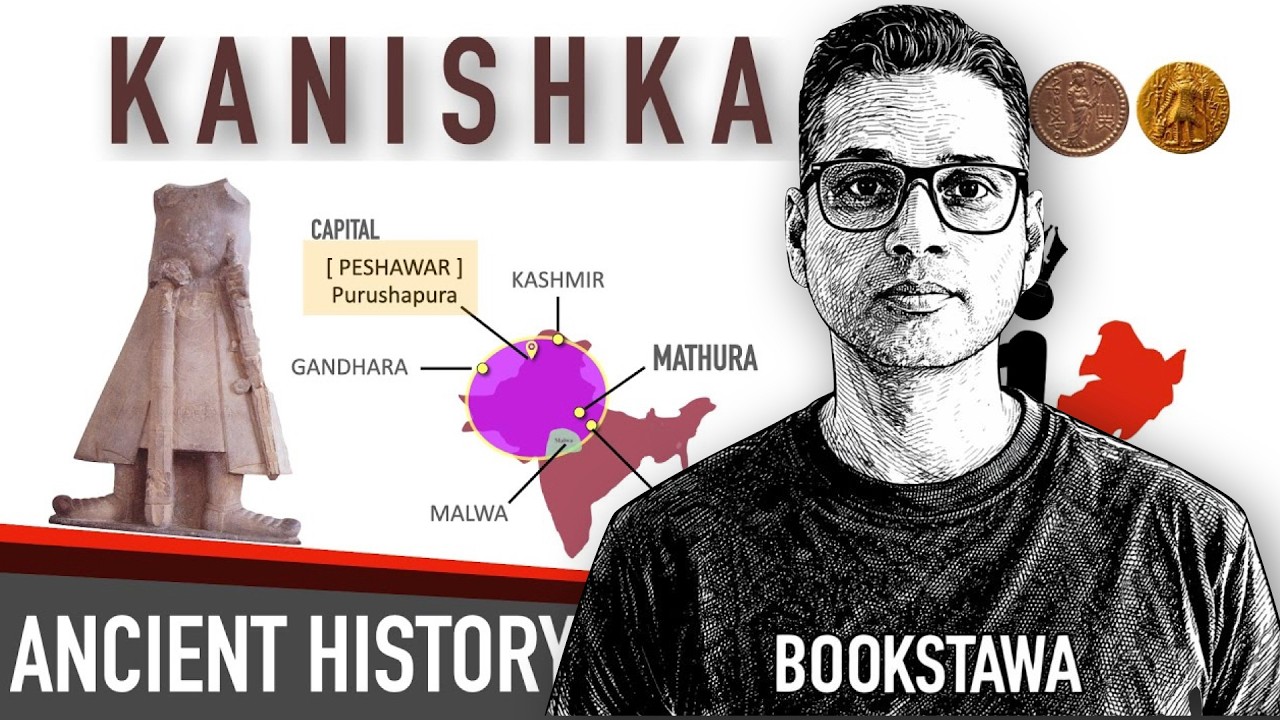
The Kushana dynasty reached its historical peak during the reign of ruler Emperor Kanishka I. Under his leadership, a vast region stretching from Central Asia down into northern and central India came together under unified rule. Kanishka transformed a nomadic empire into an urban powerhouse by taking advantage of vital trade passages like the Silk Road. His military campaigns secured lucrative transit lines, while his personal patronages nurtured Mahayana Buddhism, unique artistic styles, and architectural marvels. Understanding Kanishka helps us see how ancient commercial routes created lasting artistic, religious, and economic ties across Asia.
In this chapter, you will understand:
- The military campaigns of Kanishka I and the historical debate surrounding his ascension date.
- The geographical reach of the Kushana kingdom across India and Central Asia.
- How Kushana territories connected Silk Road trade networks between India and China.
- The spread of Prakrit scripts, coin minting, and cultural exchange throughout northern frontiers.
Why this topic matters: Kanishka's reign marks a major turning point in ancient Asian history, showing how military control over trade routes reshaped culture, art, and long-distance commerce.
Core Idea: Emperor Kanishka I built a mighty empire by securing Silk Road trade hubs, uniting northern India with Central Asia, and fostering vast cultural and commercial ties across the ancient world.
Kanishka the Great: Architect of Kushana Imperial Power
The overall strength of the Kushana dynasty reached its highest point under Kanishka I. Through focused territorial expansion and open support for scholars and artists, he built a stable imperial structure that brought together remarkably diverse cultures across the subcontinent.
Kanishka's Military Conquests and The Mystery of His Accession Date
Kanishka I directed imperial expansion deep into northwestern regions and across the central Ganges Plain, pushing authority eastward to key settlements like Champa.
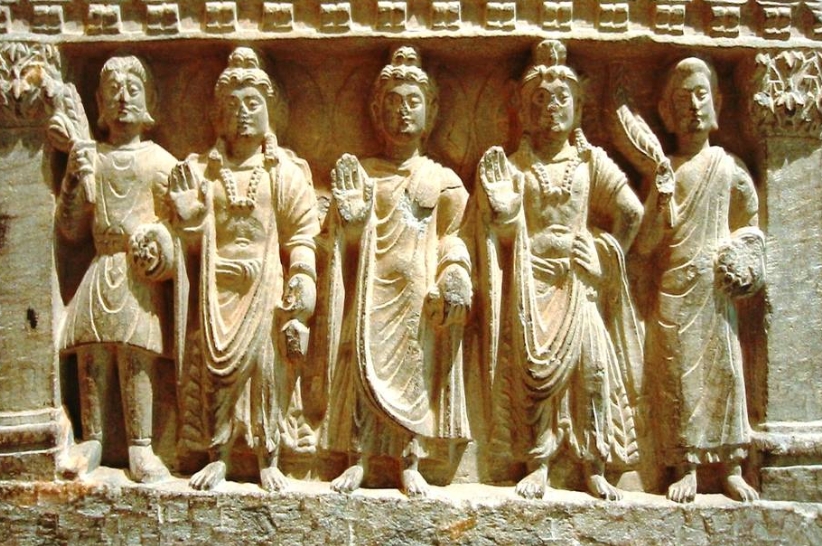
Iconic representation of the Kushana dynasty during the reign of Kanishka I. - (i) Official imperial announcements were first published in Greek before being adapted into local Aryan dialects like Prakrit so broad populations could easily understand them.
- (ii) His Central Asian heritage was confirmed when workers near Mathura unearthed a headless stone statue depicting him in traditional northern riding attire.
The Chronological Debate of the Shaka Era
Historians continue to discuss the exact year Kanishka took the throne, offering estimates ranging from to . The year remains widely associated with the start of the famous Shaka era calendar system.
- Military control extended across key hubs in the middle Ganges Plain.
- Headless statues with clear inscriptions provided direct proof of royal lineage.
- Prakrit language declarations helped unite diverse cultural territories.
- The year established an administrative calendar system still recognized in historical studies today.
Kushana Geopolitical Extent and Central Asia Connections
By positioning the empire across primary land routes, Kushana rulers created an ideal geographical position to oversee and tax cross-continental travel and commerce.

- The imperial heartland drew strength from twin capital cities at Purushapura (near present-day Peshawar) and Mathura, effectively securing both northwestern border regions and central trade corridors.
Inscriptional Evidence and Frontier Boundaries
Discovered coins and carved stone records outline the practical scope of Kushana territorial governance.
- Imperial inscriptions throughout central river basins confirm direct governance.
- Scattered coin caches in distant villages like Chirand show strong economic reach, even where permanent garrisons were not placed.
- Expansion northward into regions like Kashgar helped the empire control vital Silk Road mountain passes.
- Dual capital cities ensured smooth oversight of both mountain frontiers and fertile central valleys.
Facilitating India-China Trade and Cultural Diffusion
The empire functioned as an essential intermediary zone, helping travelers, commercial goods, and ideas move easily between ancient Chinese and Indian civilizations.
- Territories under Kushana authority gave traders protected land passages, leading to a steady surge in Silk Road commerce.
Commercial and Linguistic Exchanges Along Border Zones
Physical artifacts and ancient records highlight deep economic and cultural exchanges along the empire's boundaries.
Kushana coinage and inscriptions featuring Kharoshthi and Brahmi scripts. - Gold and copper coins show high trade volume along all northern borders.
- Inscribed artifacts found at sites like Khalchayan show that both Brahmi and Kharoshthi scripts were used across northern markets.
- Communities using Prakrit languages established lasting settlements well past traditional regional borders.
- Guarded mountain passes ensured safe passage for merchants, scholars, and traveling monks.
Quick Revision Capsule
Review the core pillars of Kanishka's reign and Kushana governance at a glance:
| Domain | Key Features & Mechanisms | Primary Historical Impact |
|---|---|---|
| Imperial Governance | Twin capitals at Purushapura and Mathura | Secured northern borders while keeping strong administrative control over river trade. |
| Military Expansion | Campaigns reaching eastward to Champa and north to Kashgar | Unified key parts of northern India and Central Asian trade stops under one authority. |
| Chronology & Era | Accession debate (–); start of the Shaka era | Created a lasting chronological framework widely used across regional history. |
| Trade Oversight | Direct control over key overland branches of the Silk Road | Boosted commercial and cultural exchange between India, Rome, and China. |
| Cultural Diffusion | Broad use of Prakrit, Brahmi, and Kharoshthi scripts | Spread Indian language, literature, and religious traditions deep into Central Asia. |
Summary
The Kushana Empire reached its peak under Kanishka I, who effectively united Central Asian administrative systems with Indian governance. By holding key cities like Purushapura and Mathura, Kanishka safeguarded major Silk Road supply lines, encouraging steady trade between Asia and Europe. The imperial administration used multi-script declarations in Prakrit, Greek, and local dialects to manage diverse populations smoothly. Beyond military success, his reign laid a solid foundation for regional trade, cultural growth, and economic stability that shaped ancient Asian history for centuries.
Quick Revision Points
Essential takeaways to review before exams:
- (i) Kanishka I expanded Kushana rule east toward Champa and north toward Kashgar.
- (ii) The accession year marks the traditional starting point of the widely referenced Shaka era.
- (iii) Administrative power was shared between twin imperial centers at Purushapura and Mathura.
- (iv) Coins and bilingual records carrying Brahmi and Kharoshthi scripts confirm far-reaching trade across Central Asia.
- Exam Tip: Remember that Purushapura (Peshawar) and Mathura served as the primary dual capitals under Kanishka I. Also note that 78 CE marks the traditional start of the Shaka era, a frequent point of interest in ancient Indian history exams.
Frequently Asked Questions (FAQ)
Q1: Why was the location of the Kushana Empire so important for global trade?
A1: The empire controlled key central passages of the overland Silk Road, acting as a protected commercial bridge connecting merchants from India, China, Central Asia, and the Roman Empire.Q2: Which dual capitals were established under Kanishka's rule?
A2: Kanishka administered his vast territories through twin capital centers at Purushapura (modern Peshawar) in the northwest and Mathura along the Yamuna River in central India.Q3: What scripts were used on Kushana coins and royal inscriptions?
A3: Official coins and rock inscriptions routinely featured Greek, Kharoshthi, and Brahmi scripts, demonstrating the diverse, multicultural character of the empire.