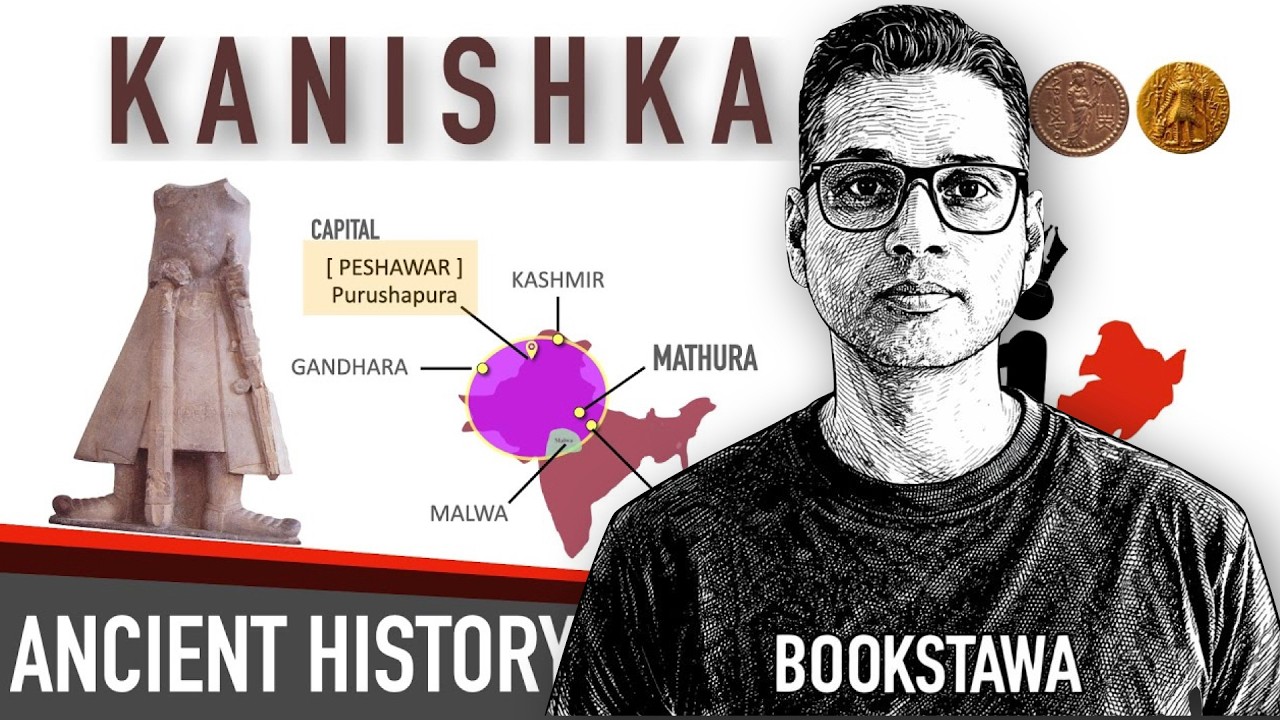
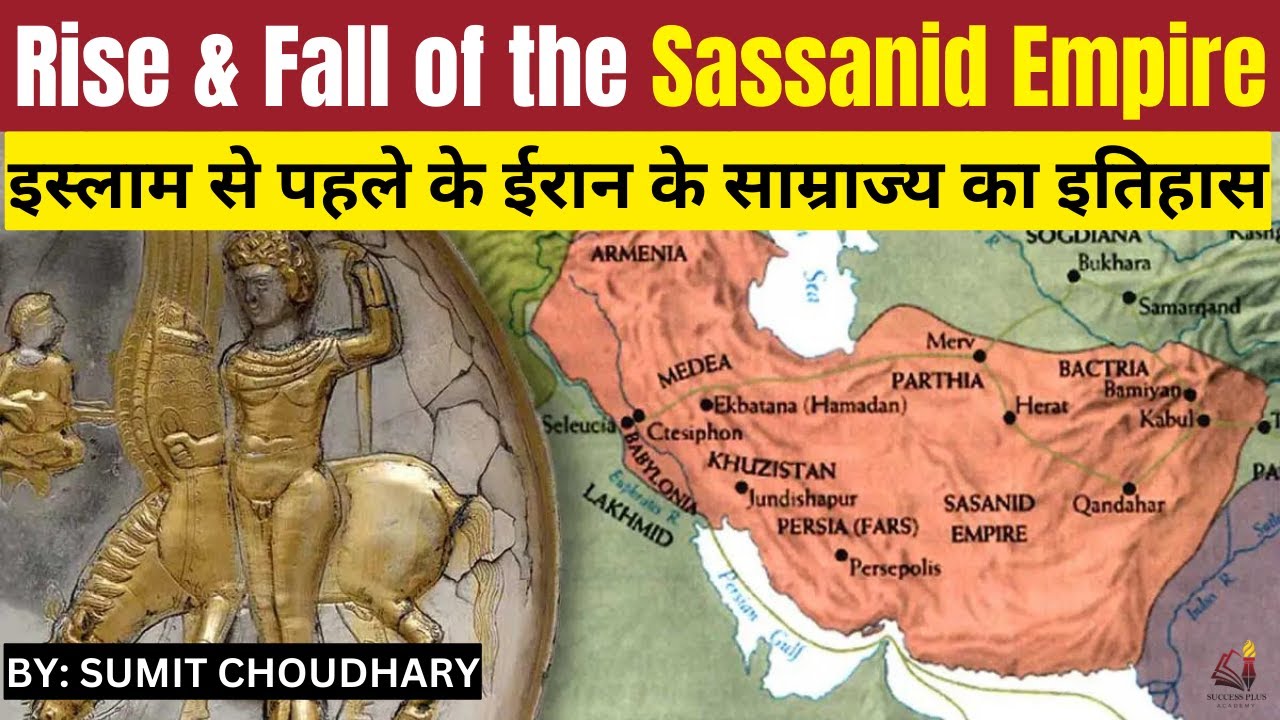
The Kushano-Sasanian Kingdom, often referred to as the Kushanshahs or Indo-Sasanians, emerged during the as a key eastern branch of the Sasanian Persian Empire. Formed after the conquest of the western regions of the falling Kushan Empire, this realm held authority over the critical strategic regions of Bactria and Gandhara. Positioned directly at the crossroads of Central Asia and North India, the kingdom played an indispensable role in maintaining trade flow along the Silk Route while facilitating deep cultural fusion. Its unique position created an environment where Iranian traditions merged with Indian religious beliefs, leaving behind distinct coinage, complex administrative systems, and lasting architectural developments. For students analyzing early Asian empires, understanding this state provides essential context for the political and cultural developments that bridged Persia and the Indian subcontinent.
In this chapter, you will understand:
- The establishment of Kushano-Sasanian rule by Ardashir I and Shapur I.
- The coexistence and patronization of Zoroastrianism and Buddhism.
- The centralized governance hierarchy featuring the Shahanshah, Shahrdar, and Shahrab.
- The multilingual coinage featuring Brahmi, Pahlavi, and Bactrian scripts alongside syncretic iconography.
Why this topic matters: It explains how political conquest can lead to cultural integration, showing how Persian administrative structures and Indian religious practices influenced regional governance and commercial networks along the Silk Route.
Core Idea: The Kushano-Sasanian Kingdom was a vital regional power created when the Sasanian Persians established control over former Kushan territories. Through bilingual coinage, centralized bureaucratic titles, and dual patronage of Zoroastrianism and Buddhism, the Kushanshahs maintained political control while fostering cultural and economic synthesis across Bactria and Gandhara during the .
Origins and Strategic Establishment by Sasanian Persians in the East
The establishment of the Kushano-Sasanian Kingdom was a direct result of eastern imperial expansion by the early rulers of the Sasanian Persian Empire. By moving into the territories formerly held by the Kushan Empire, the Sasanians secured key trade arteries and established a firm administrative presence across Bactria and Gandhara.
Annexation and Imperial Authority
During the , Sasanian monarchs moved eastward to dismantle the central power of the Kushan rulers. They appointed royal princes to govern these new borderlands, creating a distinct sub-dynasty known as the Kushanshahs.
- (i) Sasanian rulers Ardashir I and his successor Shapur I led military campaigns that successfully annexed the western provinces of the Kushan Empire, appointing governors who took the official title of Kushanshah (King of the Kushans).
- (ii) The newly formed province became an active bridge for commerce and communication, linking the Iranian plateau directly with Central Asian steppe routes and the northern river valleys of the Indian subcontinent.
Bureaucratic Integration and Local Adaptation
The political structure implemented across the region balanced imperial control with local governance necessities. Rather than wiping out local systems, the new rulers integrated existing practices to ensure stability.
- (i) The administration imported formal Sasanian bureaucratic models to collect taxes and manage royal security.
- (ii) Regional governors accommodated long-standing local traditions to maintain peace among diverse indigenous populations.
- (iii) Imperial garrisons were stationed near major urban centers to protect trade caravans and maintain territorial borders.
- (iv) Local elites were retained in administrative roles to streamline revenue collection and civil governance.
Religious Life and Syncretism: Coexistence of Zoroastrianism and Buddhism
Religious life under the Kushanshahs was marked by continuous interaction between the official state religion of Persia and the deeply rooted faiths of Central Asia and South Asia. This environment created a unique atmosphere of official patronage and mutual cultural influence.

- State patronage supported Iranian traditions without suppressing major local faiths.
Zoroastrian Influence and the Royal Fire Cult
As an offshoot of the main Sasanian dynasty, the Kushanshahs brought with them the traditions of Zoroastrianism, using its symbols to reinforce their political legitimacy and connection to the central empire.
- (i) The official promotion of Zoroastrianism by the ruling class was clearly demonstrated by the continuous appearance of sacred fire altars on the reverse side of issued currency.
- (ii) Royal rituals performed at fire temples helped establish the divine right of the Kushanshahs over their ethnically diverse subjects.
- (iii) Specialized fire temples were built and maintained as symbols of royal authority and community focal points for the Iranian population.
- (iv) Priestly authorities maintained state religious records and ensured administrative practices aligned with royal religious standards.
Spread of Buddhism and Cultural Adaptation
While Zoroastrianism enjoyed official royal status, Buddhism remained the dominant faith among the general populace in Gandhara and parts of Bactria. The monastic institutions continued to grow, acting as major economic and educational centers.
- Monasteries expanded along trade roads, benefiting from donations by merchants, local elites, and regional travelers.
Administrative System and Centralized Governance Model
The administrative framework of the Kushano-Sasanian state was designed to maintain firm military control while ensuring efficient tax collection across trade routes and agricultural centers.
Administrative structure from the central Shahanshah down to regional Shahrabs. - (i) Supreme power rested with the ruler who adopted the title Shahanshah (King of Kings) to denote imperial authority over regional governors.
- (ii) Provinces were overseen by semi-autonomous governors holding the official Sasanian title of Shahrdar (holder of the country).
- (iii) Local districts were managed by appointed officers known as Shahrab, who handled judicial matters and tax assessments.
- (iv) Senior religious officers known as Mowbed (chief priests) oversaw legal matters and reinforced civic administration alongside secular officials.
Quick Revision Capsule
Key structural aspects of the Kushano-Sasanian Kingdom summarized for quick study:
| Administrative Level | Key Title / Concept | Primary Role & Significance |
|---|---|---|
| Supreme Ruler | Shahanshah | Maintained imperial authority and represented Sasanian dynastic power in the East. |
| Provincial Governor | Shahrdar | Managed administrative provinces and collected regional taxation for the state. |
| District Administrator | Shahrab | Handled local civil administration, legal disputes, and community policing. |
| Religious Official | Mowbed | Supervised state fire temples and maintained religious alignment within local governance. |
| Commercial Base | Silk Route Trade | Provided economic revenue through tariffs on goods moving between East and West. |
Summary
The Kushano-Sasanian Kingdom represents a crucial chapter in the history of Central and South Asia during the . Established after Sasanian campaigns under Ardashir I and Shapur I annexed Kushan territories, the state successfully bridged Iranian and Indian cultural spheres. Through an organized governance model led by the Shahanshah, Shahrdar, Shahrab, and Mowbed, the realm maintained administrative stability. Its currency highlighted a unique syncretic culture by combining Iranian Zoroastrian fire altars with Indian deities like Shiva and Nandi, transcribed in Brahmi, Pahlavi, and Bactrian scripts. Operating at the heart of the Silk Route, the kingdom generated immense economic strength, supported thriving Buddhist monasteries alongside Zoroastrian fire temples, and left an enduring imprint on regional art, architecture, and administrative methods.
Quick Revision Points
Essential facts to review before examinations:
- (i) The kingdom was founded in the following Sasanian conquests of western Kushan lands in Bactria and Gandhara.
- (ii) Maintained a multi-script monetary system utilizing Brahmi, Pahlavi, and Bactrian scripts.
- (iii) Featured syncretic coinage combining Zoroastrian fire altars with the Indian deity Shiva and his bull Nandi.
- (iv) Economic prosperity was driven by direct control over lucrative trade passages along the Silk Route.
- Exam Tip: Pay close attention to the multi-script nature of Kushano-Sasanian coinage and the specific titles (Shahanshah, Shahrdar, Shahrab) used in their administration, as these are frequently tested in questions regarding ancient trade and empire management.
Frequently Asked Questions (FAQ)
Q1: Who were the Kushanshahs?
A1: The Kushanshahs were Sasanian royal princes who ruled the eastern conquered provinces of the former Kushan Empire in Bactria and Gandhara during the .Q2: What religions coexisted within the Kushano-Sasanian Kingdom?
A2: Zoroastrianism was patronized as the primary imperial state religion by the ruling class, while Buddhism continued to thrive widely among the local populace and merchant communities.Q3: What makes Kushano-Sasanian coinage historically significant?
A3: Their coins are vital primary evidence of cultural syncretism, featuring multiple scripts (Brahmi, Pahlavi, Bactrian) and combining Zoroastrian symbols with Indian religious figures like Shiva.