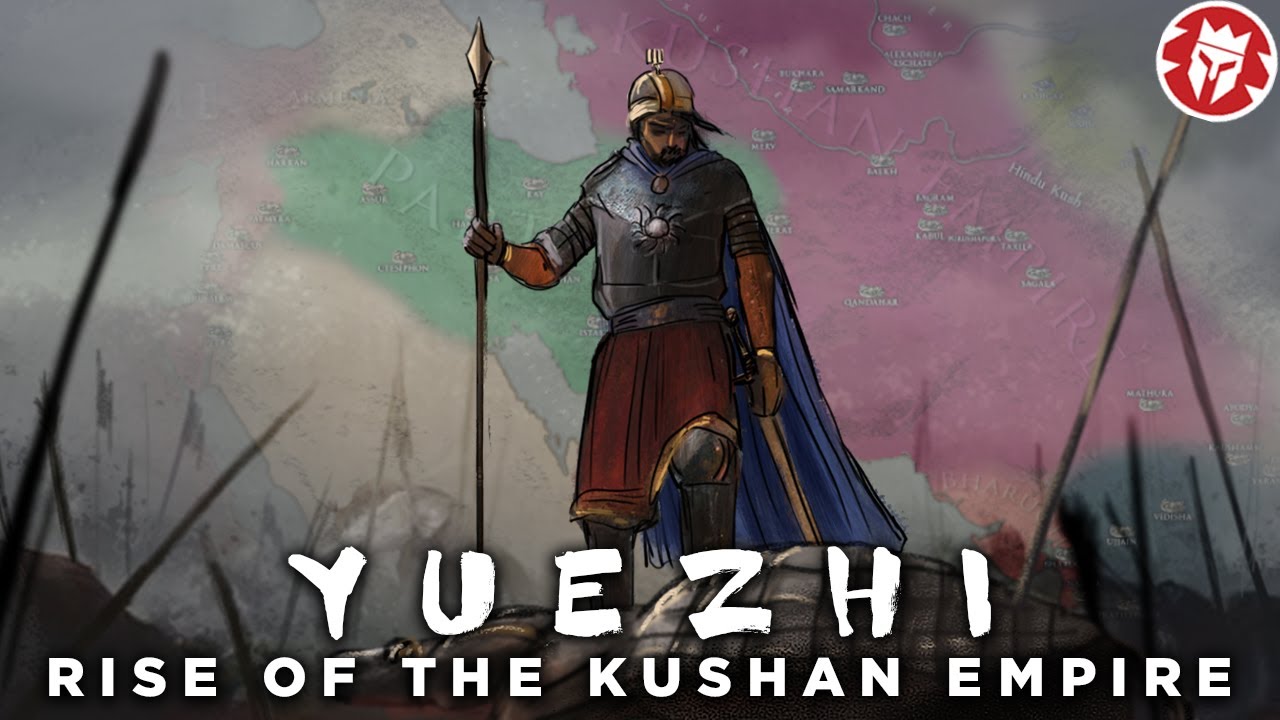
The Kushana Empire reached its absolute peak under Kanishka I, becoming one of the most powerful states in ancient Asia. Controlling key trade routes that linked India, Central Asia, and the Mediterranean, the Kushanas built a bridge between cultures. Their realm combined Indian traditions, Iranian court customs, and Hellenistic style into a unique imperial identity. Under Kanishka and his immediate successor Huvishka, the empire prospered through trade, city building, and religious tolerance. However, internal political divisions and rising external forces eventually weakened the state. By the middle of the third century, pressure from regional powers, climaxing in the expansion of the Sassanid Empire from Persia, brought an end to this mighty kingdom.
In this chapter, you will understand:
- The territorial extent and grand imperial titles of Kanishka I
- Key developments in urban centers and monumental building work
- Huvishka's diverse coinage and cosmopolitan governance
- The gradual decline of later Kushana kings and their fall to Shapur I
Why this topic matters: Understanding the Kushana era helps explain how ancient trade networks expanded across Asia and how different political traditions mixed during the first few centuries of the Common Era.
Core Idea: Kanishka I expanded Kushana rule across Northern and Central India, backing his power with grand titles and public monuments. His successors maintained this vast, diverse realm for several decades through rich, multi-religious coinage. Over time, internal fragmentation and the rise of the Sassanid Empire led to the collapse of the Kushana dynasty.
Kanishka I: Imperial Peak and Governance
The reign of Kanishka I stands as the high point of Kushana strength, bringing wide conquests and rich cultural life. Many historical traditions link the start of his rule with the beginning of the Saka Era in .
Vast Territories and Symbolism of Power
The true size of Kanishka's realm is clearly described in the famous Rabatak inscription, which lists major political hubs under his control across South Asia.
- (i) His territory stretched deep into the fertile Ganges-Yamuna valley, taking in major urban centers like Saketa, Kausambi, Pataliputra, and Sri-Campa.
Imperial Ideology and Divine Titles
Kanishka presented his authority as both absolute and sacred, drawing upon political customs from neighboring empires.
- A headless stone statue found near Mathura shows his imposing stance and carries the inscription: Great King, King of Kings, Son of God, Kanishka.
- His royal titles reflected a broad, multicultural style of leadership: maharajatiraja (King of Kings) from Persian traditions, daivaputra (Son of Heaven) influenced by Chinese concepts, along with soter (Savior) and Kaisara (Caesar) derived from Hellenistic and Roman titles.
Kushana Urbanization and Monuments
Alongside conquest, Kanishka focused heavily on building projects and strengthening strategic centers to hold his empire together.

- Kanishka renamed the northwestern city of Purushapura (modern Peshawar) to Kanishkapura, turning it into a primary royal capital.
Urban Development and Kushan Fortification
He built grand structures to give his cities lasting religious and political importance.
- He ordered the construction of a massive stupa at Purushapura, famous across Asia for its size and artistic detail.
- This landmark became a major center for travelers and pilgrims moving along regional trade routes.
- New fortifications and royal sites were established to protect crucial trade stops.
- City layouts from this time show clear signs of systematic planning and growing merchant activity.
Successors of Kanishka I and Dynasty Decline
After Kanishka's long reign, strong rulers like Huvishka kept the empire stable before gradual decline set in.
- Huvishka held power for more than three decades, maintaining strong authority across both Central Asia and Northern India.
Huvishka: The Cosmopolitan Ruler
Inscriptions found at Mathura and Wardak (dated to his 51st regnal year) show that his territory stretched well west of Kabul.
Gold coins issued under Huvishka featuring Greek, Iranian, and Indian gods. - Huvishka issued extensive gold and copper coins that reveal a remarkably open, multi-religious state.
- His coins feature deities from Indian, Iranian, Central Asian, and Greek pantheons side by side.
- This varied coinage shows how the Kushana court appealed to diverse groups across their trade roads.
The Later Kushanas and the Final Collapse
The last period of Kushana history was marked by shrinking boundaries and growing pressure from rival powers.
Later Kushana Rulers
Records left by later kings show they still held core areas around Mathura, though their broader reach was slipping.
- The Ara inscription notes the rule of Kanishka II, who tried to maintain the founder's political prestige.
- Vasudeva I ruled for over thirty years (from years 64/67 to 98), keeping firm control over the Mathura region.
- Later kings, like Kanishka III and Vasudeva II, are known almost entirely from their coins rather than large stone inscriptions.
Sassanid Conquest and End of Dynasty
The final collapse came as powerful neighbors moved into former Kushana lands.
- Vasudeva II is generally viewed as the last major ruler of the main Kushana line.
- His weakened state faced a heavy invasion led by the Sassanid ruler Shapur I of Persia.
- This military defeat broke Kushana power, bringing an end to their centuries-long empire.
Quick Revision Capsule
Key phases, rulers, and events defining the peak and collapse of the Kushana Empire:
| Ruler / Event | Key Action / Evidence | Historical Impact |
|---|---|---|
| Kanishka I | Issued the Rabatak inscription; used titles like daivaputra | Expanded Kushana rule into the Gangetic plain; started the Saka Era () |
| Kanishkapura (Peshawar) | Capital city shift; built a grand stupa | Created a major administrative and religious center along key trade paths |
| Huvishka | Issued gold coins depicting Greek, Iranian, and Indian gods | Maintained an extensive, cosmopolitan empire stretching west of Kabul |
| Vasudeva I | Ruled for over 30 years from Mathura | Held core Indian territories despite shrinking outer borders |
| Sassanid Conquest | Invasion by Persian King Shapur I against Vasudeva II | Brought an end to Kushana sovereign rule |
Summary
The Kushana Empire reached its heights under Kanishka I, who combined vast military power with cultural tolerance. By taking multi-ethnic titles and building grand urban sites like Kanishkapura, he turned his state into a hub for Asian trade and culture. Huvishka kept this multi-religious empire strong through broad coinage. However, later rulers faced shrinking borders and loss of regional influence. By the reign of Vasudeva II, the empire was too weak to resist the rising Sassanid power under Shapur I, marking the end of the Kushana era.
Quick Revision Points
Essential facts to review before exams:
- (i) The Rabatak inscription details Kanishka's control over Gangetic cities like Saketa, Kausambi, Pataliputra, and Sri-Campa.
- (ii) Kanishka used titles from multiple cultures: maharajatiraja (Persian), daivaputra (Chinese), soter (Greek), and Kaisara (Roman).
- (iii) Huvishka's coins featured deities from Greek, Iranian, and Indian religions, highlighting the empire's open culture.
- (iv) The Kushana dynasty ended when the Sassanid king Shapur I defeated Vasudeva II.
- Exam Tip: Remember that the Rabatak inscription is key primary evidence for the geographical extent of Kanishka I's empire, while coin finds best illustrate Huvishka's multi-religious policies.
Frequently Asked Questions (FAQ)
Q1: What is the historical importance of the Rabatak inscription?
A1: The Rabatak inscription is vital because it lists the principal cities controlled by Kanishka I in Northern India, giving clear proof of how far his empire extended into the Gangetic region.Q2: Which titles were used by Kanishka I, and what did they signify?
A2: Kanishka used titles like maharajatiraja, daivaputra, soter, and Kaisara. These show how he drew upon Persian, Chinese, Hellenistic, and Roman political ideas to reinforce his authority over a diverse population.Q3: How did the Kushana Empire come to an end?
A3: After decades of territorial shrinkage under later kings like Vasudeva I and Kanishka III, the final collapse occurred when the Sassanid ruler Shapur I invaded and defeated Vasudeva II.