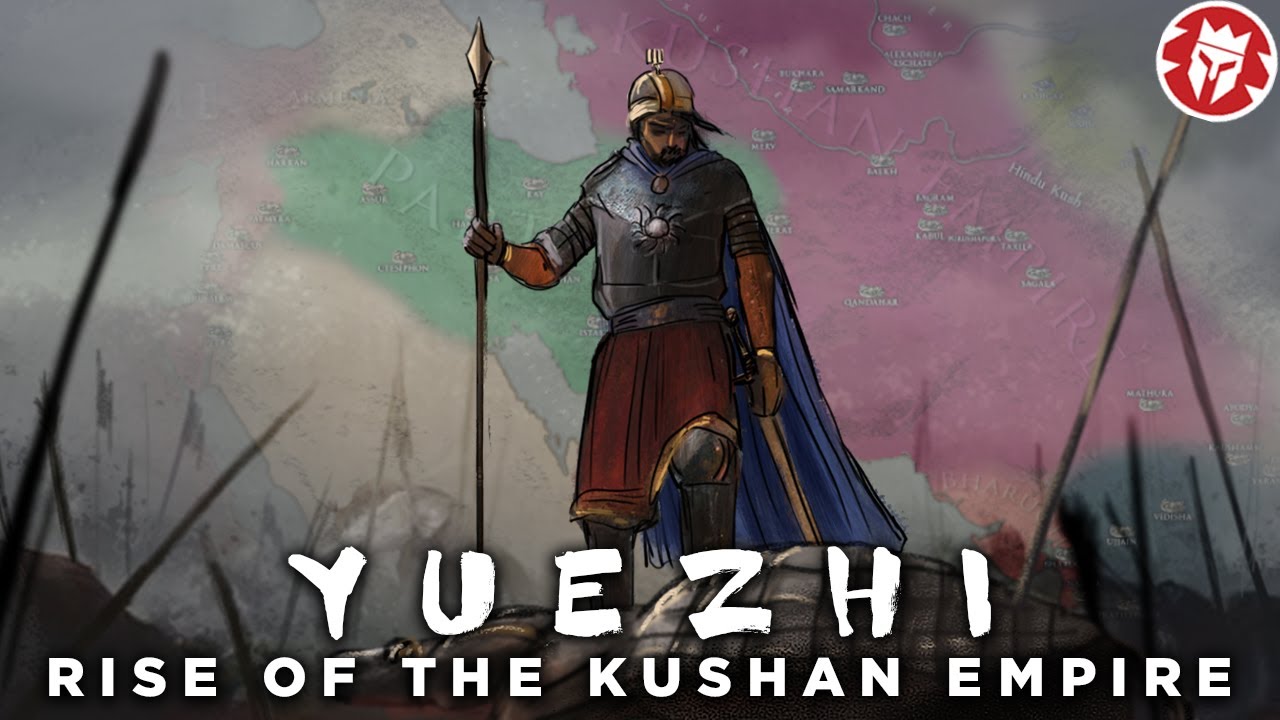
The Kushan Empire () stands out as a pivotal power in Central and South Asia. Originating from the nomadic Yuezhi confederation, the Kushans built an imperial bridge connecting Tajikistan, Afghanistan, Pakistan, and the Ganges valley in northern India. By securing key legs of the famous Silk Route, their rulers enabled intense global trade and deep cultural integration. This period transformed the region's spiritual and artistic landscape—nurturing Mahayana Buddhism, spawning distinct hybrid art forms, and introducing high-purity gold coinage that fueled international commerce across Eurasia.
In this chapter, you will understand:
- The origin of the Yuezhi tribe and their territorial expansion
- The golden era of Emperor Kanishka I and the Fourth Buddhist Council
- Silk Route trade economics and revolutionary gold coinages
- Greco-Buddhist art in Gandhara and the eventual decline under Sassanid pressure
Why this topic matters: It explains how ancient trade networks drove cultural mixing between Indian, Greek, Persian, and Chinese civilizations, shaping religious art and economic systems for centuries.
Core Idea: Emerging from nomadic origins, the Kushan dynasty unified diverse regions from Central Asia to northern India. Their control over the Silk Route created an unprecedented era of economic prosperity, multilingual governance, and religious synthesis marked by the spread of Mahayana Buddhism and Hellenistic-inspired art.
Kushan Empire: Dynasty, Geopolitical Expansion, Syncretic Religion, Administration, and Cultural Exchange (1st–3rd Century CE)
The Kushan state took root when nomadic clans moved out of Central Asian steppes and adapted to urbanized Eurasian trade centers. They transformed from a loose confederation into an organized imperial powerhouse that tied Indian markets to broader Eurasian exchange routes.
Kanishka the Great and the Golden Age of the Kushan Dynasty
The reign of Kanishka I (dated around ) marks the political and cultural peak of the empire. His administration effectively managed dual power centers: the northern strategic capital at Purushapura (modern Peshawar) and the southern cultural hub at Mathura.
Imperial Administrative Reach and Multilingual Cultural Bridges
Kushan rulers maintained stability across diverse populations by using multiple languages and scripts. Official records and public decrees relied on Brahmi for local Indian dialects, Kharoshthi in the northwest, and official Bactrian (written in Greek letters) for central imperial affairs.
Strategic Connectivity and the Flourishing Silk Route International Trade
By controlling crucial hubs like Samarkand and Yarkand, the Kushans acted as vital intermediaries between the Roman Empire, Han China, and Indian commercial guilds.
- (i) Trade flourished in high-value goods like Central Asian warhorses, fine Chinese silks, Indian spices, and luxury glassware from the Mediterranean.
- (ii) Cavalry innovations—including improved saddles and heavy armored horse tactics—entered Indian military practices during this time.
- (iii) Merchants and traveling monks used these secure roads to carry early Mahayana Buddhist philosophy across Central Asia into China.
Religious Syncretism and the Concept of Divine Kingship (Daivaputra)
Emperor Kanishka supported many faiths, building temples and stupas for Buddhist, Hindu, and Zoroastrian believers. He adopted the royal title Daivaputra ("Son of Heaven"), taking inspiration from Chinese imperial titles to reinforce his divine authority over a multi-ethnic empire.
Kushan Administrative Model and Subsequent Sassanid-Led Decline
Governance depended on regional military governors called satraps and higher-ranking mahakshatrapas. Following the reign of Vasudeva I around , internal succession fights and aggressive invasions by the Persian Sassanid Dynasty broke the empire into smaller, vulnerable principalities.
Profound Cross-Cultural Integration in Art and Coinage
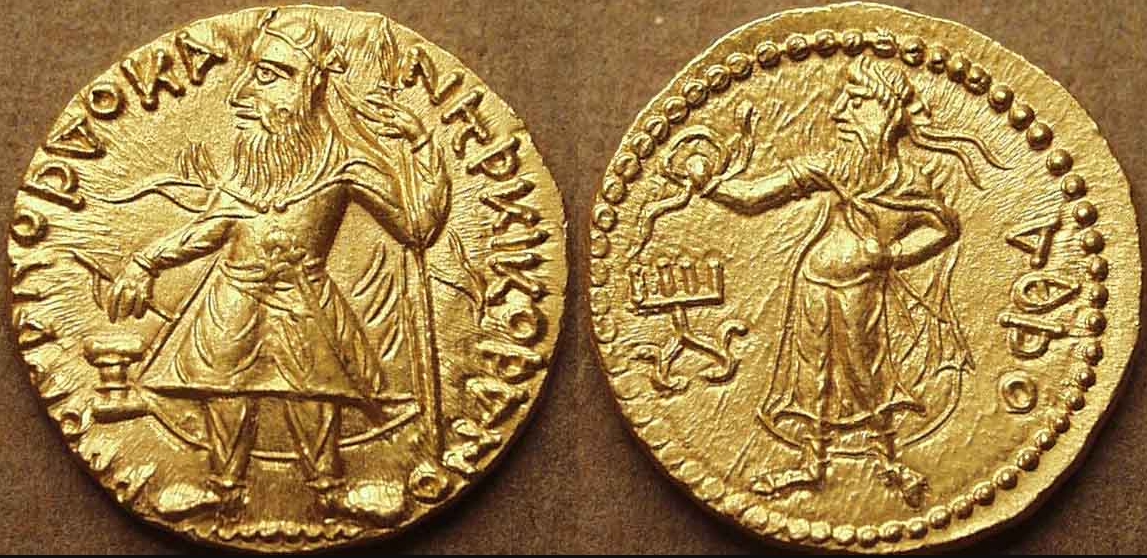
Kushan coins visually capture their syncretic culture. Persian deities like Ardochsho were paired alongside Indian figures like Shri Lakshmi, while Greek gods like Helios appeared together with the Buddha on royal gold and copper issues.
Western India, Kshatrapas, and Early Sanskrit Royal Inscriptions
Contemporary rulers in western regions, such as the Western Kshatrapa king Rudradaman I, supported the formal adoption of classical Sanskrit. His famous Junagadh Rock Inscription () is among the earliest major public records written entirely in polished Sanskrit prose.
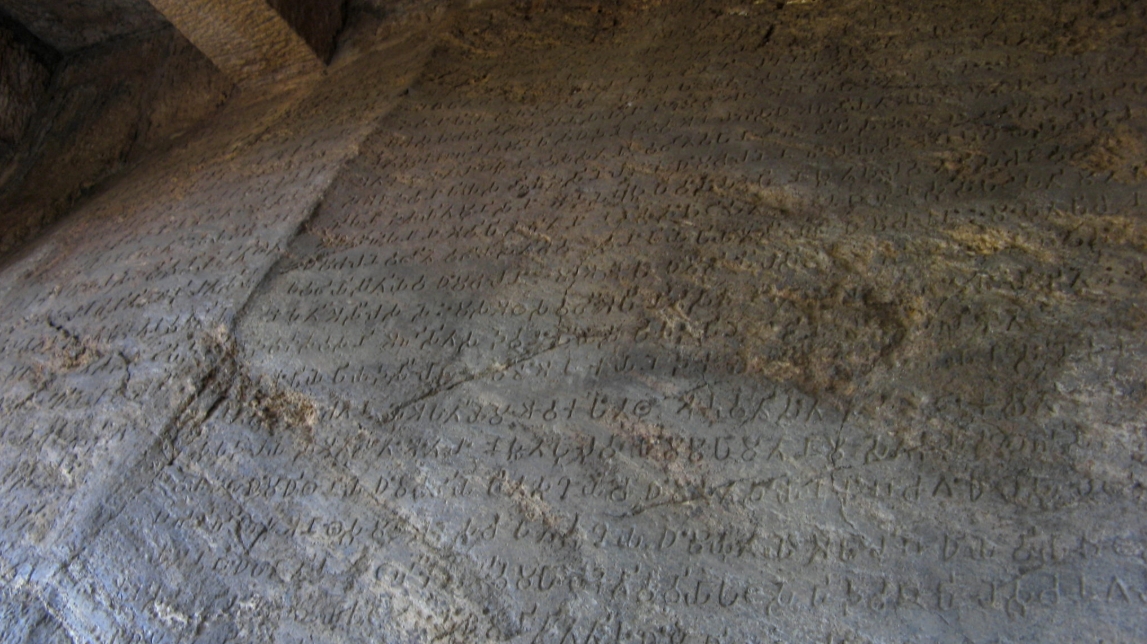
The Junagadh Rock Inscription of Rudradaman I—an early benchmark for royal Sanskrit prose Points to remember: Kanishka's golden age connected Asian trade routes, popularized Mahayana Buddhism, and established multilingual imperial governance.
Genealogy of Prominent Kushan Rulers and Their Legacies
The rise and fall of the dynasty spans six main rulers, each contributing to its military power, currency, or cultural legacy.
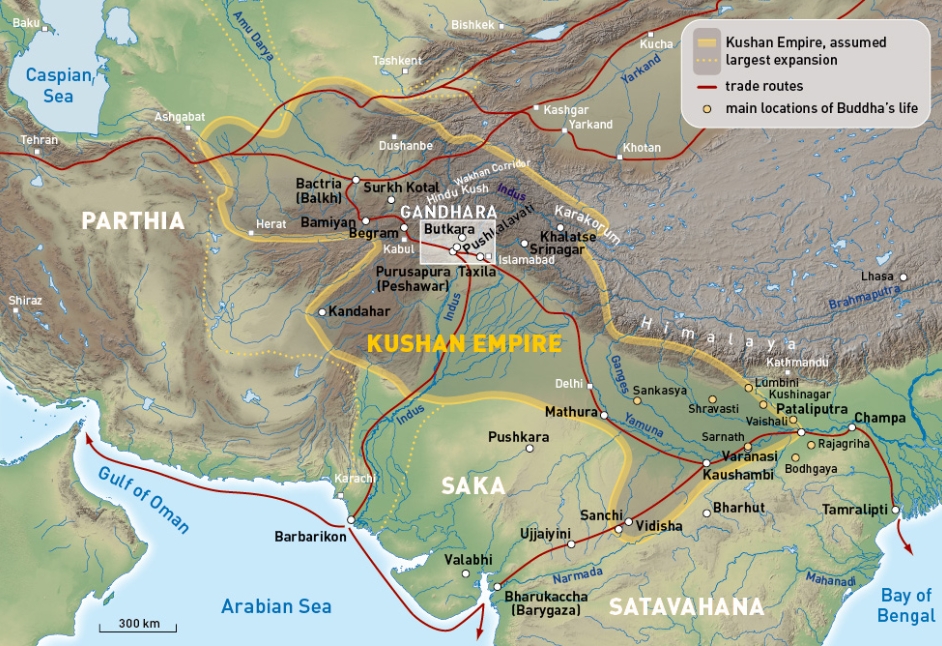
- (i) Kujula Kadphises (): United the five separate Yuezhi tribes and founded the unified Kushan state south of the Oxus River.
Vima Taktu and Vima Kadphises Expansion Era
These two early rulers expanded borders into northwestern India and overhauled the economic foundation of the state.
- (i) Vima Taktu (): Pushed imperial claims deep into northern India, as confirmed by the Rabatak Inscription.
- (ii) Vima Kadphises (): Issued India's first large-scale high-purity gold coinage to handle high-value international trade with Rome.
- (iii) Kanishka I (): Convened the Fourth Buddhist Council in Kashmir and initiated the widely used Saka Era calendar system.
- (iv) Huvishka (): Maintained territorial stability and lavished patronage on religious centers in Mathura.
Rise of Mahayana Buddhism and The Unique Gandharan Art Influence
Under Kushan royal patronage, Buddhist art and philosophy underwent fundamental changes that transformed how the faith was practiced across Asia.
Gandhara Art Style, Iconography, and Hellenistic Fusion
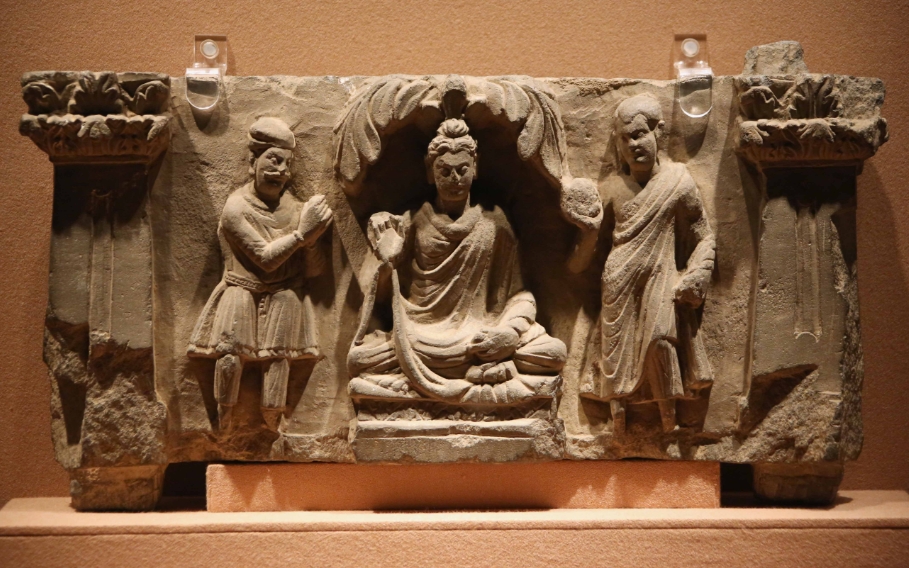
The Gandhara region (spanning parts of modern Pakistan and Afghanistan) developed a distinctive visual style. Craftsmen blended Greek artistic techniques with traditional Indian spiritual themes.
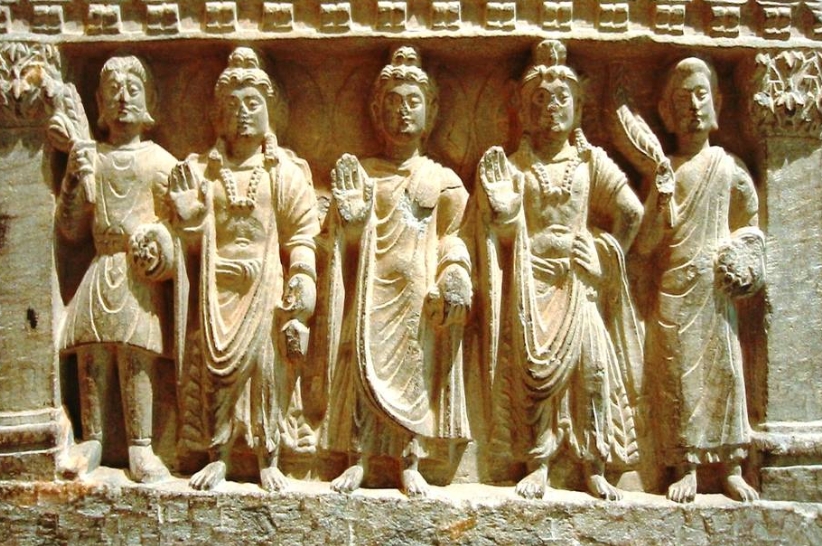
Major achievements and key milestones during the reign of Kanishka the Great - (i) Buddhas and Bodhisattvas were depicted with realistic human anatomy, flowing Greek-style drapery, and wavy hair.
- (ii) Images shifted away from abstract symbols (like footprints and umbrellas) toward anthropomorphic statues built for devotion.
- (iii) Concurrent developments in Mathura produced a native artistic style using local spotted red sandstone.
- (iv) Monasteries received generous land grants, turning them into thriving centers for education and community trade.
Quick Revision Capsule
A structured overview of core Kushan achievements, governance mechanisms, and historical impacts:
| Ruler / Topic | Key Mechanism / Action | Historical Impact |
|---|---|---|
| Kujula Kadphises | Unification of five Yuezhi tribes | Established the foundation of the Kushan state in Bactria. |
| Vima Kadphises | Minted standard high-purity gold coins | Stabilized international trade along the Eurasian Silk Route. |
| Kanishka I | Organized the 4th Buddhist Council in Kashmir | Formalized Mahayana doctrines and accelerated its spread to East Asia. |
| Gandhara School | Blended Hellenistic forms with Indian motifs | Created the human visual depiction of Buddha images. |
| Rabatak Inscription | Bactrian language inscription in Greek script | Clarified the exact genealogy and chronology of early Kushan emperors. |
Summary
The Kushan Empire remains one of ancient history's most successful multi-ethnic experiments. By transforming from steppe nomads into cultured emperors, the Kushans built an economic engine that funded artistic, literary, and spiritual growth. Their control over trade corridors allowed Mahayana Buddhism and Greco-Buddhist art to travel freely across borders, leaving a lasting legacy across Central and South Asia.
Quick Revision Points
Essential facts to review before examinations:
- (i) The Kushans belonged to the nomadic Yuezhi tribe from Central Asia.
- (ii) Kanishka I convened the Fourth Buddhist Council at Kundalavana in Kashmir.
- (iii) The Rabatak Inscription discovered in Afghanistan provides key dynastic family details.
- (iv) Imperial coins featured a syncretic blend of Greek, Persian, Zoroastrian, and Indian deities.
- Exam Tip: Remember that Vima Kadphises introduced gold coins first, but Kanishka expanded their issue and started the Saka Era (78 CE). Pay close attention to the difference between Gandhara art (Greco-Roman influence) and Mathura art (indigenous style) for direct exam questions.
Frequently Asked Questions (FAQ)
Q1: Who was the most powerful ruler of the Kushan Empire?
A1: Emperor Kanishka I is considered the greatest ruler due to his territorial conquests, economic success, patronage of Mahayana Buddhism, and introduction of the Saka calendar system.Q2: What is the historical importance of the Rabatak Inscription?
A2: Discovered in Afghanistan, this Bactrian inscription written in Greek script confirmed the exact family tree of early Kushan kings from Kujula Kadphises down to Kanishka I.Q3: How did the Silk Route contribute to Kushan prosperity?
A3: Controlling key trade stops along the Silk Route allowed the Kushans to tax transcontinental trade between Rome, China, and India, bringing immense wealth into their treasury.