The Later Vedic Age () marked a turning point in ancient Indian history, with the expansion of agriculture, trade, iron technology, and settlement patterns. This period witnessed the rise of Painted Grey Ware culture, growing urbanization, and political consolidation. For students preparing for history exams, the Later Vedic period is crucial as it highlights the foundations of state formation, social stratification, and cultural transformation in northern India.
🎯 In this chapter, you will understand:
- The geographic shift towards the eastern plains and the rise of settled agriculture.
- The revolutionary impact of iron tools and Painted Grey Ware (PGW) material culture.
- The political transformation from tribal assemblies to territorial kingdoms (Janapadas).
- The hardening of the Varna system and the emergence of Upanishadic philosophy.
💡 Why this topic matters: It explains how nomadic tribal groups settled into organized kingdoms, laying the groundwork for India's first urban centers and classical philosophies.
🧠 Core Idea: Iron tools and surplus farming changed society from simple pastoral clans into powerful territorial monarchies with structured social layers.
The Later Vedic Age and Its Features: Expansions, Iron Technology, and Sociopolitical Transformation ()
The Later Vedic period saw a significant eastward expansion of the Aryan culture, the crucial introduction of iron technology, a surge in trade, and profound cultural and political transformation.
This era fundamentally reshaped the landscape of Northern India, witnessing settlements along the rich Indo-Gangetic plains, revolutionary agricultural growth, and the development of proto-urban centers that collectively laid the essential foundation for the complex state structures and Mahajanapadas of the subsequent period.
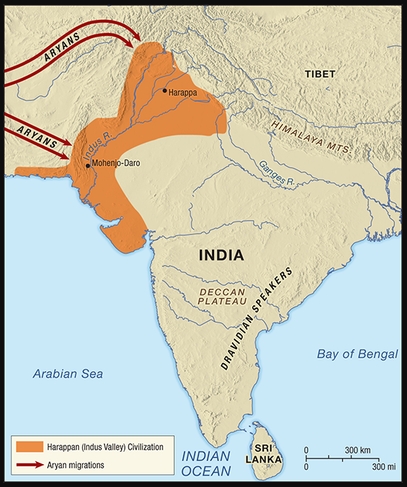
- (i) The Aryan socio-cultural sphere expanded dramatically, pushing into key territories, including Uttar Pradesh, Bihar, and Rajasthan.
- (ii) This consolidation led to the rise of politically powerful tribal entities, notably the Bharatas and the Purus, whose subsequent fusion formed major kingdoms.
- (iii) The concurrent consolidation of agriculture, inter-regional trade, and political institutions established entirely new and enduring directions for Indian civilization's development.
Geographical Expansion and Political Consolidation in the Eastern Plains
The eastward migration of the Aryan communities was not merely a geographic shift but a profound process that entirely reshaped the political and socio-economic map of the Later Vedic era, transitioning from small clans to larger territorial units.
Settlement Patterns and the Agricultural Revolution
The defining shift from a primarily pastoral lifestyle to a settled, intensive agricultural economy was the cornerstone of Later Vedic society and its sustainability.
- (i) The widespread adoption of revolutionary iron plows and sickles significantly enhanced efficiency, marking a true turning point in farming technology and capacity.
- (ii) Settlement density increased markedly, leading to larger villages and new settlements concentrated along fertile riverbanks, enabling the reliable cultivation of staple crops such as barley, wheat, and rice.
Urban Growth and the Emergence of Early Proto-Urban Centers
The slow but sure development of proto-urban centers was a crucial indicator, signaling the initial stages of state formation and economic specialization beyond mere subsistence farming.
- (i) The first signs of permanent towns began to emerge, particularly in the strategically vital and resource-rich Ganga-Yamuna Doab region.
- (ii) This early urbanization was fundamentally enabled by two factors: the productivity gains from iron technology and the resulting agricultural surplus, which supported both non-agricultural crafts and significant population growth.
Expansion of Trade and Sophisticated Economic Networks
The growth of sophisticated trade networks during this period extended the cultural and economic reach of the Vedic people far beyond their immediate settlements, even towards distant regions like Central Asia and the Middle East.
- (i) A robust system for the exchange of valuable goods, including finished metals, high-value horses, and intricate textiles, fostered considerable inter-regional economic growth and specialization.
- (ii) While traditional barter systems remained in use for local transactions, they gradually began to coexist with the earliest forms of proto-monetary practices and recognized standards of value.
The Painted Grey Ware Culture: Archaeological Evidence of Later Vedic Life
The distinct Painted Grey Ware (PGW) culture provides the most compelling and tangible archaeological evidence that confirms the material and social reality of life during the Later Vedic Age.
Archaeological Significance of PGW Sites
Excavation findings from key sites such as Hastinapur and Atranjikhera are invaluable, offering detailed insights into the complex social and economic organization of these early settlements.

Archaeological artifacts showing Painted Grey Ware pottery - (i) The characteristic PGW pottery, identifiable by its fine grey fabric adorned with intricate painted geometric motifs, strongly suggests a unified and shared cultural identity across the extensive region.
- (ii) Evidence of structured settlements, complete with dedicated storage pits and large granaries, clearly indicates early efforts toward sophisticated communal resource management and proto-urban planning.
Iron Phase Culture and the Transformative Later Vedic Economy
The systematic adoption and mastery of Iron technology acted as the primary catalyst, profoundly transforming not only agriculture but also the entire socio-economic framework of this pivotal phase in ancient Indian history.
Technological Advancements and the Agricultural Production Boost
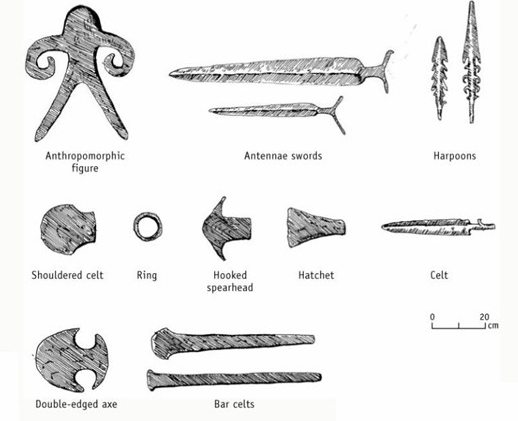
The strategic deployment of new tools like iron plows, heavy axes, and efficient sickles directly resulted in a significant and sustainable boost in overall food production.
- (i) The durable iron axes made large-scale forest clearance in the dense Ganga valley possible, thereby opening up vast new tracts of land for cultivation.
- (ii) The resulting substantially higher agricultural yields generated the necessary surplus that was essential to support a growing class of specialized artisans, crafts, and the expanding trade networks.
Economic Diversification and the Flourishing of Inter-Regional Trade
Fueled by the agricultural surplus, trade and commerce flourished, leading to crucial economic diversification across the emerging kingdoms.
Economic Integration and Trade Routes
Isolated villages began to integrate more closely into developing regional and international trade routes, facilitating larger-scale resource distribution.
- (i) Local production became linked with distant markets as craft specialization increased.
- (ii) These intense economic and cross-cultural exchanges were instrumental in establishing the complex administrative and monetary foundations required for the subsequent emergence of sophisticated territorial state economies.
Political Organisation in Later Vedic Age: From Tribe to Territory
The political system shifted dramatically from the loosely structured, tribal form of governance to the emergence of powerful, centralized monarchies, a transition that was heavily legitimized by complex rituals and the influential priestly class, effectively paving the way for the early territorial states (Janapadas).
Formation of Janapadas and the Rise of Monarchic States
The rise of the larger territorial units, the Janapadas (the precursors to the Mahajanapadas), symbolized the firm growth of centralized authority and increasingly organized, specialized governance.
- (i) Established states such as Kuru and Panchala were at the forefront of this critical transition, moving away from decentralized tribal rule toward a model of consolidated power.
- (ii) The newly emergent monarchs heavily relied on a symbiotic relationship with the powerful priestly class and the growing strength of their military forces to establish and reinforce their political legitimacy among the populace.
Administrative Institutions and Legitimization of Kingship
Structured governance saw the development of key administrative roles, with officials dedicated to managing the growing military, collecting state revenue, and administering law, while elaborate rituals formally validated the king's authority.
- (i) An early form of bureaucracy appeared with the emergence of specialized roles for ministers, treasurers (Sangrahitri), and military commanders (Senani).
- (ii) Grand, costly royal rituals like the Rajasuya (consecration), Vajapeya (chariot race), and the expansive Ashvamedha (horse sacrifice) were performed specifically to reinforce the monarch's supreme authority over his territory.
Inter-State Relations: Conflict, Alliances, and Early Diplomacy
The political landscape was increasingly defined by a mix of diplomatic alliances and frequent conflicts (Yuddha), as rulers strategically employed both formalized warfare and key matrimonial alliances to systematically expand their territorial influence and secure borders.
- (i) Calculated military conquests were the primary means used to forcibly expand the territorial boundaries and influence of the growing Janapadas.
- (ii) Strategic matrimonial alliances were also a crucial political tool, often utilized to secure stability, forge beneficial non-aggression pacts, and create powerful political relationships between ruling houses.
Social Organisation in Later Vedic Period: The Rigid Varna System
The foundational varna system underwent a major transformation, becoming significantly more rigid and stratified, determining an individual’s status solely by birth. This era also saw the increasing ritual influence of the Brahmanas and a concerning decline in the social, religious, and educational freedoms traditionally afforded to women.
Social Stratification and the Hardening of Varna Inequality
The varna hierarchy, which now included the four distinct classes (Brahmana, Kshatriya, Vaishya, and Sudra), became fundamentally hardened, severely restricting social mobility and making occupations strictly hereditary.
- (i) The Brahmanas, by controlling the increasingly complex and essential state rituals, secured and maintained the highest ritual and social status within the emerging hierarchy.
- (ii) The Sudras, at the bottom of the codified structure, were increasingly confined to providing essential menial labor and agricultural support, with significantly limited social, economic, and religious rights.
The Ascent of Brahmanas and the Decline in Women’s Status
Brahmanas decisively gained paramount ritual authority over all other classes, while conversely, women experienced a marked decline in their traditional educational and religious rights, a clear reflection of the growing patriarchal dominance in society.
- (i) The emphasis on ritual purity and complex sacrificial ceremonies reinforced the absolute Brahmanical supremacy and their indispensable role in legitimizing kingship.
- (ii) Women were increasingly excluded from key aspects of religious life, such as participating in Vedic learning assemblies (like the Sabha and Samiti), and their roles became more restricted to domestic duties.
Gods, Rituals, and Philosophy in Later Vedic Era: The Dawn of Upanishadic Thought
While the performance of grand sacrificial rituals remained a central pillar of public and state religious life, this period also saw the powerful emergence of philosophical introspection, leading directly to the profound Upanishadic philosophy and planting the deep roots of classical Hindu thought.
Upanishadic Philosophy: The Inquiry into Atman and Brahman
The Upanishads (the concluding sections of the Vedas) introduced a radically new spiritual and metaphysical inquiry, shifting the focus from external actions (rituals) to internal knowledge, emphasizing self-realization and the pursuit of universal truths.
- (i) The central philosophical concern became the relationship between the Atman (the individual soul) and Brahman (the ultimate, universal reality).
- (ii) This represented a significant spiritual shift, prioritizing inner, mystical realization and experiential knowledge over the mere external performance of prescribed rituals.
Core Concepts and Ethical Framework: Karma, Dharma, and Moksha
Core philosophical ideas like karma (action and consequence), dharma (cosmic and social duty), moksha (liberation), and the cycle of rebirth (samsara) were elaborated upon, fundamentally shaping the ethical foundation of subsequent Indian spiritual practices.
- (i) The principle of Dharma tied the concept of cosmic and social order directly to an individual's ethical conduct and sense of duty within the social hierarchy.
- (ii) The philosophy provided validation for different paths to realization, recognizing the importance of both the ascetic (renunciate) and the householder life.
Continuity of Ritual Practices and the Role of Fire Worship
Despite the revolutionary growth of philosophical thought, traditional ritual sacrifices remained dominant in public life, with the two streams of thought largely coexisting for a period.
- (i) Grand public fire rituals (Yajnas) like the Agnishtoma remained central to Vedic worship and the assertion of social status.
- (ii) The unbroken oral tradition (Sruti) continued its critical role, meticulously preserving the precise knowledge of complex ritual procedures, chants, and formulas.
Emergence of Philosophical Schools and Intellectual Diversification
The intense intellectual growth and spiritual questioning of this period directly fostered the conceptual seeds for later, more formal philosophical schools, including Vedanta (based on the Upanishads), Samkhya, and Yoga.
- (i) Diverse interpretations regarding the nature of reality (Sat) and the means to achieve Moksha (spiritual liberation) began to emerge across intellectual circles.
- (ii) This intellectual vitality led the initially unitary Vedic tradition to diversify into multiple, sophisticated philosophical streams (Darshanas), marking a new stage in Indian intellectual history.
⚡ Quick Revision Capsule: Later Vedic Age Overview
This table summarizes the core structural changes that took place between and .
| Feature Domain | Key Historical Shift | Core Significance |
|---|---|---|
| Geographical Scope | Shift from Punjab to Ganga-Yamuna Doab | Settlement in fertile river valleys enabled large-scale farming. |
| Technology & Economy | Widespread use of Iron Tools and plows | Forest clearance boosted farming surpluses and trade. |
| Political Structure | Tribal clans evolved into Janapadas | Centralized monarchies replaced simple clan governance. |
| Social Organization | Rigid birth-based Varna system | Decreased social mobility and reduced rights for women. |
| Religious Philosophy | Rise of Upanishads alongside Yajnas | Spiritual focus shifted toward Atman, Brahman, and Moksha. |
📝 Summary
The Later Vedic period () was a foundational and transformative era in ancient Indian history. Key developments included the crucial adoption of iron tools, the rise of the archaeologically identifiable Painted Grey Ware culture, the expansion of trade and sophisticated proto-urban settlements, and the subsequent rise of powerful territorial Janapadas. This profound transformation in both material and spiritual realms set the stage for the classical age of the Mahajanapadas in the Indo-Gangetic plains. For students and exam aspirants, grasping this age is vital to understanding the fundamental evolution of Indian polity, stratified society, philosophy, and economic governance that critically influenced all subsequent civilizations.
🚀 Quick Revision Points
Essential facts to review before examinations:
- (i) Eastward expansion brought Aryan groups into the Ganga-Yamuna Doab and territories like Uttar Pradesh and Bihar.
- (ii) The introduction of iron technology powered clearing of dense forests and increased crop yields.
- (iii) Society transformed into a rigid four-tier Varna system based strictly on birth.
- (iv) Philosophical texts known as the Upanishads introduced core concepts of Karma, Dharma, and Moksha.
- 💡 Exam Tip: Remember that while early Vedic society was semi-nomadic and pastoral, the Later Vedic society was settled and agricultural, fueled by iron technology and marked by the rise of territorial Janapadas.
❓ Frequently Asked Questions (FAQ)
Q1: What was the main technological driver of change in the Later Vedic Age?
A1: The widespread adoption of iron technology, including iron axes and plows, allowed cleared forests and intensive farming in the Ganga valley.Q2: How did the political structure change during this period?
A2: Governance shifted from small, pastoral tribal assemblies to larger territorial monarchies known as Janapadas, ruled by kings with specialized officials.Q3: What are the main philosophical concepts introduced in the Upanishads?
A3: As outlined in the Upanishads, key concepts include Atman (individual soul), Brahman (ultimate reality), Karma (action and result), and Moksha (liberation).