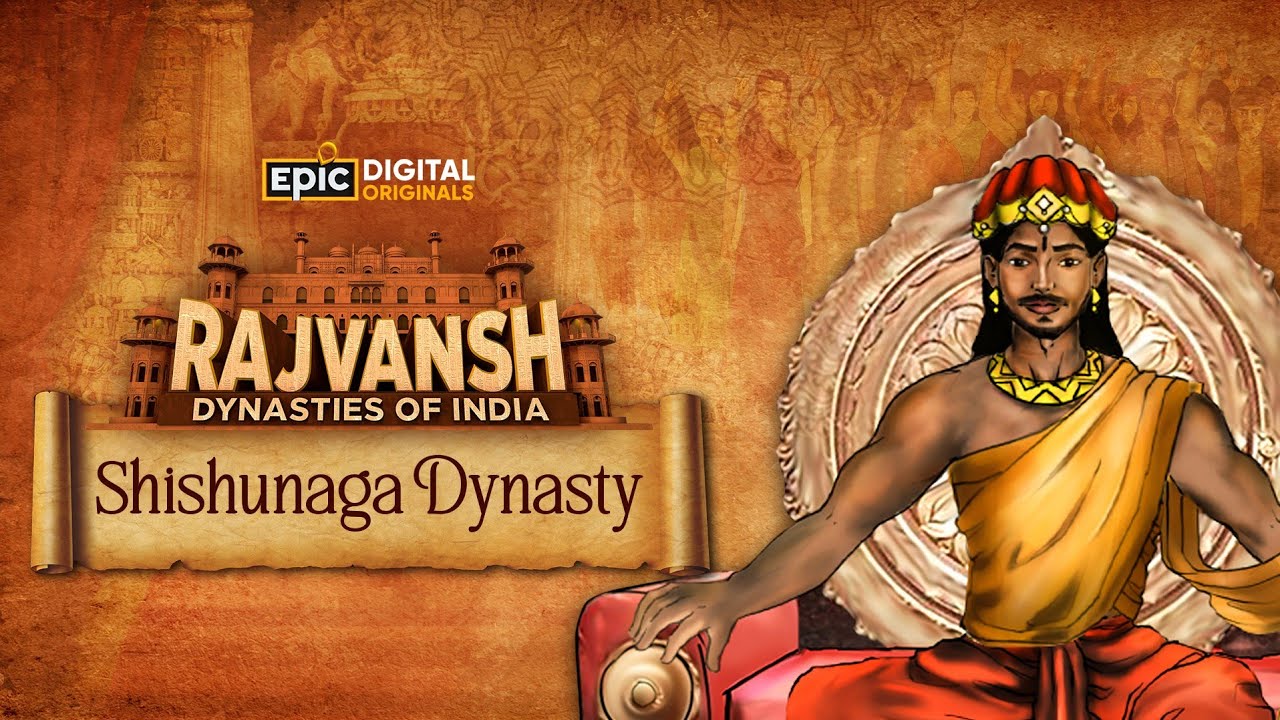
The Shishunaga Dynasty, ruling from to , marks a decisive turning point in the territorial consolidation of ancient Magadha. Emerging after a public rebellion against the preceding Haryanka line, this imperial house transformed Magadha into Northern India's most powerful state. By leveraging rich local mineral deposits like iron ore, deploying heavy cavalry and battle elephants, and successfully annexing long-standing rivals like the Avanti Kingdom, the Shishunagas built the administrative and military groundwork that later enabled the grand expansion of the Nanda and Mauryan empires.
In this chapter, you will understand:
- How King Shishunaga established the dynasty via popular support and defeated Avanti.
- The strategic moves of capitals between Girivraja, Varanasi, Vaishali, and Pataliputra.
- The convening of the Second Buddhist Council under Kalasoka.
- The political downfall of the dynasty and the subsequent rise of the Nandas.
Why this topic matters: Key subject for competitive examination candidates preparing for ancient Indian history, competitive civil service exams, and historical analysis of early imperial state-building.
Core Idea: The Shishunagas turned Magadha into an undisputed regional power by securing crucial natural resources, ending a century-old conflict with Avanti, shifting political capitals for strategic dominance, and sponsoring heterodox traditions like Buddhism and Jainism before internal political intrigue ended their reign.
Shishunaga Dynasty: Establishing Magadha as a Dominant Power in Ancient India (413–345 BCE)
The Shishunaga Dynasty successfully consolidated the territorial and political gains of Magadha, setting the stage for imperial expansion across the northern plains.
The Third Imperial Line of Magadha
This dynasty represents the third major line of monarchs to rule ancient Magadha, coming right after the legendary Brihadratha and Haryanka dynasties.
- (i) The dynasty was founded by Shishunaga, who originally served as a senior minister or amatya under the final Haryanka ruler, Nagadasaka.
- (ii) His elevation to the throne in came through a widespread revolt by citizens who were dissatisfied with the misrule of the late Haryanka kings.
- (iii)
Administrative and Military Fortification
Although their reign lasted less than a century, the Shishunagas significantly reinforced the state apparatus and standing army.
- (a) Strengthened border garrisons to protect trade corridors.
- (b) Reorganized taxation to fund prolonged military campaigns.
- (c) Created stable governance structures across conquered territories.
- (d) Formed the crucial framework for the upcoming unified Magadha Empire.
Magadha's Natural Advantage: Utilizing Rich Resources for Imperial Expansion
Strategic geography and abundant natural wealth gave the Shishunaga rulers the resources needed to equip heavy divisions and maintain continuous military dominance.

- Magadha benefited from heavy mineral deposits, river security, and fertile farmland that kept its state treasury well funded.
Strategic Resources: Iron Ore, War Elephants, and Fertile Lands
Geographical advantages gave Magadha an unprecedented edge over rival contemporary states across the Indo-Gangetic plain.
- (i) Mineral Wealth: Direct access to rich deposits of iron ore enabled continuous manufacturing of hard metal weapons, heavy armor, and agricultural tools.
- (ii) War Elephants: Dense forest regions yielded wild elephants, which were captured and trained into dangerous frontline shock units.
- (iii) Agricultural Productivity: Rich alluvial soil near major river systems produced abundant yields of grain, easily feeding large standing armies during long military campaigns.
Conquest of Avanti: Shishunaga's Greatest Military Feat
The definitive defeat of the Avanti Kingdom ended a century of bitter rivalry, leaving Magadha without any equal competitor in northern India.
- (a) Shishunaga directed a decisive campaign against Avanti, resolving a conflict that had dragged on for nearly 100 years.
- (b) Following this victory, Avanti was fully annexed into Magadha, bringing an end to the ruling Pradyota dynasty.
Shishunaga: Founder, Early Reign, and Strategic Shifts (413–395 BCE)
Reigning from to , Shishunaga focused on expanding territorial boundaries and adjusting capital cities for maximum administrative efficiency.
- Starting his career as a high administrative official, Shishunaga earned broad public trust through efficient governance and political stability.
Ascent to the Throne and Puranic Accounts of Shishunaga
Historical records from ancient literature like the Puranas detail his movement from minister to crowned king.
The historic hill fort of Girivraja (Rajagriha), early seat of Magadhan power. - (i) Public discontent against the corrupt Haryanka rulers led citizens to invite Shishunaga to take royal command.
- (ii) Early in his reign, he managed affairs from the ancient walled capital of Girivraja (Rajagriha).
- (iii) He stationed his son as provincial governor in Varanasi to secure vital river trade along the Ganges valley.
Capital Relocation to Vaishali: A Strategic Move
After conquering Avanti, Shishunaga moved the royal court to Vaishali to maintain better administrative control over newly annexed northern territories.
Quick Revision Capsule
Key details of the Shishunaga Dynasty at a glance:
| Ruler / Topic | Key Event / Policy | Historical Significance |
|---|---|---|
| Shishunaga () | Annexation of the Avanti Kingdom | Ended a 100-year conflict and destroyed the Pradyota dynasty. |
| Strategic Capitals | Shifts between Girivraja, Vaishali, and Pataliputra | Optimized military command, trade security, and border governance. |
| Kalasoka () | Hosted the Second Buddhist Council at Vaishali | Promoted major developments within early Buddhist monastic tradition. |
| Resource Management | Utilization of iron ore and trained battle elephants | Provided permanent tactical superiority over rival regional armies. |
| Dynastic Decline () | Assassination of Kalasoka | Cleared the path for Mahapadma Nanda to found the Nanda Dynasty. |
Summary
The Shishunaga Dynasty () played a key role in making ancient Magadha an dominant power. By capturing Avanti, making smart use of regional iron reserves, and encouraging trade, Shishunaga built a stable state structure. His successor Kalasoka permanently moved the political capital back to Pataliputra and sponsored the historic Second Buddhist Council at Vaishali around . Although political violence brought an end to their rule, the Shishunagas constructed the strong military and administrative base required for the later expansion of the Mauryan Empire.
Quick Revision Points
Essential facts to review before examinations:
- (i) Shishunaga started his career as an amatya (minister) before being crowned king following a popular revolt in .
- (ii) The total destruction of the Pradyota dynasty of Avanti stands out as their greatest military triumph.
- (iii) Kalasoka permanently restored Pataliputra as Magadha's central imperial capital.
- (iv) The Second Buddhist Council took place at Vaishali exactly one century after the Maha Parinirvana of Lord Buddha.
- Exam Tip: Remember that Shishunaga shifted the capital to Vaishali, but it was his son Kalasoka who permanently moved it to Pataliputra. The Second Buddhist Council was convened during Kalasoka's reign at Vaishali.
Frequently Asked Questions (FAQ)
Q1: How did the Shishunaga Dynasty come to power in Magadha?
A1: In , discontented citizens of Magadha led a revolt against the weak Haryanka king Nagadasaka and chose his experienced minister Shishunaga to take the throne.Q2: What was the most significant military achievement of King Shishunaga?
A2: His biggest conquest was defeating the Avanti Kingdom, which brought an end to a century-long conflict and annexed Avanti into the growing Magadhan state.Q3: What major religious event occurred during the reign of King Kalasoka?
A3: King Kalasoka hosted the Second Buddhist Council at Vaishali around , marking a key milestone in early Buddhist history.