The Mauryan Empire (322 BCE – 185 BCE) marks a colossal and pivotal turning point in ancient Indian history, achieving the unprecedented feat of unifying almost the entirety of the subcontinent under a singular, powerful centralized administration. Spanning from the strategic founding by Chandragupta Maurya, guided by Chanakya’s Arthashastra, to the humanitarian reign of Ashoka’s Dhamma, this epoch is critically important for students preparing for high-stakes examinations like UPSC, SSC, and State PSC exams, showcasing profound examples of political consolidation, remarkably efficient administration, and the dynamic, successful spread of Buddhism across the vast expanse of Asia.
In this chapter, you will understand:
- Chandragupta Maurya's rise and diplomatic relations with Seleucus Nicator.
- The administrative architecture detailed in Chanakya’s Arthashastra and Megasthenes’ Indica.
- The strategic role of specialized officers known as Adhyakshas and Dharmamahamatras.
- The impact of the Kalinga War (~261 BCE) and Ashoka's Dhamma in spreading Buddhism globally.
Why this topic matters: This period establishes India's first pan-Indian centralized empire, providing fundamental lessons in statecraft, administrative structures, public welfare, and cross-border diplomacy that form a core component of ancient Indian history competitive examination syllabi.
Core Idea: Founded by Chandragupta Maurya with the guidance of Chanakya around 322 BCE, the Mauryan Empire transformed from a militarily consolidated territory into a moral and welfare state under Emperor Ashoka, before eventually fracturing post-232 BCE due to central weakness and internal pressures.
Mauryan Empire History: Political Consolidation from Chandragupta Maurya to Ashoka’s Dhamma (322 BCE – 185 BCE)
The ascendancy of Chandragupta marked a watershed moment—the first successful establishment of a genuine pan-Indian empire. This new realm secured vital frontiers against Greek influence and meticulously crafted a robust administrative foundation essential for effective imperial governance across diverse territories.
Founding and Rise of Chandragupta Maurya
The dynasty was heroically established by Chandragupta Maurya, who successfully dethroned the preceding Nanda rulers with the profound strategic counsel of Chanakya.
- (i) Various historical sources debate his origins, with Buddhist texts suggesting he belonged to the Maurya clan, while Brahmanical accounts often trace him back to a more humble background.
- (ii)
Overthrow of the Nanda Dynasty
The monumental defeat of the powerful Nanda dynasty, achieved through Chanakya’s astute military and political strategy, took place around 322 BCE.
- (a) This triumph irrevocably laid the groundwork for the establishment of the first truly comprehensive and centralized imperial rule structure in the history of India.
- (b) It secured central routes across northern India, anchoring power at the capital city of Pataliputra.
Mauryan–Greek Diplomatic Relations and Significant Territorial Expansion
Chandragupta’s strategic confrontation and subsequent diplomatic treaty with Seleucus Nicator were instrumental in defining early Indo-Greek political and cultural ties, successfully extending Mauryan control deep into regions including modern Afghanistan and Baluchistan.
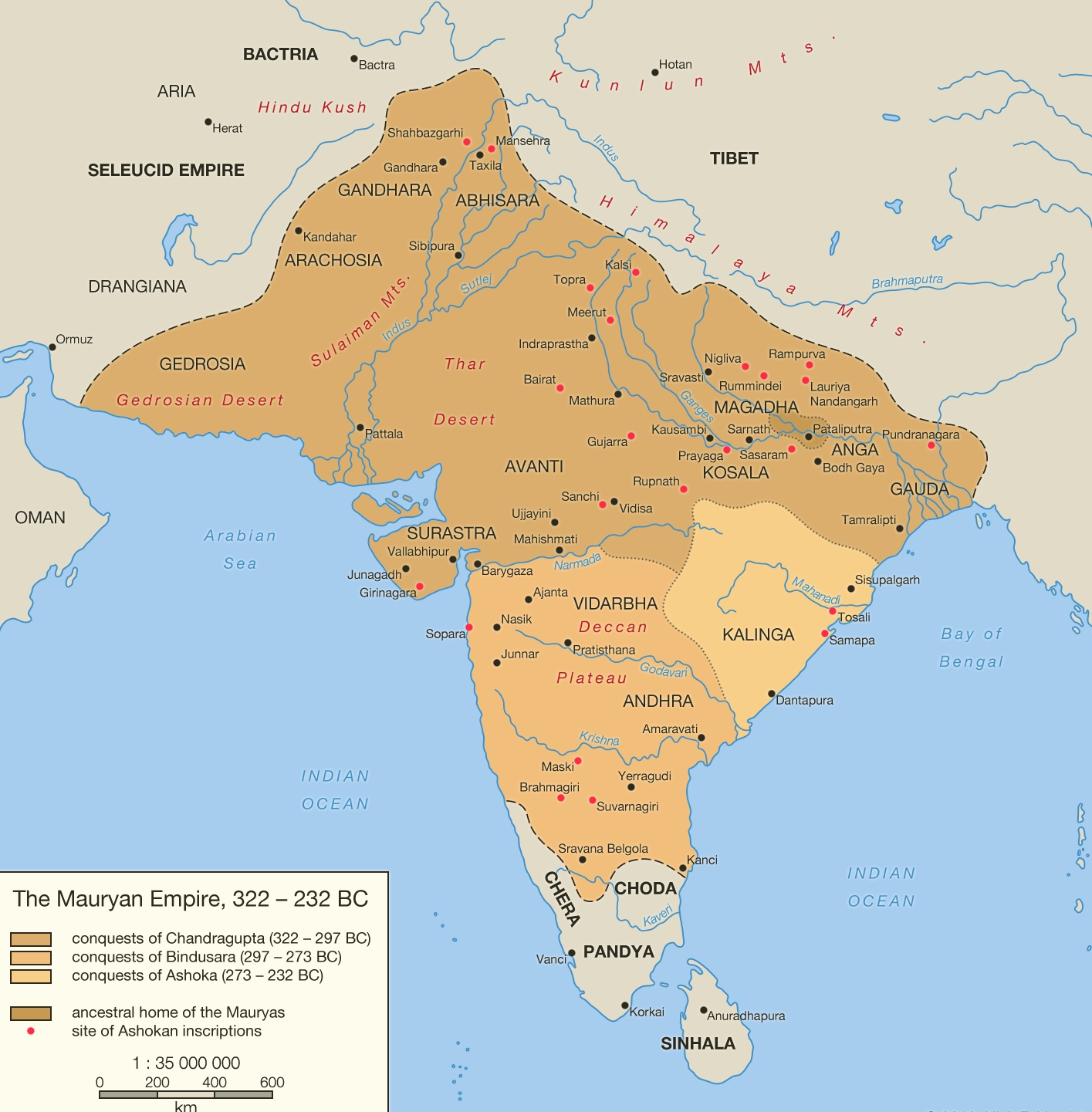
- The empire encompassed the vast majority of the Indian landmass, with only the deep south (including Tamil Nadu, Kerala) and certain northeastern tribal belts remaining outside its direct governance.
Conflict and Strategic Alliance with the Greeks
The determined Seleucus, a successor of Alexander, was decisively defeated by Chandragupta Maurya, leading to a crucial peace treaty. This treaty not only secured the Mauryan territories but famously included the strategic exchange of 500 formidable war elephants for vast tracts of western territory.
- (i) This diplomatic and military victory fundamentally strengthened the crucial northwestern frontiers of the nascent empire.
- (ii) The ensuing peace effectively opened the gates for sophisticated and mutually beneficial Indo-Greek cultural and commercial exchanges.
- (iii) The newly acquired lands permanently ensured Mauryan control over several of the era's key trans-regional trade routes.
Geographic Extent and Scale of the Mauryan Empire
The Mauryan Empire stands unparalleled as the single largest political entity in ancient India, its scale and subcontinental reach far surpassing many later, even colonial, imperial structures in its unified control.
- (a) Its extensive territory included modern-day Bihar, Bengal, Odisha, Madhya Pradesh, Gujarat, the Deccan region, and parts of Afghanistan.
- (b) This extraordinary achievement marks the first genuine and successful subcontinental integration of India under one political umbrella.
The Mauryan System of Administration and Highly Specialized Officials
The Mauryan Empire gained recognition for its sophisticated and remarkably centralized bureaucracy, a system meticulously detailed in Chanakya’s Arthashastra and corroborated by the accounts found in Megasthenes’ Indica.
- The magnificent city of Pataliputra served as the imperial capital, the heart of the administration. The empire was strategically divided into multiple provinces, each managed by royally appointed governors to ensure seamless rule.
Imperial Organisation: Capital, Military, and Bureaucratic Departments
Administrative management relied on structured committees and a disciplined standing army to maintain control across provinces.
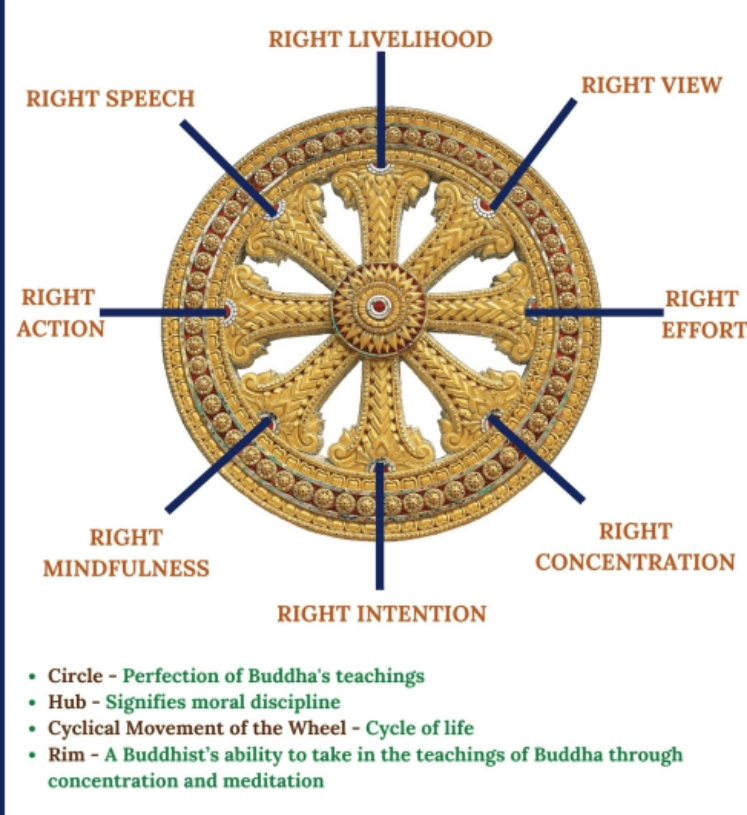
The ethical tenets and moral framework underpinning Ashoka’s dhamma as promulgated through his edicts. - (i) The capital city management was exceptionally organized, overseen by six specialized committees responsible for vital urban affairs, including regulation of trade, accurate census recording, and public health maintenance.
- (ii) The empire maintained a massive, highly disciplined standing army, comprising formidable components of infantry, cavalry, powerful chariots, and strategically utilized war elephants.
- (iii) The system relied on specialized government departments, or Adhyakshas, dedicated to key sectors like agriculture, the administration of justice, internal intelligence gathering (espionage), and systematic taxation.
Key Mauryan Officers and Specialized Superintendents
The operational framework of the Mauryan administration depended heavily on numerous specialized officials, specifically the adhyakshas (superintendents), each assigned distinct and essential regulatory responsibilities.
- Sitadhyaksha: The high-ranking superintendent responsible for overseeing all matters related to the state's agriculture.
- Panyadhyaksha: The official tasked with the crucial regulation and oversight of all commerce and trade activities.
- Durgapal: The officer responsible for the strategic command and maintenance of the empire's numerous forts and fortifications.
- Koshadhyaksha: The superintendent responsible for managing and safeguarding the state's central treasury and finances.
- Nava Adhyaksha: The dedicated head of the naval affairs, underscoring the importance of waterways.
- Dharmamahamatras: Special, high-ranking officers appointed by Ashoka himself, charged with the solemn duty of propagating and implementing the principles of dhamma.
Ashoka the Great: Transformation from Kalinga War to Dhamma
The accession of Emperor Ashoka around 268 BCE marked a monumental shift in governance, transitioning from aggressive territorial expansion to holistic human welfare and moral governance across ancient India.
The Kalinga War and Ethical Aftermath
Fought around 261 BCE, the bloody conquest of Kalinga caused immense destruction and loss of life, profoundly altering Ashoka's worldview.
- (i) Deep remorse over the destruction led Ashoka to abandon the path of military conquest (digvijaya).
- (ii) He initiated a policy of moral conquest (dhammavijaya), dedicating imperial state resources to social welfare, non-violence, and public ethics.
Ashoka's Dhamma: A Universal Moral Code
Dhamma was not a narrow religious doctrine, but a practical social code promoting tolerance, compassion, respect for elders, and humane treatment of all living beings.
Global Spread of Buddhism
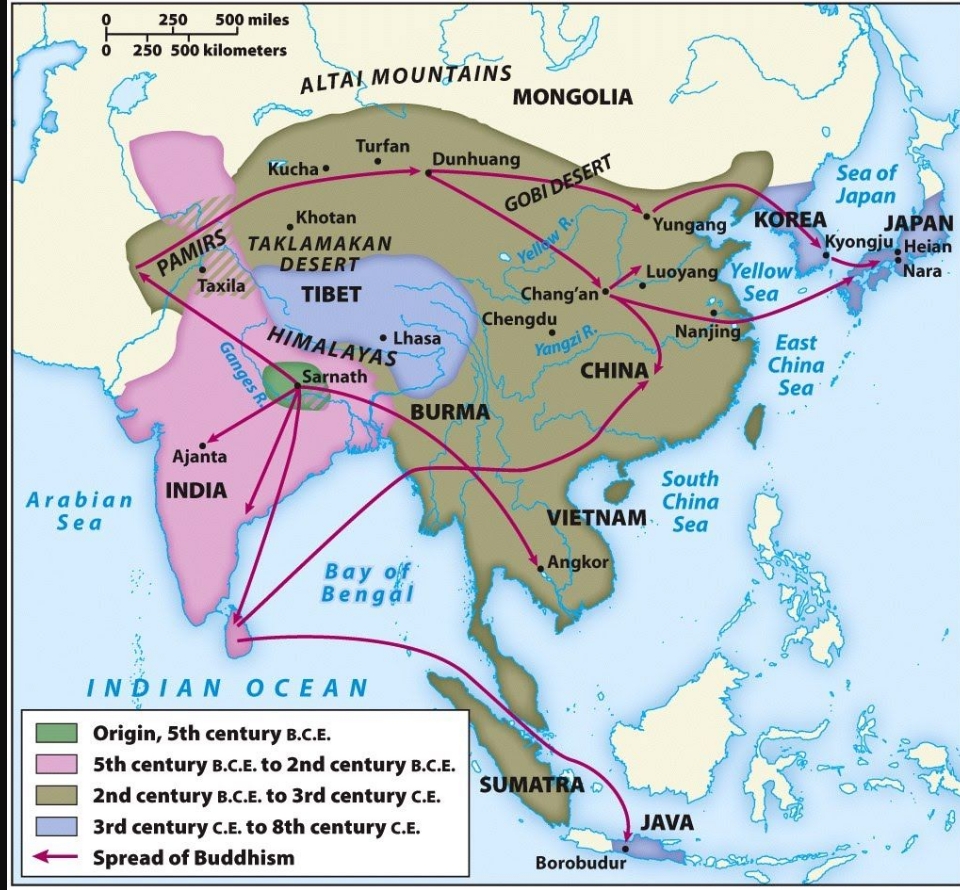
Through royal patronage, rock and pillar edicts, and diplomatic missions sent to Sri Lanka, Southeast Asia, and Hellenistic kingdoms, Ashoka elevated Buddhism into an international movement.
Ashoka's Legacy and Mauryan Decline
Following Ashoka’s death around 232 BCE, the central authority weakened. Financial strain, vast regional distances, and weak successors contributed to the empire's eventual collapse around 185 BCE, when Pushyamitra Shunga established the Shunga dynasty.
Mauryan Empire Quick Revision Capsule
Key operational and political parameters summarizing the Mauryan Imperial apparatus:
| Ruler / Pillar | Core Strategy / Mechanism | Historical Impact & Target Objective |
|---|---|---|
| Chandragupta Maurya | Overthrow of Nanda Dynasty with Chanakya guidance (322 BCE) | Established the first unified, centralized pan-Indian imperial structure. |
| Seleucid Treaty | Military defense & exchange of 500 war elephants with Seleucus Nicator | Secured northwestern frontiers and crucial trans-regional trade routes. |
| Central Bureaucracy | Departmental regulation via Adhyakshas (Sitadhyaksha, Panyadhyaksha) | Systematic taxation, agricultural expansion, and state-monopolized trade. |
| Ashoka the Great | Pivoted from military conquest (digvijaya) to ethical policy (dhammavijaya) | Reconstructed state governance around moral integrity, non-violence, and public welfare. |
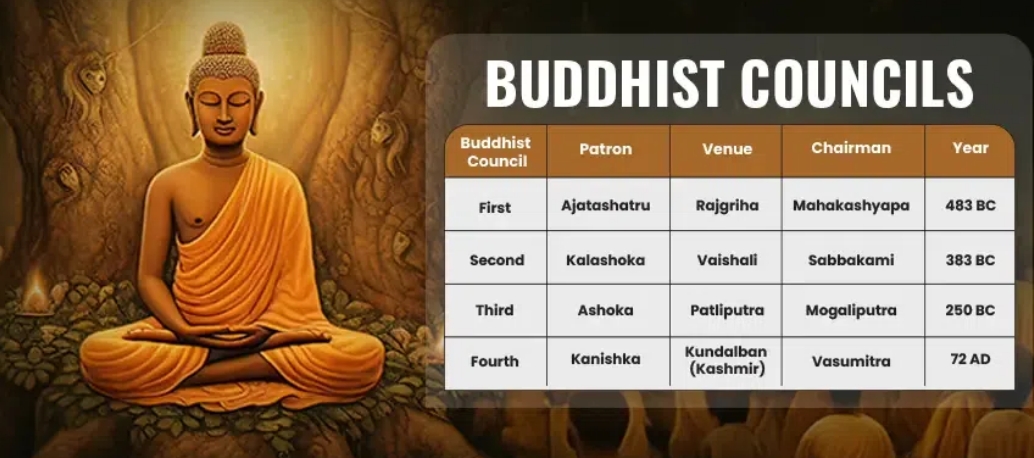
| Global Missionary Activity | Appointment of Dharmamahamatras & Third Buddhist Council (~250 BCE) | Transformed Buddhism from a regional movement into a global religion. |
Summary
The Mauryan Empire (322–185 BCE), stretching from the foundational efforts of Chandragupta Maurya to the epoch-making reign of Ashoka the Great, stands as India’s definitive first centralized imperial power. Characterized by the strategic principles of Arthashastra, an exceptionally strong and integrated administration, pioneering Indo-Greek diplomacy, and Ashoka’s powerful commitment to Dhamma and Buddhist missions, this era fundamentally shaped ancient Indian polity and society. For students preparing for UPSC/SSC and PSC exams, Mauryan history offers indispensable lessons in statecraft, governance models, cross-cultural diplomacy, and the transformative power of socio-religious reform with a truly lasting global influence.
Key Study Notes for Rapid Revision
Essential examination checkpoints to memorize for the Mauryan Period:
- (i) Chandragupta Maurya founded the empire in 322 BCE by defeating the Nanda dynasty under Chanakya's direction.
- (ii) Strategic treaty with Seleucus Nicator gained territorial control over parts of modern-day Afghanistan and Baluchistan.
- (iii) The Kalinga War (~261 BCE) caused Ashoka to renounce war and adopt dhammavijaya (conquest by righteousness).
- (iv) Specialized officials called Adhyakshas oversaw trade, agriculture, navy, and finance across imperial territories.
- Exam Tip: Questions frequently test specific Adhyaksha designations (e.g., Sitadhyaksha for agriculture, Panyadhyaksha for trade) and the distinction between digvijaya and dhammavijaya in Ashoka’s edicts.
Frequently Asked Questions (FAQ)
Q1: What was the primary significance of the treaty between Chandragupta Maurya and Seleucus Nicator?
A1: The treaty secured India's northwestern borders, granted the Mauryas territories in modern Afghanistan and Baluchistan in exchange for 500 war elephants, and initiated strong diplomatic and commercial links with the Hellenistic world.Q2: What role did the Dharmamahamatras play in Ashoka’s administration?
A2: Dharmamahamatras were special high-ranking officers created by Ashoka to promote ethical conduct, ensure public welfare, propagate the teachings of Dhamma, and prevent unjust punishment across the empire.Q3: How did the Kalinga War alter the governance strategy of the Mauryan Empire?
A3: Fought around ~261 BCE, the extreme suffering of the war led Ashoka to abandon military expansion (digvijaya) in favor of moral, humanitarian rule (dhammavijaya) rooted in Buddhism and non-violence.